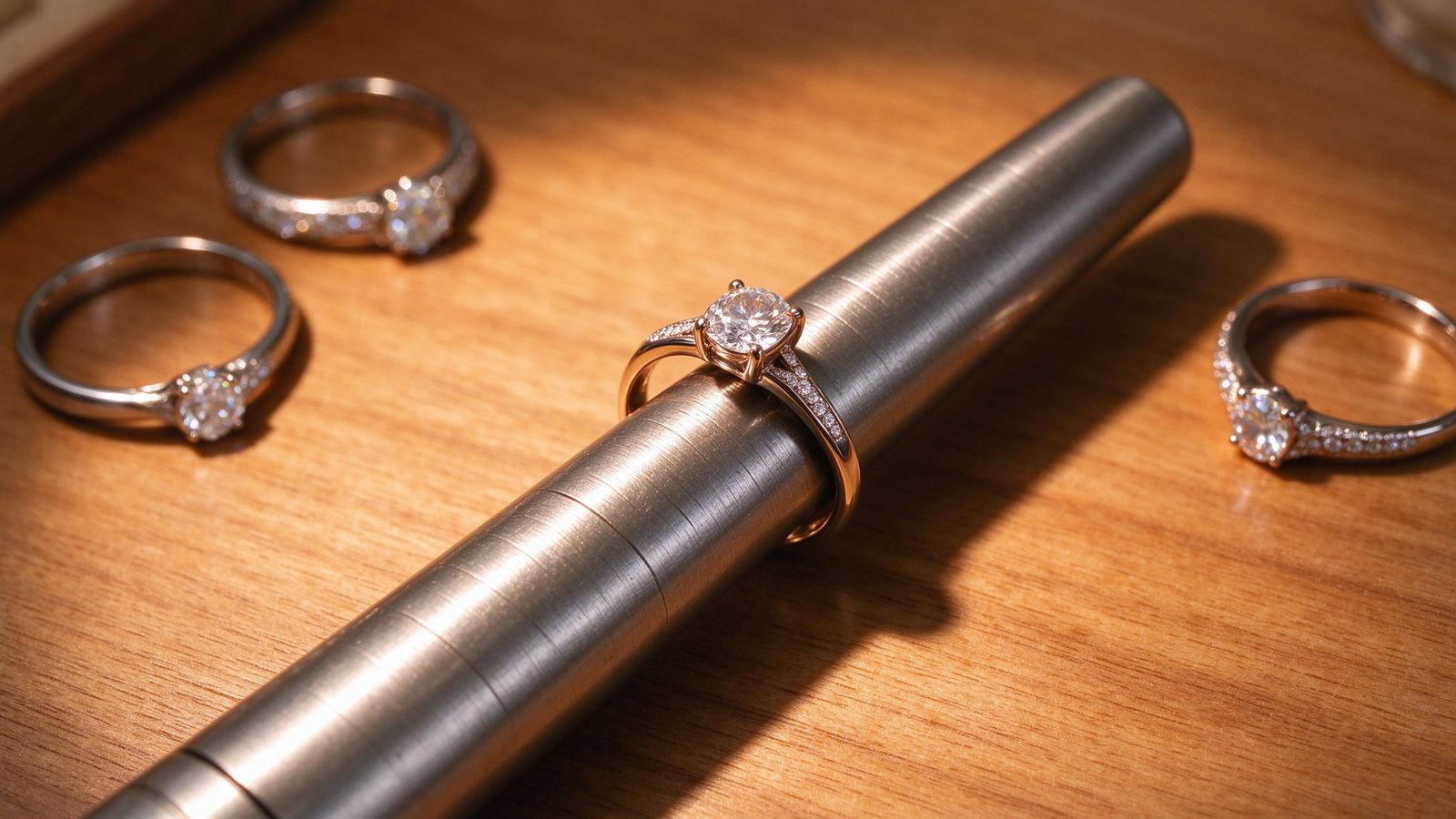
Ring Prongs Explained: How to Check Tightness and Catch Loose Stones
A diamond sits in a ring because tiny metal claws, called prongs, grip it. Those prongs are the most fragile part of any stone-set ring, and they wear down over years of contact with desks, fabrics, and door handles. When a prong loosens, the stone wiggles. When it breaks, the stone falls out and is lost. Most lost engagement stones did not fall out by accident; they fell out because a loose prong went unnoticed for months. The good news is that checking your prongs takes thirty seconds a month, and tightening them is cheap. The bad news is that almost no one does it until the stone is already gone.
This guide explains how prongs work, how to check them at home, when they need repair, and how to wear your ring without wearing the prongs down. It is the single most useful care habit for any ring with stones.
What Prongs Do
Prongs are the small metal claws that rise from the ring head and bend over the edge of the stone to hold it down. A four-prong setting holds a diamond at four points; a six-prong holds it at six. More prongs mean more security but slightly less visible stone. A prong setting lifts the stone above the band, letting light enter from the sides, which is why solitaires sparkle. Our setting guide explains the options.
Prongs bend and wear because they are thin. Over years of daily wear, the tips rub against surfaces and wear down until they no longer hook over the stone's edge. A bent prong leans to one side, leaving a gap. A worn-down prong becomes a sharp little nub. Either failure lets the stone move. The stone then wears against the metal, and eventually drops out. This is normal wear, not bad craftsmanship.
How to Check Prongs at Home
Once a month, give your ring a quick prong check. Wash and dry it first, so grime is not masking the problem. Lay the ring flat on a white cloth. Look at each prong under a bright light or a magnifying glass. The tips should all curl neatly over the stone's edge, evenly sized, none bent outward or missing. Run a fingertip lightly over each tip; if a prong catches on your skin or on a cotton cloth, it may be bent or worn thin.
Gently nudge the stone with a toothpick. A secure stone does not move at all. A stone that clicks or shifts even slightly is loose and needs a jeweler. Hold the ring to your ear and shake it; a loose stone makes a tiny rattling sound. Do this check after washing dishes, typing, or any day the ring has taken a knock. If you feel a rough spot, that is a worn prong catching fabric.
Pay special attention to the prongs on the side of the ring that faces outward, because that side rubs against surfaces the most. The ring finger's outward side wears faster. If one prong looks shorter or shinier than the others, it has been rubbing and needs inspection.
When Prongs Need Repair
If a stone wiggles, stop wearing the ring and take it to a jeweler within days. A loose stone falls out fast. Do not wait for a scheduled cleaning. A jeweler can tighten prongs in minutes, usually cheaply. If a prong is worn thin, they re-tip it, adding a tiny bit of metal to the claw. Re-tipping is routine and should be done every few years on a daily ring. Our repair guide covers what to expect.
Do not try to bend prongs back yourself. Needle-nose pliers on a prong snap it, and a broken prong may require rebuilding the whole head. Leave prong work to a jeweler. The check you do at home is for spotting the problem, not fixing it. If the stone has already fallen out, keep the ring and the stone, and a jeweler can reset it.
How Prongs Wear Faster
Everyday habits accelerate prong wear. Typing with the ring on drags the prongs across a keyboard. Washing dishes with the ring on exposes prongs to grit. Sleeping on your side presses the ring against your hand and bends prongs over months. Gym work, gardening, and lifting are hard on prongs. The simplest protection is to take the ring off for these activities. Our gold care guide covers when to remove rings.
Jewelry boxes that let rings rattle together also wear prongs. Store each ring in its own slot or pouch, so prongs do not rub against other pieces. A prong that rubs against a diamond in the next slot wears down fast. Our storage guide covers the setup.
Pavé and Micro-Pavé Prongs
Small pavé stones are held by tiny prongs that are far easier to knock loose. A pavé band or a halo has dozens of micro-prongs, and one catches on fabric every time you put on a sweater. Check pavé settings more often, and run your finger along the band to feel for stones that are sitting lower than their neighbors. A pavé stone that sits lower is about to fall out. Our pavé setting guide explains the structure.
If pavé stones keep falling out, the setting may be poorly made or the prongs too fine. A well-made pavé uses slightly thicker prongs and survives years. If your pavé loses a stone within months of cleaning, talk to the maker about the setting quality. Our buying guide helps you ask the right questions.
Annual Prong Check With a Jeweler
Even if your home check looks fine, have a jeweler inspect the prongs once a year. They use a loupe and can see worn spots you miss. Most jewelers tighten prongs and clean the ring in one visit, often as a free service. This annual visit is the difference between a ring that keeps its stones for decades and one that loses a stone. Our professional cleaning guide explains the visit.
If your ring is insured, a yearly prong check is often a requirement. Keep the receipt from the jeweler as proof of maintenance. If a stone falls out despite checks, the insurance claim is smoother with documented care. Our insurance guide covers this.
Types of Prong Tips and What They Mean
Prongs are not all the same. A ball-tip prong ends in a small rounded bead that hooks over the stone, the most common and most secure style. A claw prong tapers to a sharp point and covers less of the stone. A peg head uses small prongs soldered onto a base. The style affects both look and security. Ball tips are the most forgiving for daily wear, because the rounded bead holds the stone without a sharp edge. Claw tips look elegant but wear thin faster. When you buy, ask which tip style your ring uses.
If a prong tip looks flat, polished, or worn smooth, it has rubbed against surfaces for years and is about to fail. A healthy prong tip is rounded and hooks over the girdle. If you can see daylight between the tip and the stone, the prong is no longer gripping. This is the visual cue that means take the ring in. Catching this early is what prevents lost stones.
What to Do If a Stone Falls Out
If a stone falls out, do not panic and do not throw the ring away. Find the stone if you can, even if it is scratched. Keep the ring and the stone together. A jeweler can inspect the setting, rebuild the prongs if needed, and re-set the stone. If the stone is lost, the jeweler can measure the setting and source a replacement. Most lost stones are small accent stones, which are inexpensive to replace.
After a stone loss, ask the jeweler to check the rest of the prongs on the ring. If one prong failed, others may be wearing too. This is also the moment to reconsider whether the setting suits your lifestyle. If pavé stones keep falling out, switch to a bezel or a stronger setting for your next piece. Our setting guide compares durability.
Protecting Prongs During Daily Life
The best prong care is removing the ring at the right moments. Take it off before washing dishes, because grit in water wears prongs. Take it off before typing for long hours, because the ring drags across the keyboard. Take it off before the gym, where weights and equipment bang the setting. Take it off before sleeping if you lie on your hand. Store the ring in a single slot, not loose. These habits double the life of your prongs.
If you hate taking the ring off, choose a lower-profile setting. A low-set stone with short prongs rubs less than a tall solitaire. A bezel setting, where the stone is wrapped in metal, has no exposed prongs to wear. If you work with your hands, a bezel or a flush pavé is far more practical than a tall prong solitaire. Buy the setting for how you live, not just how it looks. Our setting style guide helps.
Prong Tightening Costs and Frequency
Routine prong tightening is one of the cheapest jewelry services. Most jewelers tighten prongs during a cleaning visit, often for free or a small fee. Re-tipping a worn prong, where the jeweler adds metal and reshapes the tip, costs modestly per prong. A full rebuild of a damaged head is more, but that is rare. The point is that maintaining prongs is far cheaper than replacing a lost stone, and insurance often covers the service as preventive care.
How often depends on wear. A daily engagement ring benefits from a prong check once a year. A ring worn occasionally can go two years. If you work with your hands, check every six months. Set a reminder on your phone. The cost of a yearly check is trivial next to the cost of losing a center stone. Our professional cleaning guide explains what the visit includes.
Signs Your Ring Needs Immediate Attention
Certain signs mean stop wearing the ring now, not on your next free day. If the center stone wiggles, stop. If a prong is visibly bent or missing, stop. If the ring catches on sweaters and hair every time you dress, a prong is catching and will break. If you hear a rattle when you shake the ring, a stone is loose. If a pavé stone sits visibly lower than its neighbors, it is about to fall. Each of these is an emergency, because a loose stone leaves the ring fast.
Many people delay because they like the ring and do not want to be without it. That delay is how stones are lost. A jeweler can usually tighten prongs while you wait. Go in, get it fixed, and wear the ring again the same day. The few hours without the ring are nothing compared to losing the stone. Our repair guide lists the warning signs.
Prong care is not glamorous, but it is the most reliable way to keep the ring you love on your finger for decades. Make the monthly check a quiet habit, the yearly jeweler visit a routine you never skip, and the ring stays secure through every season of life. The stones are not going anywhere if the prongs are doing their quiet, hidden job.
Prong Care From HOLYCOME
HOLYCOME, based in Henggang, Longgang, Shenzhen, sets stones with robust prongs designed for daily wear, and we include prong checks in our after-sales service. Email us at service@holycome.com if a stone feels loose. If you are choosing a setting, our halo versus solitaire guide compares prong exposure, and our setting guide covers bezel alternatives that need fewer prongs.
Thirty seconds a month is all it takes. Look at the prongs, nudge the stone, feel for catches. If anything moves, stop wearing the ring and see a jeweler. That habit keeps the stones on your finger where they belong.