How to Store Jewelry to Prevent Scratches and Damage
Most jewelry damage happens not while you are wearing a piece, but while it is being stored. Necklaces tangle into knots that break fine chains, diamonds scratch gold bangles, silver tarnishes in open air, and earring backs vanish into a drawer. The good news is that nearly all of this is preventable with simple storage habits that take seconds each evening. A well-organized jewelry storage system is the cheapest insurance you can buy.
This guide explains how to store each jewelry type to avoid scratches, tangling, and tarnish, the best materials for storage, how to pack for travel, and the daily habits that keep your collection safe between wears. Set up your storage once and your jewelry stays beautiful and findable for years.
The Core Principle: Separate Every Piece
The root cause of most storage damage is contact. Diamonds scratch gold and silver. Pearls scratch against hard gems. Chains knot together when they touch. Perfume residue on one piece tarnishes another. The single principle that solves nearly everything is separation: each piece should have its own space, never jumbled in a common bowl. A divided jewelry box, individual soft pouches, or compartmentalized trays prevent ninety percent of storage damage.
Soft lining matters. Felt, velvet, and suede lining cushion pieces and absorb moisture, while hard wood or plastic surfaces can scratch metal over time. Avoid storing jewelry on open metal stands, which can tarnish silver and let pieces knock together. A closed, lined box protects from air, humidity, and dust. For a small collection, even individual cotton pouches in a drawer work, as long as each piece has its own.
The goal is that when you open your box, nothing moves against anything else. Rings sit in padded slots, necklaces hang or lie flat, earrings are paired in pockets. This not only prevents damage but makes it easy to see what you own, so you actually wear it. The best storage system is the one that keeps pieces both safe and visible.
Storing Rings and Earrings
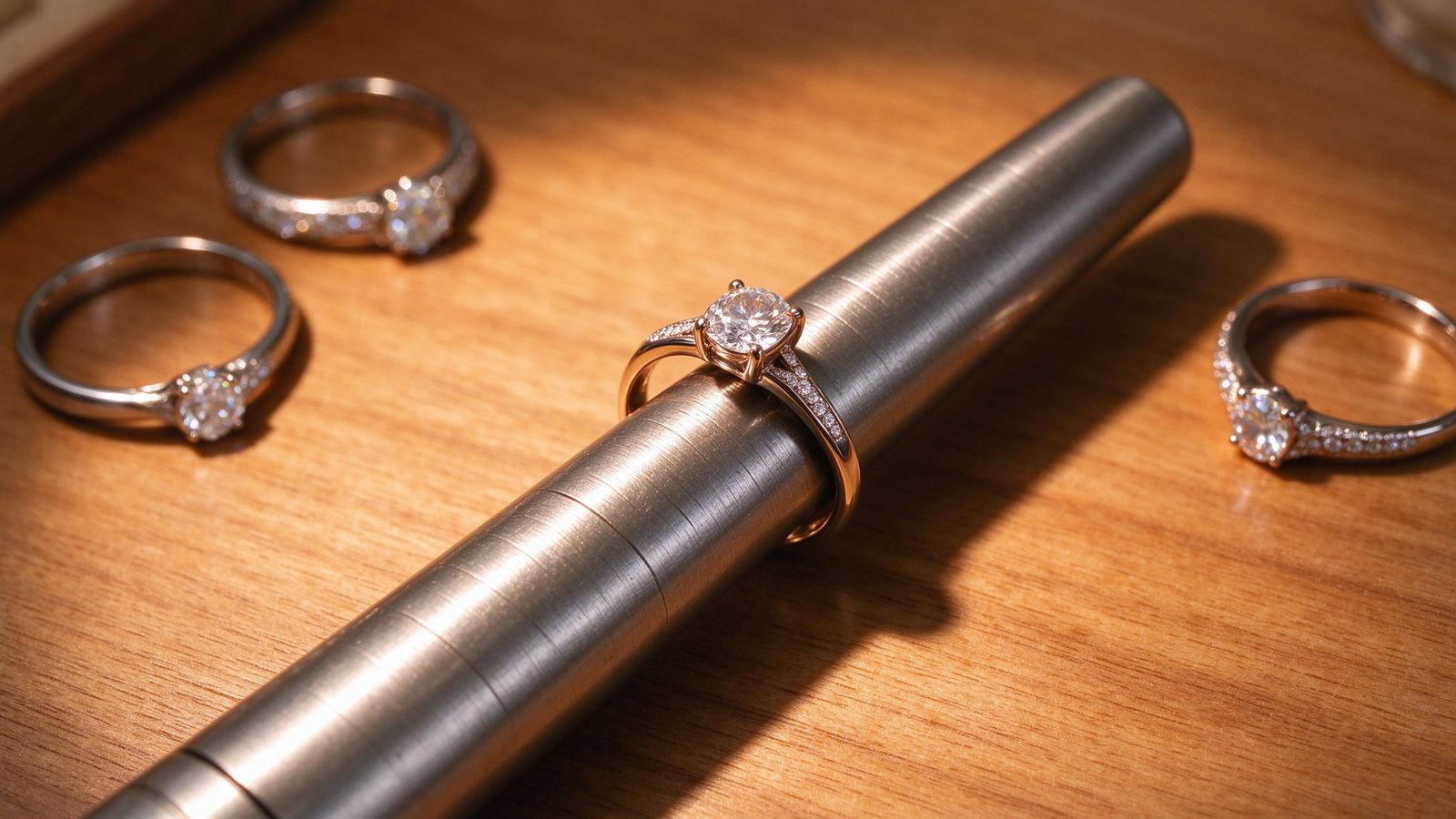
Rings should stand upright in padded slots or rest individually in small cushions, never stacked on top of one another. A diamond ring lying flat against a gold band will scratch it, and a prong can catch on another piece. Ring slots keep each ring secure and upright, and let you browse your collection without touching every piece. For valuable engagement rings, consider a locked compartment for extra security.
Earrings should be stored as matched pairs with the backs on, in small pockets or on an earring card. Leaving the back off means the post scratches other pieces and the back itself vanishes. Stud earrings can be pushed through a card into their own plastic pocket, while dangling earrings should lie flat so their drops do not tangle. Never dump earrings into a shared dish, because the posts scratch and the pairs separate.
For valuable rings and earrings, keep them away from the edge of the box where they can be knocked when you reach for something. A mirrored jewelry chest looks lovely but means pieces sit out in the open air; a closed lined drawer or armoire is safer for daily pieces and better for silver tarnish control.
Storing Necklaces to Prevent Tangling
Necklaces tangle because chains are flexible and curl into each other when stored loosely. The fix is to keep each chain stretched or clasped. Hang necklaces on individual hooks where they hang freely, or lay them flat and clasped in a long pocket. Never drop two necklaces into a shared pile, because a tangled fine cable chain can take an hour to untangle and often breaks in the attempt.
For travel, a necklace roll with individual loops keeps chains separated. At home, simple adhesive hooks or a necklace stand let chains hang straight and untangled. Pendants should hang below the chain so they do not fold and kink. Clasp every necklace before storage, because a clasped chain cannot knot. This one habit prevents the single most frustrating jewelry storage problem.
Store silver necklaces in anti-tarnish pouches, because chains tarnish fastest when air reaches them. Fine gold chains can lie flat in a soft pocket. Keep heavier chains separate from delicate ones, because a thick curb chain can tangle around a fine cable chain and bend it. A little separation here saves hours of untangling later.
| Item | Best Storage | Avoid |
|---|---|---|
| Rings | Padded slots, upright | Stacked together |
| Stud earrings | Card with backs on | Loose in dish |
| Necklaces | Hung or clasped flat | Piled together |
| Silver | Anti-tarnish pouch | Open air |
| Pearls | Soft cloth, flat | Plastic bags |
Storing Silver and Preventing Tarnish
Silver tarnishes when exposed to air and moisture, so silver storage is about isolation. Keep each silver piece in an anti-tarnish bag or a sealed plastic pouch with the air squeezed out. Add an anti-tarnish strip or a small piece of chalk, which absorbs sulfur and moisture. A felt-lined jewelry box with anti-tarnish lining achieves the same result. Never leave silver out on a vanity where it collects air and humidity.
Dry every silver piece completely before storing it, because moisture accelerates tarnish. Wipe it with a soft cloth after wearing, let it air for a few minutes, then seal it away. Avoid storing silver near rubber bands, wool, or carpet, because these materials release sulfur that speeds tarnish. A cool, dry drawer is ideal; a humid bathroom drawer is a tarnish factory.
Rotate silver pieces into regular wear, because the friction of wearing keeps them bright. A piece forgotten in a pouch for a year will be black when you find it, though it cleans up easily. The goal is storage that slows tarnish between wears, not permanent isolation. With anti-tarnish lining and dry pouches, silver stays bright for months.
Travel Jewelry Storage
Travel is when jewelry gets lost or damaged. Use a padded jewelry roll with individual loops and pockets, not a plastic bag in a suitcase. Lay necklaces flat in their loops, clasped, and put rings and earrings in the pockets. Keep the roll in your carry-on, never in checked luggage, both for security and to avoid the rough handling of baggage.
When staying in a hotel, unpack the roll into a drawer or on a soft surface, not on the edge of a sink or where pieces can be knocked into a drain. Never leave jewelry on a hotel bedside or bathroom counter, because it is the most common place it gets left behind. Use the hotel's safe for valuable pieces when you are out.
Pack only what you need, and pair earrings and necklaces deliberately so you do not overpack. A small cleaning cloth in the roll lets you wipe pieces after wearing. With a dedicated travel roll, your jewelry arrives in the same condition it left, rather than tangled, tarnished, or lost.
Daily Habits That Protect Your Collection
A few evening habits make storage effortless. After taking jewelry off, wipe each piece with a soft cloth to remove skin oils and lotion, let it dry, then return it to its own slot or pouch. This quick step prevents buildup and means pieces are clean when you next wear them. Never put jewelry on while spraying perfume or hairspray, and take it off before showering.
Keep a small dish by the bathroom sink and by the bed, so rings and earrings have a safe temporary home during handwashing or sleeping, rather than being set on a counter where they can be knocked off. This prevents the two most common jewelry losses: down drains and hotel countertops. Treat storage as part of the wearing ritual, not a separate chore.
Finally, inspect pieces as you put them away. Notice a loose prong, a worn chain link, or a tarnished silver piece, and address it promptly. A well-stored, well-maintained collection stays beautiful for decades, and the pieces you wear become the heirlooms you pass on. Good storage is how everyday jewelry becomes lasting jewelry.
Travel and Everyday Storage Habits
Daily storage habits prevent most jewelry damage. After wearing each piece, wipe it with a soft cloth to remove skin oils, let it dry, and return it to its own slot or pouch. This quick routine prevents buildup and means pieces are clean when next worn. Never set jewelry on a bathroom counter, where it can be knocked into a sink or drain. A small dish by the bedside and by the sink gives pieces a safe temporary home.
Keep a consistent system so you always know where each piece is. Rings in slots, necklaces hung or clasped in pockets, earrings paired with backs on. When storage is a habit, you never lose an earring back or knot a chain. A divided jewelry box, an armoire, or even labeled pouches in a drawer all work, as long as each piece has its place.
For travel, a padded jewelry roll with individual loops protects pieces on the road. Never pack jewelry loose in a suitcase, where it knocks against keys and cosmetics. Keep the roll in your carry-on. On arrival, unpack into a drawer, not a bathroom counter. These habits protect pieces both at home and away, so nothing gets lost or damaged.
The best storage system is the one you actually use. A fancy box you do not return pieces to is useless. Build the habit of wiping and returning each piece as you take it off, and your collection stays organized and beautiful. Good storage is not about an expensive box; it is about a small, consistent ritual that protects what you own.
Building a Jewelry Care Habit
Great storage is ultimately a daily habit, not an expensive box. After taking off jewelry, wipe each piece, let it dry, and return it to its own place. This thirty-second ritual prevents buildup, tangling, and tarnish, and it means you always know where everything is. Over time, the habit becomes automatic, and your collection stays organized and beautiful with almost no effort.
Inspect pieces as you put them away. Notice a loose prong, a worn clasp, or a tarnished silver piece, and address it promptly. A well-stored, well-checked collection avoids the broken-drawer problem where neglected pieces deteriorate. Treat storage as part of wearing jewelry, not a separate chore.
Rotate pieces so nothing sits forgotten. Wear silver often, because use keeps it bright. Mix up rings and necklaces so each gets air and wear. A collection that is used and returned to its place stays lovelier than one locked away. Good storage is how everyday jewelry becomes lasting jewelry, protecting the pieces you love for years.
Storage for Different Metals
Different metals need slightly different storage. Silver needs airtight, anti-tarnish storage with anti-tarnish strips, because it darkens on exposure. Gold and platinum need separation from each other and from diamonds, which scratch them. Pearls need to breathe, so store them in a soft cloth pouch, not sealed plastic. A divided box with soft lining handles all of these: silver in sealed pouches, gold and platinum in separate slots, pearls in their own cloth pockets. Matching storage to the metal prevents tarnish, scratches, and damage.
Keep everything dry. Moisture accelerates tarnish and can dull finishes, so never put jewelry away wet. Wipe pieces, let them air, then store. A cool, dry drawer beats a humid bathroom. With the right storage per metal, your collection stays bright, untangled, and scratch-free for years, ready to wear whenever you are.
How We Pack and Protect Jewelry for Transit
Storage begins long before a piece reaches your drawer, because shipping is itself a test. At our workshop, every ring goes into its own padded slot, every necklace is clasped and laid flat, and earrings are paired with backs on, before anything is boxed. We do this because we know that scratching, tangling, and lost backs happen in transit as often as at home. A piece that arrives in perfect condition sets the standard for how the owner should store it.
When you unpack, keep that separation going. Give each piece its own soft pouch or compartment, clasp necklaces, and keep silver sealed against tarnish. Treat the jewelry as we packed it: protected, separated, and dry. That habit means the piece stays as flawless as the day it left the bench. Good storage is really just continuing the care that began when we packed it, and it keeps your collection beautiful for years.
Building a Long-Term Storage Habit
Good storage is a habit, not a one-time box purchase. After wearing, wipe each piece, let it dry, and return it to its own spot. Inspect prongs and clasps as you put pieces away, so small issues do not worsen in a drawer. Rotate pieces so nothing sits forgotten, and wear silver often, because use keeps it bright. A divided box, anti-tarnish pouches for silver, and a cool dry drawer do the rest. Treat storage as part of wearing jewelry, and your collection stays organized, bright, and scratch-free for years.
Frequently Asked Questions
What is the best way to store necklaces?
Hang them on individual hooks or lay them clasped flat in their own pocket. Never pile chains together, because they knot, and always clasp each chain before storage.
How do I keep silver jewelry from tarnishing?
Store each piece sealed in an anti-tarnish bag with an anti-tarnish strip or chalk, keep it dry, and avoid humid drawers and rubber or wool contact.
Should I store rings in a box or out in the open?
In a lined, divided box with padded slots. Open storage lets rings scratch against each other and exposes silver to tarnish.
How do I pack jewelry for travel?
Use a padded jewelry roll with individual loops, keep it in your carry-on, and never check it in luggage. Unpack into a drawer on arrival, not on a bathroom counter.
Can diamonds scratch my other jewelry?
Yes. Diamonds scratch gold, silver, and softer gems, so store diamond pieces in their own slot, never jumbled with the rest.
Great jewelry storage is simple: separate every piece, line surfaces softly, keep silver sealed and dry, clasp and hang necklaces, and pack carefully for travel. These habits take seconds each evening but prevent the scratches, tangles, tarnish, and losses that ruin jewelry. Treat your storage as an extension of how you wear and value your pieces, and your collection stays beautiful, organized, and ready to wear for decades.