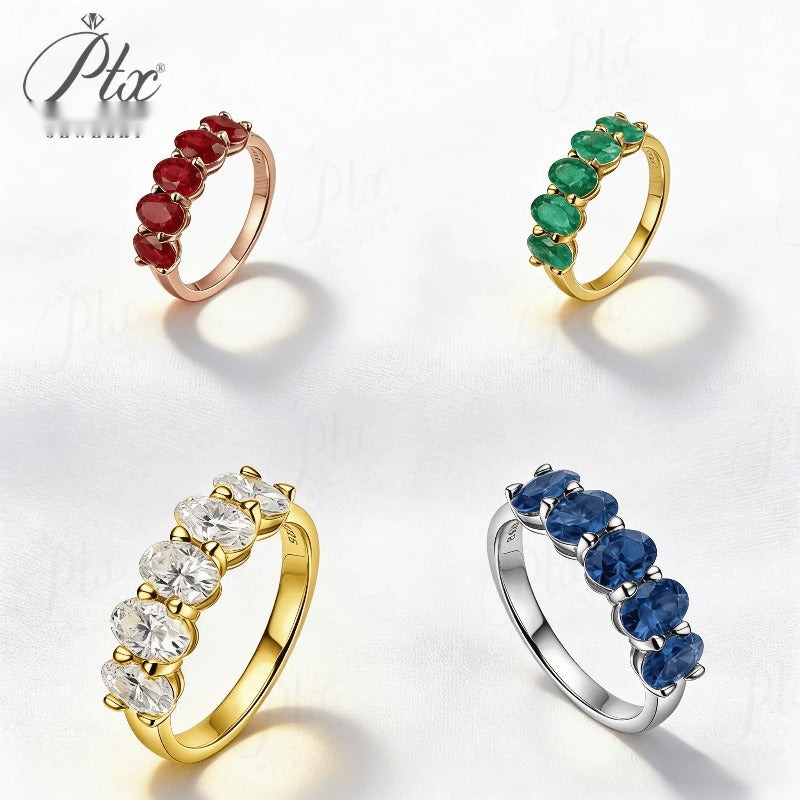
Most engagement-ring conversations focus on the center stone. But the small gems flanking it—the accents—do at least as much to determine how the ring looks on a hand. Accents widen a finger, lengthen a finger, add sparkle, and quietly add 10 to 30 percent to the budget. Choosing them deliberately is as important as choosing the center.
What accents actually do
A side stone serves one of four jobs. It frames the center (trillions, tapered baguettes). It extends sparkle along the band (pavé). It anchors the center with a halo of small stones. Or it matches the center in a three-stone layout.
Each job changes the visual effect on the finger. A wide two-trillion setting makes a round center look broader. A slim tapered-baguette setting lengthens the finger. A pavé band reads delicate and sparkly; a channel band reads modern and smooth.
Pavé accents
Pavé sets tiny diamonds in small bead cups along the band. It is the most popular accent style because it is romantic, sparkly and relatively affordable. Downside: the small beads wear over time and need tightening; pavé rings are also harder to clean because dirt lodges between the beads.
If you like pavé but want less upkeep, micro-pavé with stronger beads wears better than the very delicate early styles. Our setting types guide breaks down the tradeoffs.
Channel and bar accents
Channel setting lines small diamonds between two metal rails. It is smooth, durable and easy to clean—no prongs catching on sweaters. Bar setting uses thin vertical bars between stones. Both styles read modern and work well for active wearers.
Channel and bar settings are also the most stacking-friendly. They sit flush against a wedding band without the pavé beads rubbing.
Trillion and baguette side stones
Two larger accents on either side of the center—rather than a row of small stones—make a deliberate statement. Trillions are triangular and widen the setting; they suit an oval or pear center. Baguettes are step-cut rectangles, and tapered baguettes narrow toward the band—the classic "cathedral" look that elongates the finger.
Larger side stones cost more per pair than pavé, but they age well and read sophisticated. They also match the center stone's quality more visibly: a low-clarity side diamond will stand out next to a clean center.
How much budget to put into accents
A reasonable rule of thumb is to spend 10 to 20 percent of the ring budget on accent stones. Beyond 30 percent, the accents start to compete with the center for attention, and the ring reads as a "setting" rather than a center stone.
If you are weighing halo vs. solitaire as a starting point, our halo vs. solitaire guide covers how the halo style changes perceived size. For three-stone layouts specifically, our three-stone guide walks through the math of middle vs. side stone proportions.
Match the center, do not compete
The most common mistake is choosing side stones that outperform the center. A pair of well-cut baguettes next to a muted round center exposes the center's weaknesses. Match the color grade closely, and keep side stones a touch lower in clarity than the center—not higher.
Accents are also where treatment and origin choices matter. If your center is a lab-grown diamond, choose accents consistently; mixing mined and lab side stones in the same band is rarely worth the inconsistency.
Upkeep
Matching accents to the center shape
The shape of your center stone should guide the accent shape. Round centers pair well with pavé bands or tapered baguettes. Oval and pear centers take trillions well, because the triangular sides mirror the taper. Emerald and asscher centers look cleanest with baguettes of the same step-cut style—mixed cuts next to a step-cut center can look busy.
Accent size also affects finger width. Large trillions add visible width; slim pavé adds length. If you have a wider finger and want the ring to read delicate, lean toward pavé. If you have a slim finger and want presence, a wider two-stone side setting reads balanced.
One underrated option is to use a colored accent. Small sapphires or tsavorite on a band next to a white diamond center add personality without much cost, and they wear harder than pavé diamonds on the underside. It is a way to make the ring feel yours rather than a catalog default.
Accents are also where your ring gains a signature. A plain solitaire is elegant but generic; a pair of tapered baguettes or a thin pavé band gives the piece a character that is harder to mistake. It is worth spending the time to choose deliberately rather than letting the catalog decide.
Whatever accent style you choose, plan for a prong check every 12 to 18 months. Small stones loosen faster than a center, and pavé beads especially need attention. A ring with well-chosen accents is one of the most personal pieces you will own—it just asks for a little maintenance.
Gemstone grading terminology used here follows the Gemological Institute of America’s gem encyclopedia.
Related reading: How Long Does a Bespoke Engagement Ring Take?, Engagement Ring Budget, Engagement Ring Shapes.
Frequently Asked Questions
What ring sizes can you supply in bulk?
US sizes 5–12 including half sizes. Send a size breakdown with your order and we cast to that curve; comfort-fit inner bands reduce resize requests.
Can I order a mixed size run instead of one size?
Yes. Mixed runs are standard for wholesale: specify quantity per size and we pack and label by size at no extra labor cost.
What is the MOQ for custom ring designs?
50 pieces per design for existing molds; 100–300 pieces when a new mold or CAD model is required.
How should I price rings for retail margin?
Most partners use a 3–4x markup on FOB cost for sterling and 2.5–3x for moissanite solos, which keeps landed cost under 30% of retail.


