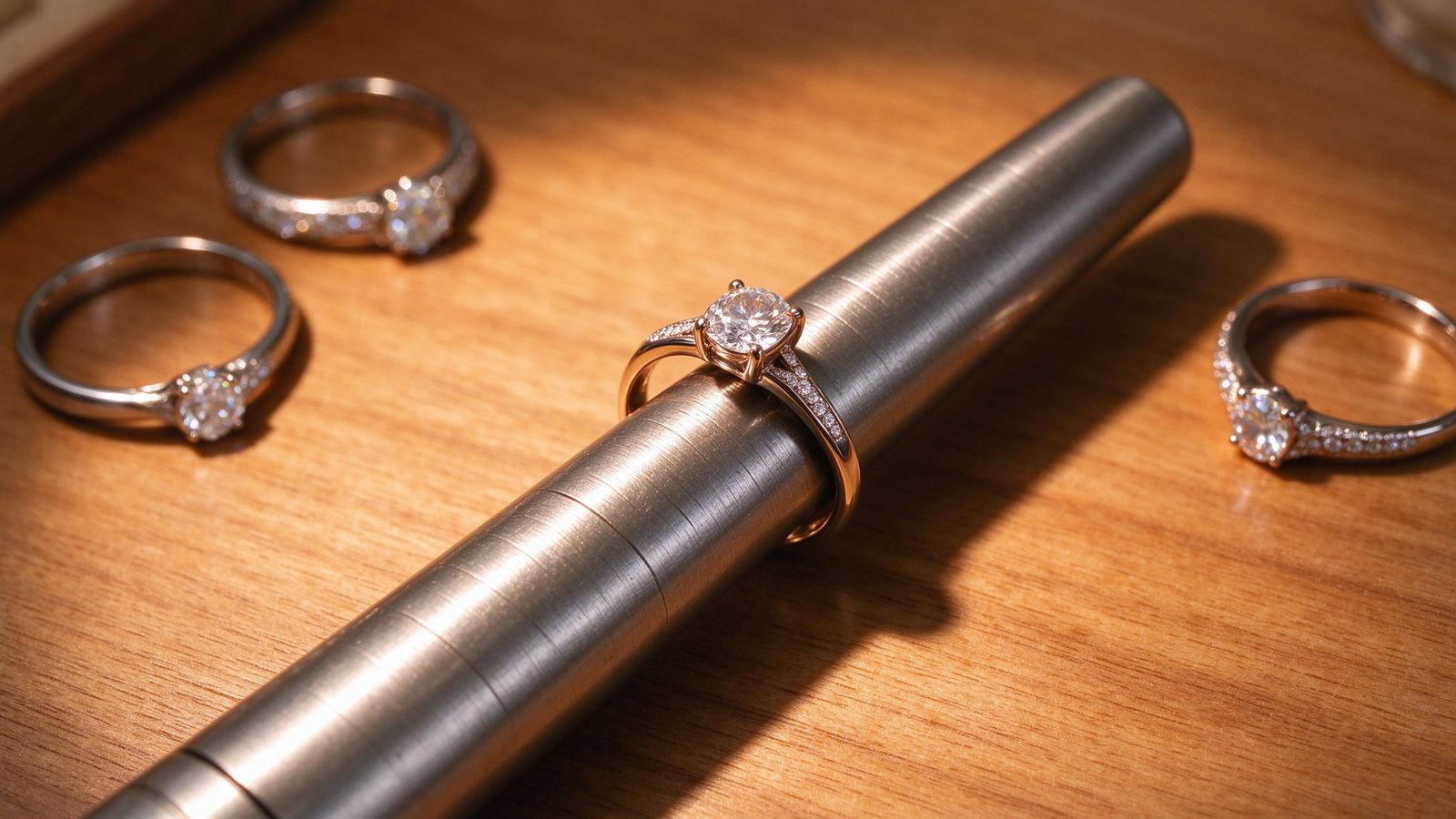
How to Choose an Engagement Ring Shape: 9 Cuts Compared
The shape of a diamond is the first thing people notice and the decision that most defines a ring's personality. Yet many buyers treat shape as a purely aesthetic afterthought when it actually drives brilliance, price, finger-flattering effect, and even durability. A round brilliant costs more because of its wasted rough and its unmatched light return, while an elongated oval can make a short finger look longer and a smaller carat look larger. Choosing the right shape is therefore a strategic decision, not just a taste call.
This guide compares the nine most popular engagement ring shapes side by side, explains how each one behaves on the hand, and helps you match a shape to a lifestyle, a finger type, and a budget. By the end, you should know exactly which cut will make your center stone look its best.
Round Brilliant: The Timeless Standard
The round brilliant is the most popular engagement ring shape for a reason: it is mathematically engineered for maximum sparkle. With fifty-eight facets arranged in a precise pattern, a well-cut round diamond returns more white light, or brilliance, than any other shape. Roughly one third of the weight of the original diamond crystal is lost during cutting, which is why round brilliants carry a price premium of twenty to thirty percent over fancy shapes of the same carat weight.
Round shapes are universally flattering and never go out of style, making them the safest choice if you want a ring that will still look classic in thirty years. They also hide minor inclusions well because the busy facet pattern distracts the eye. The trade-off is that a round diamond of a given carat weight looks smaller on the finger than an elongated fancy shape of the same weight, because its width is constrained by its circular geometry. If timeless sparkle is the priority, the round brilliant is the gold standard, and it pairs beautifully with solitaire, pavé, and halo settings alike.
Oval and Marquise: Elongated, Finger-Lengthening
Oval and marquise cuts are elongated shapes that extend the finger and maximize visible surface area. Because their length spreads weight across a larger footprint, an oval of one carat often appears as large as a 1.2 carat round. That optical generosity is why ovals have surged in popularity: they deliver presence on a budget. The modern oval cut features a soft, rounded outline and excellent light performance, though poorly cut ovals can show a dark bowtie shadow across the center, so always compare stones in person or by video.
The marquise is even more elongated and was popularized in the eighteenth century when King Louis XV commissioned a diamond shaped to match his mistress's lips. Marquise rings are elegant and exceptionally finger-lengthening, but their pointed tips are vulnerable to chipping, so a V-shaped prong at each tip is essential. Both ovals and marquises suit narrower or shorter hands because their vertical line draws the eye downward and creates a slimming effect.
Cushion and Princess: Brilliant vs Square
The cushion cut is a square or rectangular shape with rounded corners and large, soft facets. It blends the fire of a round with a romantic, vintage feel, and modern cushion cuts use a modified brilliant facet pattern that gives them plenty of sparkle. Cushions tend to show color more readily than rounds, so buyers often step up to a higher color grade. Their rounded corners also resist chipping, which makes them a practical daily-wear choice.
The princess cut is the angular counterpart: a square shape with sharp corners and brilliant-cut facets on the surface. It offers excellent sparkle and typically costs ten to twenty percent less than a round of the same quality because its efficient shape preserves more rough. Princess cuts are modern and geometric, but their exposed corners are prone to chipping unless protected by a V-prong. Choose cushion for a soft, romantic look and princess for a crisp, contemporary square.
Emerald and Asscher: Step-Cut Elegance
Emerald and asscher cuts are step cuts, meaning their facets run in parallel lines like a hall of mirrors rather than radiating outward. Instead of fiery sparkle, they offer a sleek, glassy clarity and a dramatic open-table reflection. Because step cuts lack the busy facet pattern that hides inclusions, they demand higher clarity grades; an eye-clean VS or better is essential, since the large open table makes internal features easy to see.
The emerald cut is rectangular with clipped corners and conveys an art-deco, architectural elegance. It has become a favorite among buyers who want something understated and sophisticated rather than flashy. The asscher cut is the square cousin, similar in spirit but with a more compact, stacked appearance and a distinctive concentric square pattern. Both shapes reward confident, minimalist settings: a clean bezel or solitaire lets the stone's long horizontal lines speak for themselves.
Pear and Heart: Shaped Statements
The pear cut combines a rounded end with a pointed tip, resembling a teardrop. It is one of the most finger-flattering shapes because its asymmetry draws the eye downward, and it can be worn point-up or point-down depending on taste. Pear shapes offer the footprint of an oval with a little extra drama, but like marquises, their tips need protective prongs and the stone should be balanced so the point lines up cleanly with the band.
The heart cut is the most overtly romantic shape and a sentimental choice, though it is notoriously difficult to cut well. A well-proportioned heart has two rounded lobes of equal size and a soft cleft; a poorly cut heart looks lopsided and loses sparkle. Because heart shapes are less forgiving of cut mistakes, they usually require a higher budget to get right, and they work best as the centerpiece of a delicate solitaire where the shape can be fully appreciated.
Matching Shape to Finger, Lifestyle, and Setting
The right shape depends on three practical factors beyond taste. Finger length and width matter: elongated shapes like oval, pear, and marquise lengthen shorter fingers, while wide shapes like cushion and emerald balance long, slender hands. Lifestyle matters too: active people should favor rounded-corner shapes like cushion, oval, or round, which resist chipping, over sharp-cornered princesses or fragile heart cuts.
Setting choice interacts with shape as well. A halo amplifies smaller stones and is especially effective on round and cushion shapes. Bezel settings suit step cuts because they frame the clean lines, while solitaire settings let elongated shapes shine. When sourcing wholesale, request a high-resolution video of each candidate shape in the exact size and grade you are considering, because the same cut grade can look dramatically different from one manufacturer to the next.
Matching Shape to Metal and Setting
The shape you choose interacts with the metal and setting in ways that change the final look. A bright white platinum or white gold setting makes a cool, colorless stone appear whiter, and it pairs beautifully with a cool round or oval. A warm yellow gold setting brings out the softer tones of a champagne or near-colorless stone and complements a vintage cushion or emerald cut. Rose gold adds a romantic, modern flush that makes a pear or oval feel especially feminine. Choosing the metal deliberately is part of choosing the shape.
The setting style also suits certain shapes. Halo settings flatter elongated and cushion shapes by boosting visible size, and they turn a modest center stone into a statement. Bezel settings suit step cuts like emerald and asscher, because the clean rim frames their architectural lines. Solitaires let a round or oval shine without distraction. When you combine shape, metal, and setting intentionally, the ring reads as designed rather than assembled.
Consider the wearer's existing jewelry too. If she already wears mostly white metals, a platinum setting is the cohesive choice. If her style is vintage and warm, yellow gold with a cushion or emerald cut will feel most like her. The shape should not be chosen in isolation; it is one element of a coordinated look that she will wear every day.
When sourcing wholesale, offer shape-and-metal pairings as curated looks. A round in platinum, an oval in rose gold, an emerald in yellow gold, gives customers a starting point that already works. This reduces decision paralysis and helps buyers visualize the finished ring, which makes the sale smoother and the result more satisfying.
How Shape Changes the Way the Ring Wears
Beyond looks, shape affects how a ring wears on a real hand. Elongated shapes like oval and marquise draw the eye along the finger, which can lengthen the hand, but their longer profile means they may catch on things more than a round. Shapes with pointed tips, like pear and marquise, need protective V-prongs because the tips chip more easily. Rounded shapes like cushion and round are the most forgiving for active wearers.
The size illusion also matters in daily life. An oval of one carat reads larger than a round of the same weight, which is delightful for the wearer who wants presence. But that same elongated shape can look oversized on a very small finger, so proportion between stone and hand matters. A good rule is that the stone should balance the finger, not overwhelm it. Trying shapes on, or looking at photos on a similar hand, helps judge this.
Lifestyle should drive the final shape. If she works with her hands, cooks, gardens, or plays sports, a rounded, prong-protected shape like a cushion or round is the practical choice. If she wants maximum sparkle and lives a low-impact life, an emerald cut or a pavé halo can be indulged. The most beautiful ring is the one she actually feels comfortable wearing daily, not the one that spends its life in a jewelry box for fear of chipping.
Finally, think about future stacking with a wedding band. A high-profile solitaire in any shape may leave a gap that needs a contoured band. A low-set shape sits flush and pairs more easily. Discuss this when choosing, because the engagement ring and wedding band will live together on the finger for decades. The right shape flatters the hand, suits the lifestyle, and sits beautifully with the band that will follow.
Comparing Shapes Side by Side
The best way to choose a shape is to compare candidates side by side in person or by video, because the same grade can look very different across shapes. A round brilliant and an oval of the same carat read completely differently on the hand. Request videos of each shape in the size and metal you are considering, worn on a hand, so you can judge the real proportions rather than a flat product photo. Online, ask the wholesaler for a short clip rotating the ring.
Consider how each shape ages with everyday wear. Rounded shapes like round and cushion are the most chip-resistant and suit active owners. Shapes with points, like marquise and pear, need protective V-prongs. Step cuts like emerald and asscher look sleek but show inclusions more, so they need a cleaner stone. Matching the shape to how the ring will actually be worn prevents a beautiful but fragile choice.
Trust your emotional reaction. After comparing facts, the shape that makes your hand light up is the right one. Some buyers are drawn to the classic round, others to the modern oval, others to the architectural emerald. There is no universally best shape, only the one that feels like yours. Compare carefully, then choose the shape you will still love wearing in thirty years.
Trying Before Buying
The most reliable way to choose a shape is to try options on your own hand, because proportions look different in person than in photos. If trying rings in a store is impractical, ask a wholesaler for videos of the same shape on a similar hand, with a ruler for scale. A 1.2 carat oval and a 1.0 carat round can look surprisingly close in a flat product shot, but on the finger the difference is clear. Seeing the shape in motion and under different light removes the guesswork.
Consider how the shape reads over decades. Trends favor certain shapes for a few years, but the shape you choose should still feel right when fashions change. Round, cushion, and emerald cuts are timeless; very trendy shapes date more quickly. A solitaire in a classic shape is the safest long-term choice, while a colored stone in an on-trend shape is a more personal statement. Choose what you love, not what a trend says you should buy.
Finally, think about maintenance. Shapes with pointed tips and visible corners need protective prongs and more frequent inspection. Rounded shapes are lower maintenance for active owners. When you combine a shape that flatters your hand, suits your lifestyle, and feels timeless, you choose a ring you will not second-guess. Try it, compare it, and trust the shape that makes your hand light up every time you look at it.
Frequently Asked Questions
Which diamond shape looks the biggest?
Elongated shapes such as oval, pear, and marquise spread their weight over a larger surface area, so they appear larger than a round of the same carat weight. An oval of one carat often reads as a 1.2-carat round on the finger.
Which diamond shape sparkles the most?
The round brilliant is engineered for maximum brilliance and light return, out-sparkling every other shape. Cushion and modified oval cuts come closest for buyers who want a fancy shape with strong sparkle.
Which shape is best for short fingers?
Elongated shapes such as oval, pear, and marquise draw the eye vertically and make shorter or wider fingers look longer and slimmer. Round and cushion also work well.
Do fancy shapes cost less than rounds?
Yes. Because they preserve more of the rough crystal, oval, princess, cushion, and emerald cuts typically cost ten to thirty percent less than a round of the same carat, color, and clarity.
Which shapes are most durable for daily wear?
Rounded-corner shapes like round, cushion, and oval resist chipping. Sharp-cornered princesses and pointed marquise or pear tips need protective V-prongs and are slightly more fragile.
Choosing an engagement ring shape is where taste meets engineering. The round brilliant remains the timeless, sparkling default, but elongated ovals and pears offer surprising size for the money, cushions and princesses deliver square personality, and emerald and asscher cuts reward a sophisticated, minimalist sensibility. Match the shape to your finger, your daily life, and your setting, and always inspect candidates by video before committing. The right shape does more than look beautiful, it makes every carat you spent work as hard as it possibly can.