Clients occasionally hand us a printed receipt and say, "This should cover my ring for insurance, right?" It should not, and almost no insurer will accept it. An appraisal is a specific document with specific jobs, and most of the confusion we see comes from people treating a purchase slip like a valuation. Let us untangle it the way we explain it to couples walking out the door with a new ring. The worst time to learn how insurance works is the night a ring is lost at a beach. Get the paper right now, while the stone is still on your finger.
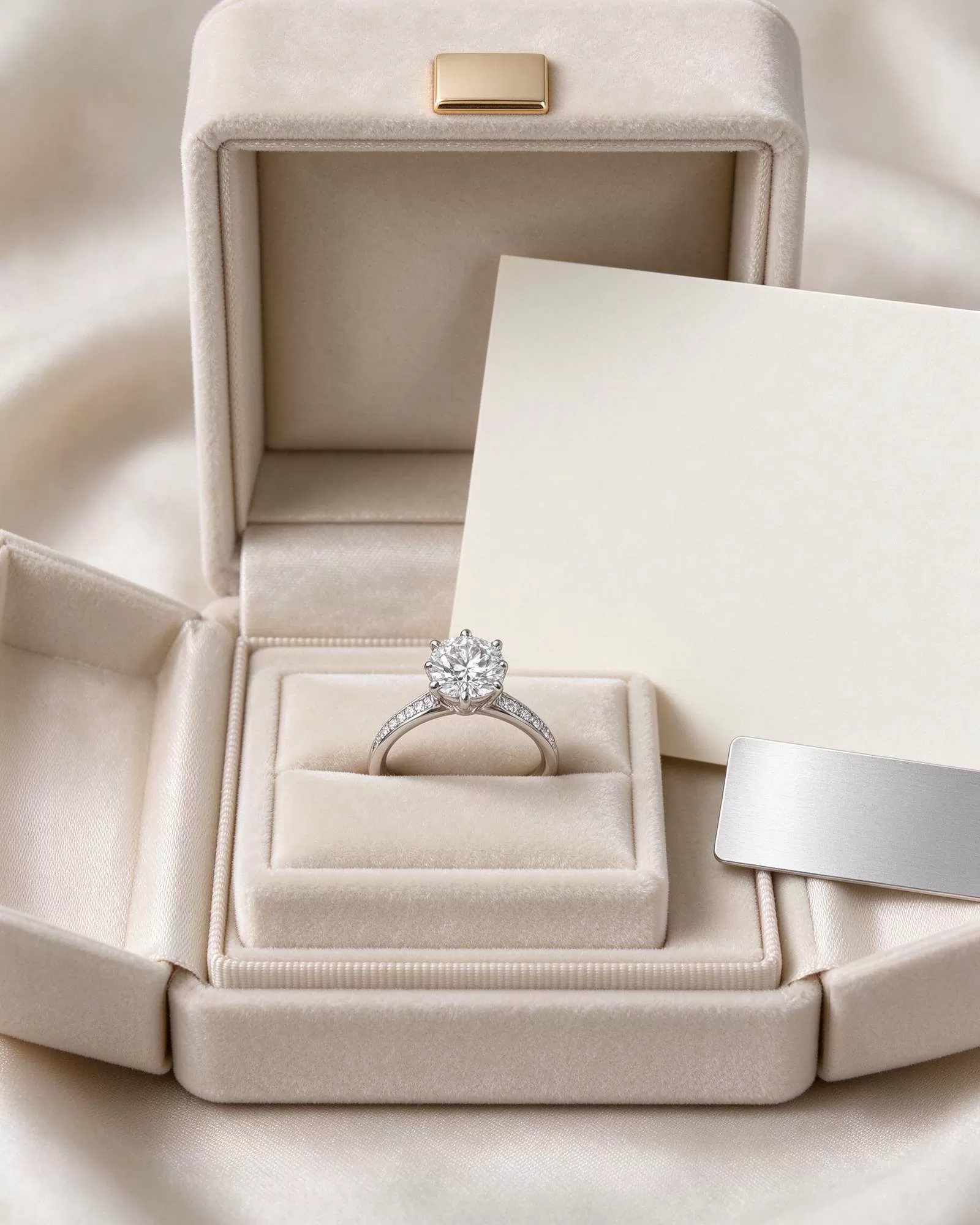
What an Appraisal Actually Is
An appraisal is a written opinion of value, prepared by a qualified gemologist or appraiser, describing the piece in enough detail that a stranger could identify it and replace it. It is not the price you paid. It is the replacement value: what it would cost today to buy, or remake, an equivalent piece. Your receipt shows what you spent; the appraisal shows what an insurer owes you if it is lost. The gap between those two numbers is exactly why insurers insist on a separate document. They are not trying to avoid paying. They are trying to avoid paying the wrong amount for the wrong ring.
What a Proper Appraisal Contains
- A full description: metal, karat, weight, dimensions, and hallmarks.
- Center stone details: species, carat, cut, color, clarity, and any treatment.
- Side stones and melee counts, sizes, and weights.
- Markings, engravings, and distinguishing features.
- The replacement value in dollars, stated as of a specific date.
- The appraiser credentials, signature, and contact information.
Receipts, Certificates, and Appraisals Are Different Things
A lab certificate grades the stone on its own. It says nothing about the setting, the metal, or the labor. A receipt says what you paid. Only an appraisal ties the stone, the setting, and the labor together into a single replaceable value. You need all three documents together: the certificate for the stone, the receipt for provenance, and the appraisal for the insurer. Clients often think the GIA paper is enough. It is not. It describes the diamond, not the hand-engraved 14K mounting you chose around it. That mounting has value, and the insurer needs to know about it.
Why Replacement Value Is Higher Than What You Paid
This surprises people. You paid forty-five hundred and the appraisal says six thousand. That is normal. Replacement value assumes the insurer must replace the ring at retail, possibly at a rush, possibly with a different stone that matches your description. If the piece is bespoke, replacement means rebuilding it from scratch, which is more expensive than the original studio price. The higher number is protecting you, not inflating it. If you insure only what you paid, you will be under-insured on the day you need the policy, and the check will not cover what the ring actually costs today.
How Often to Re-Appraise
Every two to three years. Gold and platinum prices move. Diamond prices move. A ring appraised in 2022 can be meaningfully under-insured by 2026. If you have done a major reset, added stones, or re-sized dramatically, re-appraise immediately. Many insurers require an updated appraisal when you increase coverage. Set a phone reminder. We have seen clients lose a ring and discover their policy still reflects the 2019 value, which meant a five-figure gap they had to absorb themselves.
Insuring Bespoke Pieces Specifically
Bespoke jewelry has a wrinkle mass-produced rings do not: design and labor. When you insure a custom ring, confirm the policy covers matching or replacing the design, not just a generic ring of similar metal weight. Ask the insurer directly: if lost, will they pay to recreate this exact design, or only a comparable off-the-shelf piece? The answer changes which policy you buy. Keep the original CAD files and the workshop drawings in your cloud folder. If the ring is ever lost, those files are what let a workshop rebuild it exactly, and they are what justifies the replacement value.
Document Everything Now
Before anything happens, photograph your jewelry against a ruler and a color card. Keep the photos, the certificate, the receipt, and the appraisal in a single folder, cloud-backed. If a ring is ever lost or stolen, that folder is what turns a claim into a payout within weeks rather than months. We have seen clients wait out a claim for six months because they had no documentation beyond a blurry phone photo. Spend an hour this weekend. Take the photos. It is the most boring insurance step and the one that matters most.
Homeowners Insurance Gaps
A standard homeowners or renters policy usually covers jewelry only up to a small per-item limit, and often only for theft, not loss. Dropping the ring down a drain, leaving it in a hotel safe, or losing it on the beach is not theft. That is where a scheduled jewelry rider, or a stand-alone jewelry policy, earns its keep. Ask specifically whether loss and mysterious disappearance are covered. If the answer is no, the policy is cheaper than you think but far less useful than you hope.
Who Should Write the Appraisal
Not every paper with a dollar number on it is a good appraisal. You want a qualified gemologist or an independent appraiser, ideally a member of a recognized appraisal society, who is not also trying to sell you a new ring. There is an obvious conflict when the person valuing your ring is the same person who wants to replace it. We are happy to refer clients to independent appraisers we trust, because the appraisal needs to stand on its own. If a jeweler offers to write the appraisal themselves, ask whether they are independent of any retail interest. If the answer is no, get a second opinion.
Jewelry You Inherit
Inherited pieces are the ones most likely to be under-documented. A grandmother ring arrives in a velvet box with no paper at all. The right move is not to guess its value. Get a full appraisal that also identifies the stones: are they natural, treated, modern? We have opened heirloom rings expecting a modest stone and found a well-cut natural diamond worth far more than the family assumed. We have also opened rings expecting a family stone and found a mid-century simulant. Neither result is bad. Both are better known than unknown, because the insurance policy and the story should match the actual piece.
Stolen versus Lost: Read the Fine Print Twice
This is the clause people skip and regret. A theft claim is straightforward: file a police report, send the insurer the report, the appraisal, and the photos. A loss claim is messier. Some policies require proof that the ring was on your person when it disappeared. Some exclude mysterious disappearance entirely. If you are the kind of person who removes a ring at a sink, a gym, or a hotel, you need a policy that covers accidental loss, not just theft. The premium difference is small. The difference between a covered loss and a four-thousand-dollar surprise is not.
Multiple Pieces, One Policy
Once you have a few pieces, it makes sense to schedule them all on one rider rather than insure each separately. A single annual premium covering the engagement ring, the wedding bands, the tennis bracelet, and the earrings is usually cheaper than four stand-alone policies, and it simplifies the paperwork. When a new piece arrives, send the appraisal to the insurer and add it to the schedule. Do not wait until you have five pieces and a shoebox of papers; consolidate as you go.
What Happens If You Never Get an Appraisal
Nothing, until something happens. Rings are small and easy. They sit on fingers, in trays, in boxes. Most people go decades without a claim. The problem is that on the day you do need a claim, the absence of an appraisal costs you more than the appraisal would have ever cost. We have seen clients whose ring was covered only up to the standard homeowners sub-limit, which was a fraction of the ring value, because they never scheduled it. The premium to schedule a ring is usually one to two percent of its value per year. That is cheap protection against a total loss. The people who skip it are not saving money; they are rolling the dice.
Appraisals for Non-Ring Pieces
The same logic applies to necklaces, bracelets, and earrings. A tennis bracelet that snaps and loses half its stones at an airport is a covered loss only if it is scheduled. Studs that go down a drain at the gym are covered only if your policy includes loss. A pair of diamond studs costs more to replace than most people expect, and the insurance premium to cover them is a rounding error. Schedule the whole collection. Do not stop at the engagement ring.
Frequently Asked Appraisal Questions
Does the jeweler who sold me the ring write the appraisal?
They can, but for an independent valuation use a separate appraiser. Conflict matters.
How long is an appraisal valid?
Two to three years. After that, the value has drifted.
Do I need a separate appraisal for each ring?
Each piece on a scheduled policy needs its own description, but one visit can cover several.
What This Means For You, This Month
If you own a ring and you have never had it appraised, put it on the calendar this month. Book the independent appraiser, bring the certificate and the receipt, and walk out with a single document that describes the piece. Then call the insurer and schedule it. The whole process takes an afternoon and costs less than one dinner out. After that, set a reminder for two years from now to update it. You will forget otherwise, and so will we. The point of jewelry insurance is that you never have to think about it again. That only works if the paperwork is right from the start.
We have seen the aftermath both ways. The client with a full folder of photos, certificate, receipt, and appraisal who filed a claim on a Tuesday and had a replacement ring on her hand by the following Monday. And the client with a ring she loved, a shoebox of vague memories, and a policy that covered less than a third of what it would actually cost. The difference between those two mornings was one afternoon of paperwork done years earlier. Do the afternoon. Forget the morning. And when in doubt, over-insure slightly rather than under-insure; the premium difference is small, and the peace of mind is not. Treat the appraisal like a tax document: boring, annual, and worth every minute you spend on it. Set the reminder now, while this is on your mind. Your ring will outlast you, and the paperwork should outlast it too. That is the whole point. If you are unsure where to start, bring the ring and whatever papers you have, and we will tell you what is missing and where to get it. We do this every week, and it takes far less time than you fear. The appraisal itself is usually under an hour, and the insurance call is another fifteen minutes. By the end of the afternoon, your ring is protected and you can stop thinking about it. That is the peace of a well-done appraisal, and it is worth every penny you spend on it, today and for decades to come, starting this very year.
Closing Thought
A ring is not insured by the box it came in. It is insured by a document that describes it precisely, values it honestly, and stays current. Spend the hundred or two hundred dollars on a real appraisal, update it every few years, and then stop thinking about it. That is the point. You should not be worrying about your ring while you are wearing it.