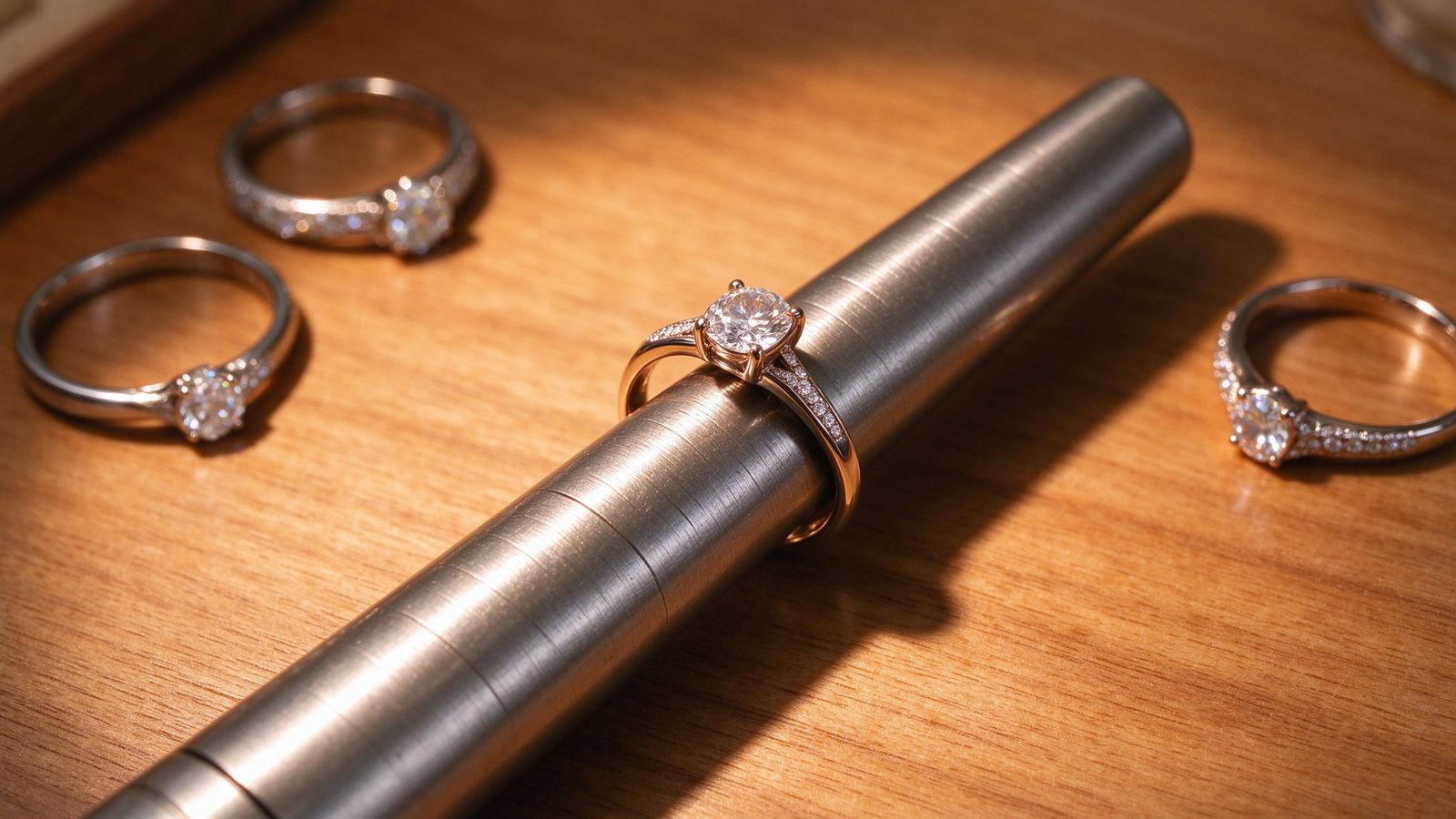
Diamond Setting Types: Prong, Bezel, Pavé, Channel and Halo Explained
The setting is the framework that turns a loose diamond into a ring, and it does far more than hold the stone. It controls how much light enters the diamond, how secure the stone is, how the ring wears, and even how large the center stone appears. Two diamonds of identical quality can look completely different depending on how they are set. Understanding the major setting types helps you choose a ring that is both beautiful and practical for daily life.
This guide compares the most common diamond settings, explains their security and sparkle trade-offs, and helps you match a setting to a lifestyle. Whether you are choosing an engagement ring or sourcing wholesale inventory, these are the setting decisions that matter.
Prong Settings: Classic and Luminous
The prong setting is the most common engagement ring style for good reason. Three to six small metal claws grip the diamond's girdle, lifting it above the band so light enters from all sides. This maximizes brilliance, because the stone is not blocked by metal. Prong settings show the most of the diamond, and a high set stone looks larger than one buried in metal. The classic solitaire is a prong setting.
Prong settings range from delicate four-prong designs, which show more stone, to sturdy six-prong settings, which distribute pressure and are more secure for larger stones. A well-made prong grips the stone tightly and is smoothed so it does not catch on clothing. The trade-off is that prongs can snag and loosen over years, which is why annual inspections matter. Thin prongs are elegant but need checking; robust prongs are safer for daily wear.
Prong setting is also versatile. It suits round, oval, cushion, and emerald cuts alike, and it pairs with pavé shoulders or a halo. For buyers who prioritize maximum sparkle and a classic look, prong setting remains the gold standard, provided the prongs are well made and periodically checked.
Bezel Settings: Secure and Modern
The bezel setting wraps a thin rim of metal around the entire edge of the diamond, cradling it like a picture frame. This is one of the most secure settings, because the stone is fully enclosed at the girdle and cannot catch on anything. Bezel settings are ideal for active owners, people who work with their hands, and anyone who worries about losing a stone. They also convey a modern, architectural, slightly vintage look.
The trade-off is that a bezel blocks some light around the edge of the stone, which can slightly reduce brilliance compared with an open prong setting. A partial or half-bezel balances security with more light. Bezel settings also protect the diamond's girdle from knocks, which is valuable for softer or included stones. Many wedding and stacking rings use bezels because they sit flush and never snag.
Bezel setting demands precision, because the rim must exactly match the stone's outline. A well-fitted bezel holds the stone firmly with no wobble. For wholesale buyers, bezel-set pieces are practical everyday sellers because customers trust their security. Choose a bezel if durability and a clean look matter more than maximum sparkle.
Pavé and Micro-Pavé: Surface Sparkle
Pavé setting covers a surface with many tiny diamonds held by minute metal beads, creating a continuous field of sparkle. The word means paved, because the small stones pave the band. Micro-pavé uses even smaller stones set under magnification for an ultra-smooth, glittering surface. Pavé shoulders add sparkle to a solitaire without overwhelming it, and a pavé band turns a ring into a statement.
Pavé looks stunning but has maintenance implications. Each tiny stone is held by a bead that can loosen over years, and the small stones collect lotion and soap, needing more frequent cleaning. A well-made pavé setting secures each stone with tight beads, while a rushed one loses stones quickly. When evaluating pavé jewelry, run a finger along the band: it should feel smooth, with no sharp beads catching skin.
For wholesale inventory, pavé pieces are popular but require honest quality disclosure. A cheaply pavé-set ring that loses stones generates returns. A well-set pavé band, with properly secured micro-stones, is a durable, high-sparkle product. The craftsmanship in pavé is what separates a luxury piece from a costume one.
Channel and Bar Settings
Channel setting places stones in a groove between two rails of metal, with no prongs visible. The stones sit side by side, held securely by the channel walls. Channel settings are smooth, comfortable, and very secure, because nothing protrudes to catch. They are popular for wedding bands and eternity rings, where a snag-free surface matters. The stones are protected on both sides, which suits active wearers.
Bar setting is similar, but small bars of metal separate each stone instead of a continuous channel. It shows more of each stone than a channel while remaining smooth. Both techniques are used for eternity bands and tennis-style pieces. The trade-off is that setting stones in a channel is precise and labor-intensive, because each stone must be exactly sized and the rails bent to hold it without pressure that could crack the stone.
Channel-set bands cannot be resized easily, because cutting the band breaks the channel. Buyers should size channel and eternity rings carefully. For wholesale, these bands are practical, comfortable bestsellers, especially for men's and wedding bands, because they sit smoothly and securely on the hand.
| Setting | Security | Brilliance |
|---|---|---|
| Prong | Good with checks | Excellent |
| Bezel | Excellent | Good |
| Pavé | Moderate, needs checks | Very high surface |
| Channel | Excellent | Good |
| Halo | Good | Boosts size |
Halo Settings: Maximum Presence
A halo setting surrounds the center diamond with a circle of smaller diamonds, which dramatically increases the visible size and sparkle. A 1.0 carat center stone in a halo can appear as large as a 1.5 to 1.8 carat stone, which is why halos are a budget-friendly way to maximize presence. The halo also adds reflected light to the center, making it look brighter. Halo settings read as glamorous and bridal.
The trade-offs are that halos are busier, the extra small stones need cleaning and prong checks, and the halo can catch on things. A thin halo is elegant, while a double halo is bold and maximalist. Halo settings are also harder to resize, because the surrounding stones constrain the band. For buyers who want the biggest visible look for the budget, a well-set halo is effective and popular.
For wholesale, halo engagement rings are consistent bestsellers because they deliver visual size at an accessible center-stone cost. The craftsmanship matters: the halo stones must be tightly set and evenly spaced, or the ring looks messy. A clean, well-proportioned halo makes a smaller center stone look stunning, which is the entire point of the design.
Choosing the Right Setting for You
The right setting balances sparkle, security, and lifestyle. If you work with your hands or are active, a bezel or channel setting protects the stone best. If you want maximum classic sparkle and can inspect prongs yearly, a prong solitaire is timeless. If you want visible size on a budget, a halo delivers. If you love continuous glitter, pavé shoulders add it without overwhelming the center.
Match the setting to the stone shape. Elongated stones pair beautifully with halos, step cuts suit clean bezels, and rounds work with almost anything. Consider how the ring stacks with a wedding band: a high prong setting may leave a gap that needs a contoured band. Try the setting on with your lifestyle in mind, because the ring you wear daily should be one you do not worry about.
When sourcing wholesale, stock a range of settings to suit different customers: prong solitaires for traditionalists, bezels for active buyers, halos for size-conscious shoppers, and pavé bands for sparkle lovers. The setting is where beauty meets practicality, and choosing it wisely is what makes a ring last a lifetime of daily wear.
Setting and Ring Size Interaction
The setting affects how a ring can be resized. A solitaire on a plain shank resizes easily. A pavé or eternity band set with stones all around cannot be cut, because the saw would damage stones. A halo setting may limit resizing to a small range. This is why sizing is so important before ordering a heavy pavé or eternity ring: there is no easy second chance.
A contoured or notched band that curves around a high setting also needs accurate sizing, because the two rings must sit together. When choosing a setting, think ahead to whether you will want to resize later. A simple solitaire is flexible; a fully set band is fixed. Plan the setting with its long-term wear in mind.
Setting Quality and Stone Security
The security of a stone depends entirely on setting quality. A well-set stone sits level, with prongs tight and smooth, and nothing catches on clothing. A poorly set stone wiggles or has sharp prongs that snag. When evaluating a ring, run a finger over the prongs: they should be uniform, rounded, and firmly against the girdle. This tactile test reveals setting quality instantly.
Pavé setting quality is especially visible: the tiny beads should grip each stone, and the surface should feel smooth. If you can feel individual beads catching, the setting is rushed. Good setting is invisible but secure, and it is what keeps a diamond on your finger for decades. Inspect this on every ring, because it is the detail that prevents lost stones.
Choosing a Setting That Lasts
The right setting balances beauty, security, and how you live. If you are active or work with your hands, a bezel or channel setting protects the stone best. If you want classic sparkle and will inspect prongs yearly, a prong solitaire is timeless. If you want visible size on a budget, a halo delivers. Consider how the ring stacks with a wedding band, and whether the setting can be resized later. A high prong setting may need a contoured band. Whatever you choose, inspect the prongs: they should be tight, smooth, and uniform. A well-set stone stays secure for decades, and the setting is what turns a beautiful diamond into jewelry you can actually wear. Match the setting to your lifestyle, and inspect it annually, and your stone stays where it belongs.
How Our Setter Secures Every Stone
Setting is the most delicate bench work we do. Our setters work under magnification, seated quietly at their benches, because a stone secured in seconds by a careless hand is a stone that falls out later. We choose the setting for the stone: a bezel for security, prongs for brilliance, pavé for sparkle, each tooled to fit the exact gem. After setting, we gently tighten each prong again after polishing, because buffing can nudge a prong loose. That double-check is how our stones stay put for decades.
When you inspect one of our rings, run a finger over the prongs. They should be smooth, uniform, and tight against the girdle, never catching on cloth. That feel is our setter's signature. A well-set stone is invisible work: you simply trust it. We choose the setting style that matches how the ring will be worn, then secure it so thoroughly you never think about it. That is the point of good setting: the stone stays where it belongs, quietly and reliably.
Matching the Setting to the Wearer
Choosing a setting is really a decision about how a ring will live. An active person who works with their hands needs a bezel or channel, which shield the stone from knocks. A buyer who wants maximum sparkle and will check prongs yearly can wear a prong solitare. Someone after visible size chooses a halo, which frames the center stone with small diamonds. We help customers match the setting to their daily life, because a beautiful setting on the wrong lifestyle is a lost stone waiting to happen.
We also consider how the ring stacks. A high solitaire may need a contoured wedding band, while a flush-set band pairs cleanly. Resizing matters too: a full eternity band cannot be cut, so sizing must be exact before setting. We walk customers through these trade-offs before the stone is set, because they are hard to undo later. The right setting balances beauty, security, and practicality, and that balance is what keeps a diamond on your finger for life.
The Prong-Check Ritual
After setting and again after polishing, our setters run a fine instrument over every prong to confirm none has loosened. This double check is how stones stay secure. A prong that is tight today can be nudged by the buffing wheel, so we re-tighten after finishing. We then round and smooth each tip so it never catches on clothing. This ritual is invisible, but it is the reason our customers rarely lose a stone. Inspect your own prongs once a year, and have them tightened if any feels rough or loose.
When you buy a ring, inspect the setting before you wear it. The stone should sit level, the prongs uniform and tight, and nothing should catch on a cotton cloth. That tactile test reveals setting quality instantly. A well-set diamond is secure and comfortable, and it stays that way for decades with an annual check.
Frequently Asked Questions
Which diamond setting is most secure?
Bezel and channel settings are the most secure, because they enclose the stone and have no protruding prongs to catch. Prong settings are secure when well made and checked annually.
Which setting gives the most sparkle?
Prong settings lift the stone and let in the most light for maximum brilliance, while pavé and halo settings add surface sparkle around the center.
Do prong settings break easily?
Thin prongs can snag and loosen over years. Well-made prongs with annual tightening last for decades. Have them inspected if they catch on clothing.
Can a halo setting make a diamond look bigger?
Yes. A halo of small stones around the center can make a 1-carat stone appear 1.5 to 1.8 carats in visible size, a budget-friendly way to boost presence.
Are channel set rings easy to resize?
No. Cutting the band breaks the channel and damages the stones, so size channel and eternity rings carefully before purchase.
The setting is where a diamond's beauty meets its practical life. Prongs deliver classic sparkle, bezels offer unbeatable security, pavé creates continuous glitter, channels sit smooth, and halos maximize visible size. Choose the setting that matches how you live, and inspect it annually to keep stones secure. When you understand these trade-offs, you buy a ring that is both gorgeous on the hand and safe on the finger for decades.