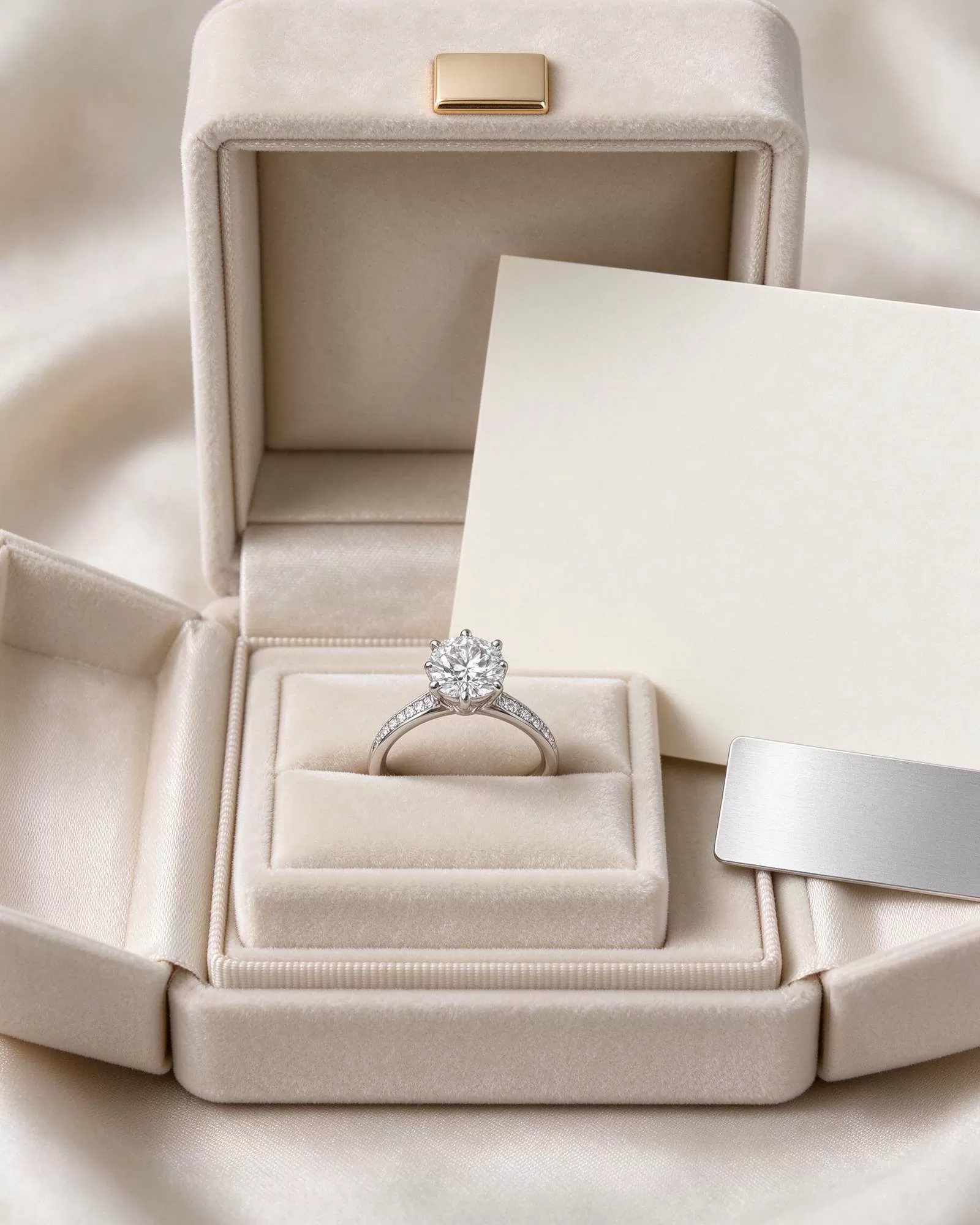
A pavé band looks effortless — a shimmering line of small diamonds running around the finger. What you do not see is the careful matching that happens before a single stone is set. Pavé diamonds are tiny, often a millimeter or two across, and if they do not match for color, size and cut, the band looks patchy rather than brilliant. This is the unseen craftsmanship behind every pavé ring we make. Here is how we select the stones that go into a pavé setting.
Why Matching Tiny Stones Is Harder Than Big Ones
A single center stone is judged on its own merits. A pavé band contains dozens of small diamonds sitting side by side, where any difference is immediately visible. One slightly darker stone among white ones reads as a smudge. One poorly cut stone reads as a dull spot. That is why we select a matched parcel — stones all within a tight color and size range — rather than using loose singles.
What We Match For
Three properties matter:
- Size. Every stone must match the next so the setting holes are evenly spaced and the line stays straight.
- Color. We keep side stones within a narrow band so the row never yellows or grays unevenly.
- Cut. Well-cut small stones sparkle; poorly cut ones look flat, so we reject dull stones even if they are cheap.
Hand Setting the Row
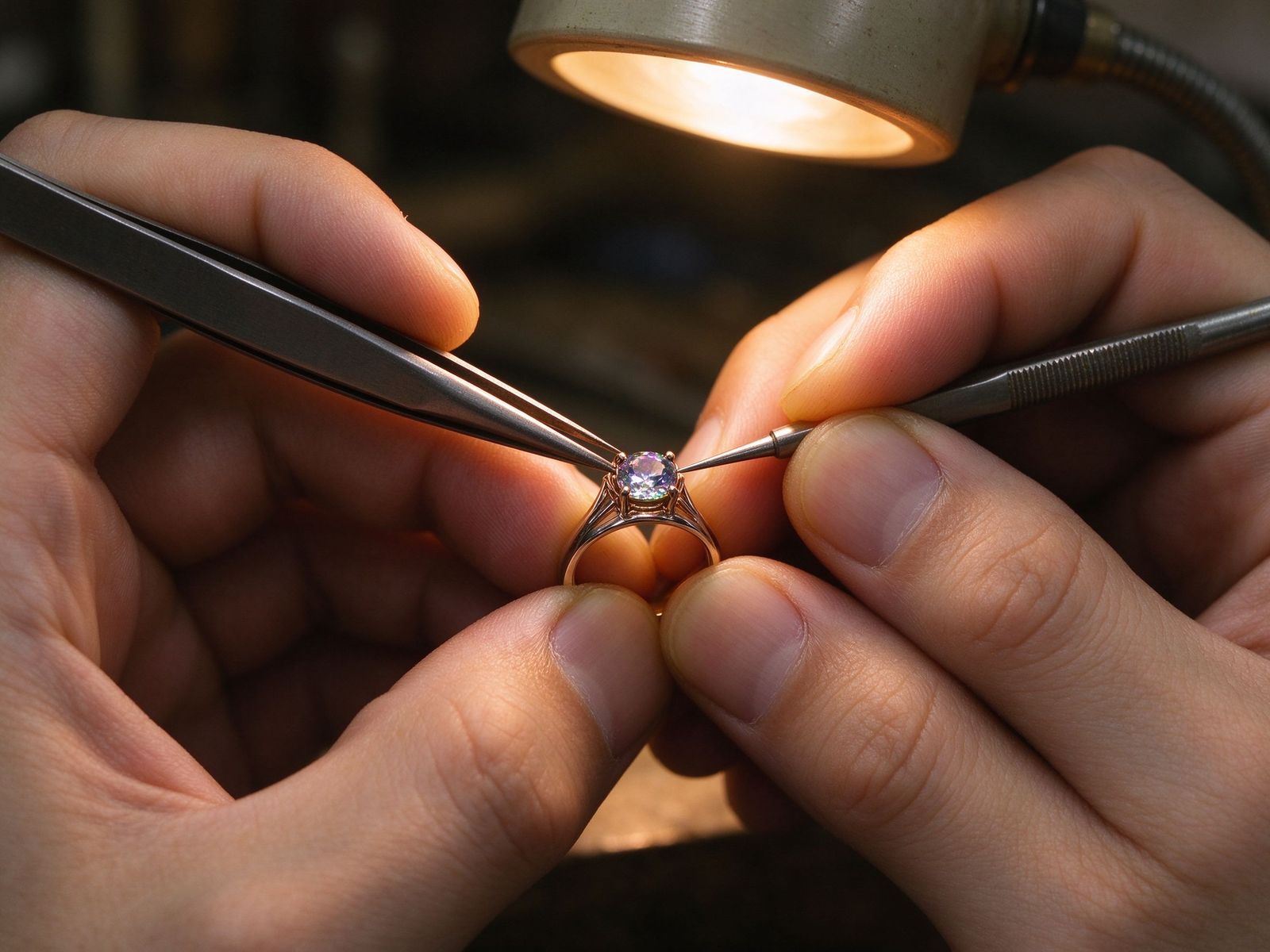
Once the parcel is ready, a setter places each stone by hand, raising tiny beads of metal to hold it. This is slow, precise work — one wrong movement and a small stone is damaged. The beads are shaped so they grip the stone without covering its sparkle. Good pavé looks like the diamonds are floating; that effect comes from careful hand work, not machines.
Why It Shows in the Result
When you compare a cheap pavé band to a well-made one, the difference is consistency. The good band glows evenly around the whole finger; the cheap one has dull spots and loose stones. This is why we invest time in the matching stage. You can see the result in our finished pavé work, and we explain more of the bench craft on the process page. If you want a pavé band designed to your ring, talk to us.
Frequently Asked Questions
Are pavé diamonds real diamonds? Yes — pavé is a setting style; the stones are genuine small diamonds or moissanite.
Do pavé stones fall out easily? Not in well-made settings; loose pavé usually means worn beads and a quick re-set.
Can pavé rings be resized? Yes, but pavé bands need an experienced jeweler to protect the stones during resizing.
Why does pavé cost more than a plain band? The matching and hand-setting of many small stones is labor-intensive.
Caring for Pavé at Home
A pavé band is delicate in one specific way: its tiny stones are held by tiny beads. Clean it gently — warm soapy water and a soft brush lifts oils without prying at the beads. Avoid ultrasonic cleaners on pavé, because vibrations can loosen small stones over time. Check the row once a year by running a finger lightly along the band; any rough or snagging bead means a stone may be working loose. Never use a sharp tool to clean between pavé stones. With gentle care, a well-set pavé row stays bright and secure. If you ever notice a dull spot or a missing bead, bring it in — resetting a small stone is quick and far cheaper than losing the whole row over time.
Why Hand-Matched Pavé Is Worth It
You can spot cheap pavé a mile away: dull spots, uneven lines, stones that fall out. Good pavé costs more because someone sat with a tray of tiny diamonds, matched them, and set each one by hand. That investment shows in how the band reads on the finger — as a continuous shimmer rather than a dotted line. If you are choosing a pavé piece, pay for the matching and the hand work; it is the difference between a band that looks premium and one that looks costume.
Caring for Pavé at Home
A pavé band is delicate in one specific way: its tiny stones are held by tiny beads. Clean it gently — warm soapy water and a soft brush lifts oils without prying at the beads. Avoid ultrasonic cleaners on pavé, because vibrations can loosen small stones over time. Check the row once a year by running a finger lightly along the band; any rough or snagging bead means a stone may be working loose. Never use a sharp tool to clean between pavé stones. With gentle care, a well-set pavé row stays bright and secure. If you ever notice a dull spot or a missing bead, bring it in — resetting a small stone is quick and far cheaper than losing the whole row over time.
Be extra careful with pavé during hands-on work. Garden gloves, dish brushes and rough fabrics can catch the beads. Take the band off for cleaning, cooking and gym work. This is not preciousness; it is how you protect a row of tiny stones that took hours to set. Customers who follow this advice keep their pavé bands for decades without a single lost stone. Read more about how we set stones on the atelier page, and see finished pavé work in the portfolio.
Why Hand-Matched Pavé Is Worth It
You can spot cheap pavé a mile away: dull spots, uneven lines, stones that fall out. Good pavé costs more because someone sat with a tray of tiny diamonds, matched them, and set each one by hand. That investment shows in how the band reads on the finger — as a continuous shimmer rather than a dotted line. If you are choosing a pavé piece, pay for the matching and the hand work; it is the difference between a band that looks premium and one that looks costume. The extra cost is repaid in longevity and in how the band looks on the finger, year after year.