Jewelry Quality Control: How Ateliers Inspect Every Piece
The difference between a jewelry brand customers trust and one that generates returns is almost always quality control. A beautiful design means nothing if the prong is loose, the ring size is wrong, or the plating wears within a week. Professional ateliers build inspection gates into every stage, catching defects before a piece reaches a customer. Understanding what quality control checks also helps you inspect pieces yourself, whether you are buying wholesale or receiving a long-awaited order.
This guide walks through the jewelry quality-control process: what inspectors check at each stage, the defects that matter most, and how a rigorous QC program protects both the workshop and the buyer. It is the invisible discipline that makes fine jewelry reliable.
Why Quality Control Matters in Jewelry
Jewelry is worn constantly, often during daily work, and it is exposed to knocks, soap, and sweat. A small manufacturing defect that seems trivial at the bench becomes a lost stone, a bent clasp, or a tarnished band within weeks. Quality control exists to catch these before shipping. A disciplined QC program reduces returns, protects the brand, and builds repeat customers, which is why serious wholesale buyers audit it.
Jewelry defects are varied: a prong left too short, a stone seat that is slightly too small, a casting with a hidden pit, a ring sized wrong, a clasp that springs open. Each is cheap to fix at the bench but expensive to fix after delivery. The cost of catching a defect at inspection is minutes; the cost of a lost customer and a returned, damaged piece is far higher. This economic logic drives serious workshops to inspect rigorously.
For the buyer, understanding QC means knowing what to expect. A reputable supplier welcomes inspection and stands behind its pieces. A supplier that rushes QC ships problems, and those problems become the buyer's problem. Quality control is therefore both a workshop discipline and a signal of which suppliers to trust.
In-Process Inspection Gates
Quality control does not happen only at the end. The best ateliers inspect at every stage. After casting, an inspector checks for pits, incomplete fills, and thin walls. After setting, they confirm every stone is seated and secure. After polishing, they check the finish and edges. This in-process catching means a flawed piece is corrected immediately, rather than accumulating value on a piece that should have been scrapped earlier.
After casting, inspectors weigh the piece against expected mass, because an unexpectedly light ring may be hollow or under-cast. They look for porosity and sprue marks. After setting, they check that stones are level and that no prong is bent. After plating, they confirm the coating is even. Each gate prevents a problem from moving downstream, where fixing it would waste more labor.
This staged inspection is especially important for wholesale production, where hundreds of pieces move through the workshop. A defect that goes unnoticed in a single piece becomes a defect in hundreds if the same setup repeats. In-process QC catches systematic issues early, before they scale into a batch-wide problem.
The Final Inspection Checklist
Before a piece ships, a final inspector runs through a detailed checklist. They verify the piece matches the order: style, metal, karat, stone weights, and ring size. They check every prong under magnification for tightness and smoothness. They run a finger along the band to feel for sharp edges. They confirm the karat stamp and hallmark are present and correct. They test the clasp and safety.
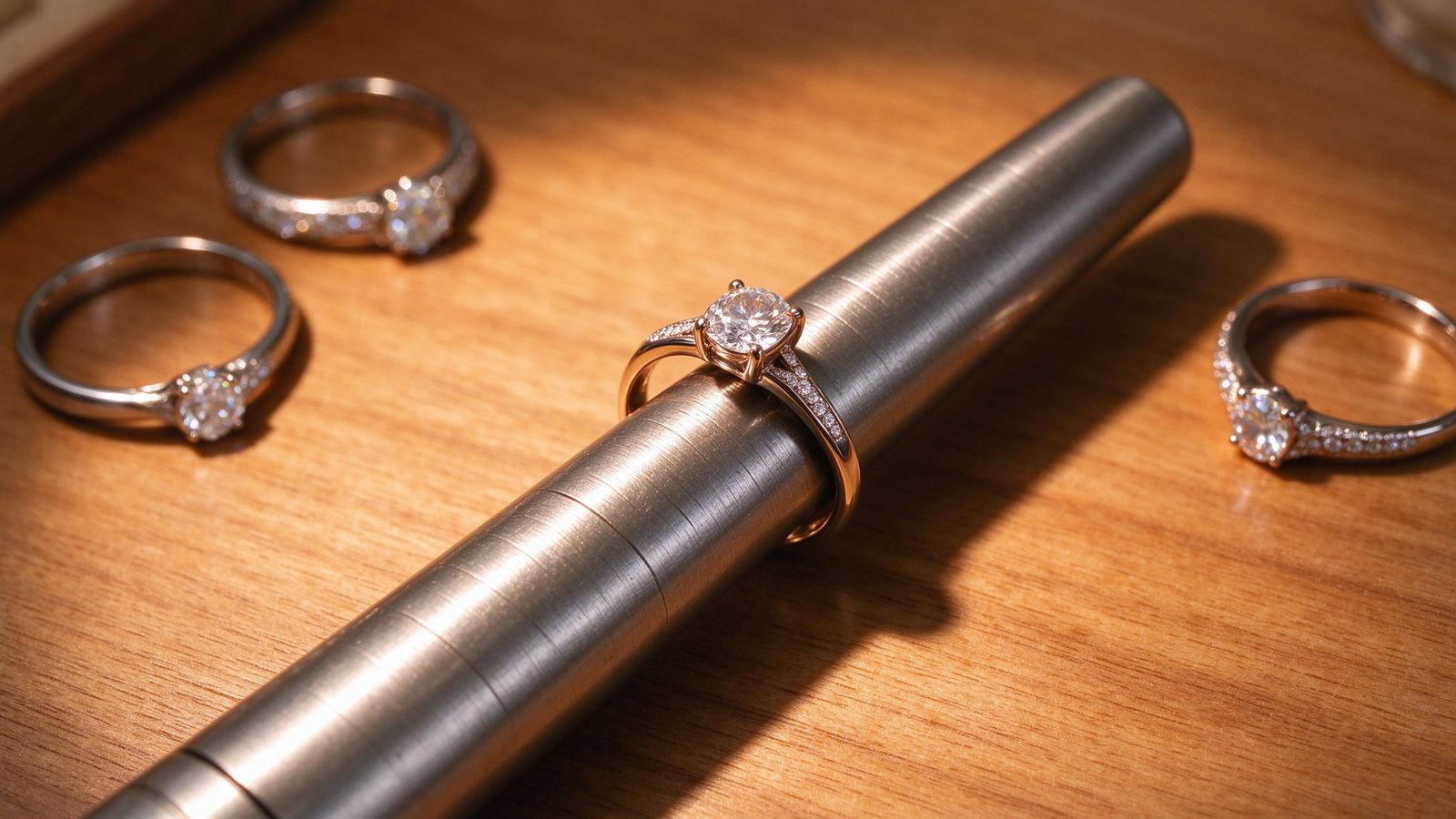
Stones are inspected for security and appearance: each should sit level, with no movement, and matched for color. The surface should be free of pits, scratches, and polishing compound trapped in crevices. Chains are pulled gently to test soldered joints. Earrings are checked for post straightness and back fit. Rings are re-sized to the specified measurement and checked on a mandrel.
Only pieces that pass every point are approved. Anything imperfect returns to the bench for rework. This gate is the last line of defense, and a careful inspector catches the loose prong or sharp edge that would otherwise become a customer complaint. Many ateliers photograph approved pieces and keep inspection records for traceability.
| Checkpoint | What Is Verified |
|---|---|
| Casting | Pits, walls, weight |
| Setting | Stones level, prongs tight |
| Polish | Smooth edges, no scratches |
| Final | Size, stamp, clasp, match order |
| Packaging | Clean, steamed, secure |
Common Defects That QC Catches
Certain defects recur. Loose prongs are the most urgent, because they lead to lost stones. Sharp or rough prongs catch clothing and scratch skin. Thin or hollow bands dent easily. Uneven plating leaves patchy white gold. Mis-sized rings are the most common order error. Weak clasps open and lose pieces. Stones that are tilted or mismatched for color look careless.
Casting porosity, tiny pits in the metal, weakens the piece and shows as small holes under polish. Soldered joints that are weak can break. Chain links that are unsoldered pull open. These are exactly the defects a trained inspector spots under magnification. Customers rarely see the catch, but they feel the difference: a QC-passed piece simply wears better.
For wholesale buyers, knowing these common defects helps you inspect samples. Weigh the piece, run your finger over prongs, check the stamp, test the clasp, and measure the ring size. If a sample passes this basic QC, the supplier likely has a disciplined process. If a sample fails, the bulk order will fail too. Sample inspection is your own QC gate.
Certification, Hallmarks, and Documentation
Quality control also confirms that the paperwork matches the piece. Diamond pieces ship with their grading reports, and the stone's details should match the order. Colored stones should carry treatment disclosures. Metal should carry the correct karat stamp, and, where required, a national hallmark. These marks are legal and trust signals, and a serious workshop ensures they are correct on every piece.
For wholesale, consistent documentation is as important as the piece itself. A customer who receives a diamond with a matching report can resell or insure it confidently. A piece without paperwork raises questions. Good QC ensures that the stamp, the report, and the physical piece all agree, which protects the buyer downstream.
Inspectors also confirm the piece is clean. A final steam and ultrasonic clean removes polishing compound and metal dust, so the customer receives a sparkling piece, not one covered in workshop residue. Packaging protects it in transit. The whole point of QC is that the piece arrives exactly as it should, ready to wear or resell.
Building a Long-Term Quality Relationship
When you find a supplier with rigorous QC, treat it as a long-term advantage. Consistent quality means fewer returns, happier customers, and reliable inventory. Communicate clearly about your standards, and give feedback when a defect slips through. A good partner treats a defect as their problem and replaces it promptly, which is worth more than a slightly cheaper unit price.
Over time, you and the supplier build a shared understanding of your quality bar. They learn your tolerances, and you learn their strengths. This relationship is far more valuable than chasing the lowest price, because the cheapest piece that fails QC costs more in returns and reputation than a slightly more expensive, reliable one.
Quality control is the quiet backbone of jewelry you trust. Every time a ring sits securely on a finger, a clasp stays closed, and a stone stays bright, it is because someone inspected the piece before it left the atelier. That invisible work is what turns jewelry from a fragile object into something you can wear and rely on every day.
Traceability and Records
Serious workshops track each piece through its stages, so if a defect appears later, they know where it came from. A batch number links a finished ring to its casting tree, its setter, and its polisher. This traceability is what lets a good supplier replace a defective piece confidently, because they can identify the issue rather than guess. For wholesale buyers, this record-keeping makes returns painless.
When you receive pieces, keep your own records: photos, weights, and the order reference. If a problem surfaces months later, that documentation supports a warranty claim. A supplier who values traceability stands behind their work, and one who does not will shrug off defects. This is a quiet but powerful signal of which workshops to trust.
Auditing a Supplier's QC
Before committing to a wholesale order, audit a supplier's quality process. Ask how they inspect, what their defect rate is, and how they handle returns. Order samples and check them against a checklist: prongs, finish, stamp, size, clasp. If the samples pass consistently, the supplier has a disciplined process. If they vary, expect the same variation in bulk.
A reliable supplier welcomes your scrutiny, because they are confident in their work. They will explain their QC stages and stand behind defects. A supplier who resists inspection or downplays quality is one to avoid. Your own sample inspection is the final QC gate, and it protects your customers from defects.
What Good QC Means for the Customer
When you buy from a workshop with rigorous QC, the benefit is simple: the piece arrives perfect and stays that way. Loose prongs, sharp edges, wrong sizes, and uneven plating are caught before shipping, so you do not deal with returns or lost stones. For wholesale buyers, consistent QC means fewer complaints and happier repeat customers. For retail customers, it means a ring that fits, a stone that is secure, and a finish that is smooth. Good QC is invisible, but its absence is felt immediately. Insist on a supplier who inspects every piece, provides documentation, and stands behind defects. That discipline protects your investment and your reputation, turning jewelry buying into a trustworthy, reliable experience rather than a gamble.
Our Inspection Gate Before Anything Ships
Every piece we make passes through a final inspector's hands before it leaves our workshop. The inspector checks the prongs under magnification, confirms the ring size on a mandrel, tests the clasp, verifies the karat stamp, and runs a finger along every edge for roughness. Anything imperfect goes back to the bench. This gate is how we keep defect rates low, and it is why our customers rarely deal with loose stones or sharp edges. We would rather rework a piece than ship a problem.
We also match the piece to the order: style, metal, stone, and size. We weigh it to confirm it is solid, not unexpectedly light. Only when it passes every point does it get cleaned, steamed, and packed. For wholesale buyers, this means reorders arrive consistent, and returns stay rare. That discipline is invisible until you need it, but it is the difference between a reliable supplier and a gamble. When you buy from us, you are buying the reassurance that someone checked the piece before it reached you.
What Every Piece Is Checked Against
Before anything ships, our inspector runs through a fixed checklist. The ring size is measured on a mandrel. The prongs are examined under magnification to confirm they are tight and smooth. The clasp is opened and closed several times. The karat stamp is verified. Every edge is felt for roughness. The stone is checked for wiggle, and the finish is held to the light for swirls or dull patches. If any point fails, the piece goes back to the bench, not out the door.
We also weigh pieces to catch thin or hollow castings that look right but feel wrong. Wholesale orders are checked against the original sample, so reorders match. This gate is why our defect rate stays low and our customers rarely deal with returns. Good QC is invisible when it works, but its absence is felt immediately. When you buy from us, you are trusting that a person checked your piece before it reached you, and that is a promise we keep on every order.
Returns, Warranties, and Trust
When QC is done well, returns almost disappear. But when a piece does arrive with a defect, our process shows how we handle it. We ask for a photo, identify the issue, and either replace the piece or credit it, no friction. Because we track every batch, we know exactly where the defect happened. For wholesale buyers, this means a reliable partnership: what does not sell right can be made right quickly. That accountability is part of quality control, not separate from it. We would rather stand behind a piece than argue about it, because a customer's trust matters more than one order.
Insist on a supplier who inspects before shipping and stands behind defects. A sample that arrives flawless, and a warranty that honors problems, tell you everything. Good QC protects both our reputation and yours.
A Final Note on Quality
Quality control is not a single step but a habit woven through every stage. From the first CAD check to the final polish, our team assumes something could go wrong, and looks for it. That mindset is what keeps our pieces consistent. When you buy from us, you receive the benefit of that habit on every order, and you can wear your jewelry with confidence.
Frequently Asked Questions
What does jewelry QC check?
It verifies prongs are tight, stones are level and matched, the finish is smooth, the ring size is correct, the karat stamp is present, and the clasp works. It also confirms the piece matches the order and paperwork.
How often should my jewelry be inspected?
Daily-wear rings should be professionally checked once or twice a year for loose prongs. Between cleans, inspect prongs yourself for anything that catches on clothing.
How can I inspect a wholesale sample?
Weigh it, run a finger over the prongs for sharp spots, check the karat stamp, test the clasp, measure the ring size, and look under magnification for pits or loose stones.
What is the most common jewelry defect?
Loose prongs, which lead to lost stones, are the most urgent. Mis-sized rings, weak clasps, and uneven plating are also common and caught in final QC.
Why does documentation matter in QC?
Matching reports, stamps, and hallmarks prove authenticity and let customers insure or resell with confidence. QC ensures the paperwork agrees with the physical piece.
Quality control is the invisible discipline that turns a designed object into jewelry you can trust. Staged inspections catch defects at every stage, and a final checklist confirms prongs, stones, size, stamps, and finish. For buyers, understanding QC helps you inspect samples and choose suppliers who stand behind their work. When every piece passes through this gate, the jewelry you wear simply works, securely and beautifully, for years.