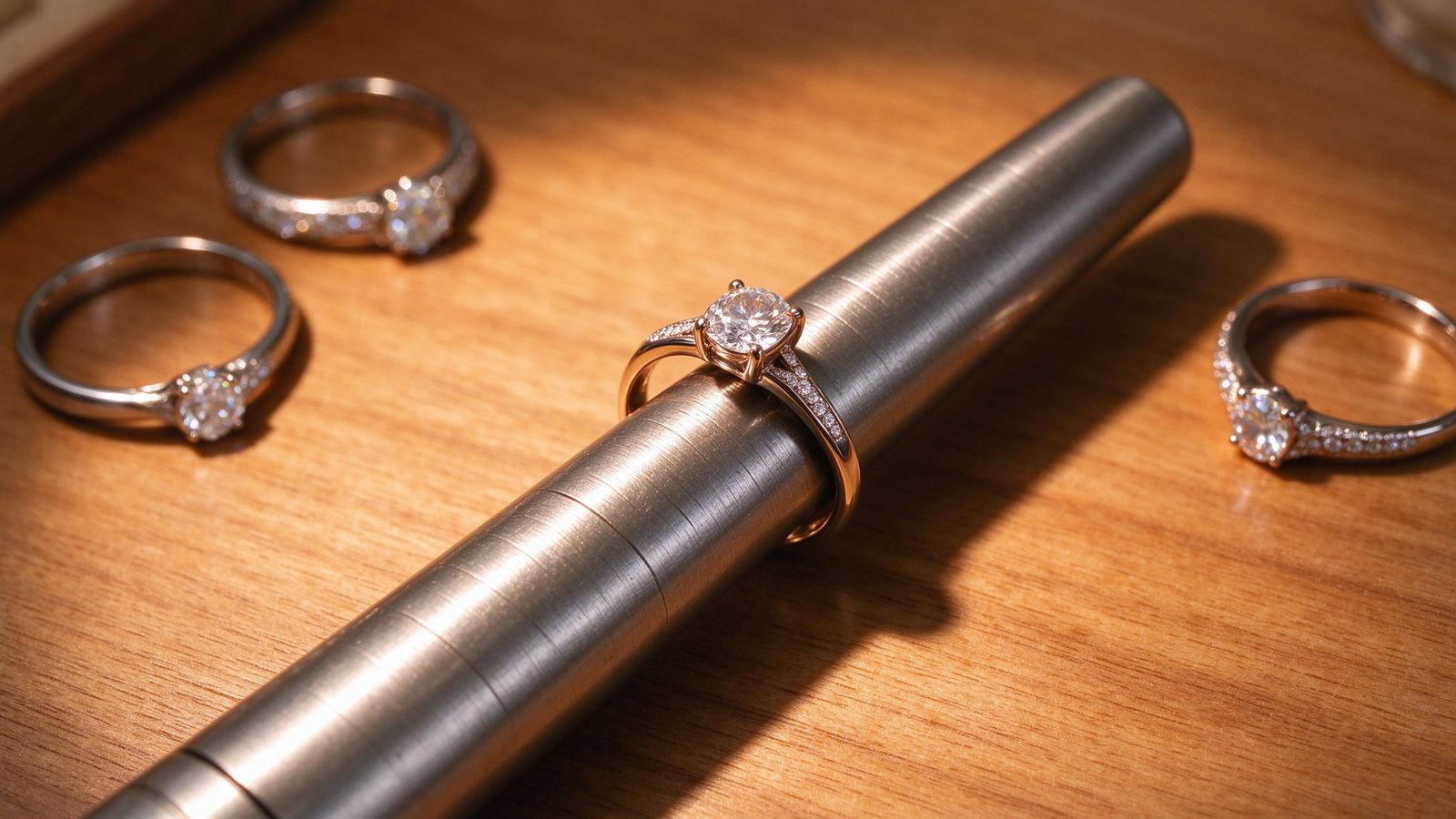
How Jewelry Is Made: The Complete Atelier Process From Sketch to Showcase
Behind every finished ring, necklace, or pair of earrings lies a chain of specialized craftsmanship that most buyers never see. A piece of fine jewelry travels through sketching, digital design, wax modeling, casting, stone setting, polishing, and quality control, each step performed by a different specialist who understands a single part of the process deeply. Understanding this journey changes how you look at jewelry: the weight on your finger is not simply metal and stone, it is the accumulated work of hands, tools, and machines over weeks or even months.
This guide walks through the complete atelier process in order, explaining what happens at each stage, what can go wrong, and how the best workshops maintain quality. Whether you buy jewelry wholesale, design your own piece, or simply love knowing how things are made, this is the story behind the objects you wear.
The Brief and the Sketch
Every piece begins with a brief. For a custom commission, the customer describes the vision, the budget, the metal, and the stones. For a wholesale collection, a designer sketches a range of pieces for the season. The sketch stage is where ideas become concrete: proportions, angles, and the placement of stones are drawn by hand, often over several iterations. A good sketch is not just a pretty drawing; it is a working document that shows the carver, caster, and setter exactly what to build.
At this stage, designers make practical decisions that determine whether the piece can be worn. A ring that looks thin in a sketch may be structurally too weak, a pendant bail may be too small for the chosen chain, and a gemstone may be too tall for a comfortable setting. The designer adjusts on paper before any metal is cut, because changing a design on screen is free, while changing a finished casting is expensive. This early problem-solving is the mark of an experienced atelier.
Once the sketch is approved, it moves to the digital or wax modeler. For modern production, the sketch is recreated as a CAD file; for traditional hand pieces, a wax carving begins directly from the drawing. The sketch is the bridge between imagination and manufacture, and its quality determines how smoothly the rest of the process runs.
CAD Design and Digital Prototyping
Computer-aided design, or CAD, has transformed modern jewelry making. A designer builds the piece as a precise 3D model on screen, rotating it, adjusting wall thicknesses, and checking that every stone fits its seat. CAD allows exact repetition: a single model can be cast hundreds of times consistently, which is essential for wholesale production. It also lets the customer see a photorealistic rendering before any metal exists, reducing surprises.
The CAD process demands jewelry-specific knowledge. A model that looks beautiful on screen may have walls that are too thin, prongs that are too short, or undercuts that prevent casting. The designer must build in enough metal at stress points, design seats that hold the stones securely, and ensure the piece is comfortable to wear. A poorly built CAD file causes casting failures later, which is why senior designers review every model.
Once approved, the CAD file is sent to a 3D printer that produces a wax or resin master pattern. This printed master is the physical shape that will be cast. CAD has not replaced hand skill; it has moved the skill from carving wax to designing digital geometry, and the best workshops combine CAD for consistency with hand finishing for character.
The Master Pattern and Wax Carving
The wax or resin master is the physical model of the final piece. In traditional workshops, jewelers carve this master by hand from a block of hard wax, using fine carving tools to shape every curve and detail. Hand carving gives the piece an organic, slightly irregular quality that mass-produced CAD cannot replicate, and it is still used for bespoke and high-end pieces. In modern workshops, the 3D-printed wax takes its place, and a wax finisher cleans and perfects it by hand.
The master must be flawless, because every imperfection in the wax is reproduced in metal. Air bubbles, scratches, and thin spots in the wax become defects in the casting. The wax modeler inspects the master under magnification, smooths surfaces, and adds any fine texture that will transfer to the metal. The master is the template from which production rubber molds are made, especially for wholesale lines.
For one-off pieces, the wax is cast directly. For production, the master is used to create a silicone or rubber mold, into which melted wax is injected to produce identical copies. These wax copies are then sprued onto a tree, ready for casting. The quality of the master determines the quality of every piece that comes after it, which is why this stage is never rushed.
Lost Wax Casting in Metal
Lost wax casting, also called investment casting, is the ancient process that turns wax into metal. The wax tree is encased in a plaster-like investment material inside a flask, which is then heated in a kiln. The wax melts and burns out, leaving a hollow cavity in the exact shape of the pieces. Molten metal is then poured into that cavity, either by gravity or under vacuum, filling every detail.
This process is why it is called lost wax: the original wax is destroyed in creating the metal copy. Once cooled, the investment is broken away, and the pieces are cut from the tree, cleaned, and inspected. Casting is where a surprising amount of waste appears: air bubbles, incomplete fills, and shrinkage can ruin pieces, and skilled casters adjust temperature and spruing to minimize rejects. A good casting is crisp, complete, and shows no pits or voids.
The choice of metal determines the casting process. Gold, silver, and platinum each melt at different temperatures and require different investment materials and kiln cycles. Platinum, with its very high melting point, demands specialized equipment. The raw cast pieces are rough and matte, and they are only halfway to a finished piece; setting and polishing transform them.
| Stage | Input | Output |
|---|---|---|
| Sketch | Brief | Approved drawing |
| CAD / wax | Sketch | Master pattern |
| Casting | Wax tree | Rough metal castings |
| Setting | Rough casting + stones | Stoned piece |
| Polish | Stoned piece | Finished jewelry |
Stone Setting
Stone setting is the delicate craft of securing gemstones into the metal. A setter receives the cast mounting, which has pre-cut seats for each stone, and works under magnification with hand tools. The setter pushes small beads of metal over the edge of each stone to hold it, or bends prongs down over the girdle. Good setting is invisible: the stone sits level, the prongs are smooth, and nothing catches on clothing.
There are many setting techniques. Prong settings lift the stone and let in light. Bezel settings wrap a rim of metal around the stone for security. Pavé settings use tiny beads to hold a row of small stones, creating a surface of sparkle. Channel settings hide stones in a groove. Each technique demands different tools and experience, and a small studio may employ setters who specialize in one style. Setting is slow, precise work: a pavé ring with dozens of tiny stones can take hours.
The setter also checks that stones are the correct size and matched for color. A stone that is too large will not seat; one too small leaves gaps. After setting, the piece goes to polishing, which can loosen stones if not done carefully, so experienced setters leave prongs slightly proud and tighten them again after polishing. Good setting is the difference between a stone that stays secure for decades and one that falls out within months.
Polishing, Finishing, and Plating
Casted metal is rough and dull, and polishing is what reveals the final beauty. A polisher uses progressively finer abrasives, wheels, and compounds to bring the surface to a high shine. This stage transforms a matte gray casting into a reflective gold or platinum object. The polisher must work carefully around stones, because harsh buffers can scratch gems or knock prongs. Textured finishes, like brushing or hammering, are also applied at this stage.
White gold is then rhodium plated, an electroplating process that coats the piece in bright platinum-group metal. Rose and yellow gold are usually polished directly. Silver may be anti-tarnish treated. Plating is applied after polishing, and it is the final surface step. The polisher also rounds sharp edges, because a well-finished piece has no rough spots that catch skin or clothing.
Finishing is where the atelier's standard shows most clearly. A rushed polish leaves scratches, uneven surfaces, and dull corners. A meticulous polish brings every facet of the metal to life. Buyers can feel this difference: a well-finished ring slides smoothly and reflects light evenly, while a poorly finished piece feels rough and looks cheap even if the stones are good.
Quality Control and Final Inspection
The finished piece passes through a final quality-control inspection before it leaves the workshop. An inspector checks every prong, every stone, the surface finish, the ring size, and the stamps. Under magnification, they look for pits, loose stones, sharp edges, and mismatched stones. Anything imperfect goes back for rework. This gate is what separates a reliable wholesaler from a workshop that ships defects.
QC also verifies the karat stamp and the hallmark, and confirms that the piece matches the order. Weight is checked against the expected range, because an unusually light piece may be hollow or under-cast. Rings are sized to the correct finger size, and chains are tested for clasp strength. The inspector signs off only when the piece meets the workshop's standard.
Finally, the piece is cleaned, steamed, and packed. A reliable atelier tracks each piece through the stages, so if a problem appears later, the workshop knows where it came from. This complete process, from sketch to inspection, is the behind-the-scenes work that makes jewelry feel effortless to wear. The next time you put on a ring, remember the dozens of hands and tools that shaped it into the object on your finger.
The People Behind the Piece
A finished piece of jewelry is rarely the work of one person. A modern atelier is a team of specialists: a designer, a CAD modeler, a caster, a setter, a polisher, and a quality inspector. Each masterstiny part of the process, which is why the result is so refined. The designer imagines the piece, the modeler builds its geometry, the caster brings it to metal, the setter secures the stones, and the polisher makes it shine. Understanding this division of labor explains why jewelry takes time and why a coordinated atelier produces better work than a solo rush job.
This specialization also means consistency. A large team can reproduce a design to exacting standards, because each stage is owned by an expert. When you buy from a manufacturer-wholesaler, you benefit from that specialized pipeline: the design is refined, the casting is controlled, and the finishing is checked. The invisible handoff between specialists is what turns a sketch into a piece that feels effortless on the finger.
Why Atelier Quality Varies
Not every workshop delivers the same result, and the difference is discipline. A well-run atelier controls wall thickness in CAD, sprues castings properly, sets stones under magnification, and inspects every piece. A rushed workshop skips grit levels in polishing, leaves thin prongs, and ships defects. Buyers feel this difference in the weight, smoothness, and security of the piece, even if they cannot name the stage.
When sourcing wholesale, ask how a workshop handles each stage. Do they design and cast in-house, or outsource? How do they inspect? An atelier that controls the whole process, from CAD to final QC, has far tighter quality than one that coordinates outside vendors. The pieces you receive reflect that control, which is why buying from an integrated atelier is worth the small premium.
From Atelier to Your Hand
When you buy jewelry from a manufacturer-wholesaler, you are buying the result of this entire chain: a designed, cast, set, polished, and inspected object. Understanding the process helps you appreciate the weight, the smoothness, and the security of a well-made piece. It also explains why quality workshops charge what they do: each stage requires skilled hands and time. The next time you put on a ring, trace it back through the sketch, the wax, the kiln, the setting, and the polish. That journey is what makes the object on your finger feel effortless. When you source from an integrated atelier that controls every step, more of what you pay goes into the metal and craft, and less into layered middlemen. That is the value of buying from the atelier itself.
The Workbench Philosophy Behind Every Piece
At jewelfmfg, every piece that leaves our shop passes through the hands of specialists who take pride in their single step. The caster who perfects the spruing, the setter who seats each prong under magnification, the polisher who rounds every edge, these are not anonymous processes. They are people who know that a hidden rough corner or a loose bead is felt by the wearer, even if it is never seen. That workbench philosophy, doing the small things right because the customer will feel them, is what sets an atelier apart from a factory rushing volume.
When you wear one of our rings, you are wearing the cumulative care of every stage: a wall thickness checked in CAD, a casting cooled at the right temperature, a stone tightened twice, a finish smoothed by hand. We do not cut corners because each stage is owned by someone who cares about the result. The result is a piece that feels effortless on your finger, because the effort was already made on ours.
Frequently Asked Questions
How long does it take to make a piece of jewelry?
A simple cast and polished ring can take days; a complex custom or heavily set piece takes weeks. Mass-produced wholesale pieces move faster because the master pattern is reused.
Is CAD replacing hand-made jewelry?
CAD has automated digital prototyping and repetition, but hand carving, setting, and finishing still require skilled artisans. The best workshops combine both.
What is lost wax casting?
It is the process of encasing a wax model in investment, burning out the wax, and pouring metal into the hollow cavity. It has been used for thousands of years and is still central to jewelry making.
Who sets the stones in jewelry?
A specialist stone setter works under magnification to secure each gem into its pre-cut seat using prongs, beads, or bezels. Good setting keeps stones secure for decades.
Why is white gold rhodium plated?
White gold is naturally slightly gray, so it is electroplated with bright rhodium for a mirror finish. The plating wears over years and can be reapplied.
Every piece of jewelry is the sum of a disciplined journey: a clear sketch, a precise master, a clean casting, secure setting, a meticulous polish, and a final inspection. Understanding these stages helps you appreciate the weight and finish of the pieces you buy, and it explains why quality workshops charge what they do. When you source from an atelier that controls the whole process, you buy not just a design but the craftsmanship behind every step, from the first pencil line to the final shine.