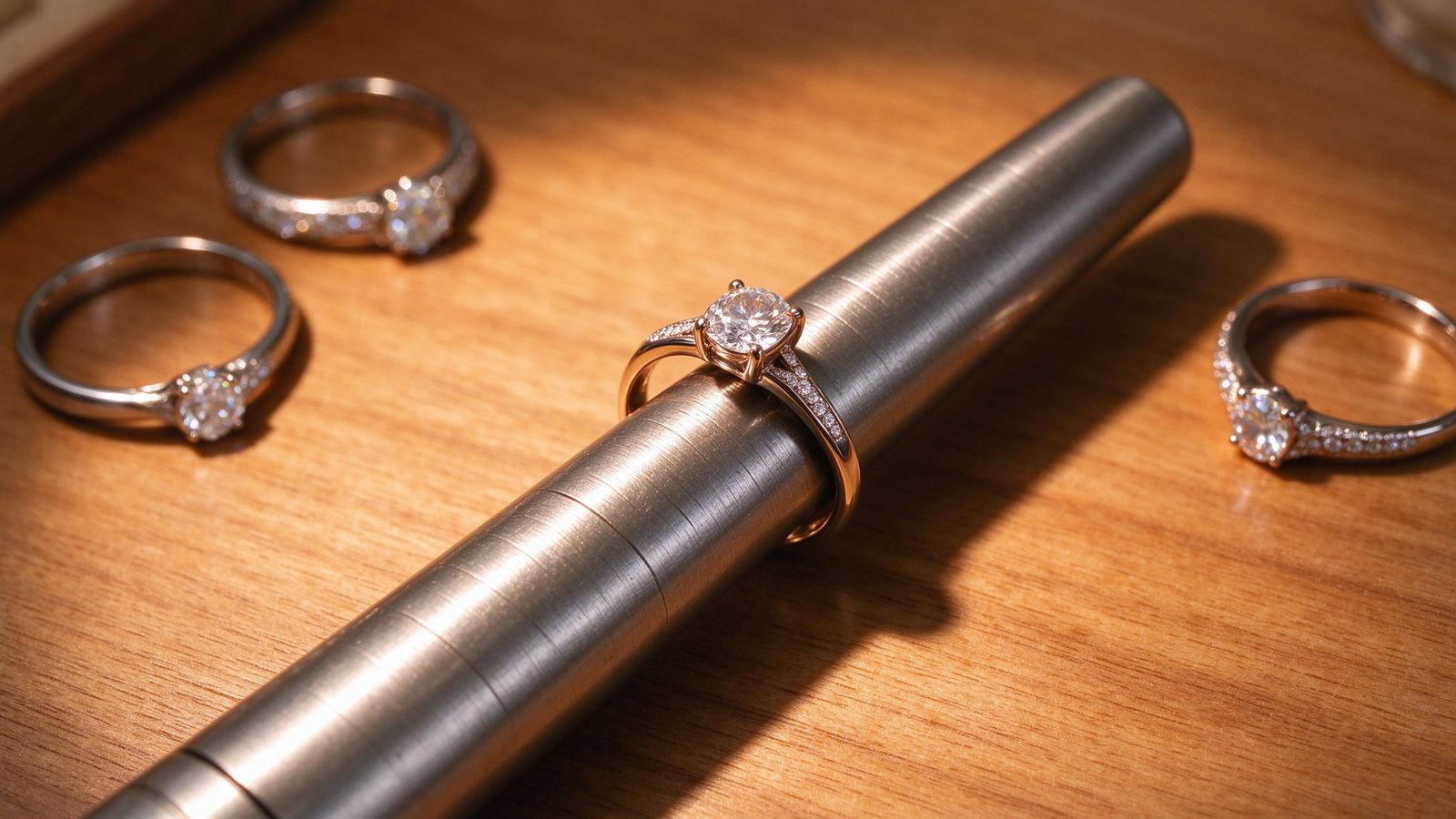
Jewelry Polishing and Finishing: How Ateliers Get That Mirror Shine
A fresh casting is rough, matte, and gray. The mirror shine that makes gold glow and platinum reflect light is not a property of the metal itself; it is the result of a long, careful finishing process. Polishing is where an atelier's true quality shows, because no amount of expensive stone can rescue a poorly finished setting. Understanding polishing also explains how to care for your jewelry, because every polish removes a microscopic layer of metal.
This guide walks through the stages of jewelry finishing, from initial grinding to the final buff and plate. It explains the tools, the order of operations, and why over-polishing is a real risk. By the end, you will understand what gives a piece its luxurious feel and how to keep it that way.
From Rough Casting to Pre-Polish
The polished journey begins with a rough casting covered in sprue marks, gates, and surface pits. The first step is grinding: the caster cuts off sprues and uses abrasive wheels and files to remove excess metal and blend the joints. This stage shapes the piece, removes casting flash, and establishes the basic form. Grinding is aggressive, using coarser abrasives, and it must be done carefully so it does not alter the design or thin the walls.
Next comes sanding, moving through progressively finer abrasive papers or rubber wheels to remove the scratches left by grinding. Each finer grit eliminates the grooves of the previous one. The goal is to reach a uniform, satin surface free of deep scratches. This is labor-intensive: a detailed ring may pass through several grits, each removing the marks of the last. Skipping a grit level leaves hidden scratches that show up only after polishing.
At this stage the piece is smooth but matte. The polisher has not yet created shine; they have prepared a flawless base. The difference between a cheap and a premium piece often appears here: rushed workshops skip grit levels, leaving micro-scratches that make the final polish look uneven. Patience in sanding is what makes the later shine possible.
The Polishing Process
Polishing uses rotating cloth or felt wheels loaded with polishing compounds. The polisher brings the piece into contact with the spinning wheel, moving it constantly so the heat and pressure do not build in one spot. The compound contains fine abrasives that burnish the metal to a reflective sheen. Different compounds suit different metals: gold, silver, and platinum each have their own polishing soaps and rouges.
The polisher must work around stones. Harsh buffers can knock prongs, scratch gems, or overheat stones, so stone areas are finished by hand or with small tools. Recesses and hard-to-reach spots are polished with fine brushes and bits. A master polisher reads the metal, adjusting pressure and wheel speed to bring every surface to the same even shine. Sharp edges are rounded slightly so they do not catch skin.
The result is a high-polish mirror finish. But polishing is not unlimited: each pass removes a tiny layer of metal. Over decades, repeated aggressive polishing can wear through thin details, soften engraving, and thin prongs. This is why professional polishing should be occasional, and why a home polishing cloth, which is much milder, is the right tool for routine upkeep.
Textured and Brushed Finishes
Not every piece is high polished. Many designs intentionally use textured finishes: brushed, satin, hammered, or sandblasted. A brushed finish uses a fine wire brush to create uniform linear lines, a modern matte look that hides scratches better than a mirror polish. Satin finishes are soft and understated. Hammered textures, created by striking the metal with a peen hammer, give organic, artisanal character. Sandblasting creates a soft, even matte surface.
These finishes are applied after polishing, in the specific areas the designer wants. A ring may have a high-polish center and a brushed shank, creating contrast. Textured finishes hide everyday micro-scratches better than a mirror polish, which is why they are popular for men's bands and modern designs. They also show fingerprints less, making them practical for daily wear.
Caring for textured finishes differs: an aggressive polish will smooth away the texture, so brushed and hammered pieces should be cleaned gently rather than buffed. Understanding that the finish is intentional helps owners care for it correctly, preserving the designer's look rather than accidentally polishing it away.
Rhodium Plating and Final Coating
White gold receives rhodium plating after polishing. The piece is cleaned and submerged in an electroplating bath where a thin layer of rhodium, a bright platinum-group metal, is electrically bonded to the surface. This gives white gold its brilliant, mirror-white finish. The plating is thin and wears over one to three years, at which point the piece is re-plated. Yellow and rose gold usually skip plating and keep their natural polished color.
Sterling silver may receive an anti-tarnish lacquer or rhodium flash to slow tarnish, though these wear off. Plating is always the final step, applied after all polishing, because plating over an imperfect surface cannot hide flaws. The plated surface is then lightly finished and inspected.
For buyers, understanding plating explains why white gold ages: the bright white gradually warms as plating wears on high-contact areas. This is normal and reversible. A reputable atelier tells customers about plating and offers re-plating as routine aftercare. The finish is part of the product, not an afterthought.
| Finish | Look | Care |
|---|---|---|
| High polish | Mirror shine | Wipes clean |
| Brushed | Matte linear | Gentle clean only |
| Hammered | Organic dents | Avoid buffing |
| Rhodium plated | Bright white | Re-plate periodically |
Quality in the Details
The true test of finishing is what you feel with your finger. A well-finished piece has no sharp edges, no rough prongs, and a smooth, even surface. Run a finger along the band: it should glide without catching. Look at the setting under magnification: the metal flows cleanly, the prongs are uniform, and no polishing compound is trapped in corners. These details separate a luxury piece from a mass-produced one.
Finishing also affects durability. Smooth, rounded edges wear better than sharp ones, which catch and thin. A well-finished prong is rounded so it does not snag threads. A comfortable inner band is finished smooth so it does't dig. These ergonomic touches are invisible in a photo but felt every hour of the day. A piece that looks perfect in a listing but feels rough on the finger was finished in a hurry.
For wholesale buyers, inspecting the finish is a quick quality signal. Compare two rings side by side: the one with deeper, more even shine and smoother edges was finished with more care. Finishing is where the workshop's pride lives, and it is the detail customers notice most, even if they cannot name it.
Caring for a Finished Surface
Because polishing removes metal, home care should preserve the finish rather than aggressively renew it. Use a gentle polishing cloth for routine dullness, which adds a light shine without heavy metal removal. Avoid abrasive toothpaste, baking soda, and jewelry dips, which scratch or strip. Clean with warm soapy water and a soft brush to remove oils, which dull the surface more than wear does.
Have a professional polish only occasionally, and ask the jeweler to avoid over-polishing delicate details. White gold should be re-plated rather than heavily polished, because re-plating restores brightness without removing metal. Store pieces separately so they do not scratch each other, because a diamond scratching a gold band is the most common source of new micro-scratches.
With gentle care, a polished finish lasts beautifully for years. A small amount of patina actually adds warmth to gold over time. The goal is not a sterile, never-worn mirror, but a piece that ages gracefully: cleaned regularly, polished rarely, and stored safely. That is how a well-finished piece stays luminous for life.
Finishing by Hand Versus Machine
Much polishing is done with spinning motors and compounds, but the final details are often finished by hand. A polisher uses small hand tools to reach under settings, round prong tips, and smooth edges the motor cannot reach. This hand finishing is what separates a luxury piece from a rushed one. The machine does the bulk; the artisan refines the last percent.
Hand-finished edges are rounded and comfortable, while machine-only edges can be sharp. When you run a finger around a well-finished ring, it glides without catching. That comfort is the result of an artisan spending minutes on details the camera never shows. This is the quiet craft that makes jewelry feel expensive in the hand, not just in the photo.
The Cost of Over-Polishing
Polishing removes a microscopic layer of metal each time, so it is not unlimited. A thin band or a delicate engraved detail can wear through after repeated aggressive polishing. This is why jewelers polish occasionally rather than constantly, and why a home polishing cloth, which is much milder, is the right tool between professional services. Knowing this helps you care for jewelry without thinning it over decades.
A well-loved piece develops a soft patina that many owners prefer. You do not need a sterile mirror finish to love your ring. Gentle cleaning and rare professional polishing preserve the piece's structure, while the patina records years of wear. This balance keeps jewelry beautiful and structurally sound for a lifetime.
The Finishing Quality Test
You can judge finishing quality yourself by feel. Run a finger along the band and over the prongs: a well-finished piece glides without catching. Look at the surface in good light: it should be even, with no swirls or dull patches. Compare two rings side by side, and the one with deeper, smoother shine and softer edges was finished with more care. Finishing is where an atelier's pride lives, and it is the detail customers notice most even if they cannot name it. A rushed polish leaves scratches and rough spots; a meticulous one makes the metal feel alive. When buying, inspect the finish closely, because it separates a luxury piece from a mass-produced one. Good finishing also wears better, because rounded edges do not catch and thin out. It is worth choosing a piece that is beautifully finished, because that quality is felt every hour of the day.
The Hand-Finishing That Makes It Luxurious
After casting, a piece is rough and gray. The transformation to a lustrous jewel happens at the polishing bench, where a finisher works through progressively finer abrasives. This is where our atelier's pride shows. We spend hours removing every scratch, rounding every edge, and bringing the surface to a deep, even shine. A machine can buff the flat surfaces, but the corners under the prongs and the inside of the shank are finished by hand, because those are the spots that catch skin and cloth if left rough.
We polish only occasionally and gently, because each pass removes a microscopic layer of metal. Over-polishing wears thin details and prongs, so we finish the piece right the first time and leave the patina to develop naturally. When you run a finger along our band and it glides without catching, that is the hand-finishing you feel. It is the detail customers notice most, even when they cannot name it, and it is what makes a piece feel expensive in the hand. That quiet craft is our signature.
Compounds, Grits, and Patience
Polishing is a sequence of gradually finer abrasives, and skipping a grit level leaves scratches that the next step cannot remove. We start with coarse abrasives to even out the casting, move through medium grits, and finish with a high polish compound on a soft buff. Each stage removes the marks of the last, until the surface is mirror smooth. Rushing this sequence is the most common cause of a dull or swirly finish, which is why our finishers work deliberately.
The final touches are done by hand, reaching under prongs and inside the shank where the motor cannot. We round prong tips so they do not catch on sweaters, and we soften every inner edge for comfort. Because each polish removes a microscopic layer, we finish the piece correctly the first time rather than overwork it. The result is a surface that glides on the skin. When you feel a well-finished ring, you are feeling the patience of someone who worked through the grits in order.
Why Finish Is the Last 10 Percent
A well-cast, well-set ring still feels unfinished if the polish is rough. The last ten percent of the work is the polishing, and it is where an atelier distinguishes itself. We spend as long as needed to bring every surface to a deep, even shine, rounding edges and smoothing under prongs. Customers feel this immediately, even when they cannot explain why. A rushed polish leaves swirls and sharp spots; our finish glides. That final care is what makes a piece feel luxurious on the hand.
We polish gently and rarely, because every pass removes a microscopic layer. Over-polishing thins prongs and details, so we get it right the first time and let the patina develop. A well-finished piece wears better, because soft edges do not catch and thin out. The finish is our quiet signature.
Frequently Asked Questions
Why does jewelry need so many finishing steps?
Because a casting is rough. Grinding, sanding through fine grits, polishing, and optional plating each remove the previous step's marks. Skipping grit levels leaves hidden scratches that ruin the final shine.
Is polishing bad for jewelry?
Occasional professional polishing is fine, but repeated aggressive polishing removes tiny layers of metal and can wear thin prongs or engraving. Use a gentle cloth at home and polish professionally only when needed.
Why does white gold need rhodium plating?
White gold is naturally slightly gray, so a thin bright rhodium layer gives it the mirror-white finish. It wears off over years and is reapplied as routine aftercare.
Can I polish away scratches at home?
Light surface dullness improves with a jewelry polishing cloth. Deep scratches require professional refinishing, which should be done sparingly.
What finish hides scratches best?
Brushed, satin, and hammered finishes hide everyday micro-scratches better than a high mirror polish, which is why they are popular for daily and men's bands.
The mirror shine on your jewelry is not magic; it is grinding, sanding, polishing, and often plating done with patience and skill. A well-finished piece feels smooth, reflects evenly, and wears comfortably. Care for that finish by cleaning gently at home, polishing professionally only occasionally, and storing pieces apart. When you understand how finishing works, you appreciate the atelier's hidden craft and know exactly how to keep your jewelry looking luminous for decades.