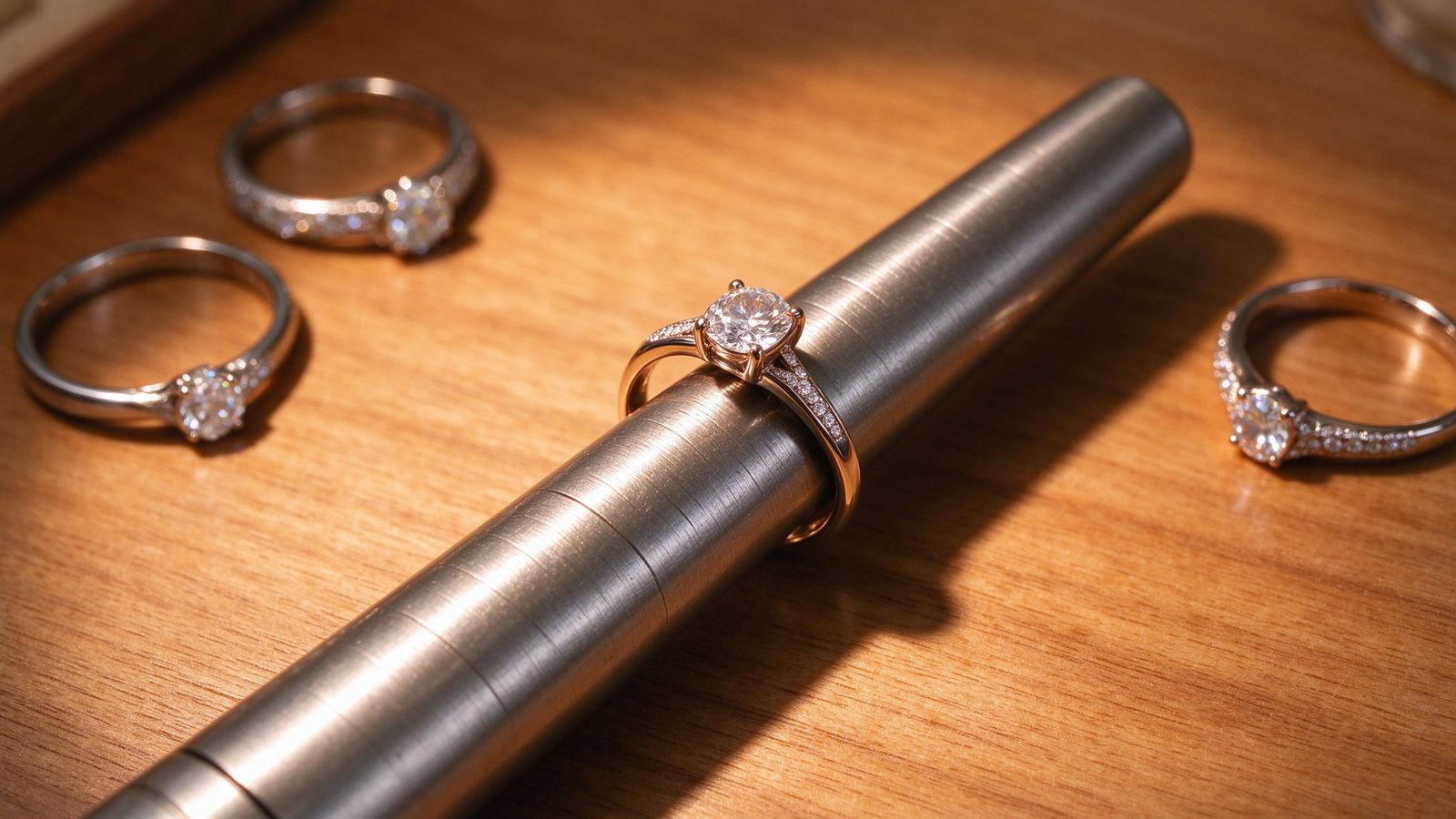
Moissanite vs Diamond: The Complete Comparison for Buyers
Moissanite has emerged as the most credible diamond alternative on the market, but it is often misunderstood. Buyers wonder whether it looks fake, whether it is durable enough for daily wear, and how it really compares to a diamond. The honest answer is that moissanite is a real, lab-created gemstone with its own optical personality, not a cheap imitation. It is chemically and physically distinct from diamond, and the choice between them comes down to budget, appearance preference, and resale expectations rather than quality.
This guide compares moissanite and diamond across hardness, brilliance, price, durability, and resale value, so you can choose the center stone that fits your priorities. By the end, you will know exactly what you are getting with each and which one belongs on your finger.
What Moissanite Actually Is
Moissanite is silicon carbide, a mineral first discovered in a meteor crater by Henri Moissan. Natural moissanite is extraordinarily rare, so nearly all moissanite in jewelry is lab-created. It is a genuine gemstone, not a plastic or glass simulant. It rates 9.25 on the Mohs scale, just below diamond and above ruby and sapphire, which means it resists scratches in daily wear almost as well as a diamond.
Moissanite is not a diamond simulant in the sense of cubic zirconia, which is a soft, cheap lookalike. It is a durable, brilliant stone in its own right. A trained jeweler can distinguish moissanite from diamond using its higher refractive index and double refraction, but to the naked eye both sparkle impressively. Modern moissanite is nearly colorless, though some stones carry a faint warm or gray tone depending on the grade and era of production.
The key optical feature of moissanite is its high fire: it disperses light into rainbow colors more strongly than a diamond. This makes it flashier and more colorful, which some buyers love and others find too much. A diamond tends to show more white sparkle, while a moissanite shows more rainbow fire. This personality difference is central to the choice.
Hardness and Durability
Durability is where moissanite shines. At 9.25 on the Mohs scale, it is second only to diamond in everyday scratch resistance. You can wear a moissanite engagement ring daily without the scratches that plague softer stones like emerald or opal. It resists chemicals, heat, and UV light, so it will not cloud, fade, or change over decades of wear. This makes it a practical, low-maintenance center stone.
Diamond, at 10, is marginally harder, but the practical difference between 9.25 and 10 is small for daily wear. Both resist scratches from normal life. The main durability caveat for moissanite is that it can be chipped by a hard blow, like any faceted gem, though its toughness is good. With a sensible setting and normal care, a moissanite ring wears as reliably as a diamond one.
Because moissanite is affordable, many buyers choose a larger stone and wear it confidently without the anxiety that comes with an expensive diamond. That peace of mind is part of its appeal. For active owners, moissanite delivers diamond-like durability at a fraction of the financial risk.
Brilliance and Appearance
Both stones are brilliant, but they sparkle differently. A diamond returns a balance of white light, called brilliance, and colored flashes, called fire, in a restrained, classic way. Moissanite returns more colored fire, flashing rainbow hues prominently, especially in bright sunlight. Some people find this gorgeous and lively; others prefer the cleaner white sparkle of a diamond. This is a matter of taste, not quality.
Color is another difference. Modern high-grade moissanite is near-colorless, but some stones show a faint warm or gray undertone, particularly in larger sizes. A diamond graded G to I is near-colorless and consistent. In a solitaire, the moissanite's extra fire is usually the first thing a viewer notices, while a diamond reads as quietly brilliant. Neither looks dull; they just express light differently.
Under magnification, moissanite shows double refraction, where back facets appear doubled, a telltale sign. To the naked eye, though, both look beautiful. When choosing, view the stone in natural daylight, where moissanite's fire is most visible, and decide which sparkle personality you prefer. Some buyers even own both, choosing diamonds for classic pieces and moissanite for larger, colorful statement rings.
Price and Value
The price difference is moissanite's headline advantage. A comparable moissanite center stone costs a fraction of a diamond. A buyer can choose between a one-carat diamond or a two-carat-plus moissanite for the same budget, and the size difference is clearly visible on the hand. This is why moissanite has become so popular for budget-conscious buyers who want presence.
But resale value is the trade-off. Moissanite has almost no secondary market, because it is affordable and lab-created, so you cannot resell it for much. Diamonds also rarely recoup retail price, but certified natural diamonds hold some marginal resale value. The right framing is to buy moissanite to wear and enjoy, not to invest. You are not losing money on resale if you always intended to consume and enjoy the stone.
When value includes the whole package, moissanite is rational: same durability, bigger size, lower price, bought to be worn. Diamond appeals to those who prize natural origin and are comfortable paying a large premium. Neither is a bad choice; they serve different budgets and values.
| Factor | Moissanite | Diamond |
|---|---|---|
| Hardness | 9.25 | 10 |
| Fire/sparkle | High rainbow fire | Balanced white sparkle |
| Price | Low | High |
| Origin | Lab created | Natural or lab |
| Resale | Very limited | Weak but exists |
Who Should Choose Which
Choose moissanite if you want the largest, most sparkly stone for your budget, do not care about resale, and enjoy its colorful fire. It is ideal for engagement rings, fashion rings, and anyone who wants diamond durability without the diamond price. It is also an ethical, conflict-free choice with a controlled origin.
Choose a natural diamond if the billion-year origin story matters to you, you want the most classic white sparkle, or resale and asset value are part of the decision. Choose a lab-grown diamond if you want diamond appearance at a lower price, accepting limited resale. These are all reasonable paths; the wrong choice is paying diamond prices for a stone without understanding what it is.
When sourcing wholesale, buy moissanite from a reputable maker with documentation, because the market also contains cheap simulants misrepresented as moissanite. A genuine moissanite is branded and certified, and it lasts. Inspect samples in daylight to judge its fire and color, then choose the stone that makes your hand light up.
How Moissanite Is Made and Graded
Moissanite is grown in controlled laboratories using processes that create silicon carbide crystal. The rough is then cut and polished by diamond-cutting techniques, producing a faceted gem. Modern moissanite is graded for color and clarity, and reputable makers sell it with documentation. Because the growth is controlled, high-grade moissanite is consistently near-colorless and clean, which is part of its appeal. Understanding that it is a real, manufactured gemstone, not a cheap plastic, helps you evaluate it fairly.
When buying moissanite, choose a well-cut, near-colorless stone from a reputable maker. Cut quality matters as much as it does for diamond: a poorly cut moissanite looks dull. View the stone in daylight to judge its fire and color. Genuine moissanite is durable and brilliant, and it cleans easily. Buying with documentation protects you from simulants sold under the moissanite name.
Styling Moissanite for Everyday Wear
Moissanite's size and sparkle make it versatile. A large moissanite solitaire is a glamorous engagement ring, while smaller moissanite studs and tennis bracelets offer affordable everyday sparkle. Because it is affordable, you can wear it confidently without the anxiety of an expensive diamond. Its rainbow fire reads as lively and modern, which suits contemporary styling. Pair it with solid gold or platinum settings for a finished look.
Clean moissanite monthly with warm soapy water, because its high fire makes oil film especially visible. Check the prongs annually. Store it separately, because although it is hard, it can scratch softer metals. With this simple care, a moissanite piece stays brilliant for years. It is the practical, joyful choice for anyone who wants diamond-like sparkle without the diamond price.
A Practical Buying Decision
If you want maximum size and sparkle for a fixed budget, moissanite is the clear choice. Its durability rivals diamond, its rainbow fire is eye-catching, and its low price means you can choose a much larger stone. Buy it with documentation from a reputable maker, prioritize a well-cut, near-colorless stone, and wear it without worrying about resale. If the natural origin and classic white sparkle of a diamond matter more, and you are comfortable paying a premium, choose a certified natural or lab-grown diamond. Either way, inspect the stone in daylight, choose a secure setting, and insure the ring. The right choice is the one that fits your budget, your taste, and your values, and it will be a ring you are proud to wear every day.
The Materials Science Behind the Sparkle
To understand moissanite, it helps to know what it is made of. Moissanite is silicon carbide, a crystalline material with a higher refractive index than diamond, which means it bends and disperses light more strongly. That is why it flashes rainbow colors, a property jewelers call high fire. Diamond has a more balanced, white brilliance, while moissanite's sparkle is more colorful. Neither is better; they simply play light differently. Under a microscope, moissanite shows double refraction, where back facets appear doubled, which is how gemologists tell it apart.
In hardness, moissanite rates 9.25, just below diamond's 10, so nearly nothing in daily life scratches it. It is thermally stable, so it will not cloud, crack, or change in sunlight, heat, or normal chemicals. This makes it one of the most practical sparkling stones available. The trade-off is that, because it is lab-grown and affordable, it has little resale value, so it is bought to wear and enjoy. Understanding the material science explains why moissanite looks the way it does and why it lasts, and it removes the idea that it is a cheap imitation. It is a distinct, durable gemstone with its own optical personality.
Choosing the Right Stone for the Ring
When we help customers choose between moissanite and diamond, we start with how they want the ring to feel. Moissanite's rainbow fire reads lively and modern, and its low price means you can choose a much larger stone for the same budget. Diamond, whether natural or lab, has a calmer, whiter brilliance that many find more traditional. There is no objectively better choice, only the one that suits the wearer's taste and budget.
We set both in solid gold or platinum, never in thin fashion settings, because a larger stone deserves a durable mounting. Both are hard, both clean easily, and both stay brilliant for decades. The practical difference is resale: diamonds hold some value, moissanite holds almost none, so buy moissanite to wear and love rather than to invest. Inspect candidates in daylight, choose a well-cut near-colorless stone, and insure the finished ring. Whether you pick the rainbow sparkle of moissanite or the white fire of a diamond, choose the one that makes your hand light up every time you look at it.
Inspecting Moissanite Quality
Because moissanite is sold at a range of quality levels, inspect it carefully before buying. A well-cut, near-colorless moissanite looks clean and bright, while a cheap one can look gray, glassy, or overly rainbow. View the stone in natural daylight: it should flash lively colors without a murky body. Check for the certificate confirming genuine moissanite, because simulants are sometimes sold under the name. Choose a reputable maker, because consistent growth and cutting make all the difference.
Set it in solid gold or platinum, and clean it monthly, since its high fire shows oil film quickly. Because it rates 9.25, it is nearly as hard as diamond and wears daily without scratching. Buy it to wear and enjoy, not to resell. When chosen well, moissanite delivers a big, brilliant, durable stone at a price that lets you smile every time you look at your hand.
Wearing Your Choice With Confidence
Whichever stone you choose, the goal is a ring you love wearing daily. Moissanite offers lively rainbow fire and generous size at an accessible price, cared for with monthly soapy cleaning and annual prong checks. Diamond offers a calmer, traditional brilliance. Both are hard, durable, and brilliant. Choose the stone that fits your budget and taste, insure the ring, and wear it proudly. The meaning of the ring comes from you, not from where the stone grew.
Your Next Step
If you are still unsure, compare a well-cut moissanite and a similar diamond side by side in daylight, and trust which sparkle moves you. Buy with documentation, set it securely, and clean it monthly. The right choice is the one you will enjoy wearing for decades, and both stones deliver that when chosen well.
Frequently Asked Questions
Does moissanite look fake?
No. Genuine moissanite is a hard, brilliant lab gemstone. It has its own rainbow fire, and to the naked eye it reads as a beautiful, sparkling stone. Only specialized testing distinguishes it from diamond.
Can moissanite be worn daily?
Yes. At 9.25 on the Mohs scale, it resists scratches and is stable in heat and light, making it ideal for daily-wear engagement rings.
Why is moissanite so much cheaper?
Because it is lab-grown at scale, so it costs far less to produce than a mined diamond. This lets buyers choose a much larger stone for the same budget.
Does moissanite hold its value?
No. It has very limited resale demand, so buy it to wear and enjoy, not as an investment. A diamond also rarely recoups its retail price.
Which sparkles more, moissanite or diamond?
Moissanite produces more rainbow-colored fire, while a diamond offers more balanced white sparkle. Preference is personal; view both in daylight to decide.
Moissanite and diamond are both beautiful, durable stones, but they are different choices. Moissanite delivers exceptional size and colorful fire at a fraction of the price, ideal for buyers who want to wear, not resell. Diamond offers classic white sparkle and natural origin at a premium. Choose by your budget, your taste in sparkle, and how much you care about resale. Either way, an informed decision gives you a ring you will love for decades.