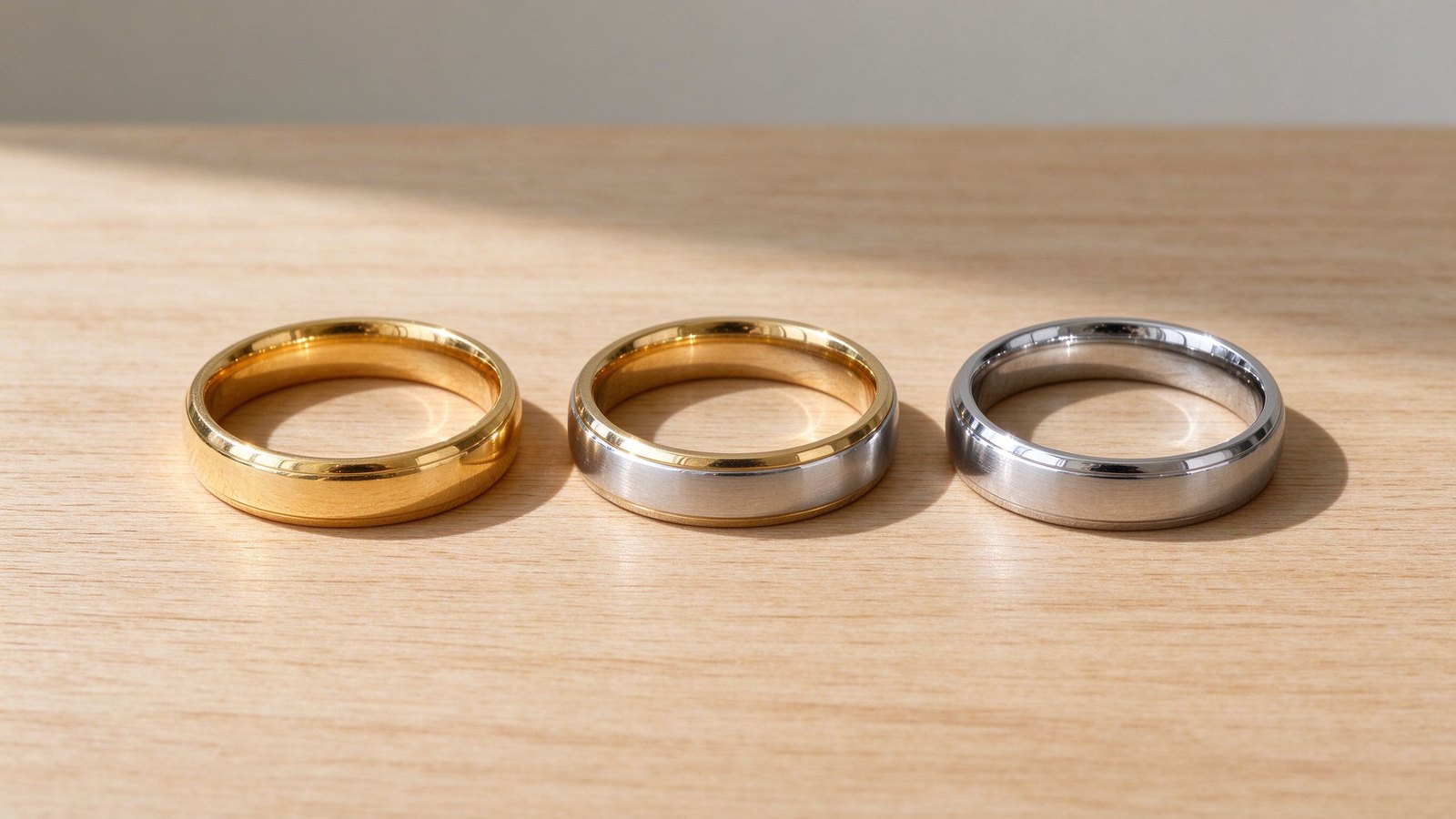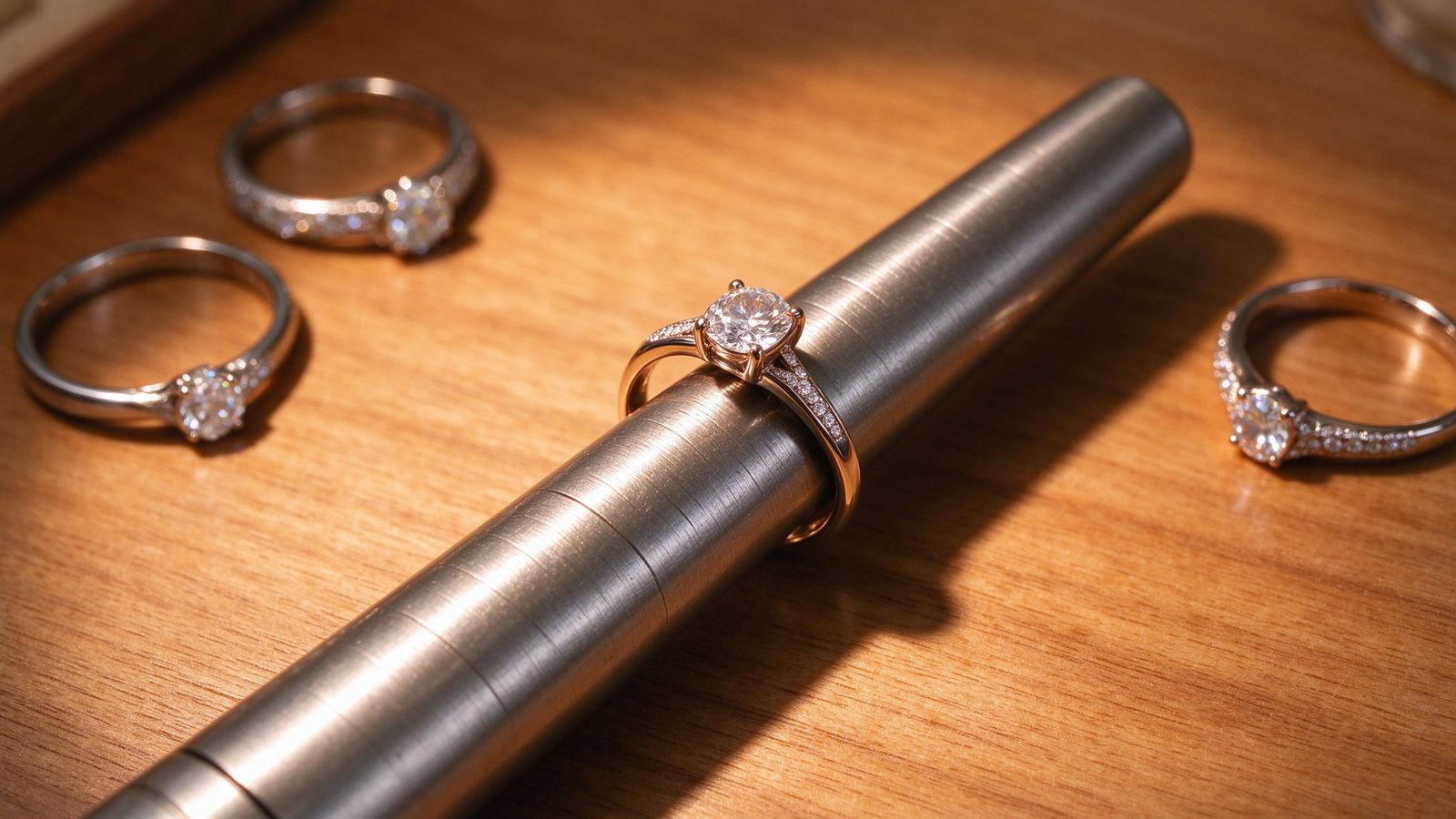
The metal you choose affects appearance, durability, price, and maintenance. This comprehensive comparison helps bespoke clients make an informed decision.
Gold Purity and Alloys
18K gold contains 75% pure gold alloyed with other metals for strength. White gold uses nickel or palladium alloys; yellow gold uses copper and silver; rose gold uses copper. Platinum is 95% pure platinum with 5% ruthenium or iridium.
Durability and Wear
TABLE:
| Factor | 18K Gold | Platinum |
|---|---|---|
| Hardness | 120-150 HV | 90-110 HV |
| Density | 15.5 g/cc | 21.4 g/cc |
| Scratch Resistance | Good | Excellent (self-healing) |
| Tarnish | No (white gold needs rhodium) | No |
| Maintenance | Rhodium every 1-2 years | Polish as needed |
Price Comparison
Platinum is approximately 2-3x more expensive than 18K gold due to higher density and material cost. For a typical engagement ring setting, 18K gold saves $200-500 at wholesale.
Color and Appearance
18K white gold has a warm white tone and requires rhodium plating for a bright white finish. Platinum has a naturally cool, gray-white patina that develops over time — many customers find this patina desirable.
Frequently Asked Questions
Does 18K gold tarnish?
Yellow and rose gold do not tarnish. White gold may yellow as rhodium plating wears, requiring re-plating every 1-2 years.
Is platinum hypoallergenic?
Yes. Platinum is 95% pure and nickel-free, making it ideal for sensitive skin.
Conclusion
18K gold offers excellent value and versatility, while platinum provides premium durability and hypoallergenic properties. Holycome's master jewelers craft bespoke pieces in both metals. Contact service@holycome.com for a custom quote.