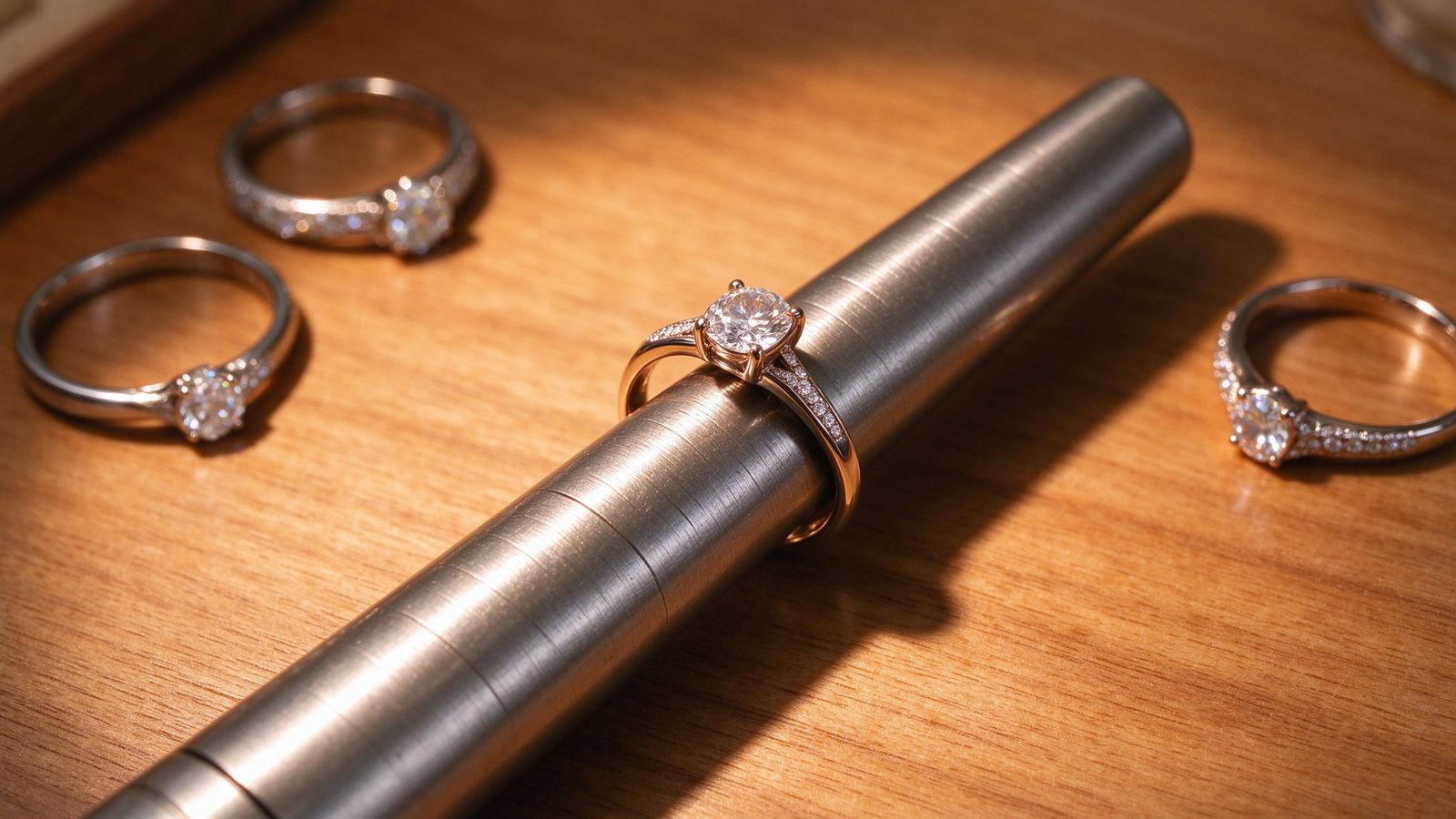
The Jewelry Design Consultation: What to Expect at Your First Meeting
A custom jewelry piece usually begins with a conversation, not a sketch. The design consultation is where a vague idea in your head becomes a set of decisions a jeweler can actually build. Many people avoid custom jewelry because they do not know what happens in that first meeting. They imagine they will be pressured to buy something expensive, or that they need to arrive with a drawing ready. The reality is the opposite: the consultation is your chance to ask questions, look at options, and decide whether the jeweler is right for you. This guide walks through what a real design consultation looks like, what to bring, what questions to ask, and how the conversation turns into a plan. By the end, the first meeting feels like something you can walk into with confidence.
What a Consultation Actually Is
A design consultation is a conversation about what you want. It is not a sales pitch. A good jeweler listens first. They ask why you want the piece, what it means, what you have seen that you like, and what budget you are working with. They may show you metals, stone shapes, and setting styles. They will not draw a finished design on the spot; that comes later, after they understand you. Our bespoke process overview explains the whole journey, and the consultation is step one.
The consultation may happen in person, over a video call, or by email. For a local jeweler, in person is best because you can hold metals and stones. For an online custom maker, a video call works. The point is not the format; the point is that the jeweler understands your idea before quoting a price. If a jeweler gives you a price in the first five minutes without asking questions, that is a warning sign. Our quotes guide explains.
What to Bring
Bring references. Screenshots of rings you like, photos of a gemstone color, a description of the story behind the piece. Bring your budget range, honestly. Bring questions. You do not need a drawing; that is the jeweler's job. If you have a family stone to reset, bring it. If you know your ring size, have it measured with our sizing guide. The more context you bring, the closer the first design lands.
Bring inspiration, not prescriptions. It helps to show three rings you like, even if they are different. The jeweler will look for the common thread: do you prefer thin bands, high settings, or vintage detail? You do not need to decide those yourself. The point of the meeting is that they help you decide. Our collection guide discusses defining your taste.
What the Jeweler Will Ask
Expect questions like: What is the occasion? Who will wear it? What is the daily environment, office or hands-on work? What colors and styles do you usually wear? Do you want it to look modern or vintage? What is the budget? How soon do you need it? These questions are not prying; they determine what is buildable. A ring for a hands-on mechanic needs a low setting; a ring for a city professional can be more delicate. Our men's style guide shows how use changes design.
The jeweler will also ask about the stone. Natural or lab-grown? Colorless or colored? What size? Our lab-grown versus natural guide frames that choice. If you are undecided, the consultation is where you compare. A good jeweler lays out options without pushing one.
What Happens After the Meeting
After the consultation, the jeweler sends a design proposal: a sketch or CAD rendering, a list of materials, and a price. You review it, request changes, and approve. This is the prototype approval step. Nothing is built until you sign off. The first sketch is almost never the final design; expect one or two rounds of tweaks. That is normal and expected. Our casting guide explains what happens after approval.
Questions You Should Ask
Ask about timeline: how long from approval to delivery? Ask about revisions: how many rounds are included? Ask about the stone source and certification. Ask about warranties and aftercare. Ask whether they use the stone you provide or source one. A transparent jeweler answers everything. Our certification guide prepares you. If they avoid questions, walk away. Our scam guide lists red flags.
The Budget Conversation
Be honest about budget. A jeweler would rather design within your range than over-promise and disappoint. If you say a number, they will propose options that fit it. If you are unsure what a piece should cost, our budget guide gives ranges. The consultation is the place to discover what your budget buys, not a place to hide it. Hiding the budget leads to a design you cannot approve. Our quotes guide compares.
In Person Versus Remote Consultations
A local in-person consultation lets you feel the weight of a platinum band, see the color of a gold alloy under real light, and try on sample settings. That is valuable. But remote consultations, which most online custom jewelers offer, work remarkably well. You send photos of your hand, your style, and your references, and the jeweler sends rendered images. The trade-off is that you cannot hold the metal, but the design precision is often better, because CAD renderings show angles a physical sample cannot. Our online buying guide covers remote buying. Both formats are valid; the jeweler matters more than the room.
In a remote consultation, expect a detailed questionnaire rather than a long video call. You answer questions about size, style, budget, and stone preference by email, and the jeweler replies with options. This works well for people who know what they want. If you are still exploring, a video call lets the jeweler ask follow-ups. Choose the format that matches how you like to communicate. Our bespoke process guide compares.
How Long the Consultation Takes
A first consultation is usually thirty to sixty minutes. You do not need to prepare a speech. Bring your references, answer questions honestly, and ask anything. You should leave with a clear sense of whether this jeweler is the right fit, what the ballpark budget is, and what the next step is. You should not leave with a pressure to sign. If you need time to think, take it. A reputable jeweler will not rush you. Our surprise engagement guide notes that consultations are also where grooms learn what their partner would love.
Red Flags in a Consultation
If the jeweler pushes a specific diamond hard, dodges certification questions, or gives a price that changes by thousands without explanation, walk away. If they dismiss your ideas rather than explaining why something is hard to build, look elsewhere. A good consultation feels collaborative. Our scam red flags guide lists more. The consultation is your chance to vet them as much as they vet you.
Turning Words Into a Design
Jewelry design begins with words. You say things like delicate, vintage, low profile, yellow gold, oval stone. The jeweler translates those into technical choices. Delicate means a thin band and light prongs. Vintage means milgrain edges or filigree. Low profile means a setting that sits close to the finger, so it catches nothing. Each word you use narrows the design. By the end of the consultation, the jeweler has enough to sketch two or three directions. You then pick the direction you like best. Our halo versus solitaire guide is exactly the kind of choice this step narrows.
You do not need to know the technical terms. That is the jeweler's job. If you say you like something but cannot name it, describe it. The jeweler will match your description to a style. The consultation is a translation conversation. You bring the feeling; they bring the vocabulary. Over and over, customers leave the first meeting surprised at how easily their vague idea became a concrete plan. That is what a good jeweler does.
Timeline Expectations
A custom piece usually takes four to eight weeks from approval. The consultation is step one, and it should not be rushed. Expect to leave the meeting and wait a few days for the proposal. Expect one or two rounds of revisions. Expect the jeweler to send progress photos during making. Our bespoke process guide lays out the stages. If you need a piece by a date, say so at the consultation; that sets the timeline. Rushing a custom piece usually shows in the result.
What You Decide at the Consultation
By the end of the first meeting, you should have agreed on several things. The metal: yellow, white, or rose gold, or platinum. Our metal guide frames that. The stone: shape, size, natural or lab-grown. The setting style: prong, bezel, halo. The budget range. The timeline. You do not decide every detail now; the jeweler proposes those in the sketch. But you lock the big choices so the sketch is on the right track. This prevents a finished design that you love but cannot afford.
If you are undecided on any of these, say so. The jeweler will propose options and explain trade-offs. The consultation is not a test you must pass with all answers ready. It is a working session. Many of the best pieces start with a customer who is unsure and leaves with a clearer vision. That is the point of the meeting. Our colored gemstone guide is one of the reference documents the jeweler may share.
The best way to walk into a consultation is curious, not certain. You do not need to know what you want down to the millimeter. You need to know the feeling you are after and the budget you have. Bring pictures you love, even if they are inconsistent. The jeweler's job is to find the common thread and turn it into a design. If you leave the consultation knowing less than when you arrived, the jeweler did not do their job. A good consultation ends with you feeling more clear, not more confused.
Remember that the consultation is free and low pressure. You can talk to more than one jeweler before deciding. Compare how each listens, how each explains options, and how each prices the work. The cheapest quote is not always the best, and the most expensive is not always the right. Our quotes guide helps. Once you find a jeweler who listens, the rest of the process becomes enjoyable. The consultation is where that relationship starts.
Take your time. A custom piece is worn for decades, and the first conversation deserves an hour. Do not let anyone rush you into deciding on the spot. You can always come back. The consultation is the foundation; a weak foundation means months of revisions later. Get it right at the start, and the rest of the process runs smoothly. Our bespoke process guide shows what follows.
That is the whole consultation, kept simple and low pressure. Bring references, share your budget, answer questions honestly, and leave with a clear plan. The right jeweler makes the conversation feel easy. When that click happens, the piece that follows is usually the one you love. Our bespoke process guide continues from here.
After the Consultation: Next Steps
Once the meeting ends, the jeweler takes notes back to the bench. They draft a design, choose stone options, and prepare a quote. You will receive a proposal within a few days. Review it carefully, and do not be afraid to request changes at this stage. Changing a sketch is cheap; changing a finished ring is expensive. This back and forth is normal and expected. Our prototype approval guide covers it. Once you approve, production begins. Our casting guide describes what happens next.
Design Consultations With HOLYCOME
HOLYCOME, based in Henggang, Longgang, Shenzhen, starts every custom order with a detailed consultation over email or video. Email us at service@holycome.com to book. Our pricing guide and prototype guide explain the next steps.
The first consultation is low pressure. Bring references, be honest about budget, and ask questions. The right jeweler turns your idea into something you will wear for life. That conversation is where every piece begins.