Every ring that leaves our bench passes through two pairs of eyes. The setter checks it after setting. Then a second person, not the setter, checks it again before the ring is boxed. This is not bureaucracy. It is how we catch the things the maker is too close to see. A craftsperson who just built a ring is not the best person to judge it. They know what they intended. The inspector sees what is actually there.
Stage One: The Maker's Check
After setting, the setter looks at every stone and every prong. They tap the stone, check the seat, look for sharp prong tips. This catches the obvious: a loose stone, a bent prong, a rough edge. The setter knows this ring. They know where the tricky spots were. This first check fixes most issues before the ring moves on. It is the craftsperson taking responsibility for their own work.
Stage Two: The Independent Inspection
Then the ring goes to a different person. This person did not build the ring. They look at it fresh. They check every stone, every prong, the finish, the engraving, the size. They run a tool around the shank. They look for scratches, sharp edges, and anything the maker missed. Because they are not attached to the ring, they see what is actually there. This second pair of eyes catches the small issues the first person was too close to notice.
- Stage one: maker checks their own work.
- Stage two: independent inspector checks everything fresh.
- Both stages must pass before the ring is boxed.
What the Second Check Catches
Small things. A prong tip that is slightly sharp. A stone that is microscopically tilted. A scratch left by polishing. A comfort edge that was missed. None of these are visible to a client at pickup. They are visible under magnification. We catch them now, fix them now, rather than have you discover them in a year. The second check is not about impressing anyone. It is about not shipping a ring that has a known flaw.
Why Not Just Trust the Maker
We trust our makers. They are excellent. But everyone has blind spots. The maker knows what they intended, and the brain fills in the gaps. An independent inspector does not know the intention. They see the reality. This is true in surgery, in aviation, and in jewelry. A second set of trained eyes catches what the first misses. We are not doubting our bench. We are improving it.
What Happens When Something Fails
The ring goes back. If the inspector finds a loose stone, it is re-set. If a prong is sharp, it is finished. If a scratch is there, it is polished out. The ring does not leave until both stages pass. We have held rings an extra day for a small fix. We have re-set a stone at the last minute. That is the cost of the double check. It is worth it. A ring that leaves with a known flaw is a ring that comes back under warranty. Better to keep it an extra day.
You Are Welcome to Watch
When you come to pick up the ring, we will walk you through the inspection. We will show you the stones under the loupe. We will explain what we checked. Most clients are fascinated. The ring they are about to wear has been looked at twice, by two different people, under magnification. That is the standard. It is not marketing. It is the process.
What We Actually Check
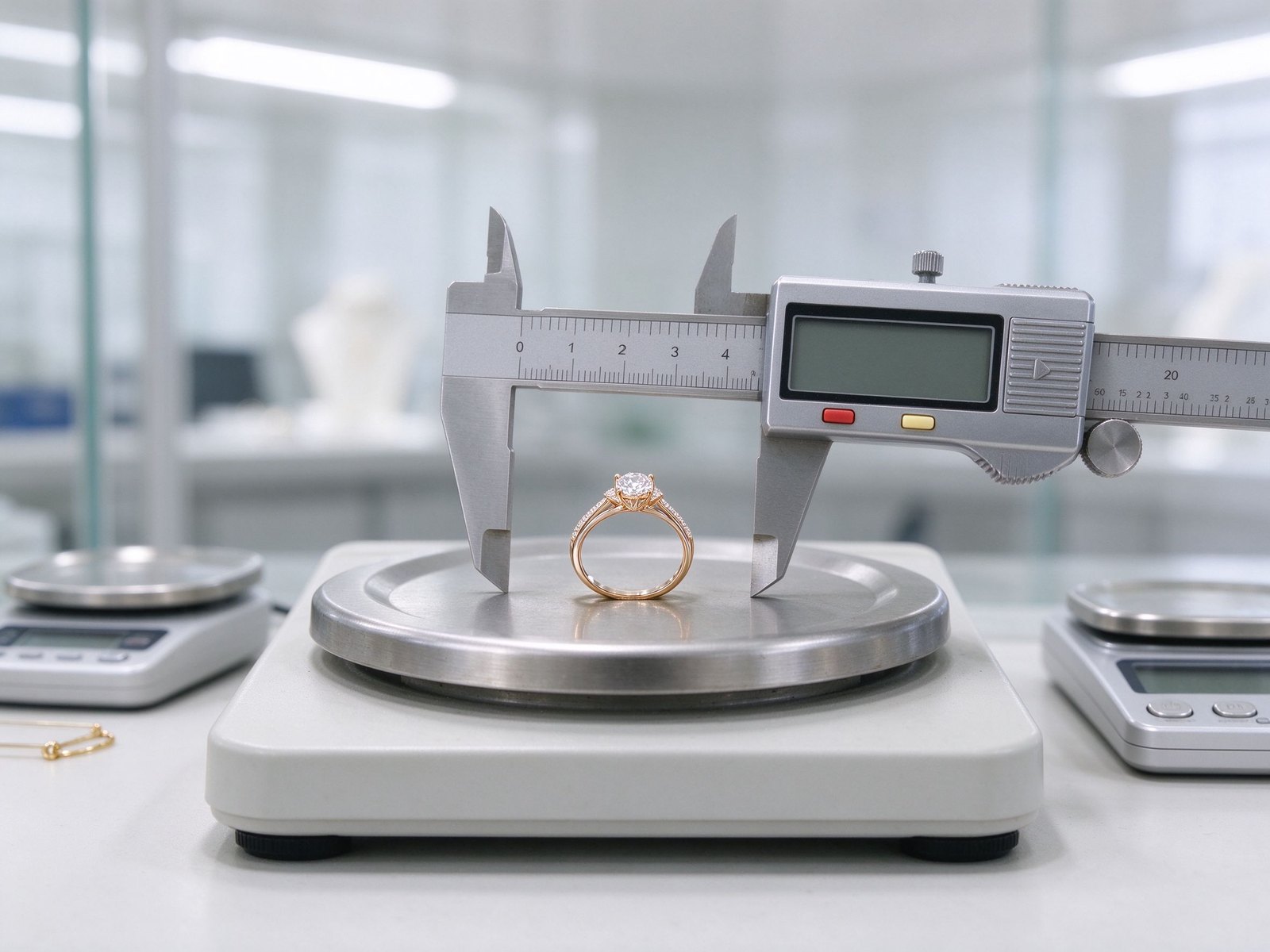
Every stone is tapped. Every prong is looked at. The shank is checked for sharp edges. The engraving is read. The size is confirmed on a mandrel. The ring is weighed against the CAD. The finish is inspected under magnification. That is the checklist. It is not ceremonial. Each item exists because a ring failed it once. We learn from our own mistakes, and the checklist grows. What started as four checks is now twelve. We have not added one for show.
The Psychology of the Second Pair of Eyes
When you have been building a ring for a week, you stop seeing it. Your brain knows what you meant to make, and it overlooks what you actually made. A fresh person sees the actual ring. This is not about trust. It is about human perception. We all have blind spots. The second check is not a verdict on the maker. It is a tool that helps the maker. Most makers prefer the second check, because it catches the thing they knew, somewhere, they had missed.
Frequently Asked Questions
Can I request extra photos before shipping
Yes. We photograph every finished ring before it leaves.
What if I find a flaw later
Bring it in. Our warranty covers craftsmanship. We will make it right.
Do you check repairs too
Yes. Every repair goes through the same two-stage check.
The Checklist, Item by Item
Our inspection checklist has grown over years. It starts with the obvious: every stone is tight, every prong is smooth. Then it moves to the less obvious: the inside of the shank is comfort finished, the engraving is legible, the size is correct on a mandrel, the hallmarks are present, the finish is uniform under magnification, the ring weighs what the CAD predicted. Each item exists because a ring failed it once. We do not skip items. We do not trust that the last ring passed, so this one will. Each ring gets the full checklist, every time.
What We Found This Week
This week, the second inspector caught a prong tip that was slightly sharp on a solitaire. The setter had not noticed because they were focused on the seat. The tip was re-burnished before the ring shipped. Last month, we caught a stone that was microscopically tilted on a pavé band. It was re-seated. The clients never knew. That is the point of the second check. The flaws are small enough that the client would likely not notice for months. We notice now, while the fix is free.
Why We Photograph Every Ring
Before a ring ships, we photograph it from every angle. The photos go into the client's file. If a question arises later about how the ring was finished, we have the record. If a client comes back years later for a matching band, the photos show us the exact finish. This is not marketing. It is record-keeping. A bespoke ring should be traceable to the day it left the bench, and the photos make that possible.
What Clients Ask Us
Can I watch the inspection
Yes. At pickup, we will show you the ring under the loupe.
What if I find a flaw later
Bring it in. Our warranty covers craftsmanship. We will fix it.
Do you inspect repair work too
Yes. Every repair passes the same two-stage check before it leaves.
What Happens When a Ring Fails Inspection
It goes back. A loose stone is re-set. A sharp prong is burnished. A scratch is polished out. The ring does not ship. We have held rings an extra day for a single sharp prong. We have re-set a stone at the last minute because the inspector caught a hairline gap. This is not slow service. This is the service. A ring that leaves with a known flaw comes back under warranty. A ring held an extra day does not. The small delay now saves a return trip later.
The Human Element
Machines can check dimensions. They cannot check feel. The inspector runs a finger around the inside of the shank, looking for sharp edges a camera misses. They hold the ring to the light and turn it slowly, watching for a reflection that should not be there. These are human checks. We use magnification, but the final judgment is a person holding the ring. That is why the second pair of eyes matters. A machine would pass a ring that a human catches immediately.
How the Checklist Grew
We did not start with twelve checks. We started with four: stones tight, prongs smooth, size correct, finish clean. Every time a ring came back with a problem we had missed, we added the check that would have caught it. The checklist grew from experience, not from a manual. Each item exists because a client once had a problem. We would rather check too much than too little. The ring leaves only when every item on the list is green.
What We Tell Clients Who Ask to Rush
Sometimes a client needs a ring in a week for a surprise. We can expedite, but we never skip the inspection. A rushed ring that skips the second check is a ring that comes back. We will work late, we will prioritize, but the double check happens. If a client pushes us to ship a ring before the second check is done, we say no. That is the line. The ring ships when the inspection passes, not when the calendar demands it. Clients who understand this become clients for life. Clients who do not usually thank us later.
The Inspection Room
We keep a separate inspection bench, away from the making benches. The inspector is not the maker. They sit in a quiet spot with a loupe and a checklist. This physical separation matters. When the maker leaves the bench and walks to the inspector table, the mental context changes. The maker stops building. The inspector starts checking. That shift is what makes the second pair of eyes actually work. It is not just a different person. It is a different mode.
What We Do Not Inspect
We do not inspect the stone itself. The stone comes with a certificate from the lab. We trust the lab grading. What we inspect is the setting, the fit, the finish, and the security. We do not try to re-grade your diamond. That is not our job. Our job is to make sure the ring we built holds the stone you chose. We do that twice. The stone quality is between you and the certificate.
How Clients Can Help
The inspection works best if clients tell us what they care about. If you are hard on rings, tell us. We will inspect the prongs extra carefully. If you have sensitive skin, tell us. We will check for sharp inside edges. The more we know about how you wear the ring, the better we can target the inspection. The checklist is our baseline. Your life is the extra layer.
The Cost of Skipping Inspection
We have done the math. A ring that ships without the second check comes back under warranty, usually with a loose stone. The return trip costs us more in labor and goodwill than the ten minutes the inspection would have taken. We are not being paranoid. We are being efficient. The inspection is the cheapest insurance we have. It is also the cheapest service we offer, because we do not charge for it. It is included. The price of the ring already covers two looks. That is the deal.
The ring that leaves the bench has been looked at by two people, under magnification, against a checklist. That is the standard. It is not ceremony. It is care. We would rather hold it an extra hour than ship it early. When you wear the ring, you should never think about the prongs. You should only think about the person who gave it to you. That is the whole point of the double check: it makes the ring disappear into your life. If you ever notice the ring, something went wrong. We do our best to make sure you never notice.
Closing Thought
We inspect every ring twice because a ring is worn for decades, and the week we ship it is the week we can still fix it for free. Once it leaves, the fixes cost you time and money. We would rather spend an extra hour at the bench than have you bring it back. The double check is how we make sure the ring that arrives at your hand is the ring we meant to build.