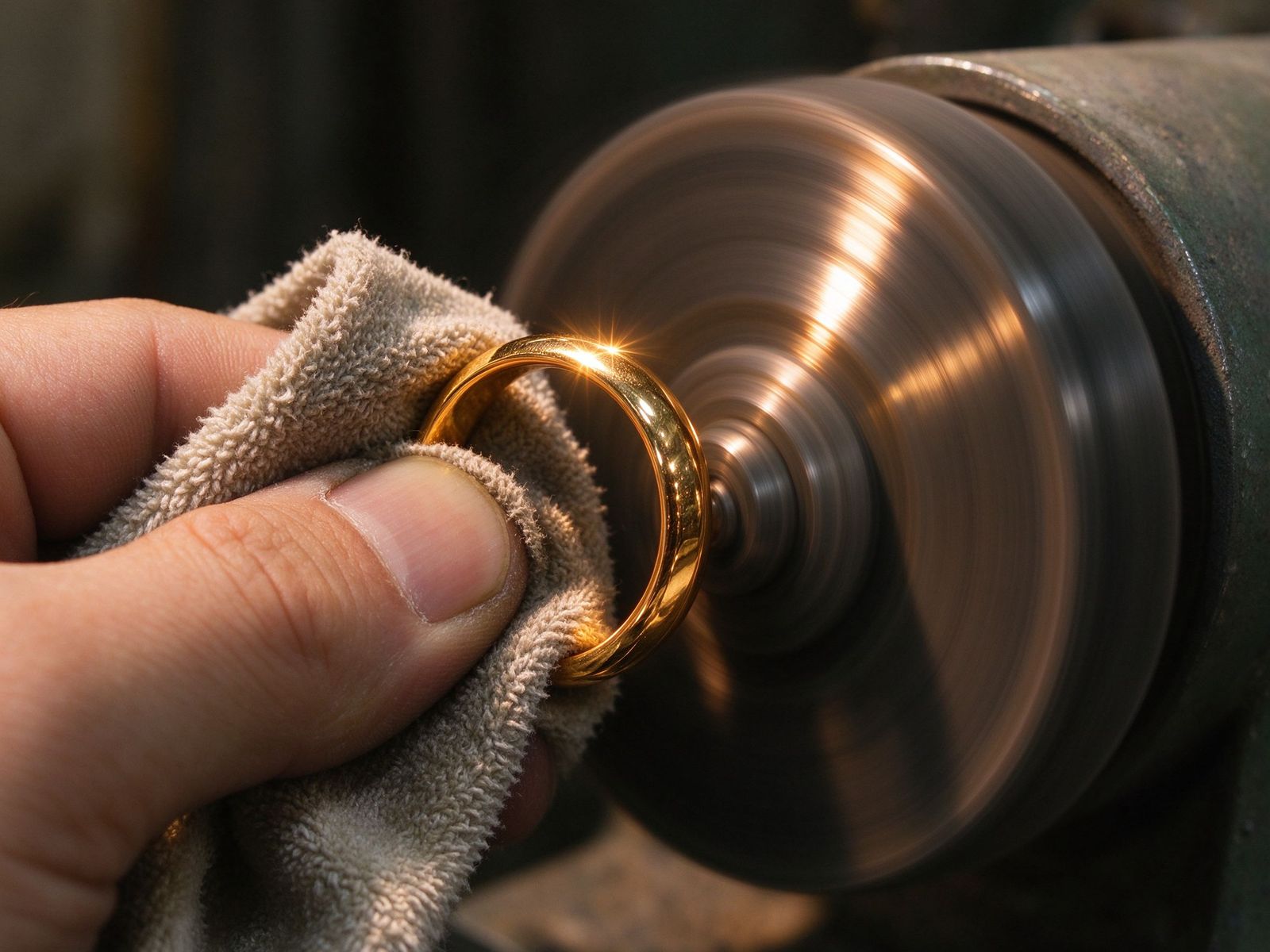
Polishing is the step that makes a ring look like jewelry. It is also the step most often rushed. A machine buffer can bring up a shine in minutes. We do not use one on fine rings. We polish by hand, with compounds and brushes, going through stages. It takes longer. The ring feels different because of it. Here is why we insist on the hand, and what you actually feel on your finger.
What Polishing Actually Does
Polishing removes micro-scratches and brings the metal to a uniform surface. It is not magic; it is abrasion, finer and finer. You start with a coarser compound to level the surface, then move to finer compounds until the metal reflects like a mirror. Done by machine, the pressure is uneven and the buff cuts too fast. Done by hand, the craftsperson feels every change in the surface and stops when it is right. The result is a finish that is even, not over-cut.
Why Machine Buffs Are Risky
A machine buffer spins at high speed. It cuts fast. On a thin shank, it can thin the metal further. On a pavé band, it can knock melee loose. On engraved details, it can wear the engraving down. We have seen rings from other shops where the milgrain was gone after a single machine polish. The machine does not know what it is touching. The hand does. We hand-polish because we want to control exactly how much metal comes off, and where.
- Machine buff: fast, uneven, can thin metal and damage details.
- Hand polish: controlled, even, preserves details and engraving.
- We use hand polish on every fine ring we make or service.
The Stages of a Hand Polish
First, we clean the ring. Then we use a medium abrasive to remove surface scratches. Then a finer compound. Then a final rouge on a soft brush. Each stage removes the scratches left by the previous one. We stop when the surface is uniform. We do not keep polishing past that point, because more polish is not better; it is just thinner metal. A hand polish knows when to stop. A machine does not.

What Hand Polishing Preserves
Engraving, milgrain, texture, prongs, and stone edges. These details are the parts that make a ring yours. A machine polish wears them down. A hand polish works around them. When you collect a ring from us, the engraving inside the band is still sharp, the milgrain is still crisp, and the prongs are still rounded. That is the difference between a ring that was finished with care and one that was run through a buffer on a Friday afternoon.
How Often to Polish
Not as often as you think. A hand polish every two to three years is plenty. Polishing too often, even by hand, removes metal over time. Between polishes, wash the ring and wear it. Scratches are a record. When they bother you, bring it in. We will polish lightly and stop. We will not take the ring down to bare metal just to make it perfect for a week. Patina is allowed.
The Feel of a Hand-Finished Ring
You feel it before you see it. A hand-finished ring slides on smoothly. The edges are rounded. The inside of the shank is comfort-fit. There are no sharp catches. A machine-finished ring can feel sharp on the edges, because the buff did not get into every corner. The hand polish rounds every edge. That is why the ring feels like it belongs on your finger. It was made for a finger, not a shelf.
Brushed and Matte Finishes
Not every ring is mirror polished. Brushed finishes have a fine linear texture. Matte finishes are soft. These are done after the mirror polish, by hand, with a brush or a media. We do not let a machine decide the texture. We brush by hand so the lines are even and the direction is consistent. A brushed ring from a machine looks uniform. A brushed ring by hand has a slight, honest variation that reads as crafted. Most clients cannot name the difference. They can feel it.
What Happens When You Over-Polish
Over time, repeated polishing thins the shank. This is why we polish rarely. A ring polished every few months will, over decades, wear thin. A ring polished every two to three years will not. We tell clients this honestly. The scratch you want removed today is less important than the metal you would remove to do it. Sometimes the right answer is to live with the scratch. Patina is not a flaw.
Frequently Asked Questions
How often should I polish my ring
Every two to three years, professionally. Wash at home monthly.
Can I use a polishing cloth at home
Yes, a soft cloth for light maintenance. Avoid abrasive cloths.
Will polishing remove engraving
A light hand polish will not. An aggressive machine one might.
The Compounds We Use
Polishing is not one step. It is a sequence. We start with a medium tripoli compound to level the surface. Then a finer ruby rouge. Then a final white diamond compound on a soft brush. Each step removes the scratches left by the previous one. We change compounds between stages, and we clean the ring between them, so no grit carries over. The whole sequence on a solitaire takes about forty minutes. A pavé band takes longer, because the detail work around each stone is slow. We do not rush the sequence. Skipping a stage means the scratches from the coarser compound stay forever.
What We Refuse to Polish
We do not aggressively polish rings that are already thin. If a shank has worn down over decades, an aggressive polish will wear through it. We tell the client and recommend a rebuild instead. We do not polish antique rings with original patina without asking. We do not polish engraved surfaces aggressively, because the engraving disappears. We would rather disappoint a client who wants a mirror shine than destroy a ring that has meaning. Sometimes the right answer is: leave the scratches.
Brushed, Matte, and Satin Finishes
A mirror polish is not the only finish. A brushed finish has fine linear texture. A matte finish is soft and even. A satin finish sits between them. We apply these by hand after the mirror polish, using a wire brush or a media. The direction of the brush matters. We brush in consistent lines so the texture reads as intentional. A machine applied brushed finish looks uniform. A hand brushed finish has a slight variation that reads as crafted. Most clients cannot name the difference. They can feel it.
What Clients Ask Us
How often should I polish
Every two to three years. More often thins the metal.
Can I use a silver polishing cloth on gold
A soft cloth is fine. Abrasive silver cloths are not.
Will polishing remove deep scratches
Surface scratches, yes. Deep gouges, no. Those need metal added, not removed.
The Cost of a Good Polish
A hand polish is not free. It is forty minutes of bench time, compounds, and cleanup. We charge fairly for it. A machine polish at a kiosk is faster and cheaper, but it cuts more metal and can damage details. Over a lifetime, the hand polish costs more per visit but less total, because you need fewer visits and the ring lasts longer. We explain this to clients who ask why our polish is not the cheapest. The cheapest polish is the one that thins your shank. We do not sell that.
What a Polished Ring Feels Like
You feel it before you see it. A hand-finished ring slides on smoothly. The edges are rounded. There are no sharp catches on the inside. A machine-finished ring can feel sharp where the buff did not reach. The hand polish rounds every edge, because the craftsperson can feel each corner. This is why the ring disappears on your finger after a day. It was finished for a finger, not for a display stand.
Polishing Heirloom Pieces
Heirloom rings deserve a lighter hand. We do not aggressively polish a ring with original engraving or patina. We clean it, lightly brighten the high points, and stop. Sometimes the right refurbishment is less than what a new ring would get, because the patina is part of the value. If you bring in a grandmother ring, tell us the story. The story changes what we choose to touch. A ring that looks tired may look tired on purpose, and we respect that.
What Scratches Actually Mean
Scratches are not damage. They are a record. A wedding band worn for ten years has scratches on the high points. Those scratches are the years. Some clients want them polished out. We do it, but we also tell them: the ring will scratch again within months. The patina is honest. Sometimes the right call is to leave the scratches. A ring that has never been polished in twenty years has a soft, worn-in look that a fresh polish cannot reproduce. We respect that. Bring the ring in and tell us how you feel about the scratches. We will polish them out or leave them, whichever you want.
The Final Wipe
Before a ring is boxed, it gets a final wipe with a clean cloth. Every fingerprint is removed. The ring is inspected one last time under the loupe. The inside is checked for any polish compound left behind. This takes five minutes. It is the last hand that touches the ring before yours. We do not skip it. A ring that arrives with a smudge on the inside is a ring that felt rushed. We want the ring to feel finished. The final wipe is how we make sure it is.
What a Machine Polish Actually Does
A machine buffer spins a cotton wheel at high speed. It cuts fast. On a flat surface, it is fine. On a ring with detail, it cuts the high points faster than the low points, rounding edges and wearing down milgrain. It also generates heat, which can soften solder if you are not careful. We use machines for rough prep on plain bands. We never use them for the final finish. The hand does the last ten percent. That last ten percent is the difference between a ring that looks machined and one that feels made.
When to Skip the Polish Entirely
If your ring has surface scratches but the metal is thin, skip the polish. Bring it in and we will look. Sometimes the honest answer is that the shank is worn and a polish will make it thinner. In that case, we rebuild the shank instead. A rebuilt shank with a light polish is better than a thin shank with a mirror finish. We would rather tell you no to a polish than damage the ring. The polish is optional. The ring is not.
Why We Do Not Outsource Polishing
Some shops send rings out for polishing. We do not. We polish in house. The reason is control. When a ring leaves our bench for polishing, we lose track of how much metal is removed. A third party may buff it fast and hard, thinning the shank. When we polish in house, we know exactly what we removed. We stop when the surface is right. The ring comes back to the same hands that built it. That continuity matters. It is also faster. A ring we polish ourselves is back on the bench in an hour, not a week.
That is why we polish every ring by hand, even when it would be faster not to.
Closing Thought
Polishing is the last step before the ring leaves the bench, and it is the step you feel every day. We do it by hand because a ring is worn, not displayed. A hand-finished ring feels smooth, wears evenly, and ages gracefully. A machine-finished one looks bright for a week and then shows its shortcuts. We choose the hand. Your finger will tell you why.