People hear "3D printed jewelry" and picture a printer spitting out a finished ring. It does not. The printer spits out a wax pattern, which is then cast into metal. The printer is not replacing the craft. It is replacing the hand-carved wax blank that used to take days. The casting, setting, and polishing are still done by hand. This is how the modern atelier uses the machine, and why we print wax rather than carve every ring from scratch.
What a Wax Pattern Is
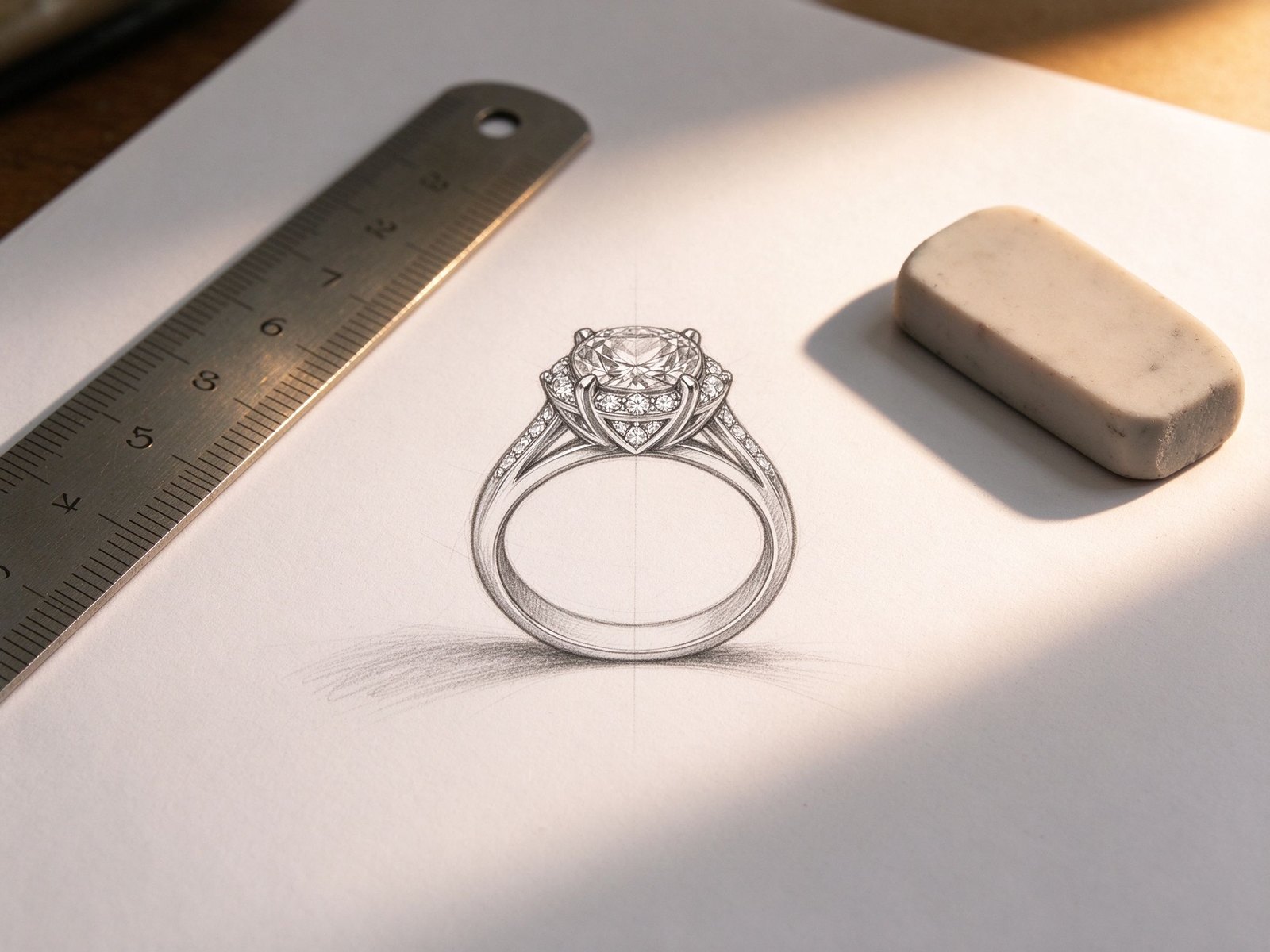
A wax pattern is a positive model of the ring, exactly the size and shape the final metal piece will be. In traditional jewelry making, a carver shapes this wax by hand from a block. It takes hours or days. In our workshop, the CAD file drives a 3D printer that builds the wax layer by layer in a few hours. The result is the same object, produced faster and more accurately. The printer does not design the ring. It builds what the designer already drew.
How the Printer Builds It
The wax printer uses a resin-like material that hardens under a light. It builds the ring in layers of microscopic thickness, following the CAD geometry. When it finishes, the wax comes out slightly soft. We wash it, cure it under light, and inspect it. Supports that held the wax during printing are removed. The wax is then ready for casting. What comes out of the printer is a model, not a ring. It has never seen metal.
Why We Prefer Printed Wax for Most Designs
Printed wax is accurate. It matches the CAD to the micron, which means the ring fits the stone the way the render promised. Hand-carved wax is beautiful for organic, sculptural pieces where the imperfection is the point. For a clean solitaire or a precise pavé band, printed wax is more consistent. It also lets you approve a render that becomes, exactly, the ring. No surprises between the design and the metal.
- Printed wax: accurate, fast, repeatable for clean designs.
- Hand-carved wax: for organic, sculptural, textured pieces.
- Both are cast the same way once the wax exists.
What We Still Carve by Hand
Not everything prints well. Organic shapes, textured surfaces, hand-engraved details, and pieces where the maker wants the hand to show are still carved in wax. We have a carver on staff for those. The choice between printed and carved is a design choice, not a cost choice. Some rings need the precision of a printer. Some need the wobble of a hand. We tell you which we recommend based on the design you want.
The Wax Is Destroyed in Casting
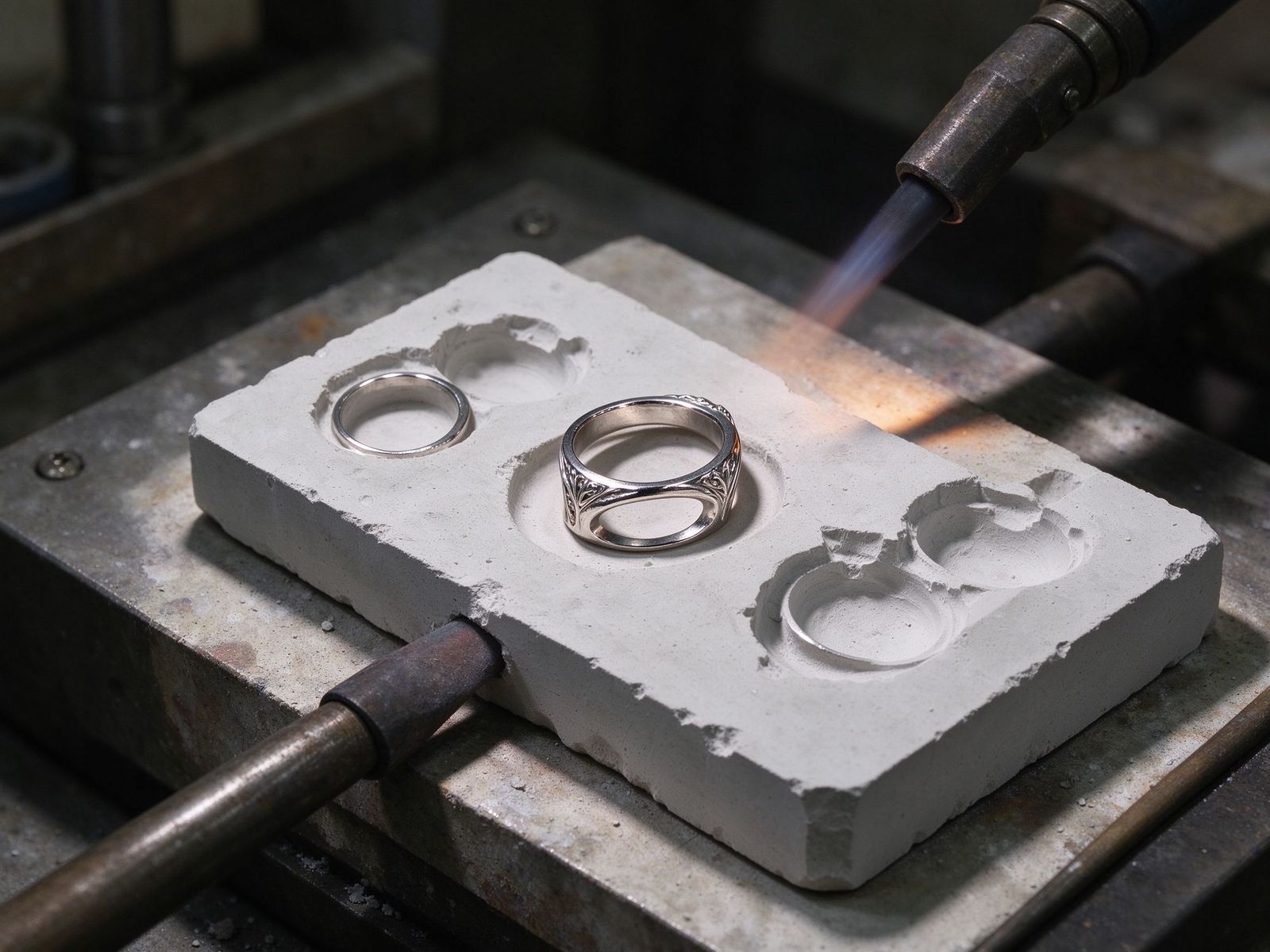
Here is the part that surprises people. The wax pattern is not saved. It is burned away in the kiln, leaving the metal. Every ring is a one-time use of the wax. If you want a second ring later, we print a new wax from the same CAD file. The digital file is the archive. The wax is the disposable bridge between the file and the metal. This is why we keep your CAD file forever. If you want a matching wedding band later, we pull the file and print a new wax.
What Happens When the Wax Is Wrong
Sometimes the wax comes back and we catch a problem: a thin spot, a rough channel, a detail that did not print cleanly. We reprint. This is normal. The printer is a tool, and tools produce imperfect outputs. The inspection step is what catches them before casting. We do not cast a wax we would not wear. If the wax is wrong, it goes in the trash and we print again. You do not pay for the reprint. It is our quality control.
Is 3D Printing Making Jewelry Less Handmade
This is the question we get asked most. Our honest answer: the printing speeds up the part that used to be slow, but the casting, setting, polishing, and inspection are all still hand. The ring you collect is still a hand-made object. The printer is a better wax carver. The rest of the craft is unchanged. We could carve every wax by hand, but it would double the lead time and cost more, with no benefit to the finished ring. We use the machine where it helps, and the hand where it matters.
What the Wax Is Made Of
The printing material is not candle wax. It is a resin that burns out cleanly in the kiln, leaving no ash. Traditional carving wax is a softer material that melts at a lower temperature. Both work, but the printed resin is engineered to leave a clean burnout, which means less casting residue. We do not care which material looks more like wax. We care which casts cleanly. The printed resin does.
Can You Feel the Difference in the Metal
No. Once the wax is burned out, the metal is the metal. The casting is the same whether the wax was printed or carved. The difference is in accuracy and repeatability, not in the final feel. A ring cast from a printed wax is indistinguishable from one cast from a carved wax, assuming the design is the same. The machine improves the front of the process. It does not change the back.
Frequently Asked Questions
Is 3D printed jewelry lower quality
No. The wax is a means to an end. The metal is cast and finished by hand either way.
Do you keep my CAD file
Yes. We archive it for matching bands and future resets.
Can I get a copy of the wax
No. It is burned in casting. We can print a keepsake copy if you want one.
The Printer in the Workshop
Our wax printer sits in a corner of the workshop, quietly running overnight. It builds rings in layers of about thirty microns, which is finer than a human hair. A solitaire wax prints in about four hours. A detailed pavé band can take eight. While it prints, the team does other work. When it finishes, we wash the wax in alcohol, cure it under UV light, and remove the support material. The whole post-print process takes about an hour. The printer is not the bottleneck. The inspection of the wax is.
When the Print Fails
Prints fail. A support breaks. A layer warps. The wax comes out slightly deformed. When that happens, we throw it away and print again. The cost of a reprint is hours, not days, and it is absorbed by us. We never cast a wax that has a visible defect. The kiln cycle is expensive in time, and we will not waste it on a wax we already know is wrong. Clients rarely see the failed prints. They see the good wax that goes into the kiln.
Traditional Wax Carving, Still in the Shop
We keep a wax carving set on the bench for organic pieces. Twisted bands, sculptural rings, textured surfaces, and pieces where the client wants the wobble of the hand are carved by hand from a wax block. The carver uses gravers and heat to shape the wax. It takes a day. The result has a slight irregularity that a printer cannot reproduce. For most solitaire rings, printed wax is better. For sculptural work, hand carving is better. We choose the method based on the design, not the marketing.
What Clients Ask Us
Is 3D printed jewelry mass produced
No. Each wax is printed for one order. The casting, setting, and polishing are all hand. There is no production line.
Can you copy a ring I love
We can use it as inspiration and design a similar piece. We do not replicate copyrighted designs or trademarked settings.
Do you keep the design forever
Yes. We archive the CAD file. If you want a matching band later, we pull it and print a new wax.
Why Not Just Carve Every Wax by Hand
Because hand carving a precision solitaire takes a skilled carver a day or more, and the result is slightly inconsistent. Printed wax is consistent to the micron. For a clean, geometric ring, that consistency is exactly what you want. Hand carving shines on organic pieces where the slight wobble is the point. We do both. We choose the method based on the design, not based on nostalgia. A ring built from a printed wax is still handmade. The printing is the front end. The casting and finishing are the craft.
The Wax Sprue and Tree
A single wax is not cast alone. We attach it to a sprue, a wax stick, and often attach several waxes to a single tree. The tree goes into the flask. When the wax burns out, the sprue becomes a channel through which the metal flows. The art is designing the sprue so metal reaches every part of the ring without trapping air. A bad sprue leaves a void in the casting. A good sprue fills cleanly. We have refined our sprue design over years. It is a quiet part of the process, but it is the difference between a clean casting and a rejected one.
What Happens to the Support Material
The wax printer builds support structures that hold the ring during printing. After printing, we break these off and clean the wax. Supports leave tiny marks on the wax, which we smooth by hand before casting. A ring that comes off the printer with supports still attached is not ready. The post-processing is half the job. We inspect each wax under magnification before it touches the sprue. If a support mark is in a visible place, we fix it now, before the metal is cast. Once the metal is there, that mark becomes a defect we have to polish away.
Resolution and Detail
The wax printer resolves detail down to about thirty microns. That is fine enough to reproduce hand engraving lines, milgrain beads, and delicate gallery rails. It is not fine enough to reproduce a fingerprint. For most jewelry, it is more than enough. When we design a ring with very fine detail, we check that the printer can actually reproduce it. If the detail is too fine, we thicken it in the CAD. The render looks ideal. The print has limits. We design within those limits.
The Environmental Footprint
Printed wax reduces waste. Hand carving wastes a block of wax. Printing uses only the material the ring needs. The burnout is clean. The metal is recycled between castings. Modern bespoke jewelry is less wasteful than it used to be. We are not saints about it. We are honest: the process is efficient, and the waste is small. A bespoke ring is not a disposable object. It is built to last decades, which is the most sustainable thing jewelry can do.
Can I See My Wax Before Casting
Yes. If you want, we will photograph the wax before it goes into the kiln. The wax looks like a white plastic version of the ring. It is not pretty, but it is the exact shape. Most clients skip this. The render already showed them the design. The wax is a process step, not a design step. But if you are curious, ask. We are happy to show you. The wax is disposable, but the photo is yours.
How Long a Wax Lasts Before Casting
We cast the wax within a day or two of printing. The resin is stable, but we do not leave it sitting for weeks. Dust settles on it. It can warp slightly in heat. The fresh wax casts cleanest. We print to a schedule, so the wax is never sitting around. When your ring moves into the casting queue, the wax prints that morning and goes into the kiln that afternoon. Fresh wax, clean casting.
Closing Thought
3D printed wax is not the enemy of craftsmanship. It is the modern version of the wax carver's bench. It lets us build precise, repeatable rings without the guesswork of hand-carved blanks. The metal that comes out of the kiln is still cast, set, and polished by hands. The printer does the boring part well. We do the rest.