The number-one way stones leave rings is not a dramatic accident. It is a tiny, quiet loosening that nobody notices until the stone is gone. Prongs wear thin over years. They catch on fabric. They get bumped against desks. They bend a fraction of a millimeter at a time, and one morning the center diamond is simply no longer there. We have seen it a hundred times. We have also stopped it a hundred times, usually in a five-minute inspection at the bench. Here is how to check your own ring at home, and the signs that mean it is time to come in.

What Prongs Actually Do
Prongs are the small metal claws that grip the edges of a stone. On a classic solitaire, there are four or six. On a pavé band, there are tiny prongs holding each melee. Each prong does two jobs: it holds the stone firmly, and it protects the girdle, the thin outer edge of the stone, from chipping. When a prong wears thin, it stops doing the first job. When it bends, it stops doing both. Prongs are not decorative. They are the entire reason the stone is on your hand at all.
The Five-Minute Home Check
Once a month, do this in good light. Wash the ring so no film hides anything. Look at the center stone from the side. Each prong should sit snug against the stone, with no visible gap. Run a fingernail gently along the top of each prong. The tips should be smooth and rounded, not sharp or worn flat. Tap the stone lightly with a wooden stick, like a pencil. It should not move. If it clicks, rattles, or shifts, that is a loose stone and you need the bench this week. Do not keep wearing it hoping it will settle. It will not.
- Gaps between prong and stone: time for the bench.
- Sharp, worn-flat prong tips: time for a re-tip.
- A stone that clicks or rattles: stop wearing it.
- Prongs bent visibly out of shape: stop wearing it.
What Normal Wear Looks Like
Prongs are supposed to wear. After years on a hand, the tips soften. That is normal. It is not normal for a prong to be paper-thin, or bent, or for the stone to move. The difference between normal wear and a problem is small, which is exactly why we offer free prong checks. You do not have to be the expert. Bring the ring in once a year and we will tell you if anything is happening. Most visits, the answer is: it looks great, keep wearing it. That is the best possible news.
The Most Dangerous Ring Is the One You Never Take Off
We admire the clients who never remove their rings. We also see the damage. Rings that never come off catch on sweaters, towels, bed linens. Each catch pulls at a prong. Over years, those pulls add up. We recommend taking the ring off to sleep, to shower, to work out, and to clean. You do not have to be precious about it. You just have to be consistent. A ring that comes off at night lives longer than one that does not, and the prongs tell the story.
What a Re-Tip Costs
A prong re-tip is one of the cheapest jobs on the bench. We rebuild the worn tip with matching solder, shape it to hug the stone, and polish it. Per prong, it is a small fee. A full re-tip on a solitaire, all six prongs, is modest. Compare that to replacing a lost center stone, and the choice is obvious. Bring the ring in once a year. Catch the worn prongs early. The re-tip is the insurance, and it costs a fraction of what a new stone would.
Heirloom Rings Need It More
Older rings often have prongs that have never been inspected. They look fine until one day they are not. If you wear a family ring, bring it in for a prong check before you wear it daily. Heirloom stones are often irreplaceable, and the prongs holding them are decades old. A ten-minute inspection tells you whether the ring is safe to wear every day or whether it needs a re-tip first. Do not learn this the hard way.
What a Loose Stone Sounds Like
Before a stone falls out, it talks. You may not notice the talk, but it is there. A loose stone clicks faintly when you tap it. It sits slightly off level. It catches light at a weird angle because it has shifted. If you are paying attention, you will feel a tiny tick when you run a fingernail across the girdle. Most people do not feel these things, which is why the monthly check matters. If you ever hear a click, stop wearing the ring. A stone that moves will not tighten itself. It will only move more.
Prong Styles and What Wears First
Not all prongs are equal. Knife-edge prongs are elegant but wear thin fastest. Rounded prongs last longer. Cathedral prongs on a solitaire catch on fabric more than low prongs. Pavé prongs are tiny and fail silently. When we design a ring, we build prongs to match the lifestyle. If you work with your hands, we build heavier prongs. If you wear the ring only on weekends, we can be more delicate. The prong design is part of the design conversation, not an afterthought. Tell us how you live, and we will build prongs that survive it.
When a Prong Snaps
If a prong snaps off, do not panic. Bring the ring in immediately. If the stone is still in, it is now held by fewer points and can loosen further. If the stone is gone, bring the ring and whatever you can find of the prong. We can rebuild the head. We cannot rebuild the stone. The cost of a re-tip is trivial next to the cost of a new center stone, which is why the monthly check is not optional. It is the cheapest insurance you will ever buy.
How a Professional Check Works
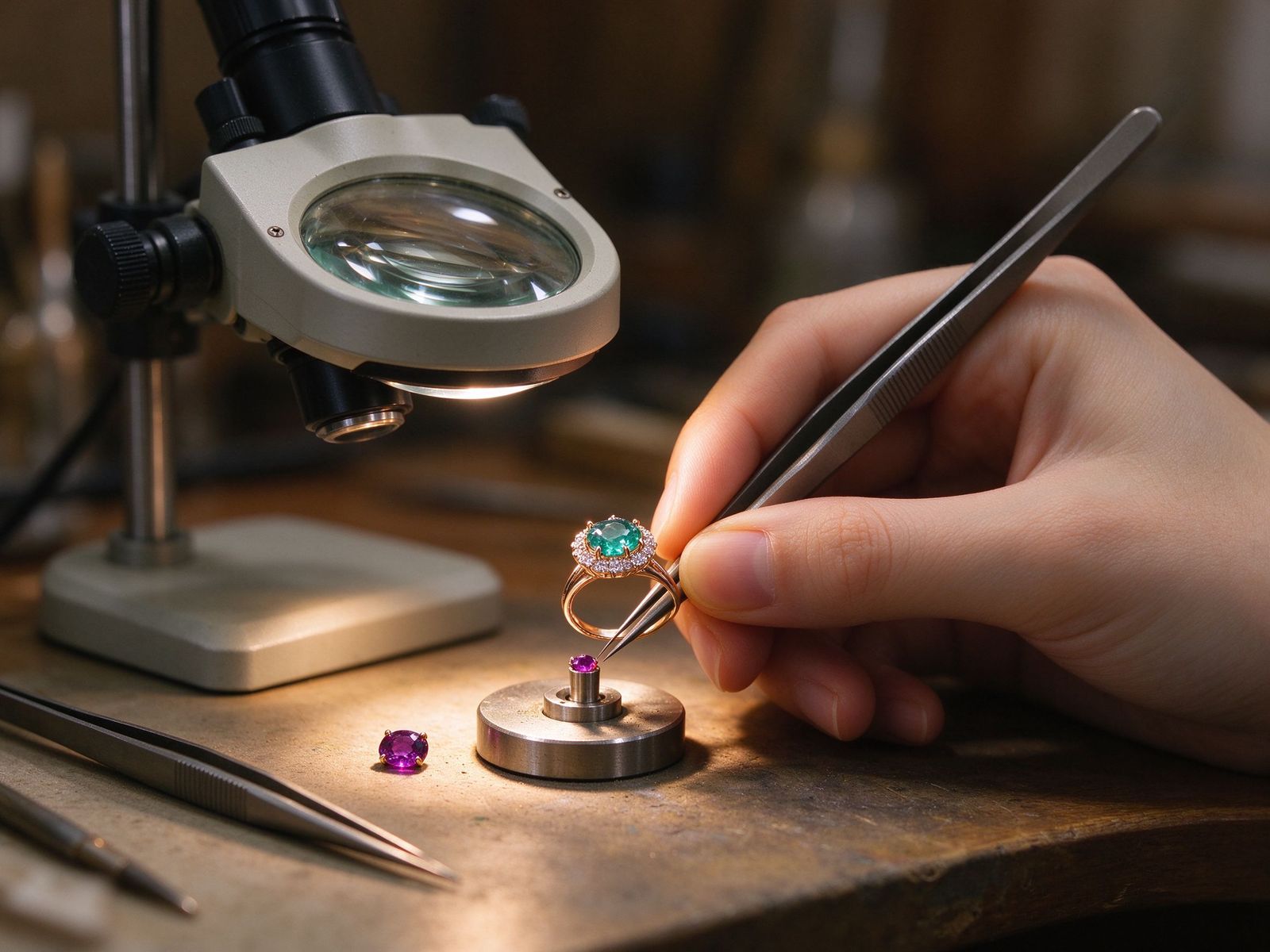
When you bring the ring in, we put it under magnification and run a small tool around each prong. We check that the stone seats correctly. We tap it gently to listen for movement. We look for wear on the prong tips. If everything is tight, you leave in five minutes with a clean ring and peace of mind. If something needs work, we quote it and tell you whether it is urgent. Most annual checks end with the words: it looks great. That is the best possible result, and it happens most of the time.
The Cost of Waiting
A re-tip now is cheap. A new center stone later is not. We have had clients who noticed a prong was thin, decided to wait, and lost the stone two weeks later. The re-tip would have cost a fraction of the replacement. This is not scare tactics. It is the math of the bench. Prongs wear predictably. If you catch them at the thin stage, the fix is small. If you wait until the stone is gone, the fix is the stone. Bring the ring in once a year. It takes five minutes and saves you real money.
What a Re-Tip Feels Like
After a re-tip, the prong is a touch firmer for a week. You may not notice. The stone sits exactly as it did. The ring looks identical, because we match the finish. Clients often bring the ring back after a re-tip and say, "I can't even tell you did anything." That is the point. A re-tip should be invisible. It should feel like a normal ring, because it is. The only difference is that the stone is now held by fresh, strong prongs instead of worn ones.
If You Work With Your Hands
If you garden, bake, type, lift, or build, your prongs work harder. Inspect them twice as often. Take the ring off for heavy work. We design rings for active clients with heavier prongs precisely because we know the wear is harder. Tell us how you live when we build the ring, and we will build prongs that match. A prong check twice a year is the minimum for active hands. Once a month at home. It takes five minutes.
The Ring You Forgot About
If you have a ring in a drawer that you stopped wearing, bring it in. We will check the prongs for free. Rings in drawers do not stay safe; the prongs corrode slightly, the metal hardens, and the stone can loosen. A ring that sat unworn for five years needs a check before it goes back on a hand. We have found loose stones on rings that were put away for years. The drawer is not a safe. The bench is.
Frequently Asked Questions
How often should I check prongs
Once a month at home, once a year professionally.
Can I tighten a prong myself
No. Leave it. A wrong move can chip the stone.
How long does a re-tip take
One to two working days. Most prongs are fixed while you wait on small jobs.
The prongs are quiet. They do their job without fanfare. Most of the time, you never think about them, which is exactly what they want. When they do need attention, they tell you gently: a slight catch on fabric, a faint tick on the stone, a prong tip that looks worn. Listen to those signs. A five-minute check once a month is enough. A yearly bench visit is enough. The stone stays. That is the whole goal.
Closing Thought
A loose stone does not announce itself. It just quietly leaves. Spend five minutes once a month looking at your prongs, and bring the ring in once a year for a professional check. That is the whole routine. It is enough. We have seen rings saved by a single prong check, and we have seen stones lost because someone skipped one. Be the person who skips neither.