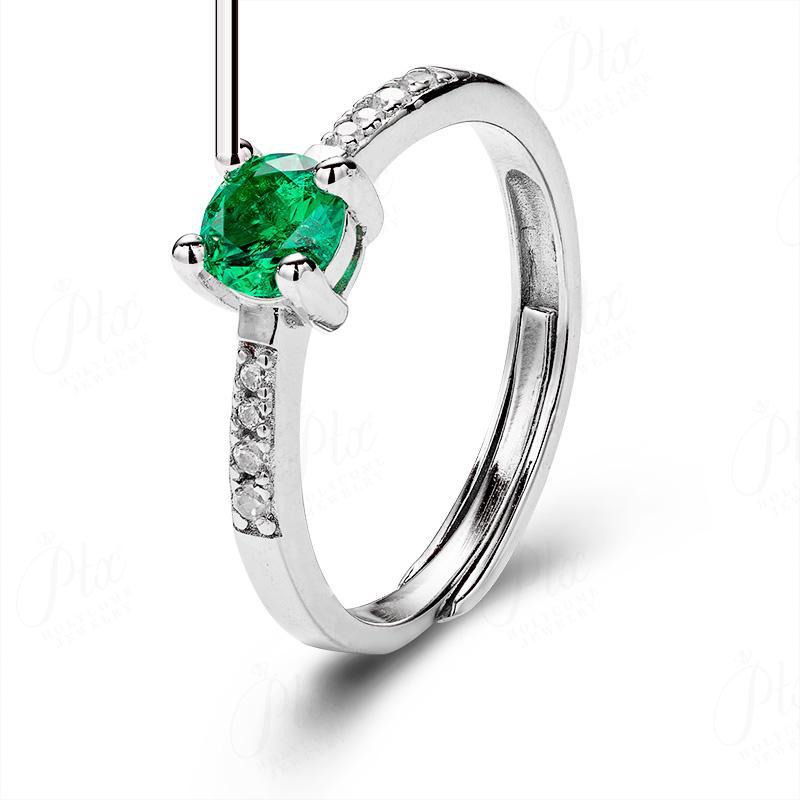
A brand ordered 300 pairs of small stud earrings. The stones arrived as a bag of loose 3mm rounds that looked fine on the loupe. But when the sales team set them on display under store lighting, one earring in five looked noticeably whiter than its neighbor, and customers assumed they were mismatched products. The problem was not the stones. It was the buying method: loose stones picked one by one are not a matched lot. Wholesale programs need color and grade (per GIA's diamond grading standards) selection built as a set, not assembled from whatever a distributor sends.
What "matching" actually means
For diamonds and colorless stones, matching locks color grade, clarity grade, cut proportion, and carat weight to a narrow band. A matched lot of 3mm rounds should all land in the same color grade (say, G-H) and a consistent clarity range, with cut angles close enough that they sparkle similarly under the same light. For colored stones, matching is about tone and saturation: two peridots both called "green" can be yellow-green, grass green, or olive, and customers see the difference immediately. We build colored-stone lots against a physical master stone approved by the buyer, then select every piece to sit within a tight delta on tone and saturation.
Grading references such as IGI grading reports and GIA color scales give a common language, but printed grades do not capture the face-up look that shoppers judge. That is why a physical master is non-negotiable for production. We ship a sample card with the first lot and keep that card for reorders, so a batch ordered six months later reads the same in display lighting.
Why a matched bag beats loose picks
Loose-picked stones average out: some are whiter, some warmer, some larger. In a single piece nobody notices. In a retail display of 20 identical rings, the eye finds the outlier immediately. A matched lot costs slightly more per stone because the supplier sorts to a narrower band, but the rejection rate in QC drops and the return rate in store drops with it. For a 1,000-piece program, the sorting premium is trivial next to the cost of reworking mismatched settings.
Size tolerance matters just as much as color. A 3.0mm stone and a 3.3mm stone both sit in a "3mm" bag, but in a shared seat they sit at different depths, changing the prong contact and the look of the top. We specify stones to a +/- 0.05mm diameter tolerance and check sampled stones with a digital caliper before setting. This pairs with bench setting precision: a tight seat only works when the stones themselves are within size band.
Specifying your stone lot on the PO
Write the species, the color grade range, the clarity range, the exact diameter tolerance, and the total carat per piece. Require a sample master for approval before the full run. For reorders, state "match previously approved master card" rather than repeating the grade numbers, because the master is what the buyer actually signed off on. Build in a small overage—5 to 10 percent—for stones that chip during setting, and decide in advance how off-grade stones will be handled: returned, downgraded to a lower tier, or rejected.
Stone choice also interacts with the rest of the piece. Plate and finish wear over time changes how a stone's color reads; a warm yellow metal flatters a warmer diamond. And a repair decision is easier when the original stone lot is documented, because a replacement stone has to match the master rather than the customer's memory.
Lighting is the last hidden variable. A lot that matches under neutral north light can drift under warm store spots, which is why we approve master cards under the actual retail lighting the buyer describes. If you sell under warm LED, ask your supplier to sort under warm LED, not under the lab's cool grading lamp. This small change removes the most common post-delivery complaint: stones that look right in the office but off in the shop window.
FAQ
Do I need certified stones in every matched lot?
Certification per stone is unnecessary for small melee, but the lot should be sorted to a stated grade range by a trained grader, with a sample master approved by you.
How much size variation is acceptable in a "3mm" lot?
Hold +/- 0.05mm for matched production. Beyond that, seats need individual adjustment and setting time climbs.
Can you reorder stones six months later that match the first lot?
Yes, if we keep the approved master card. Color and clarity lots shift with mining supply, so matching against a physical master rather than grade names is what keeps reorders consistent.
Building a matched stone program? HOLYCOME sorts diamonds and colored stones against your approved master card, with size tolerance and overage planned per lot. Ask for a matched stone quote for your custom line.
Frequently Asked Questions
How do I verify a factory before placing a bulk order?
Request a production video, business license, export records and a paid sample run. A factory that accepts a 50-piece test order is usually a real manufacturer.
What payment terms do you offer?
30% T/T deposit with the balance against the bill of lading. This protects both sides on first orders and can move to net terms after a track record.
What is your normal reject rate?
3–5% under 10x loupe inspection for cast and set pieces. Defective units are replaced free in the next shipment.
Where is the factory located?
Wuzhou, Guangxi, China—the core lab-grown and moissanite manufacturing cluster. Shipments go via Guangzhou or Shenzhen ports.


