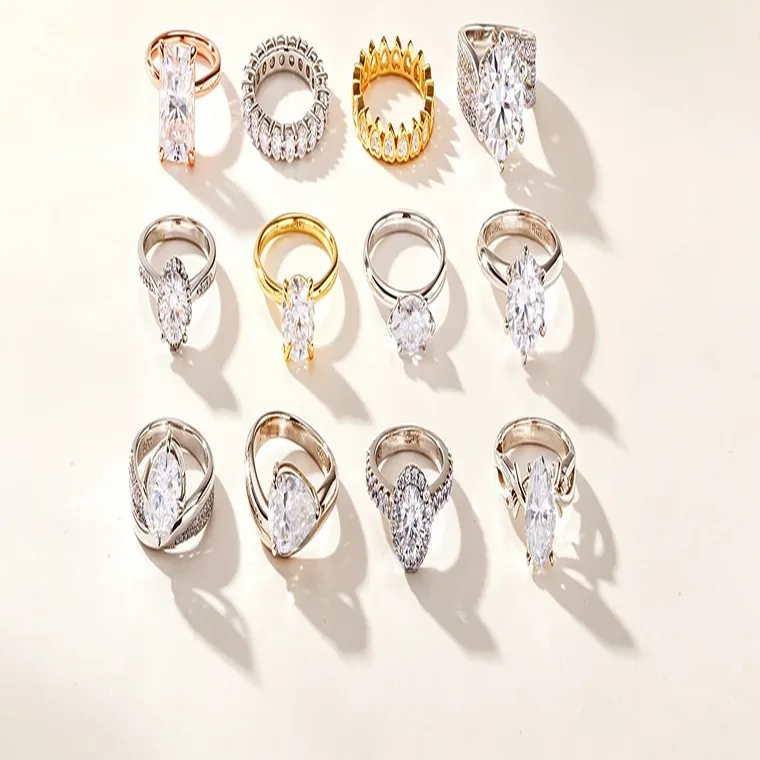
A jeweler hands you a woman's wedding band split clean across the bottom of the shank. The reflex answer is "solder it." But if the shank has been worn thin from years of resize grinding, if the break is jagged, or if the ring carries a pave setting whose stones would crack under heat, a simple weld can fail again in months. Knowing when to weld and when to remake the shank is the difference between a one-time repair and a warranty claim. For wholesale accounts offering repair services, this decision also drives cost and turnaround.
When a weld is the right call
A clean break in a structurally sound shank—say, a hairline crack from a single impact—repairs well by laser welding. The laser delivers pinpoint heat, so nearby stones can usually be protected with heat shields without removing them. The weld bead builds up the missing metal, and after filing and polishing the joint is nearly invisible. This is fast, low-cost, and strong when done right. We laser weld shanks at around 20 to 40 joules depending on metal thickness, then anneal the joint so it does not stay brittle.
The weld choice assumes the rest of the shank has life left. We measure remaining wall thickness; below roughly 0.6mm in a ring that sees daily wear, a weld is a patch on a wall that is already paper-thin. It will crack again, usually at the same stress point, within a year.
When a remake is the better product
A shank that is worn oval, thinned around 60 percent of its circumference, cracked in multiple places, or badly distorted should be remade rather than welded. Remaking means cutting out the damaged lower shank and fitting a new, sized band, then re-finishing. It costs more in labor, but the result is a structurally fresh ring with the original top and stones preserved. For heirloom and high-value pieces, the remake is the service customers actually want even if they ask for "just solder it."
Heat risk is the other remake trigger. Pave stones set close to the shank, heat-sensitive colored stones, or stones with internal fractures can crack or discolor under a torch. A controlled remake in the shop—where the top is removed, the shank replaced, and the stones reset under magnification—avoids that. This is the same logic a factory uses when it decides between precision setting under magnification and hand repair.
Cost, turnaround, and disclosure
A straightforward laser weld turns around in a day or two and costs a fraction of a remake. A full shank replacement takes three to five days and involves sizing, finishing, and sometimes stone removal. For wholesale service departments, the recommendation should be documented: which option was chosen, why, and what the customer is paying for. This is not just good service; under trade rules such as the FTC Jewelry Guides, disclosing when material is replaced or the piece is rebuilt protects both you and the end customer.
Either path ends with verification: the ring should be checked for roundness, the resized inner diameter, and a final weight and tolerance check so the returned piece matches the customer's expectation. For brands selling directly, offering both a quick-weld and a remake tier—priced separately—avoids the trap of quoting a cheap repair that the shop then cannot honor.
Wall thickness is the quiet variable that decides cost. We measure the remaining shank wall before quoting, because a 0.4mm wall on a daily-wear band has already reached the point where it will bend and crack again no matter how clean the weld. In those cases, pushing back to a remake saves the customer a second service call. For wholesale accounts, we send a short measurement note with every returned repair so the buyer can decide whether to absorb the remake cost or offer it as a paid upgrade rather than discovering the problem after the customer has already worn the ring.
Either way, document the decision on the repair tag so the next service visit starts from a known condition rather than a guess. Wholesale accounts that track this over time can also quote repair turnaround more accurately, because they know which geometries tend toward a weld and which tend toward a remake before the ring even arrives.
FAQ
Will a welded shank be visible?
When laser-welded and refinished correctly, the joint is nearly invisible on the inside of the band. Heavy pave on the outside may leave a faint finish line that polishing removes.
How do I know if my ring needs a remake?
If the shank is thin enough to see light through, is bent oval, or has cracks in more than one spot, plan on a shank replacement rather than a weld.
Can stones stay in during a repair?
Laser welding often allows stones to stay with heat shielding, but heat-sensitive or heavily included stones are safer removed and reset. The shop should make that call per stone, referencing its grade.
Need a repair or remake service partner? HOLYCOME evaluates every shank failure, documents the weld-versus-remake choice, and returns rings to size, finish, and tolerance. Ask about our wholesale repair program.
Our product descriptions follow the disclosure requirements of the FTC Guides for the Jewelry, Precious Metals and Pewter Industries (16 CFR Part 23).
Frequently Asked Questions
What ring sizes can you supply in bulk?
US sizes 5–12 including half sizes. Send a size breakdown with your order and we cast to that curve; comfort-fit inner bands reduce resize requests.
Can I order a mixed size run instead of one size?
Yes. Mixed runs are standard for wholesale: specify quantity per size and we pack and label by size at no extra labor cost.
What is the MOQ for custom ring designs?
50 pieces per design for existing molds; 100–300 pieces when a new mold or CAD model is required.
How should I price rings for retail margin?
Most partners use a 3–4x markup on FOB cost for sterling and 2.5–3x for moissanite solos, which keeps landed cost under 30% of retail.


