Setting is the most nervous step in making a ring. The stone has arrived. The setting is built. Everything comes down to a few minutes of bending small prongs. Set too hard and the stone cracks. Set too soft and it falls out later. This is why we use a dedicated setter, working under magnification, by hand. Here is what happens in that quiet room where stones become rings.
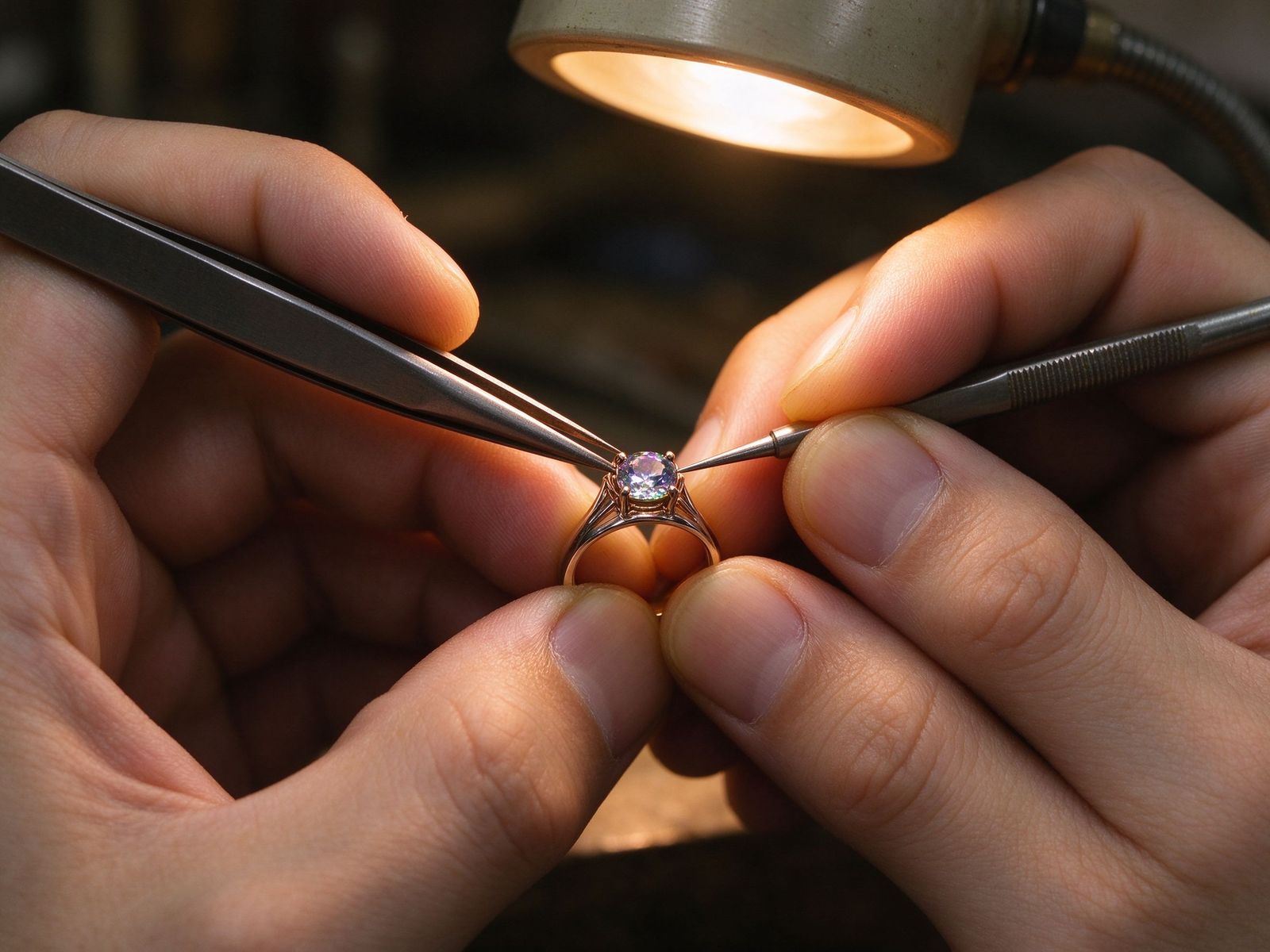
The Setting Bench
Our setter works at a bench with a binocular loupe, small tools, and a quiet room. No radio, no rush. The stone is placed in the seat that was cut for it. The seat is the tiny ledge inside the head that the stone sits on. If the seat is right, the stone sits level. If it is wrong, the stone tilts. Setting is not just bending prongs. It is confirming the seat, seating the stone, and then locking it in.
How a Prong Is Bent
A prong is not just squeezed. It is pushed, gradually, with a small pusher tool. The tip of the prong folds over the edge of the stone, holding it without covering the face. The setter works on opposite prongs in turn, so the stone stays level. One prong at a time, checking after each. If the stone shifts, the setter stops and re-seats it. This is slow, careful work. A solitaire takes thirty to forty minutes. A pavé band takes hours, because each tiny melee needs its own micro-set.
- Seat the stone level.
- Bend opposite prongs in turn.
- Check after each prong.
- Tighten, then finish the tips smooth.
Why We Work Under Magnification
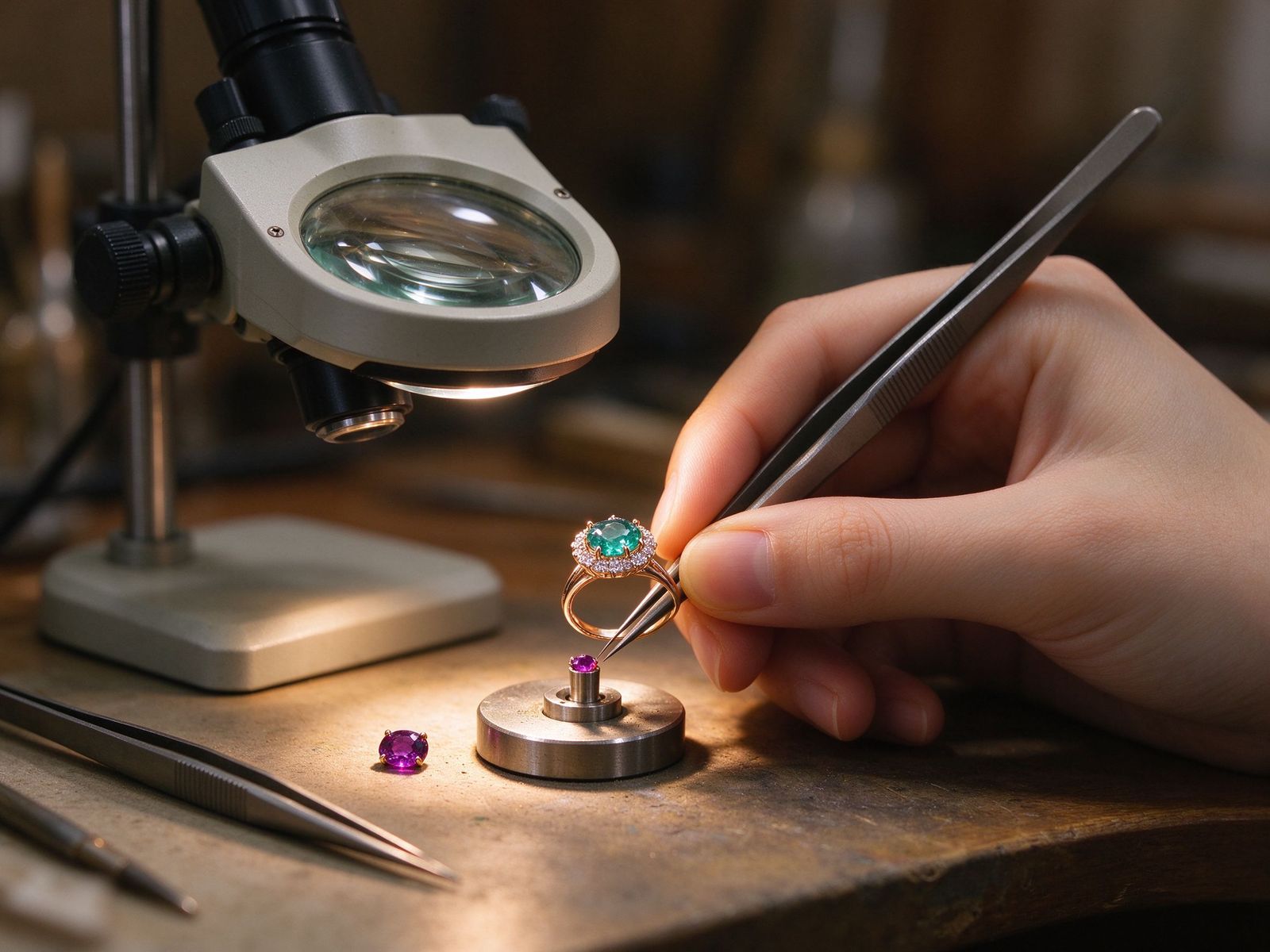
The naked eye cannot see what the loupe sees. A prong that looks fine to the naked eye is actually leaving a gap. A stone that looks level is actually tilted by a fraction. We set under magnification so we can see the seat, the girdle, and the prong contact. The loupe is not a luxury. It is the tool that lets us know the stone is actually held. If you cannot see the gap, you cannot fix the gap. Magnification removes the guesswork.
What Makes a Setting Secure
Secure setting is not tightness. It is contact. Each prong must touch the stone along enough of the girdle to hold it, but not press hard enough to chip it. The stone should not move when tapped. The prongs should be smooth on top, so they do not catch on fabric. A well-set stone stays for decades. A poorly set stone loosens in months, because the prong never actually touched the girdle. We test every stone with a gentle tap before the ring leaves the bench.
Pavé Setting Specifically
Pavé is the rows of tiny stones across a band. Each melee is held by a microscopic bead of metal, not a prong. The setter uses a burnisher to push the metal over each tiny stone. It is painstaking, slow work. A pavé band with good beads will hold its stones for years. A rushed pavé loses stones within months. We budget the time pavé deserves. If a client wants a pavé band on a tight timeline, we tell them honestly that the stones will not be as secure. Better to wait than to lose melee.
After Setting: The Final Check
Once all stones are set, the ring goes to the inspector. Every stone is tapped. Every prong is looked at. The ring is cleaned and polished. Only when the inspector signs off does the ring go to the box. The setter's job is not done when the last prong is bent. It is done when the inspector confirms nothing moves. That double check is why our rings do not lose stones.
How We Seat the Stone
Before any prong is bent, the stone sits in the seat. The seat is a tiny ledge cut into the head, matched to the stone's girdle. If the seat is too small, the stone tilts. If it is too large, the stone rattles. The setter checks the fit before touching a prong. A stone that does not seat correctly is not forced. We adjust the seat until the stone sits level and stable. This is the most important moment in setting. Everything after is just locking in what the seat already made right.
Why We Do Not Glue Stones
Some shops use adhesive to hold stones. We do not. Adhesive breaks down over years of sweat, soap, and temperature. A mechanically set stone held by bent prongs will outlast any glue. Glue is a shortcut. We do not take it. The stone is held by metal, period. If a stone cannot be mechanically held, we redesign the setting so it can. Glue is not a fix.
Frequently Asked Questions
How long does setting take
A solitaire: thirty minutes. A pavé band: hours. We budget the time.
Can you set a stone I already own
Yes. Bring it in and we will build a setting around it.
What if a stone chips during setting
Rare, but if it happens, we make it right. That is the job.
The Setter's Bench Tools
A setter uses a small, quiet toolkit: a burnisher, a prong pusher, a seat-cutting bur, a loupe, and a gentle hammer. The tools are tiny because the work is tiny. Each prong is bent with a pusher, not squeezed with pliers. The seat is cut with a small bur that matches the stone's girdle. The loupe is binocular, so the setter works with both hands free. This bench is not where rings are made. It is where stones are placed. The precision required is why we keep a dedicated setter, not a general bench hand.
What Happens If a Stone Chips
Rare, but possible. If a stone chips during setting, we stop immediately. We assess the chip. If it is on the pavilion and hidden by the setting, we may still use it with the client's blessing. If it is on the table or visible, we replace the stone. We do not charge the client for our mistake. The stone we damaged is on us. This has happened maybe a handful of times in years, and each time we handled it quietly and fairly. Clients appreciate the honesty more than they fear the chip.
Pavé Setting in Detail
Pavé is rows of tiny stones held by beads of metal, not prongs. The setter drills a seat, drops in a melee, and burnishes a small bead over the edge of the stone. Each stone takes about a minute. A pavé band with twenty stones takes twenty minutes of careful work, plus inspection. The beads must be tight enough to hold but not so tight they chip the stone. We set pavé slowly, and we test every bead. A band we rush loses stones within months. A band we take time on holds for years.
What Clients Ask Us
Can you set a family stone
Yes. Bring it in, we assess it, and design a setting around it.
How tight should a set stone feel
It should not move at all when tapped. Any click means a re-set.
Do you use glue
No. Stones are mechanically held by prongs or beads, never glued.
The Difference Between Prong and Bezel Setting
Prong setting leaves the stone open to light, which maximizes sparkle. Bezel setting wraps a thin band of metal around the stone, protecting it but reducing sparkle. Prongs are elegant but catch on fabric. Bezels are protective but more metal. We choose the setting based on lifestyle. If you work with your hands, a bezel or a half-bezel protects the stone. If you want maximum sparkle, prongs. Both are set by hand under magnification. The choice is yours, and we will show you the difference on a model before we commit.
Laser Welding at the Bench
We use a laser welder for delicate joins. A laser puts a tiny, precise burst of heat exactly where we want it, without heating the whole ring. This is how we re-tip a prong without damaging the stone next to it. It is also how we repair a cracked shank without annealing the setting. The laser is a modern tool that lets us do repairs that used to be impossible without damaging surrounding stones. We use it carefully. It is not a substitute for good setting. It is a precision instrument that extends the setter's hand.
The Day a Stone Is Set
The setter works in a quiet room. The stone arrives in a sealed packet. The head is on the bench. The setter seats the stone, checks the level, bends the first two prongs, and re-checks. They work slowly, opposite prongs in turn. After all prongs are set, the stone is tapped. If it is tight, the tips are burnished smooth. The whole solitaire takes about forty minutes. The setter does not talk during this. They are watching the stone. When they finish, the ring moves to the inspector.
Setting a Family Stone
Family stones come with history. A grandmother diamond, a mother ruby. We set these with extra care. The stone is inspected first for fractures. The seat is cut to the stone, not to a spec. We show the client the proposed setting before we commit. Family stones are irreplaceable. We treat them like it. If a stone is too fragile for a prong setting, we say so and propose a bezel. The goal is to wear the family stone, not to endanger it. We have reset hundreds of family stones. None have been lost on our bench.
The Setter Pace
A setter cannot be rushed. The hands have to be steady. The bench has to be quiet. We schedule setting work in the morning, when the setter is fresh. Afternoons are for filing and prep. A tired setter makes mistakes. A rushed setter chips stones. We protect the setter time. This is why setting takes as long as it takes. The stone is worth the morning.
How We Test a Set Stone
After setting, the inspector taps each stone with a small wooden stick. A tight stone makes a dull thud. A loose stone clicks. We listen. We also look at the seat under magnification to confirm no gap. We run a fine instrument around the girdle to check that no prong is sharp. This takes a minute per stone. A ring with five stones gets five minutes of testing. We do not skip the test. The tap is how we know the stone will not fall out in week three.
Setting Different Shapes
Round stones are the easiest. Oval and pear stones need a seat cut to their outline. Emerald cuts have sharp corners that need protection. Each shape has its own setting geometry. We choose the seat and prong style based on the shape. A round stone in prongs is standard. An emerald cut in a bezel is safer. We match the setting to the stone. The shape dictates the setting, not the other way around.
Why We Set Under a Microscope, Not a Loupe
A hand loupe is fine for inspection. Setting needs more. A binocular microscope lets the setter work with both hands while seeing the stone at high magnification. The depth of field is shallow, but the detail is clear. We can see the gap between prong and girdle at a glance. This is the same tool watchmakers use. It is not jewelry-specific. It is precision work. Setting a stone under magnification is how we know the prong actually touches the stone, not just appears to.
Closing Thought
Setting is the moment a piece of metal becomes a ring. It is quiet, slow, and done by hand under magnification. The stone you wear on your hand was locked in by someone who leaned over a bench for an afternoon. That care is why it stays. We do not rush setting. We do not machine it. We do it the slow way, because the slow way is the way that works for fifty years.