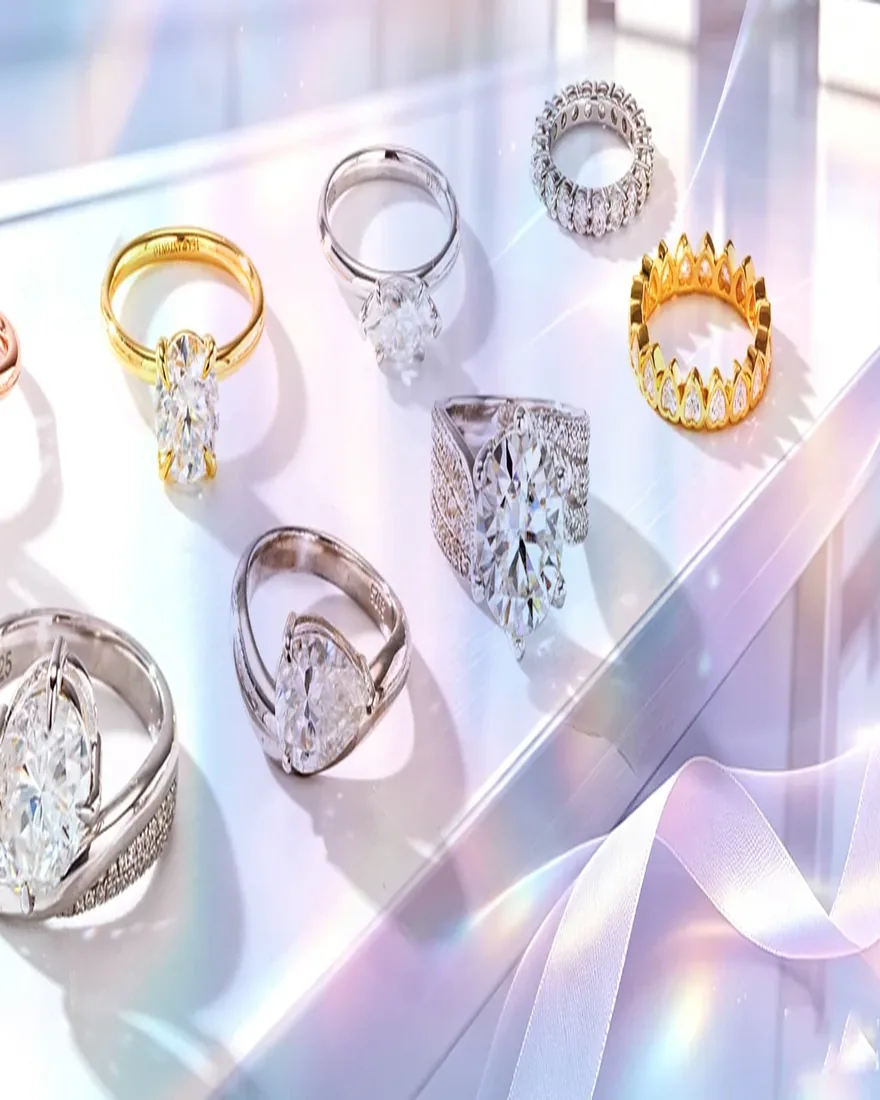
A client with a knuckle larger than her knuckle base kept taking her solitaire off at the sink because the ring slid around. A full resize down would have made it impossible to get over her knuckle. The fix was a 1.5 mm gold bead soldered inside the lower shank. It stopped the ring from spinning, cost a fraction of a resize, and left the original shank untouched. Size beads are one of the most useful custom fixes we offer, but only when they are done right.
When a size bead beats a resize
A size bead (also called a ball stop, sizing bead or comfort bead) is a small soldered ball on the inside of the shank that takes up the slack between knuckle and finger. It is the right call when the ring must pass over a large knuckle but sits loose on the finger below. It is also useful for rings with stones that cannot be resized safely, or for customers who want a temporary, removable-feeling solution. We lay out the broader choice in when to resize a ring and when not to, and which bands even accept a cut in which bands work for resizing.
How the bench fits and solders the bead
- Mark the spot. The bead goes opposite the head, on the inside bottom of the shank, where it contacts the finger least.
- Size the ball. We use a 1.0-2.0 mm ball of the same alloy as the ring. Too large and it digs; too small and it does not stop spinning.
- Flux and tack. Flux the seat on the shank and the ball, touch them with medium-easy solder, and fuse with a soft flame. We use the flux discipline from silver soldering flux and heat control.
- Shape and finish. Dome the ball smooth, then polish so no sharp edge catches skin. The bead must be comfortable enough to wear all day.
On gold rings, matching the alloy matters because the bead itself is worn next to skin; we stay within the karat marking rules so the final piece is legally marked. On larger resizing jobs where a bead is not enough, we cut and join the shank as covered in ring sizing up vs down by stretch or cut, and where a worn shank needs more than a bead, see shank repair weld vs remake.
What goes wrong with a poorly fitted bead
The most common defect is a bead placed too far forward, where it presses against the finger and turns the ring sideways. The second is a bead that is not smoothly domed, leaving a hard edge that rubs. The third is using solder that is the wrong color, leaving a visible flash on a polished shank. We avoid these by test-fitting the bead on the customer's finger size before final solder, and by finishing the inside shank to the same polish as the outside.
Choosing one bead or two
The first question a setter asks is where the ring actually spins. If it only turns a little, one small bead opposite the head is enough. If it flops around on a knuckle-heavy finger, two smaller beads set opposite each other give more balanced resistance than one big ball, because a single large bead digs into one spot while the ring still tilts. We size the ball by trial: start with a 1.0 mm bead, solder it, let the customer try the ring on, and add a second bead or grow the first only if it still spins. We never fit a bead larger than 2.0 mm, because anything bigger starts to feel like a lump inside the shank. On wide comfort-fit bands we sometimes use a small sizing bar instead of a round bead, because a bar spreads the contact over more finger and feels less obtrusive. After soldering, we dome the bead smooth and polish the inside shank so no edge catches skin. The whole job takes about fifteen minutes on the bench, and the bead files off cleanly later if the customer's finger size changes.
FAQ
Will a size bead damage my ring?
No. It is a small soldered addition that can be filed off later if you change your mind, and it does not cut the shank.
How big should the bead be?
Typically 1.0-2.0 mm. We start small and add a second bead if the ring still spins, rather than fitting one large ball.
Can two beads help?
Yes. On wider bands we often fit two small beads opposite each other for balanced comfort, rather than one large ball.
Does a size bead work on engraved or patterned inside bands?
It does, but we choose the solder point carefully to avoid covering engraving. On patterned interiors a discreet sizing bar is sometimes better.
Got a ring that spins because of a knuckle-to-finger gap? Send it to our custom repair and sizing bench — we size-bead, resize or remake, and photograph the before and after for your records.


