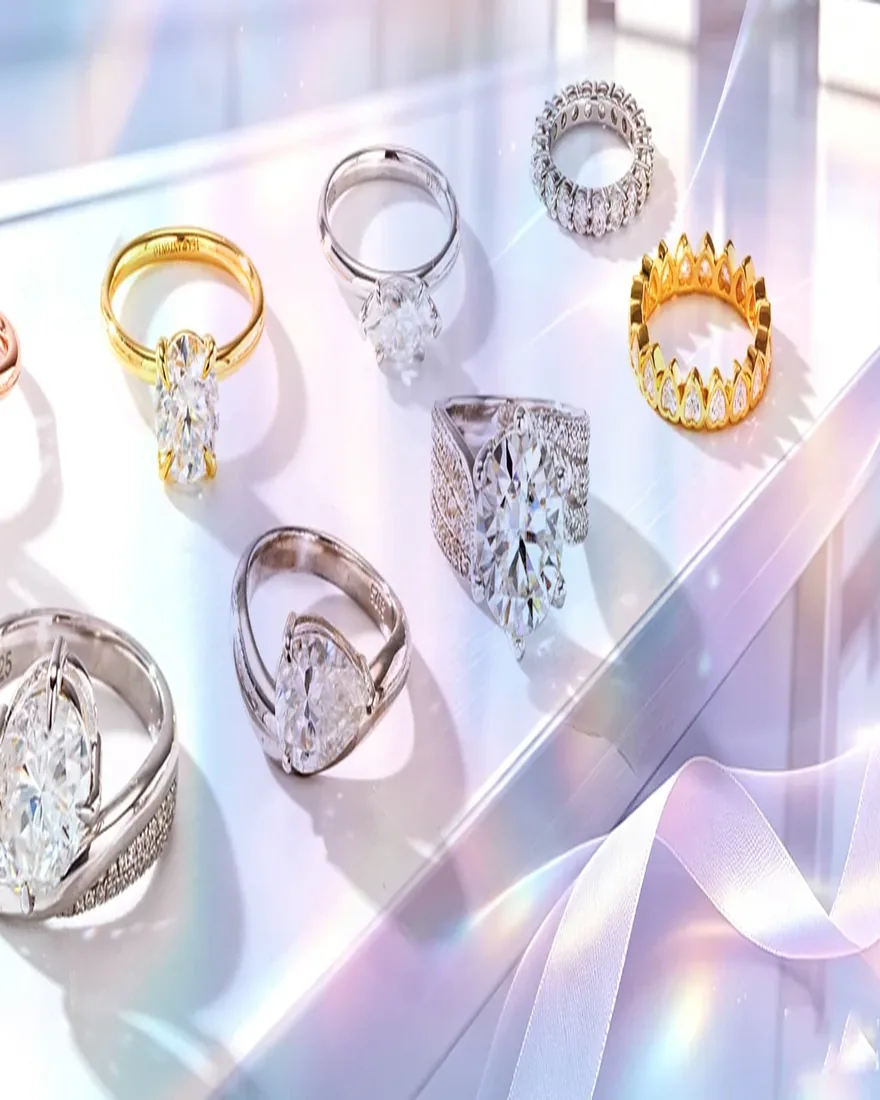
A customer walks in with a 14K vintage-style pave band and asks to go from size 7 to size 9. The salesperson says yes. The bench shakes its head. A pave band with stones running three-quarters of the way around the shank cannot be stretched by two sizes; the stones will pop, the prongs will open, and the band will ovalize within a year. Ring resizing is one of those operations that looks simple from the customer's side and is actually a structural decision. The 16 CFR Part 23 marking rules require the karat stamp to remain accurate after any structural work, which is why a resize that changes the alloy mass has to be done carefully.
When to resize: the safe list
Solid bands, plain shanks, one stone or a small head. A plain 2mm comfort-fit band in 14K yellow gold can go up or down by two full sizes (about 1.5 mm of circumference) without losing structural integrity. A solitaire with a plain shank can go up one size, down one size, safely. A silver stacking band can go up one size on a stretcher, but silver work-hardens fast; heat it during the stretch or it cracks. Our notes on shank repair: weld vs remake cover when the resize is really a new shank. The sterling silver reference explains why silver stretches less forgivingly than gold.
When NOT to resize: the walk away list
1. Pave or channel bands that run more than half around. Stretching opens the seats. 2. Eternity bands, full around. No exception. 3. Tungsten, titanium, ceramic, carbon-fiber bands. These are not resizable; the customer needs a replacement. 4. Inlay wood, antler, or resin rings. Heat destroys the inlay. 5. Rings already resized once with a visible weld in the area you would have to cut. 6. Gold-filled or plated fashion rings below the karat-stamp line; cutting them exposes base metal, and under FTC Jewelry Guides the result can no longer be sold as the original karat. If the customer insists, quote a remake, not a resize.
Up vs down: the weld math
Going up a size means cutting the shank and inserting a sliver of matching gold, then welding, filing, and refinishing. Going down a size means cutting out a section and welding the two ends together. Up-sizing leaves a longer weld; down-sizing leaves a shorter one but removes metal. Either way, the inner surface has to be re-finished to a comfort-fit radius, and any rhodium plating has to be stripped and re-applied. A resize that skips re-plating will show a bare gold line inside the band within weeks. We document every resize with before-and-after photos, and we quote the re-plating as part of the job; it is not optional. We also size the finished band twice, once cold and once after a 24-hour rest, because a newly welded shank will spring back about half a size as the stress relieves itself; sizing immediately after welding gives a false reading.
What to tell the retailer up front
If a customer asks for a two-size jump on a pave band, the honest answer is: remake the setting at the new size. The cost is about 1.5 to 2x the resize price, but the stones stay in, the band stays round, and the warranty holds. We also recommend a free sizing check before the wedding season: band sizing in the morning differs from the evening by about half a size, and a ring that fits in October may bind in July. Our notes on which bands can be resized give the decision table, and finished ring weight tolerance explains why a properly welded shank should weigh within 5% of the original after the resize.
FAQ: When to resize a ring (and when not to)
How many sizes can a plain 14K band go up?
Two full sizes is the safe limit. Three sizes and the shank work-hardens, ovalizes, and the weld starts to fatigue.
Can an eternity band be resized?
No. Every stone would have to be removed and re-set, which costs more than remaking the band. Offer a replacement at the new size.
Does resizing remove the karat stamp?
Sometimes. If the weld crosses the stamp, re-stamp to the same karat under 16 CFR Part 23 rules before the piece ships.
Should rhodium be re-applied after resizing?
Yes. The heat and welding strip the rhodium on the shank. Strip the whole band and re-plate to a uniform thickness.
For custom manufactured bands, we design the shank to allow a future one-size resize; thickening the inner rail and leaving the pave zone clear. Send us a CAD or a sample; our custom manufacturing quote includes the resize margin up front, so the customer never has to choose between the ring and the correct fit, and we ship the re-sized band with a fresh rhodium coat.
Frequently Asked Questions
What ring sizes can you supply in bulk?
US sizes 5–12 including half sizes. Send a size breakdown with your order and we cast to that curve; comfort-fit inner bands reduce resize requests.
Can I order a mixed size run instead of one size?
Yes. Mixed runs are standard for wholesale: specify quantity per size and we pack and label by size at no extra labor cost.
What is the MOQ for custom ring designs?
50 pieces per design for existing molds; 100–300 pieces when a new mold or CAD model is required.
How should I price rings for retail margin?
Most partners use a 3–4x markup on FOB cost for sterling and 2.5–3x for moissanite solos, which keeps landed cost under 30% of retail.


