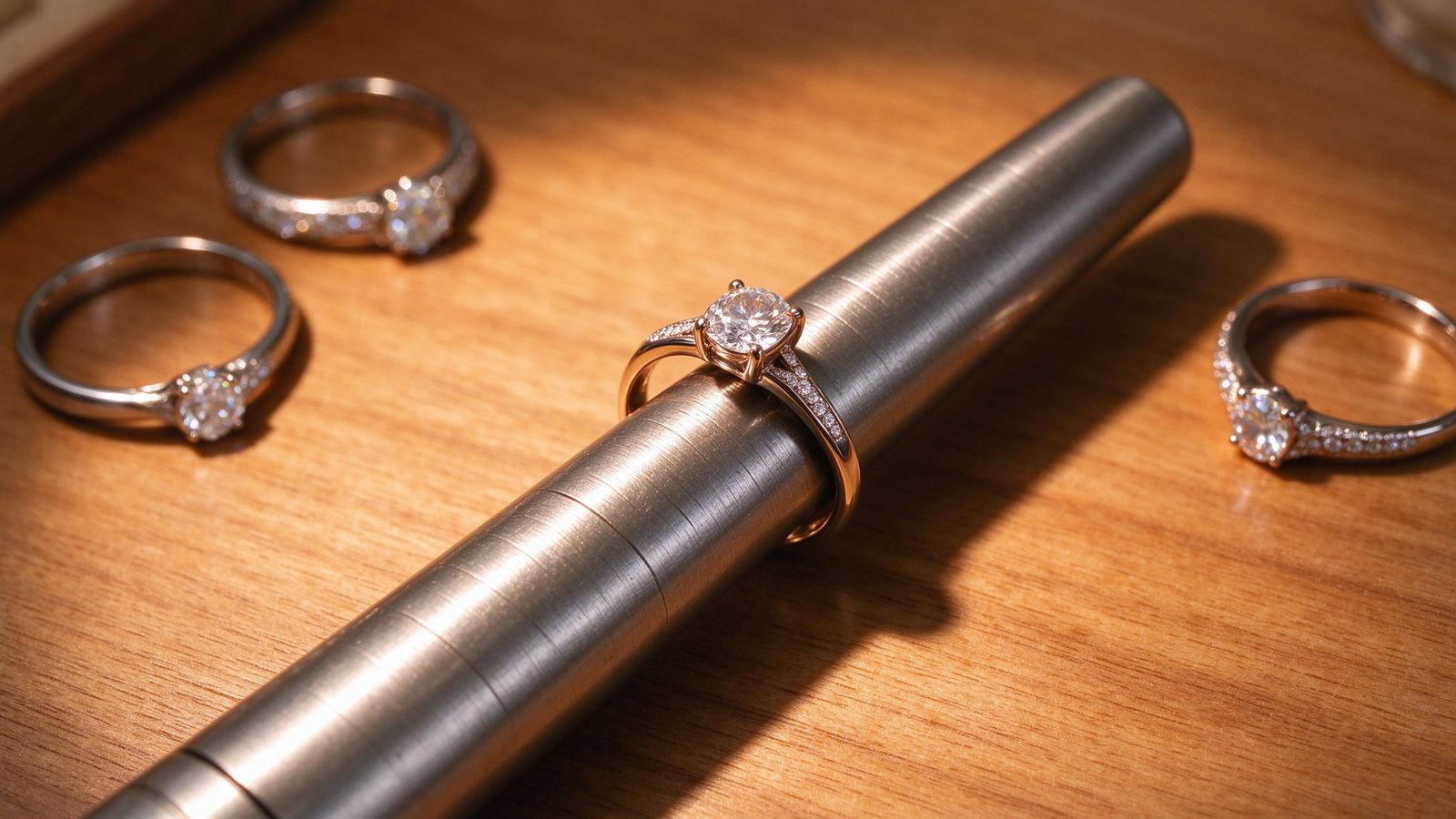
Ruby Jewelry Care: The Complete Maintenance Guide
The ruby is the red variety of corundum, sharing sapphire's 9 on the Mohs scale and its legendary durability. For centuries, rubies have been prized as the most valuable colored gemstone, and a fine ruby engagement ring is both a statement and a practical daily-wear choice. But while rubies are hard, they are not unbreakable, and their value makes careful maintenance essential. A chipped ruby or a loose stone is an expensive problem to fix.
This guide explains how to clean ruby jewelry safely, what heat treatment means for care, how to inspect and protect the setting, and how to store rubies so they stay vivid and secure. Because rubies share sapphire's toughness, the routine is simple, but the value of the stone means attention to prongs and treatment is especially important.
Ruby Durability and What to Watch
Ruby is corundum, the same mineral as sapphire, and it rates 9 on the Mohs scale. It resists scratching in daily wear better than emerald, opal, or aquamarine, making it suitable for rings. However, rubies often contain visible silk inclusions and fractures, and a heavily included ruby can chip along a fissure if struck sharply. The intense red that makes a ruby desirable sometimes comes with internal features, so treat the stone with respect even though it is hard.
Rough wear, like gardening, weightlifting, or moving furniture, is the main enemy. A direct blow against a concrete edge or a metal weight can chip a ruby's girdle. For everyday office and social wear, a ruby is robust. The habit of removing rings for manual work is the single most protective thing a ruby owner can build. Because a ruby's value is high, that small precaution is worth taking every time.
Unlike softer gems, rubies do not need to be treated as delicate objects, but they benefit from being kept off the hand during impact. Store them separately, because a ruby, though hard, can scratch gold and softer stones and can itself be chipped if a diamond knocks into it. With sensible care, a ruby will outlast most other pieces in a jewelry box.
Cleaning Ruby Jewelry the Safe Way
The safe cleaning method for rubies is warm soapy water with a soft brush. Soak the piece for ten to twenty minutes, gently brush around the stone and under the setting, rinse with the drain closed, and dry with a soft cloth. This removes the skin oils and makeup that dull a ruby's transparency. Because rubies are often worn as engagement rings, they collect lotion and soap quickly, so a monthly clean keeps the red looking rich.
Ultrasonic cleaning is the tricky area. Rubies that are clean and well-formed generally tolerate ultrasonic cleaners, but many rubies have natural fractures that the vibration can open or worsen. For this reason, unless you know your ruby is free of significant fissures, avoid home ultrasonic cleaners and rely on soap and water. Steam cleaning carries the same risk and is best left to a professional who knows the stone.
Never use bleach, chlorine, or abrasive cleaners on ruby jewelry, because these attack the gold or platinum setting rather than the ruby itself. Avoid acidic dips. A soft toothbrush and mild dish soap is enough. For a vivid ruby, clean it a little more often than a diamond, because oil film makes red look brownish, and a clean ruby glows.
Heat Treatment and Oil in Rubies
The vast majority of rubies on the market are heat treated to improve color and clarity. Heating dissolves silk inclusions and deepens the red, and this treatment is permanent and accepted. A heat-treated ruby needs no special care and is cleaned like any other. Untreated rubies of fine color are extremely rare and command premium prices, so most buyers happily choose heat-treated stones.
The care nuance applies to rubies that have been fracture-filled with glass or resin, a treatment used to fill surface cracks and improve apparent clarity. These filled rubies are more delicate: ultrasonic cleaners, heat, and harsh chemicals can damage the filling, which can cloud or leak. If your ruby was fracture-filled, clean it only with warm soapy water, avoid ultrasonic and steam, and remove it before hot tubs or saunas.
Always ask, in writing, whether a ruby has received anything beyond standard heat treatment. A gemological report will state this. Knowing the treatment tells you whether you can clean aggressively or must be gentle. Because rubies are valuable, this disclosure is not optional; it is the difference between safe maintenance and accidental damage.
| Ruby Type | Treatment | Cleaning |
|---|---|---|
| Standard heated | Heat only | Soap, ultrasonic ok |
| Fracture-filled | Glass/resin fill | Soap only, no heat |
| Unheated fine | None | Soap and gentle ultrasonic |
Inspecting Prongs and Settings
Ruby settings need the same vigilance as diamond settings, perhaps more, because a ruby is expensive to replace. Every time you clean the ring, look at the prongs under magnification. Prongs should sit tight against the stone, be uniform in height, and not snag on clothing. A rough or bent prong is a warning sign that needs a jeweler, not a home repair.
Ruby cuts vary: a faceted oval or cushion shows the color best, while a cabochon-cut ruby is smooth and rounded and often displays a star effect. Cabochons are set with bezels or prongs that hold the flat back securely. If the stone wiggles at all, stop wearing it and have it tightened immediately, because a loose ruby can fall out and chip on the floor.
Have the setting inspected once a year by a jeweler, who will check prongs, re-tip worn ones, and confirm the ring shank is sound. Because rubies are often set in vintage-style rings with delicate prongs, annual servicing is cheap insurance against a five-figure loss. Keep the appraisal and report, and the inspection becomes straightforward.
Storing and Wearing Rubies
Store ruby jewelry in a separate soft pouch or compartment, not jumbled with other pieces. Although a ruby cannot be scratched by most surfaces, it can scratch gold, silver, and softer gems, and it can be chipped if a diamond or hard surface knocks against its edge. A divided jewelry box protects both the ruby and its neighbors.
Wear your ruby with intention. It is robust enough for daily office wear, but remove it before swimming, because chlorine damages settings, before applying perfume and lotion, and before heavy physical work. Ruby color is stable and will not fade in sunlight, so you do not need to hide it from light the way you would an opal or a pearl. The main risks are impact and chemicals, both of which are easy to avoid.
Travel with rubies in a padded jewelry roll, never loose in a bag where they can knock against keys and cosmetics. When you arrive, place them on a soft cloth rather than a hard counter. These small habits protect the girdle, the most chip-prone edge of the stone, and keep the ruby's faceted edges crisp.
When to Have a Ruby Appraised
Because fine rubies are valuable, have the stone appraised and insured at purchase, and re-appraised every few years as ruby prices fluctuate. Keep the gemological report, which states origin and treatment, because it is the document that protects both value and care. If you inherit a ruby without paperwork, have it assessed by an independent gemologist to confirm whether it is natural, treated, or possibly a simulant.
Watch for signs that a ruby needs attention: a sudden change in the stone's look, a crack that appears to grow, or prongs that snag. These are reasons to see a jeweler promptly. With regular inspection, gentle soap cleaning, and sensible impact avoidance, a ruby will keep its deep red glow for generations and can become a family stone passed down with its story intact.
Rubies in Engagement and Bridal Jewelry
Ruby engagement rings carry a passionate, romantic history and make a distinctive alternative to diamonds. A ruby's rich red stands out, and its 9 hardness means it wears beautifully. When choosing a ruby engagement stone, prioritize vivid color and eye-clean clarity, and buy with a treatment report. Set it in a secure prong or bezel, and inspect the setting annually. A ruby solitaire is bold, timeless, and far less common than a diamond.
Ruby pairs beautifully with diamond accents. A ruby center with diamond halos or pavé shoulders creates a luxurious, bridal look, and the contrast of red and white is striking. The small diamonds need the same prong checks as any pavé. Because rubies are valuable, a secure setting and insurance are especially important. Insure the ring and keep the gemological report, which documents the stone's treatment and value.
For daily wear, a ruby ring is practical, but remove it for gardening and heavy lifting, because a sharp blow can chip an included stone. Clean it monthly with warm soapy water. If the ruby is fracture-filled, avoid ultrasonic cleaners. Treat it like the valuable, durable stone it is, and it will keep its red glow for decades. Ruby's color never fades, which is part of its enduring appeal.
Wholesale buyers find ruby bridal pieces are strong, differentiated sellers. Customers seeking something personal and red choose ruby over a default diamond. Stock vivid, well-documented stones in secure settings, and disclose heat treatment. A beautiful ruby ring is a statement piece customers treasure, and it stands out in a market full of diamond solitaires.
Choosing Ruby Color and Quality
Ruby color is everything. The ideal is a vivid, saturated red that glows, neither too dark nor too brownish. Compare several stones side by side, because the difference between a good red and a great one is obvious when you see them together. Trust your eye in natural daylight, where ruby shows its true color. A small vivid ruby looks more valuable than a large dark or pale one.
Clarity in ruby is more forgiving than in diamonds, because silk inclusions are natural and expected. Eye-clean is the goal, but slight silk gives the stone a soft glow. What matters is that inclusions do not threaten durability. A gemological report confirms whether the stone is only heat treated or also fracture filled, which changes both value and care. Heat-only rubies are durable and affordable; filled rubies are more delicate.
Origin adds a premium, with Burmese rubies historically prized, but fine Mozambican rubies offer excellent color at accessible prices. For everyday jewelry, buy the best color you can afford from a transparent source, and let origin be a bonus. The red on your hand is what you live with, not the mine it came from.
When sourcing wholesale, sample rubies in natural light, because display lighting can flatter weak color. Stock vivid reds in popular sizes, and disclose treatment honestly. A great ruby is one of the most emotionally resonant stones in jewelry, and choosing color over size ensures the piece looks as passionate as it feels.
Shopping for Ruby With Confidence
Shopping for a ruby is a matter of focusing on color and documentation. Choose a vivid, saturated red that looks good in natural daylight, because that is the color you will live with. Ignore carat size when the color is weak; a small bright ruby outshines a large dull one. Always request a gemological report stating treatment, because undisclosed fracture filling changes both value and care.
Compare several stones side by side. The difference between a good red and a great one is obvious when you see them together. Trust your eye, not just the grade on paper. Buy from a seller who discloses heat treatment openly and stands behind the stone. A reputable source will explain the origin and treatment, and let you view the stone in good light.
Because rubies are valuable, insure the piece and keep the report. Set the stone in a secure mounting. With a well-chosen, documented ruby, you own one of the most passionate and durable gemstones available. Wear it proudly, clean it gently, and it will keep its famous red glow for a lifetime.
Wearing Ruby Every Day
Ruby's 9 hardness makes it one of the most wearable colored gems. You can wear a ruby ring to the office and for everyday occasions without the caution an emerald demands. Remove it only for gardening, heavy lifting, and sports, where a blow can chip an included edge. Clean it monthly with warm soapy water, and avoid ultrasonic cleaners if the stone is fracture-filled. Insure the ruby, keep its report, and inspect the prongs once a year. Treated well, a ruby keeps its passionate red for a lifetime.
When to Have a Ruby Serviced
Ruby is tough, but it still benefits from a yearly check. Bring the ring in once a year so a jeweler can inspect the prongs under magnification, because a loose setting is the main way a ruby is lost. If the ruby is fracture-filled, avoid ultrasonic cleaning and have the fill checked. A ruby that starts looking dull can be gently cleaned at home, but if the red seems to have faded or a crack has appeared, see a jeweler. With these periodic checks, a ruby stays secure and vivid for decades.
Frequently Asked Questions
How do I clean a ruby ring at home?
Soak in warm soapy water for 10-20 minutes, gently brush around the stone, rinse with the drain closed, and dry with a soft cloth. Avoid ultrasonic cleaners unless you know the ruby has no fractures.
Can I use an ultrasonic cleaner on rubies?
Only if the ruby is clean and not fracture-filled. Many rubies have natural fissures that vibration can open, so when unsure, stick to warm soapy water.
Are heat-treated rubies durable?
Yes. Standard heat treatment is permanent and stable, and heat-treated rubies need no special care. Avoid ultrasonic and heat only if the stone has glass or resin fracture filling.
Can I wear a ruby ring every day?
Yes, rubies are hard enough for daily wear. Remove them for gardening, sports, and heavy lifting, because a sharp blow can chip an included ruby's edge.
Do rubies fade in sunlight?
No. Ruby color is stable and does not fade with light. Protect it instead from impact and from chemicals that damage the setting.
Ruby jewelry is tough, vivid, and meant to be worn. Clean it monthly with warm soapy water, inspect the prongs every time you clean, and avoid ultrasonic and heat if the stone is fracture-filled. Store it separately, remove it for impact and chemicals, and have it appraised and insured. With this straightforward care, a ruby keeps its famous red fire for decades, becoming the kind of meaningful, durable heirloom that fine gemstones are meant to be.