Every gemstone has a hardness. The Mohs scale ranks them from one to ten, from talc at one to diamond at ten. But hardness is not the whole story of whether a stone belongs on a daily ring. Some hard stones still chip. Some softer stones wear beautifully on a pendant. This is how we read the scale when a client asks, "Can I wear this every day?"
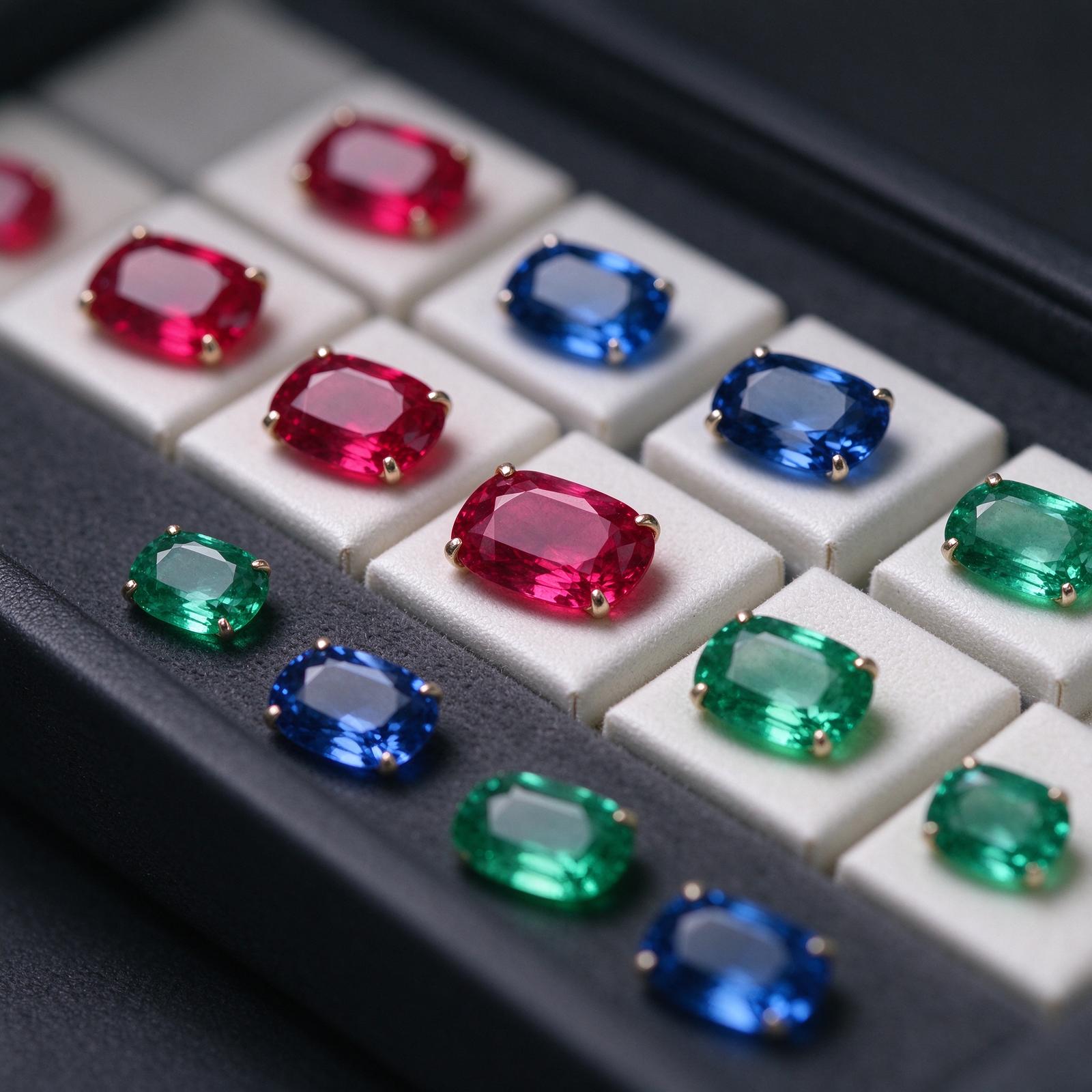
What the Mohs Scale Actually Measures
It measures scratch resistance. A stone at seven will scratch a stone at six. It does not measure toughness, which is resistance to chipping. Corundum, the family of sapphire and ruby, is a nine on Mohs and very tough. Emerald is a seven to eight but fractures easily. Hardness and toughness are related but not the same. A stone can be hard and still chip if it has internal cracks. When we talk about daily wear, we talk about both.
What Survives a Daily Ring
Diamond, lab grown diamond, moissanite, sapphire, and ruby all live happily on a daily-worn ring. They are hard and tough. They take soap, hand cream, and accidental bumps. A daily ring in any of these is fine. Below that, the story changes. Topaz, aquamarine, and garnet are wearable but need more care. Emerald, opal, pearl, and turquoise belong on necklaces and earrings, not on a ring you never take off.
- Daily ring safe: diamond, moissanite, sapphire, ruby.
- Wearable with care: topaz, aquamarine, garnet.
- Occasion only: emerald, opal, pearl, turquoise.
Why Emeralds Are Tricky
Emerald is beautiful. It is also heavily fractured, by nature, and oil-treated to stabilize it. On a daily ring, the oil dries, the fractures open, and the stone can chip. We love emeralds. We set them in pendants and rings for clients who know the care. We do not recommend an emerald solitaire for someone who never takes the ring off. Choose a sapphire for daily wear. Choose emerald for a piece you wear carefully.

What Wears a Stone Out
Not the wear itself. The wear is fine. What wears stones out is chemicals, heat, and knocks. Perfume, hairspray, chlorine, and ultrasonic cleaners attack softer stones. A hard stone can take these. A soft one cannot. If you love a softer gem, wear it on a necklace where it does not bump desks. Keep it away from chemicals. Clean it by hand. That is enough to make it last.
The Metal Matters Too
A soft stone in a thin pronged setting is more likely to chip than the same stone in a bezel. The setting protects the edges. When we set a softer gem, we often recommend a bezel or a protective setting rather than prongs. The hardness of the stone is only half the story. The setting is the other half. Tell us how you will wear it, and we will build the protection around it.
The Scale, Ranked for Reference
For the curious, the common jewelry stones sit roughly here: diamond and moissanite at the top, nine to ten. Sapphire and ruby at nine. Spinel and topaz at eight. Aquamarine and garnet at seven to eight. Emerald at seven to eight, but with poor toughness. Pearl and opal sit much lower, around two and four. Talc is one. This ranking is about scratch resistance, not toughness. A sapphire scratches almost nothing and survives daily life. A pearl scratches from a fingernail and belongs on a necklace, never on a ring.
Daily Wear Reality Check
A daily-worn ring goes through soap, lotion, hand sanitizer, accidental knocks, and the occasional gym session. The stone on that ring must be hard and tough. Diamond, moissanite, sapphire, and ruby are the honest answers. Anything softer belongs on a pendant or a pair of earrings, where it does not bump desks. We see clients who love an aquamarine and want it on a ring. We set it in a bezel and tell them honestly: this is a piece you wear on weekends, not while washing dishes. That is fine. It just needs to match the wear.
Care by Stone Type
Hard stones can take the occasional ultrasonic clean. Softer stones, and any stone with fractures, must be cleaned by hand. Pearls and opals should never touch chemicals. If you own a mix of stones, do not throw them all in the ultrasonic. Know what you have. When in doubt, bring the whole box in and we will tell you which stones can handle what. A ten-minute consult saves a chipped stone.
What Clients Ask Us
Can I wear an emerald engagement ring daily
Not if you never take it off. Emeralds need gentle life.
Is moissanite hard enough
Yes, around 9.25. It is one of the harder stones.
What is the softest ring stone
Pearl, opal, and turquoise. Occasion wear only.
Toughness Versus Hardness: The Difference That Matters
Hardness is scratch resistance. Toughness is resistance to chipping. A stone can be hard but fragile. Emerald is a seven to eight on the Mohs scale, which is fairly hard, but it is full of fractures and chips easily. Sapphire is a nine and very tough. Pearl is soft and tough in its own way, but scratches easily. When we talk about a daily ring, we want both hardness and toughness. Diamond, moissanite, sapphire, and ruby have both. Emerald has hardness but not toughness. That is why emerald belongs on a pendant, not a never-removed ring.
Chemicals That Attack Stones
Chlorine, bleach, and harsh detergents attack metal and some stones. Hairspray and perfume leave film. Hand sanitizer is fine for most stones but dries pearls. The rule: take the ring off before you clean, swim, or spray. Wash it with mild soap afterward. This single habit extends the life of any stone. We see stones damaged not by wear but by chemicals the client never thought about. The ring does not need to be precious. It needs to be kept away from the bottle.
What Happens When a Stone Chips
A chip on the pavilion, the bottom of the stone, is often hidden by the setting. A chip on the table, the flat top, is visible. We can sometimes re-polish a small chip, but that removes weight and changes the proportions. Sometimes the honest answer is that the stone has lived its life and should be replaced. We will tell you which. Chips are not always a tragedy. A small hidden chip can be left. A visible chip on a daily ring is worth fixing. Bring it in. We will look and tell you the options.
Stacking Rings and Scratches
If you stack an engagement ring with a wedding band, the two rub together. Over years, the band scratches the inside of the solitaire. This is normal. We design stacking sets so the edges meet cleanly, minimizing the rub. If you already stack, expect some scratches. They are from your own ring, not from damage. A polish every few years removes them. Do not worry about them.
What a Chip Looks Like
A chip is usually visible as a small nick on the edge of the stone, often on the girdle. It may catch on fabric. If you feel a catch, look under magnification. A small hidden chip is fine. A visible chip on a daily ring is worth bringing in. We can sometimes re-polish it, but that changes the proportions. Sometimes the honest answer is to live with it. We will tell you which.
The Ring You Never Take Off
If you never take the ring off, the stone must be indestructible. Diamond, moissanite, sapphire, ruby. Anything else is asking for trouble. A wedding band with no stones is fine in any metal. But a colored stone on a never-removed ring will show it. We tell clients this honestly. If you want a ring you never take off, choose the hardest stone you love. If you want a softer, prettier stone, plan to take it off at night. That is the trade-off. We will not pretend an emerald is a diamond.
What About Pearls and Opals
Pearls and opals are not ring stones. They are necklaces and earrings. Pearls scratch from the lightest contact. Opals crack with temperature changes. We love both. We set them in pieces that do not bump desks. If you ask for a pearl ring, we will talk you out of it for daily wear. We will happily set it for an occasion ring. The stone belongs where it is safe.
The Ring That Outlasts the Marriage
We see rings worn for decades. The ones that survive are the ones with hard stones in strong settings. A diamond in a bezel is still going forty years later. A soft stone in thin prongs may not make ten. This is not about sentiment. It is about physics. If you want a ring your grandchildren will wear, choose a hard stone and a strong setting. The soft stones belong on pieces that come out for occasions. The hard stones belong on the hand. Plan accordingly.
The Bottom Line on Hardness
For a daily ring, choose a stone that is both hard and tough. Diamond, moissanite, sapphire, and ruby are the honest answers. Save the softer stones for pieces you wear carefully. Match the stone to the life you live, and we will set it to survive that life. The Mohs scale is a guide. Your lifestyle is the decision. We will help you pick the stone that lasts on your hand, not on a chart. Bring us your routine and we will match the stone to it. The scale does not care how busy you are. Your schedule does. We build for the schedule you actually keep, not the one you wish you kept.
Common Questions About Wear
Can I wash my hands with the ring on? Yes, for diamond, moissanite, sapphire. Can I shower with it? Yes, but soap film builds up. Take it off sometimes. Can I gym with it? No, hit the weights without it. Can I garden with it? No. Can I sleep with it? Yes, but your partner may feel it. Can I swim in the pool? Yes, chlorine is fine for gold, but rinse it. The rule is simple: if the activity risks a blow or a chemical, take the ring off. If it is just living, leave it on. We will tell you which is which.
When in doubt, take it off. It costs nothing to remove a ring for a workout or a dish session. It costs a lot to repair a chip. Build the habit early. A ring that comes off before the risky task is a ring that never needs a repair. That is the easiest jewelry advice we give. We hope you never need us for a chip. But if you do, we will be here.
We have seen rings that survived fifty years of hard wear because the owner took them off for the rough work. We have seen rings destroyed in a month by someone who never took them off. The stone is hard, but it is not magic. Treat it like a tool you love. Remove it when it would be in danger. Wear it proudly the rest of the time. That is the balance. Bring your ring in once a year and we will check it under the loupe. We will spot the chip you did not feel. We will tighten the prong you did not notice. Ten minutes of inspection once a year keeps the ring on your finger for decades. It is the easiest jewelry habit you will ever build.
Closing Thought
The Mohs scale is a guide, not a verdict. A sapphire on a daily ring is fine. An emerald on a daily ring is asking for trouble. Choose the stone for the life you live, and we will set it to survive that life. The right stone in the right setting lasts decades. The wrong stone in the right setting still chips. Match the stone to the wear.