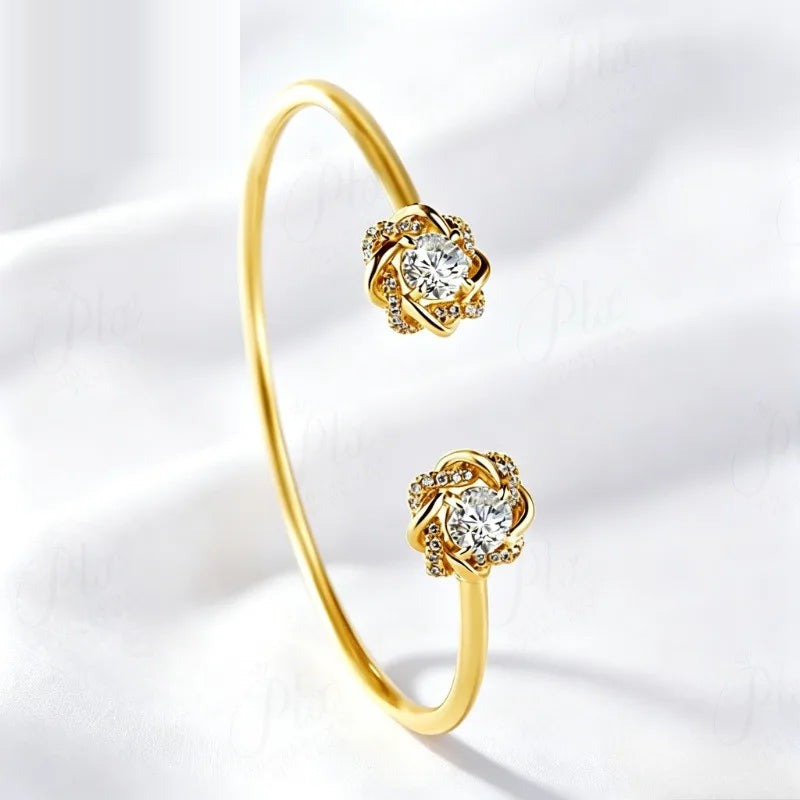
Hardness is only one of three things
Ask a jeweler which gems survive everyday wear and the answer usually starts with the Mohs scale: diamond at 10, corundum (ruby and sapphire) at 9, then topaz, quartz, beryl in descending order. It is a useful list, but it is not the whole story. Real durability splits into three separate properties, and a stone can be hard, yet brittle, or stable against light yet vulnerable to heat. Buying a ring on Mohs alone explains why some "hard" stones still chip, cloud, or crack within a year of daily wear.
Axis one: hardness (scratch resistance)
Mohs measures how well a surface resists abrasion - being scratched by dust (which is quartz, 7), by steel, by other jewelry. A sapphire at 9 resists most everyday scratching and stays bright; a softer stone like fluorite (4) or calcite (3) mats over with micro-scratches and looks dull within months. For a ring, where the face rubs against desks, phones, and handbags, hardness is the reason top-tier gems sit at 8 and above. Opal (5.5-6.5), pearls (2.5-4), and emerald (7.5-8 but heavily fractured) are honest pendants and earrings before they are honest rings.
Axis two: toughness (resistance to breaking)
Toughness is the one buyers forget. It describes whether a chip or knock propagates into a crack. This is where the Mohs list misleads. A topaz at 8 is hard but has perfect cleavage - a single sharp knock on a table corner can split it like glass, despite its high score. Emerald is 7.5-8 but is so heavily included and fractured by nature that its toughness is rated fair to poor; it is a ring stone for careful wearers, not for tradespeople or gym-goers. Jadeite, by contrast, is unusually tough despite a modest 6.5-7, which is why it survives carved bangles that would shatter a harder stone.
The practical read: hardness decides how the stone looks after years of rubbing; toughness decides whether it survives one good bump. For a daily-wear ring, both matter, and toughness is the reason a sapphire or spinel is a safer bet than a topaz or an emerald at the same hardness tier.
Axis three: stability (chemical, heat, and light)
The third axis is stability against the environment. Some gems are fine to scratch but degrade chemically: pearls and opals dry and craze under heat and dry air; emerald oils out and dries; turquoise and pearls are sensitive to cosmetics, perfume, and sweat. Some fade in light - certain amethysts and dyed stones bleach in sunlight. Others react to heat: a tanzanite can crack if the jewelry is repaired with heat while still set, which is why repair houses remove heat-sensitive stones before soldering. Even diamonds can be harmed - by sudden extreme heat that fractures them, or by chlorine in swimming pools attacking the metal around them.
Mapping stones to the body
Once you separate the three axes, placement logic is simple. Rings and bracelets take the hardest, toughest stones: diamond, sapphire, ruby, spinel, the better garnets, and (in careful use) moissanite. Earrings and pendants move through the air without banging into things, so stones with lower toughness but beauty - opal, emerald, tourmaline, tanzanite - are reasonable. Pieces meant to be stacked, knocked, or worn during work shift down a tier. A retailer who knows this triage steers customers right instead of selling a beautiful emerald into a construction worker's daily ring.
A quick triage by jewelry type
For a stockroom, the triage is easier to apply as a short list. Rings and wedding bands want diamond, sapphire, ruby, spinel, and the harder garnets (demantoid, tsavorite); moissanite fits the same tier in everyday durability. Bracelets and bangles take the same short list, because wrists knock into desktops and doors. Earrings can move to emerald, tanzanite, tourmaline, and aquamarine - they swing, but they rarely strike a hard surface. Pendants and necklaces are the most forgiving slot, which is where opal, pearl, turquoise, and softer stones belong, visible but sheltered. Children's jewelry and pieces for manual trades shift everything down a tier, regardless of the customer's taste.
Chemicals deserve their own reminder. Household bleach, chlorinated pool water, perfume, hairspray, and cooking acids attack both metal and some gems; pearls and opals are porous enough that cosmetics discolor them within months. The safest care message is the simplest: jewelry goes on after dressing, perfume, and lotion, and comes off before cleaning, swimming, or exercise. No stone is durable enough to absorb that routine indefinitely.
What to tell your customer
When selling everyday-wear stones, do not quote Mohs in isolation. Say how the stone handles scratch, how it handles a knock, and how it handles heat and chemicals. A one-line triage - "this is a weekend stone, not a workday stone" - builds more trust than a spec sheet. And regardless of stone choice, prong security is the cheap insurance: a durable stone drops out of a weak head just as easily as a fragile one. For more on what survives the finger, read our gemstone durability and care guides.
The International Gem Society moissanite guide explains how moissanite performs in daily wear compared with diamond.
Authoritative References
For buyers who need to verify the technical and regulatory basis of this guide, the following independent institutions publish authoritative reference data:
- GIA Gem Encyclopedia - independent grading and identification reference for natural and lab-grown gems.
- Wikipedia: Moissanite - peer-reviewed background on moissanite chemistry, optics and history.
Frequently Asked Questions
How do I verify a factory before placing a bulk order?
Request a production video, business license, export records and a paid sample run. A factory that accepts a 50-piece test order is usually a real manufacturer.
What payment terms do you offer?
30% T/T deposit with the balance against the bill of lading. This protects both sides on first orders and can move to net terms after a track record.
What is your normal reject rate?
3–5% under 10x loupe inspection for cast and set pieces. Defective units are replaced free in the next shipment.
Where is the factory located?
Wuzhou, Guangxi, China—the core lab-grown and moissanite manufacturing cluster. Shipments go via Guangzhou or Shenzhen ports.


