Jewelry Gift Buying Guide: Birthstones and Occasions
Gifting jewelry is one of the most personal gestures you can make, but it is also one of the easiest to get wrong. A ring in the wrong size, a necklace in a metal the recipient never wears, or a birthstone they associate with a bad gift, can turn a thoughtful gesture into a drawer ornament. The best jewelry gifts are chosen with the recipient's taste, lifestyle, and the meaning of the occasion in mind, not just with your own preferences.
This guide pairs occasions and birthstones with the right jewelry categories, explains how to choose a gift without spoiling the surprise, and covers the sizing and metal stealth moves that let you buy confidently. By the end, you will have a clear framework for gifting jewelry that gets worn, not stored.
The Modern Birthstone Chart
Birthstones are the most classic personalized jewelry gift, and the modern standardized chart has settled on a consistent gem for each month. January is garnet, February amethyst, March aquamarine, April diamond, May emerald, June pearl or alexandrite, July ruby, August peridot, September sapphire, October opal or tourmaline, November topaz or citrine, and December turquoise, tanzanite, or blue topaz. A birthstone pendant or stud is a gift that feels chosen just for the wearer.
The beauty of birthstone gifting is that you are not locked into the traditional gem. Many buyers choose a birthstone in a more affordable or durable form: a small emerald can be fragile, so a May birthday might instead receive a more durable emerald-colored spinel or a lab-grown emerald. The emotional point is the month and the color, not the exact mineral. When sourcing birthstone gifts wholesale, stock small stud and pendants in each month's color, because these are the highest-turning personalized pieces.
| Month | Birthstone | Gift Idea |
|---|---|---|
| January | Garnet | Small studs |
| April | Diamond | Solitaire pendant |
| May | Emerald | Birthstone ring |
| July | Ruby | Eternity band |
| September | Sapphire | Three-stone necklace |
| December | Turquoise/Topaz | Drop earrings |
Matching the Occasion to the Gift
Different milestones call for different jewelry. An engagement is a centerpiece ring; a wedding involves bands. An anniversary typically calls for something that layers onto what they already wear, such as an eternity band or a pendant that complements their chain. A birthday is personal and can be a birthstone piece. Mother's jewelry uses the birthstones of children, set in a single pendant or ring, which is one of the most emotionally resonant gifts you can give.
Graduation and promotion gifts lean toward durable everyday pieces like a watch-style bracelet, simple hoop, or signet ring. A bridal party gift should be a small matching piece the whole group can wear on the day, such as delicate studs or a thin initial necklace. The principle is proportionality: a gift should match the weight of the occasion without overshadowing it. A diamond tennis bracelet for an anniversary is appropriate; the same for a first date is not.
Choosing Metal to Match Their Taste
The most common gifting mistake is choosing your preferred metal rather than theirs. Notice what the person already wears. If their existing jewelry is nearly all white gold or silver, do not give yellow gold; the piece will sit in a drawer. If they mix metals, you have freedom. Rose gold is a warm, modern choice that flatters most skin tones, but it is a statement preference rather than a neutral default.
For sensitive skin, solid 14K gold or sterling silver posts and bands are safest, because cheap plated jewelry causes the reactions that stop people wearing gifts. When in doubt, a small solitaire in the metal they already wear is impossible to get wrong. Steal a look inside their existing jewelry box when they are not around, or ask a close friend, and match the metal exactly. This single detail makes a gift feel effortless and considered.
Sizing Without Spoiling the Surprise
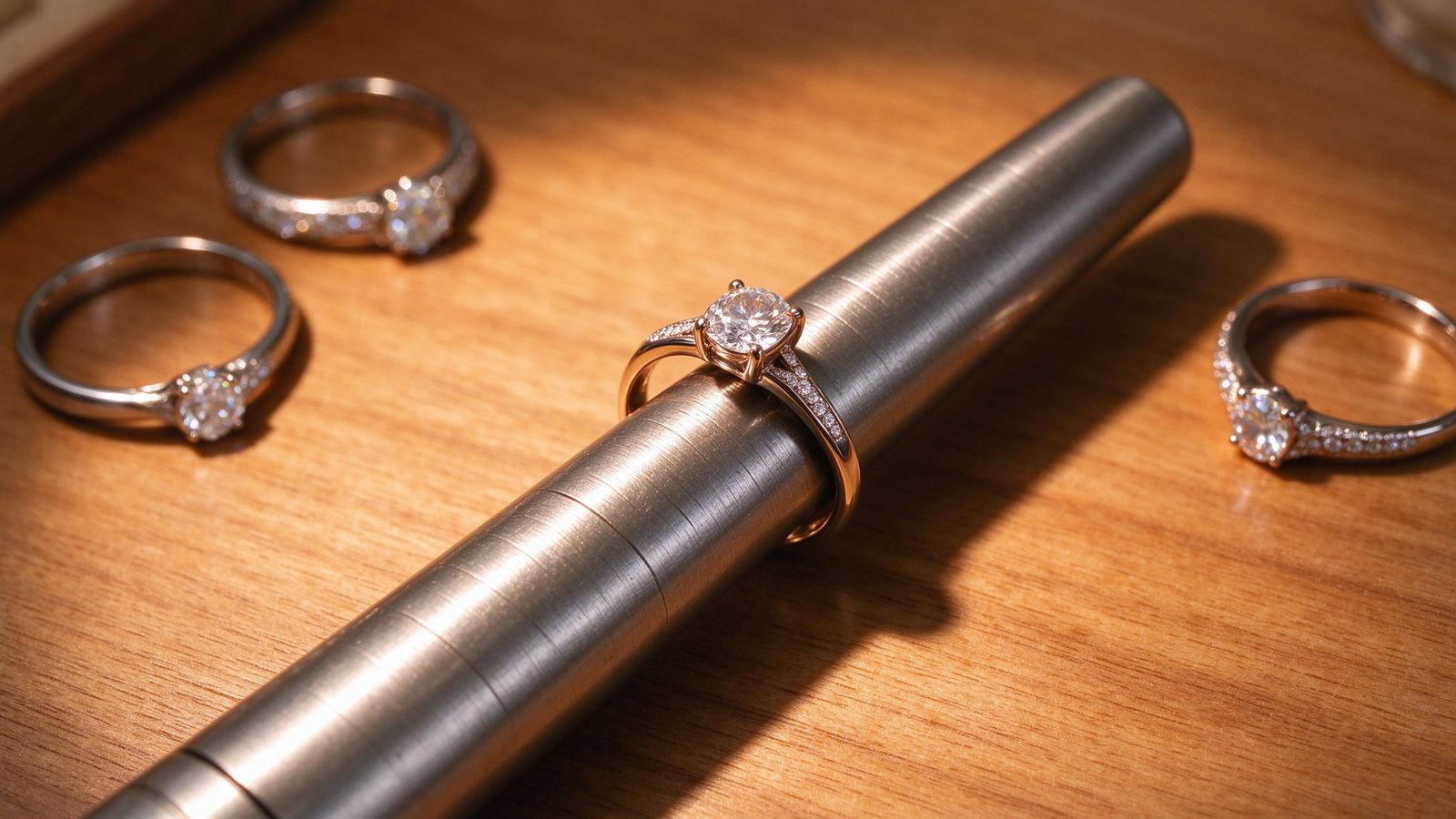
Ring sizing is the classic gifting puzzle. If the ring is a surprise, you have options. Borrow a ring they currently wear on the correct finger and trace its inside diameter on paper, then take the tracing to a jeweler. Be careful: rings on the index finger are a different size than the ring finger, so confirm the finger. Alternatively, use a hidden plastic sizer while they sleep, though that is risky. For necklaces, 18 inches is the safe universal length. For bracelets, measure a bracelet they already own laid flat and add a comfortable allowance.
If you truly cannot size the ring, choose a piece that is not size-dependent: a necklace, earrings, or a bracelet is far more forgiving. Many stores offer complimentary resizing, so keep the receipt and the return window open. The worst outcome is a beautiful ring that never fits, so build in the option to exchange or resize, and tell the recipient where the receipt is. A thoughtful gift comes with the freedom to make it perfect.
Personalization That Feels Considered
Engraving and initials transform a generic gift into a personal one. A handwritten date inside a band, a child's name on a bracelet, or a single initial on a pendant turns an object into a keepsake. Keep engravings short and legible: names and dates age better than inside jokes that lose meaning. For mother's and family pieces, arrange the children's birthstones in birth order along a bar, which is a design that reads as intentional rather than cluttered.
When personalizing, order early because engraving and custom-setting add lead time. Confirm the spelling of names twice, because an engraved name cannot be undone. For wholesale gift assortments, stock a range of pieces that accept engraving, and offer the service in-store or at checkout, because personalized gifts carry a much higher emotional value and price margin than off-the-shelf pieces.
Presentation and After-Gift Care
Presentation is part of the gift. A jewelry gift belongs in a proper box, not a plastic bag, and a handwritten note explaining why you chose that stone or date adds a layer of meaning no retail display can match. Tell the recipient the care basics: which metal it is, how to clean it, and whether it should be removed before showering, so the piece stays beautiful.
Finally, frame the gift as something meant to be worn, not locked away. Many people save fine jewelry for special occasions and then never wear it, which defeats the point. Encourage everyday wear by choosing pieces that suit their routine. A gift that is on their neck, ears, or wrist every day is a gift that keeps reminding them of you, which is the whole purpose of giving jewelry in the first place.
Gift Receipts, Sizing, and Peace of Mind
A thoughtful gift comes with the freedom to make it perfect. Always include a gift receipt, and let the recipient know they can exchange or resize. A ring in the wrong size, a necklace in a metal they do not wear, or a pair of earrings that does not suit their style is a missed opportunity if it cannot be exchanged. The goal is a gift that gets worn, so building in flexibility is part of being thoughtful.
For rings, sizing as a surprise is risky. Borrow a ring from the correct finger and trace it, or use a discreet sizer. If you cannot confirm the size, choose a size-independent gift: a necklace, earrings, or a bracelet, which are far more forgiving. When in doubt, take the recipient to pick out the size or the piece together for a major gift, because the wrong surprise is worse than a chosen gift.
Present the gift in a proper box with a handwritten note. Explain the metal and any care, so the recipient knows how to keep it beautiful. Tell them where the receipt is, so they can resize if needed. A little practicality around the gift removes the stress of getting it wrong and lets the meaning land.
When selling jewelry as gifts, make the gifting experience easy. Offer gift boxes, gift receipts, and engraving, and suggest resizing services. Customers who can give with confidence buy more, because they know the recipient can make the piece fit and suit them. The best gift experience removes uncertainty and lets the gesture shine.
Personalized Engraving and Meaningful Details
Engraving turns a beautiful piece into a keepsake. A handwritten date inside a band, a child's name on a bracelet, or a single initial on a pendant adds a layer of meaning that off-the-shelf jewelry lacks. Keep engravings short and legible: names, dates, and coordinates age better than inside jokes that lose meaning. For family pieces, arrange birthstones in birth order along a bar, which reads as intentional rather than cluttered.
Personalized gifts, like a mother's ring set with each child's birthstones, are among the most emotional pieces you can give. The recipient wears the people they love on their hand. These pieces are rarely returned, because they cannot be bought elsewhere. When commissioning such a piece, confirm spellings twice, because an engraved name cannot be undone, and order early, since engraving adds lead time.
For wholesale, offering engraving and personalization raises both the emotional value and the margin. Customers pay more for a piece that is uniquely theirs. Stock pieces that accept engraving, and promote the service at checkout. A personalized gift is memorable, which drives word-of-mouth and repeat business.
The detail that makes a gift personal is often small: the right birth month, a matching metal, a date that matters. Combine these with a handwritten note, and the gift becomes a story the recipient keeps. That is the difference between a present and a treasure, and it is why personalized, well-made jewelry is such a lasting way to show you care.
Choosing the Right Price and Presentation
A jewelry gift should match the occasion without overspending. Everyday pieces like studs or a small pendant suit birthdays and graduations, while a centerpiece stone fits anniversaries and engagements. Spending beyond the weight of the occasion can make the recipient uncomfortable. Set a price that feels generous for the moment, and remember that thoughtfulness and presentation matter more than the price tag.
Presentation elevates any gift. A proper jewelry box, a handwritten note explaining why you chose that stone or date, and the gift receipt turn a nice object into a meaningful gesture. Tell the recipient the metal and basic care, so the piece stays beautiful. A gift given with confidence and warmth lands far better than an expensive one given awkwardly.
When selling gifts, make the experience easy: offer boxes, gift receipts, engraving, and sizing. Customers give jewelry because they want to delight someone, and removing the friction of returns and presentation makes them buy more. A well-presented, thoughtfully chosen piece becomes a treasure the recipient wears daily, which is the whole point of giving jewelry.
Matching the Gift to the Person
The best jewelry gift matches the recipient's taste, not yours. Notice what metal they already wear and choose the same. Notice whether they wear simple or statement pieces, and follow that. A person who never wears perfume and rarely accessorizes will not love a bold chandelier earring; they will love small, everyday studs. Steal cues from their existing jewelry rather than buying what you think is pretty.
Consider their lifestyle. An active person who works with their hands needs durable, secure pieces, not delicate dangling earrings. A busy professional appreciates versatile, neutral tones. If you are unsure, a small solitaire or a thoughtful birthstone piece in their preferred metal is almost impossible to get wrong. Keep the receipt for resizing and exchanges, so the gift can be made perfect.
Presentation completes the gift. A proper box, a handwritten note, and the gift receipt turn an object into a gesture. Explain the metal and basic care. The most meaningful gifts are the ones that get worn daily, so choose something that fits their real life rather than an idealized version of it. Thoughtful, well-matched jewelry is a gift that keeps reminding them of you every time they put it on.
Making Personalized Gifts in the Workshop
Personalized gifts are some of our favorite pieces to make, because each one carries a specific story. A mother's ring set with her children's birthstones, a pendant engraved with a baby's name, or a couple's bands inscribed with a date all leave the bench with meaning built in. We arrange birthstones in birth order along a clean bar, so the design reads as intentional rather than cluttered. Engraving is kept short and legible, because names and dates age better than inside jokes.
Because these pieces are custom, we confirm every spelling and date twice before engraving, since a mistake cannot be undone. We recommend ordering early, because personalization adds lead time. The result is a gift that could not be bought off a shelf, and that is exactly why it means so much. When you give a piece made with the recipient's birthstone, initials, or date, you give something that feels chosen for them alone.
Frequently Asked Questions
What is the safest jewelry gift if I am unsure of their taste?
A small solitaire pendant or pair of simple studs in the metal they already wear is almost impossible to get wrong. Avoid rings when you cannot confirm the size.
How do I size a ring as a surprise?
Borrow a ring they wear on the correct finger and trace its inside diameter, or use a discreet sizer. If unsure, choose a necklace or earrings, which are size-independent.
Which birthstone gifts sell best?
Small birthstone studs and solitaire pendants are the highest-turning personalized pieces. You can use affordable or durable alternatives if the traditional stone is too fragile.
Should I match the gift metal to what they already own?
Yes. White gold, silver, or rose gold should match their existing jewelry. Gifting a mismatched metal is the most common reason a beautiful piece sits unused.
How much should I spend on a jewelry gift?
Match the gift to the occasion. Everyday pieces suit birthdays and graduations, while centerpiece stones fit anniversaries and engagements. Always keep the receipt for resizing or exchange.
The perfect jewelry gift is less about the price tag and more about how closely it matches the recipient's taste, metal preference, and life. Use birthstones and dates for meaning, choose size-independent pieces when you cannot ask, and always present the gift with a note and a return option. When you curate personalized, well-made pieces at wholesale, you give gifts that get worn daily rather than stored away, which is the truest measure of a successful jewelry present.