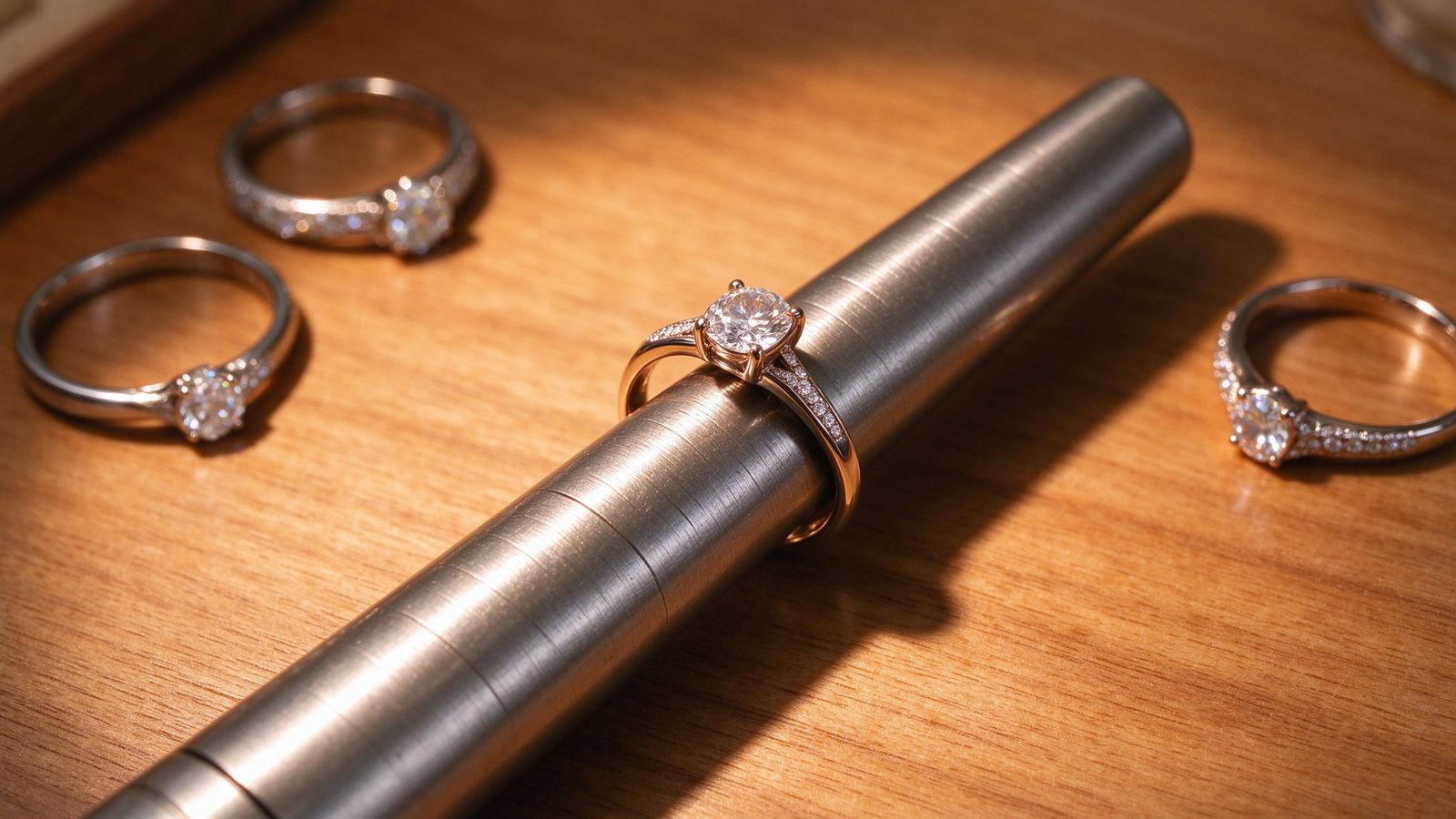
Handcrafted vs Machine-Made Jewelry: What Is the Real Difference?
Walk into any jewelry store and you will hear both words: handcrafted and machine-made, each marketed as a virtue. Handcrafted promises artistry and soul; machine-made promises precision and affordability. The truth is more nuanced, because almost no modern jewelry is purely one or the other. Most pieces blend digital design, cast production, and hand finishing. Understanding where the hand ends and the machine begins helps you buy with clear eyes, appreciating real craft without paying a premium for a marketing word.
This guide compares handcrafted and machine-made jewelry, explains where each excels, breaks down the real cost drivers, and helps you decide which is right for a given piece or inventory. It is a lesson in what craft actually means in the modern atelier.
What Handcrafted Actually Means
Truly handcrafted jewelry begins as a hand-carved wax or a hand-formed piece of metal, shaped by an artisan using hand tools. Every curve is slightly irregular, every surface carries the mark of the maker. Hand carving allows forms that CAD cannot easily replicate: organic textures, sculptural asymmetry, and intimate details that feel personal. A handcrafted piece is often one of a kind, and its slight imperfections are part of its character.
Handcrafting is slow and expensive. A wax carver may spend days on a single master. Each piece is finished by hand, and no two are exactly identical. This is why bespoke artisanal jewelry carries a high price: you are paying for hours of skilled labor. Handcrafted pieces also tend to carry strong emotional value, because the maker's hand is literally in the object. For investment and heirloom pieces, that hand-finished quality is the point.
But handcrafting has limits. It is less consistent: a hand-carved master may vary subtly, and reproducing it identically by hand is difficult. Complex pavé settings are faster and more precise with digital tools. Pure handcrafting excels at sculptural, one-of-a-kind pieces, not at producing hundreds of identical solitaires.
What Machine-Made Actually Means
Machine-made or produced jewelry uses CAD design, 3D printing, rubber molds, and casting to repeat a design consistently. A master is created once, and the piece is cast identically many times. This is how most wholesale and mass-market jewelry is made. Machines, tools, and semi-automated processes handle the repetitive work, while artisans still do setting and polishing.
The advantages are consistency and affordability. Every piece matches, stones fit predictably, and the cost of the design is spread over many units. Machine-made jewelry can be remarkably detailed, because modern 3D printing reproduces filigree and pavé with precision that hand carving struggles to match. For everyday pieces bought at accessible prices, production manufacturing is the practical reality.
The criticism of machine-made jewelry is that it can feel uniform and lacks the irregular warmth of hand work. But this is often overstated. A well-designed CAD model, well-cast and well-finished by hand, is a beautiful, durable piece. The machine handles repetition; the artisan handles finishing. The distinction is not hand versus machine so much as mass-produced versus individually built.
Where They Overlap in Modern Ateliers
The reality is that almost all modern jewelry combines both. A typical piece is designed in CAD, 3D-printed, cast, then hand-finished and hand-set by artisans. The casting is mechanical, but the setting, polishing, and final touches are hand work. Calling such a piece purely handcrafted or purely machine-made is misleading; the truth is a blend optimized for both consistency and quality.
Even handmade studios use machines for repetitive tasks: a jeweler may carve a wax by hand but use a flex shaft for polishing. Production studios may cast from a digital master but set every pavé stone under magnification by hand. The genuine question is not how much is machine versus hand, but how carefully the skilled stages are performed. A hand-set pavé band from a production line can outlast a poorly carved, poorly set artisanal piece.
This overlap means buyers should not overpay for the word handcrafted if the piece was actually cast from a shared mold. Ask what part of the process is hand done. Honest makers explain exactly where their hands were involved, which is far more informative than the label itself.
| Factor | Handcrafted | Machine/Produced |
|---|---|---|
| Uniqueness | One of a kind | Identical repeats |
| Cost | High, labor-based | Lower, scaled |
| Consistency | Variable | Excellent |
| Detail complexity | Organic forms | Precise pavé/filigree |
| Finishing | Hand-finished | Often hand-finished too |
Cost and Value
The price difference between handcrafted and produced jewelry comes down to labor and repetition. A hand-carved, one-off piece carries days of artisan time, so it costs accordingly. A produced design amortizes the design cost over hundreds of units, making each piece affordable. Neither is inherently better value; they serve different purposes. A meaningful heirloom justifies artisanal labor; a trendy everyday pendant does not.
Resale and emotional value favor genuinely handcrafted, unique pieces, especially by recognized makers. Mass-produced pieces hold their value mainly through metal and stone weight, not design. But produced jewelry can still be excellent value, because it delivers real gold and stones at accessible prices thanks to efficient manufacturing. The mistake is paying handcrafted prices for a mass-produced piece, which is why asking about the process matters.
For wholesale buyers, produced jewelry with strong finishing is the inventory that turns over. Handcrafted pieces suit a boutique, high-margin segment. Many successful retailers blend both: affordable produced basics alongside a few artisanal statement pieces. Matching the production method to the customer and the price point is the real skill.
Durability and Quality Control
Durability depends less on hand versus machine and more on construction. A well-cast, properly set, solid produced ring can outlast a thin, rushed handcrafted one. What matters is wall thickness, prong security, and finish, regardless of how the master was made. A handcrafted label does not guarantee durability, and a produced label does not guarantee flimsiness.
Machine production actually improves consistency in structural details. A CAD model can be checked for wall thickness and stress points before casting, reducing weak points. Hand-carved pieces, by contrast, can have uneven thickness that the carver did not notice. The best of both worlds uses digital modeling for structural soundness and hand skill for finishing and setting.
When judging durability, ignore the label and inspect the piece: weigh it, feel the prongs, check the finish. A solid, well-finished piece is durable whether it was carved or printed. This is the practical truth that cuts through the marketing: build quality matters far more than how the master was made.
Choosing What to Buy
Choose handcrafted when you want a unique, sculptural, meaningful piece, are commissioning a bespoke design, or value the maker's personal touch. Choose produced or CAD-made when you want consistent quality, accessible prices, and the ability to reorder identical pieces. Most people benefit from a mix: produced everyday jewelry they wear constantly, and an occasional artisanal piece for milestones.
For wholesale buyers, the question is what your customer values. A modern e-commerce customer often wants consistent, well-finished pieces at fair prices, which production manufacturing delivers. A boutique collector may seek artisanal one-offs. Ask suppliers about their process, inspect samples, and judge by finish and construction. The word handcrafted should be backed by a clear explanation, not assumed.
In the end, jewelry is about the object on your finger, not the story behind its making. A beautifully finished, well-set, solid piece brings joy whether it began as a carved wax or a digital file. Understand the difference, ask the right questions, and buy the piece that is genuinely well made, whatever label it carries.
The Rise of Made-to-Order Production
Modern jewelry sits between pure handcraft and mass production in a model called made-to-order. A design is created in CAD, and each piece is cast and finished when ordered, rather than stockpiled. This gives the consistency of digital manufacturing with the hand finishing of an artisan. It also means less waste, because pieces are made to demand rather than produced speculatively. For wholesale buyers, made-to-order reduces minimums and keeps inventory fresh.
This model has changed what small brands can offer. A small workshop can design in CAD, print on demand, and cast locally, competing with large factories without holding warehouses. The result is more variety and faster innovation. When you buy from such a workshop, you get a piece that is both modern and hand-finished, without the huge overhead of either a factory or a solo carver.
What to Ask Before You Buy
Whether a piece is handcrafted or produced, ask the maker what part of the process is done by hand. Honest makers explain: the CAD is digital, the casting is mechanical, but the setting and polishing are hand done. This tells you where the craftsmanship lives and what you are paying for. Avoid vague claims of handmade without detail, because the word is marketing until defined.
Inspect the piece itself regardless of the label. A well-finished, solid, securely set piece is well made, whatever its origin. A handcrafted label on a flimsy, poorly set piece is just marketing. Trust the object in your hand: the weight, the smooth edges, the secure prongs. Those are the real signs of quality, far more reliable than how the piece was advertised.
Buying Based on Build, Not Buzzwords
The wisest approach is to judge the piece in your hand, not the marketing label. Feel the weight, run a finger over the prongs, check the finish, and confirm the stamp. A well-built, solid, well-finished piece is excellent whether it was carved or printed. A handcrafted label on a flimsy, poorly set ring is just marketing. Ask the maker which parts are truly hand done, and trust the object itself. For wholesale buyers, sample inspection reveals the real build quality far better than a description. Buy the jewelry that feels solid, secure, and beautiful, and let the handcrafted story be a bonus rather than the reason to pay more. In the end, what matters is that the piece is well made and will last, not how it was advertised.
Our Blend of Hand and Machine
We do not pretend our pieces are carved entirely by hand, nor that they are stamped out by a machine. The honest truth is that modern jewelry is best made by blending both. We design in CAD for precision, 3D-print the wax, and cast for consistency, but every piece is set, finished, and inspected by hand. The machine handles repetition; the artisan handles the details that make a ring comfortable and beautiful. This blend gives customers consistent, accurate pieces that still carry a craftsman's touch.
When you ask us what is handcrafted, we will tell you exactly: the setting, the polishing, the final checks. We do not sell the word handcrafted as a marketing mystery. A well-made ring from our bench feels solid and smooth, and that feel comes from human hands doing the finishing work. We believe in being transparent about the process, because trust matters more than the label. The piece in your hand is what proves the quality, whatever it is called.
Why We Are Transparent About the Process
The word handcrafted is overused in jewelry marketing, which is why we prefer to be specific. We design in CAD and cast with modern equipment, but we set, finish, and inspect every piece by hand. We tell customers exactly which steps are machine-assisted and which are done by a craftsman, because honesty builds more trust than a vague artisan label. A well-made piece should be judged by how it feels, not by how it is described.
For wholesale buyers, this transparency means you know what you are sourcing: consistent, dimensionally accurate pieces finished by skilled hands. You can inspect samples and trust that production matches. We believe the future of jewelry is this blend: technology for precision, hands for the details. Buy the piece for its solid build and smooth finish, and let the story support rather than replace the quality. That is how we want to work.
The Price of Honesty
Being transparent about what is hand done and what is machined keeps our pricing honest. CAD and casting let us offer detailed pieces at fair prices, because we do not pay a carver to shape metal by hand for weeks. The hand work, setting and finishing, is what justifies the labor cost, and we charge for that honestly. Customers get precision plus craftsmanship without paying a mythical artisanal premium for work a machine does better. This honesty is why our pieces offer such good value.
When you buy from us, you know exactly what you are paying for: solid metal, a well-set stone, and hand finishing. Compare that to a vague handcrafted label on a flimsy piece, and the difference is clear. Buy the build, not the buzzword, and you get jewelry that is both well made and fairly priced.
A Last Word on the Label
Whether a piece is called handcrafted or produced, what matters is that it is well built. Feel the weight, check the prongs, inspect the finish, and confirm the stamp. A solid, smooth, secure piece is excellent however it was made. Choose the maker who is honest about the process, and buy the jewelry that feels right in your hand.
Frequently Asked Questions
Is handcrafted jewelry always better?
Not necessarily. Handcrafted offers unique, sculptural character, but produced CAD-made jewelry can be more consistent, precisely set, and durable when well finished. Quality depends on construction, not the label.
What does handcrafted really mean?
It means the piece was shaped by an artisan's hand, often hand-carved wax, with hand finishing. Most modern pieces blend hand work with CAD and casting, so ask which parts are truly hand done.
Why is handcrafted jewelry more expensive?
Because it involves hours of skilled labor that cannot be amortized over many identical units. Produced designs spread the design cost over hundreds of pieces, lowering each unit's price.
Does machine-made jewelry lack quality?
No. Modern CAD and casting reproduce detail precisely, and artisans still set and finish by hand. A well-made produced piece can outlast a rushed handcrafted one.
Which should I buy for wholesale?
Produced, consistently finished pieces are best for everyday inventory and reorders. Reserve artisanal handcrafted pieces for a higher-margin, unique segment.
The handcrafted versus machine debate is less a contest than a spectrum. Most jewelry blends digital precision with hand setting and finishing, and quality comes down to construction, not origin. Handcrafted pieces offer unique, soulful artistry for milestones; produced pieces offer consistent, affordable, well-made everyday wear. Ask what is actually hand done, inspect the finish and weight, and buy the piece that is genuinely well made. That is how you cut through the marketing and get jewelry you will love.