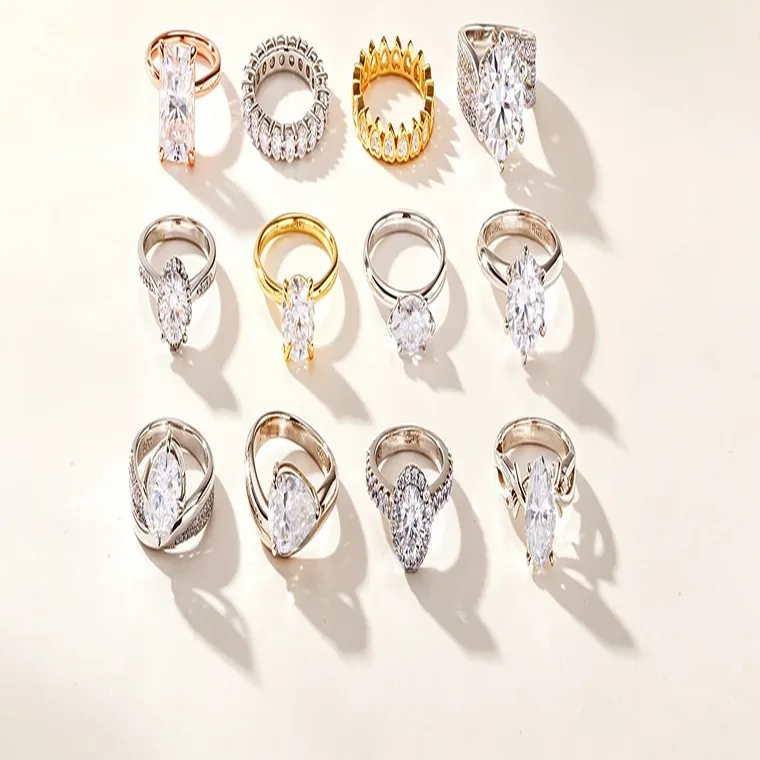
When most people hear the word garnet, they picture a deep, brownish-red stone set in vintage silver. That is one member of the family, but it is far from the whole story. Garnet is actually a group of closely related silicate minerals, and the different species behave quite differently once they reach the bench. If you are considering garnet for jewelry—as the January birthstone or simply as an underlooked colored gem—it helps to know which species you are looking at.

The garnet family by species
Several garnet species are used in jewelry, and each has its own color range and price tier.
Pyrope is the classic deep, slightly orange-red garnet. It is often clean, and the finest material borders on ruby color. Almandine is the darker, purplish-red garnet you see most often in affordable jewelry; it tends to be the most affordable and frequently shows small included crystals. Spessartite is the mandarin-orange garnet, prized for its vivid color and usually sold at a premium.
Grossular is where garnet gets expensive. Its green variety, tsavorite, rivals fine emerald in tone but is harder and usually cleaner. Its yellow-brown variety, hessonite, has a warm cinnamon color. Andradite includes demantoid, the rare green garnet with fire that can outperform diamond, plus black melanite used in masculine, contemporary pieces.
Hardness and everyday wear
Garnet sits at roughly 6.5 to 7.5 on the Mohs scale depending on species. That is comfortable for rings, but it is below sapphire and ruby, so a garnet ring will pick up micro-scratches over years of wear. It is an excellent choice for pendants, earrings and brooches, and it holds up well in a ring that is not worn during manual work. For a quick refresher on how hardness translates to daily use, our guide to the Mohs scale explains the tradeoffs.
Garnet toughness is generally good. Unlike emerald, it does not usually crack along its setting under normal wear, which is one reason jewelers have used it for centuries in closed-back and carved settings.
Treatments to know about
Most red garnet is sold completely untreated. That is part of its appeal—what you see is the natural color. The exceptions are worth a short mention.
Some darker material is heat-treated to lighten or improve red tone, though this is uncommon. Tsavorite and demantoid are almost never treated, partly because their value rests on natural clarity and color. On rare occasion, lower-grade garnet may be fracture-filled or dyed; this is more typical of cabochon and bead material than of fine faceted stones. If a dealer cannot tell you whether a stone is treated, buy from a source that will.
How to buy garnet well
Because garnet is affordable relative to ruby and emerald, you can spend your budget on size and color rather than chasing rarity. Three things matter most.
Color leads. For red garnet, look for even, saturated color without a gray or brown overlay. For tsavorite and demantoid, the green should be vivid rather than pastel. Clarity is usually excellent in pyrope and spessartite; almandine often carries small included crystals, which is acceptable if they are not visible face-up. Cut matters more than people expect—a poorly cut garnet looks dark and dead, while a well-proportioned one glows.
If you are weighing colored gems for an engagement ring, garnet (especially tsavorite) is one of the underrated color gems worth considering. For the broader decision, our colored gemstone buying guide covers the tradeoffs of color, clarity and treatment disclosure.
Care at home
Garnet is straightforward to maintain. Warm water, a drop of mild dish soap and a soft brush are all you need. Avoid ultrasonic cleaners for included or fracture-filled material, and keep garnet away from harder stones that can scratch it in a shared tray.
Where garnet works best in jewelry
Because garnet comes in so many colors, it is unusually versatile. Red pyrope and almandine are the default for vintage-style rings, cufflinks and signet settings. Spessartite orange works well in gold settings for people who want warmth without the cost of imperial topaz. Tsavorite pairs naturally with platinum or white gold, where its green reads vivid; in yellow gold it can look darker. Demantoid is usually reserved for one-of-a-kind pieces, because stones above two carats are uncommon and priced accordingly.
We also see garnet used as an accent stone. Small almandine beads in a bracelet, a row of tsavorite on a band, or a pair of spessartite drops add color without the maintenance burden of emerald. If you are building a collection around a single stone, garnet rewards the research: learning the species changes how you see every piece in the display case.
The bottom line: garnet offers more variety and value than its reputation suggests. Start with the species, then choose color and cut, and you can end up with a stone that looks far more expensive than it cost.
The definition of carat weight and how it is measured are set out in the Wikipedia entry on carat weight.
Related reading: Aquamarine Gemstone: Properties, Color, and Value Explained, Garnet Gemstone Guide: Varieties, Colors & Hardness, Blue Topaz Gemstone Guide: Colors, Value & Care.
Frequently Asked Questions
How do I verify a factory before placing a bulk order?
Request a production video, business license, export records and a paid sample run. A factory that accepts a 50-piece test order is usually a real manufacturer.
What payment terms do you offer?
30% T/T deposit with the balance against the bill of lading. This protects both sides on first orders and can move to net terms after a track record.
What is your normal reject rate?
3–5% under 10x loupe inspection for cast and set pieces. Defective units are replaced free in the next shipment.
Where is the factory located?
Wuzhou, Guangxi, China—the core lab-grown and moissanite manufacturing cluster. Shipments go via Guangzhou or Shenzhen ports.


