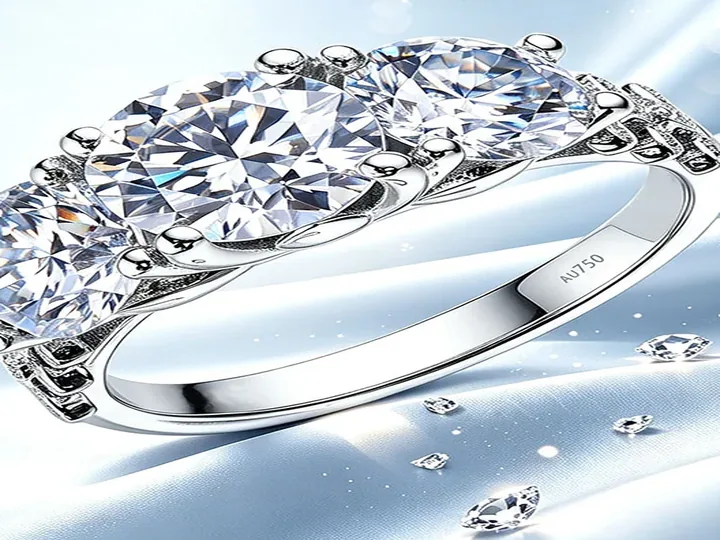
If you have ever held a clear, slightly cool blue stone and thought it looked like seawater on a bright day, you have probably met aquamarine. It is the blue variety of the beryl family, the same mineral group that produces emerald, and it has become one of the most-requested colored stones for rings, pendants, and earrings in our shop. Buyers like it because it reads elegant without being loud, and it wears far more gracefully than most soft colored gems.

What aquamarine is, chemically
Aquamarine is a beryl colored by traces of iron. Unlike emerald, which gets its green from chromium and vanadium and is famously included, aquamarine forms in much cleaner crystals. That is why commercial aquamarine is often eye-clean and available in large sizes at prices that would be unthinkable for a comparable emerald. The color ranges from pale sky blue to a deeper, slightly greenish blue, and the most valuable material leans toward a saturated, slightly violetish "Santa Maria" blue.
Hardness and daily wear
On the Mohs hardness scale, aquamarine sits at 7.5 to 8. That puts it comfortably above quartz (7) and well above softer stones like opal (5.5) or pearl (2.5-4.5). For a ring, that is good news: it resists scratches from normal handling. It is not as tough as ruby or sapphire, however. Beryl has fair-to-good toughness, which means a sharp blow on a hard edge can still chip or crack a girdle. We always seat aquamarine in a protective bezel or a well-rounded prong setting rather than leaving it fully exposed on a thin edge.
Color, tone, and why heat matters
Most rough aquamarine comes out of the ground with a greenish cast from the iron in its lattice. Heat treatment, typically around 400 to 450 degrees Celsius, drives off that green component and leaves a cleaner blue. This treatment is stable, permanent, and universally accepted in the trade; it is as standard as heating sapphire. You should expect nearly all commercial aquamarine to be heated, and it does not detract from value the way a hidden fracture-filling would. What really moves price is the depth of blue: pale, almost washed-out stones are inexpensive, while a strongly saturated, medium-toned blue commands a clear premium.
Where the good material comes from
Brazil has historically been the largest source, with the classic Minas Gerais material. Mozambique produces increasingly clean, saturated blue, and Nigeria, Madagascar, and Pakistan contribute as well. "Santa Maria" originally referred to a Brazilian mine; today the term is often borrowed to describe a deep blue color tone regardless of origin. For a buyer, origin matters less here than it does for ruby: even color and clean cutting will give you more satisfaction than a famous label.
How we cut and set it
Aquamarine takes a fine polish and holds sharp facets, which is why it is often cut as an emerald step-cut or a clean oval. Because it is frequently sold in large sizes, cutters watch color carefully: a deep stone cut too light looks washed out, while a pale stone cut too dark looks dead. At the bench we favor proportions that let light return evenly. In a mounting, we prefer a setting with at least four snug prongs and we avoid tight tension settings, since beryl does not flex the way diamond does.
Caring for aquamarine jewelry
Warm soapy water and a soft brush are the safest way to clean it. Ultrasonic and steam cleaners are generally tolerated by clean, heat-treated aquamarine, but we are cautious: any stone with a natural liquid fracture or a previous blow can be pushed over the edge by thermal shock. We tell our own clients to keep aquamarine away from sudden temperature swings: do not jump into a hot tub with a ring on, and do not polish it under a steam wand. Store it separately from harder diamonds so it does not get scratched against them over years of contact. For a broader routine, our guide to hard colored-gem care applies the same way.
Is aquamarine a good value?
Yes, especially if you want a genuinely blue, eye-clean stone at a fraction of sapphire's cost. You can buy a substantial 2- or 3-carat aquamarine ring for less than a half-carat comparable sapphire, and it will wear beautifully for decades. It is the March birthstone, which makes it a natural gift choice, but we set it for clients every month of the year because it simply photographs and wears well. If you want a colored stone that feels calm, cool, and built for daily life, aquamarine is one of the smartest places to start.
Common questions buyers ask
Is aquamarine a March birthstone? Yes, it is the traditional March birthstone, which makes it a go-to for spring birthdays and push gifts. Can it be worn every day? Yes, as long as it is set protectively. A bezel-set aquamarine in a pendant or a low-profile ring handles office life and errands with no trouble; a high-set ring that takes knocks is a different story. Does it fade over time? No, unlike some softer colored stones, aquamarine does not fade in normal indoor light. The main long-term risk is chipping from blunt impact, not color loss. If you compare it side by side with a pale sapphire, the price difference for a similar-sized stone is usually where buyers are surprised, and that gap is exactly why aquamarine stays a favorite in our workshop.
A concise scientific overview of moissanite is given in the Encyclopaedia Britannica entry on moissanite.
Authoritative References
For buyers who need to verify the technical and regulatory basis of this guide, the following independent institutions publish authoritative reference data:
- GIA Gem Encyclopedia - independent grading and identification reference for natural and lab-grown gems.
- Wikipedia: Moissanite - peer-reviewed background on moissanite chemistry, optics and history.
Related reading: Iolite Gemstone Guide: Properties, Color, and Value, Peridot Gemstone Guide: Properties, Color, and Jewelry Wear, Turquoise Gemstone Guide: Stabilization, Color, and Value.
Frequently Asked Questions
How do I verify a factory before placing a bulk order?
Request a production video, business license, export records and a paid sample run. A factory that accepts a 50-piece test order is usually a real manufacturer.
What payment terms do you offer?
30% T/T deposit with the balance against the bill of lading. This protects both sides on first orders and can move to net terms after a track record.
What is your normal reject rate?
3–5% under 10x loupe inspection for cast and set pieces. Defective units are replaced free in the next shipment.
Where is the factory located?
Wuzhou, Guangxi, China—the core lab-grown and moissanite manufacturing cluster. Shipments go via Guangzhou or Shenzhen ports.


