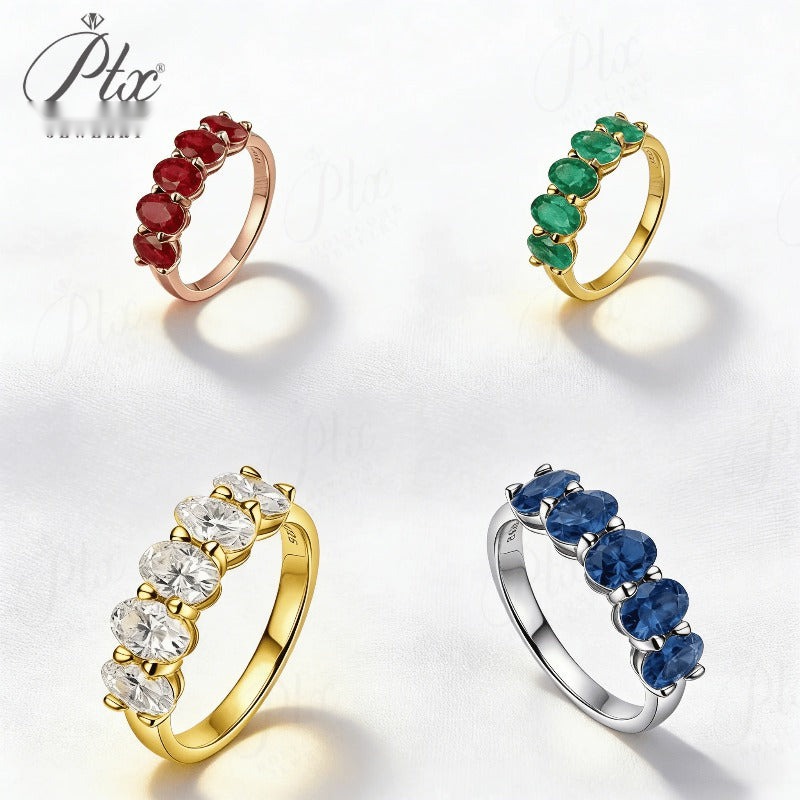
Blue topaz is quietly one of the most successful gemstones in modern jewelry. It is hard, brilliant, clean and inexpensive, which is exactly why it appears in everything from studs to statement pendants. What most buyers do not realize is that the vivid blue topaz in stores is almost always a transformed version of a colorless stone. Once you understand that, buying it becomes simple.
What topaz actually is
Topaz is an aluminum silicate mineral with the formula Al2SiO4(F,OH). It forms in orthorhombic crystals and has a perfect basal cleavage, which means it can split along one plane. That cleavage matters to a setter—a sharp tap on the wrong axis can chip the girdle—but in everyday wear, topaz is robust.
Natural topaz occurs in colorless, pale blue, yellow, brown, pink and imperial orange shades. Naturally deep blue topaz is rare and expensive. The commercial blue market, by contrast, is built almost entirely from colorless topaz that is irradiated and heat-treated to produce a stable blue.
The three commercial blue grades
Dealers and cutters sort treated blue topaz into three loose categories. None is an official grading scale, but the terms are widely used.
Sky blue is the palest, softest blue, closest to a light aquamarine tone. Swiss blue is a brighter, medium blue with good saturation—the most popular choice for everyday jewelry. London blue is the darkest, slightly grayish blue, often described as "ink" or "steely" blue. It reads more sophisticated in smaller stones.
Color preference is personal. Sky blue suits pale skin and small studs; London blue reads well in larger pendants and masculine rings; Swiss blue sits in the middle and flatters most people.
Hardness, durability and the cleavage caveat
Topaz measures 8 on the Mohs scale, well above quartz and comparable with spinel. That means it resists scratches from everyday contact, cosmetics and storage. It is an excellent ring stone for most wearers.
The one caveat is cleavage. A hard impact—banging a ring against a counter, a fall—can cause a clean split, especially if the stone is mounted with its cleavage plane aligned badly. A competent setter orients the stone and uses protective prongs or a bezel when topaz is used as a center stone. For context on how hardness ranks for daily wear, see our Mohs scale guide.
Treatments: stable and accepted
Almost all blue topaz on the market is irradiated and heat-treated. The color is stable under normal light and wear; it does not fade. This is standard, accepted practice and is disclosed openly in the trade.
What you should avoid is paying untreated, premium prices for generic blue topaz. If a seller markets a Swiss blue stone as "natural blue" without certification, treat the claim skeptically. Truly natural blue topaz exists, but it is uncommon and priced accordingly.
How to buy blue topaz
Because the stone is affordable, you can focus on the few things that actually change the look.
Color consistency across a matched pair—for earrings, two stones should be indistinguishable side by side. Eye-clean clarity is the norm and should be expected; topaz is usually very clean. Cut quality drives the shine. Look for a stone that is not windowed (transparent and dull in the center) and has crisp faceting.
Blue topaz pairs beautifully with white gold, platinum and rose gold. It is the December birthstone in the traditional list, so it is a frequent gift choice; our birthstone guide covers the full calendar and the modern vs. traditional discrepancies.
Care
Clean blue topaz with warm soapy water and a soft brush. It tolerates home ultrasonic cleaners reasonably well when untreated and unset, but we still skip the steam—the combination of heat and pressure can aggravate cleavage. Store it away from harder stones and you will have a vivid blue that stays bright for decades.
Setting blue topaz well
Because of its cleavage, we treat blue topaz the way we treat aquamarine in a setting. A prong ring should use medium-sized, well-rounded prongs that grip the girdle without pinching the culet. A bezel setting is even safer, because it wraps the edge and removes the risk of a side impact. Pavé-set small topaz is less common and, in our view, less sensible—small stones with cleavage chip easily along the girdle when the beads are tightened.
Blue topaz also shows off well in pear, oval and cushion cuts. Mixed cuts that add more facets to the crown give it the fire it is known for. Very thin, flat cuts look dull; depth is what makes the blue sing.
It is also one of the few birthstones you can buy in any carat weight without stretching the budget. A three-carat Swiss blue pendant is an everyday purchase rather than a considered acquisition, which is why topaz remains a default for first fine-jewelry gifts.
For the money, few gems deliver this much brilliance per carat. Buy the color you like, confirm the cut, and treat the treatment disclosure as a baseline rather than a drawback.
The Gemological Institute of America’s gem encyclopedia is an authoritative, widely cited reference on moissanite and diamond quality factors.
Related reading: Colored Gemstone Buying Guide: How to Evaluate Color, Clarity, and Cut, Blue Topaz Gemstone Guide: Colors, Value & Care, Aquamarine Gemstone: Properties, Color, and Value Explained.
Frequently Asked Questions
How do I verify a factory before placing a bulk order?
Request a production video, business license, export records and a paid sample run. A factory that accepts a 50-piece test order is usually a real manufacturer.
What payment terms do you offer?
30% T/T deposit with the balance against the bill of lading. This protects both sides on first orders and can move to net terms after a track record.
What is your normal reject rate?
3–5% under 10x loupe inspection for cast and set pieces. Defective units are replaced free in the next shipment.
Where is the factory located?
Wuzhou, Guangxi, China—the core lab-grown and moissanite manufacturing cluster. Shipments go via Guangzhou or Shenzhen ports.


