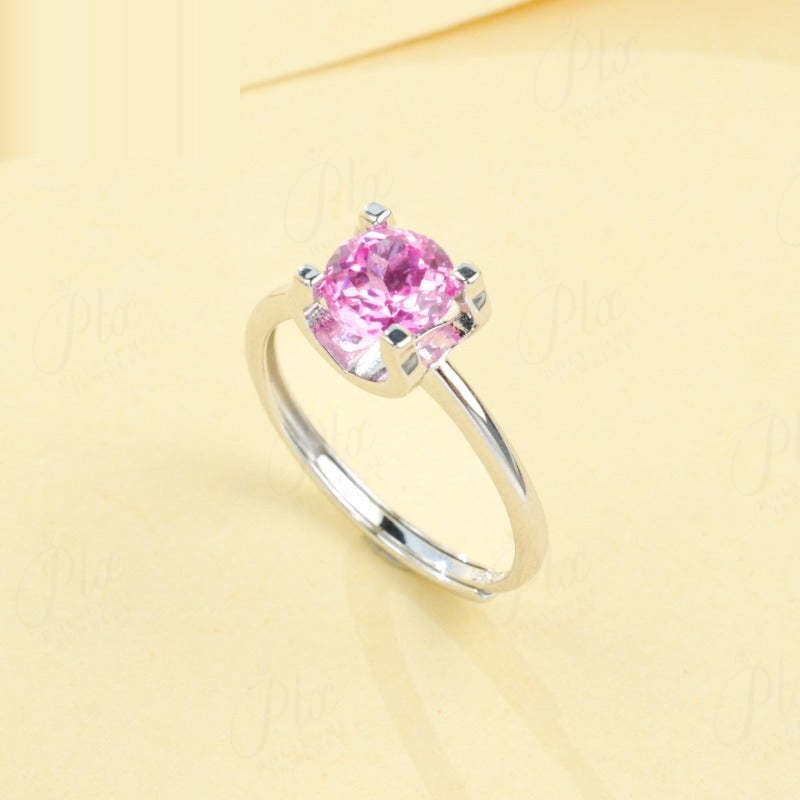
Birthstone Jewelry Gifts - HOLYCOME
Gifting jewelry is one of the most personal gestures you can make, but it is also one of the easiest to get wrong. A ring in the wrong size, a necklace in a metal the recipient never wears, or a birthstone they associate with a bad gift, can turn a thoughtful gesture into a drawer ornament. The best jewelry gifts are chosen with the recipient's actual taste, wardrobe, and life in mind, not with a generic "birthday present" checklist. Birthstone jewelry is the most meaningful category of gift because it ties the piece to the recipient's birth month, but even that advantage is wasted if you pick the wrong setting, the wrong metal, or the wrong size. This guide walks through how to choose a birthstone gift that will be worn, kept, and remembered.
The most important principle of jewelry gifting is to buy something she would choose for herself, not something you want to see her wear. Those two things are often different. A pendant you find dramatic may be something she would never put on. The way around this is to study the jewelry she already owns: the metals she wears, the lengths of her necklaces, the size of her earrings. That research takes ten minutes and prevents ninety percent of bad gifts.
Why Birthstones Make Meaningful Gifts
A birthstone gift works because it carries a personal connection no generic jewelry can match. The stone is tied to the month she was born, and that story gives the piece a narrative that a random diamond pendant lacks. Birthstone gifts also span every budget: a small birthstone stud in sterling silver costs a few dollars, while the same stone in a custom gold pendant with an engraving can run into the thousands. That range makes birthstones ideal for everything from a sibling's birthday to an anniversary.
The modern birthstone list was standardized in the twentieth century to make the trade easier, but the stones have deep historical roots. Many cultures assigned gems to months long before the modern list, and some people still use traditional or mystical birthstone systems. If you are unsure which stone "counts" for a given month, the modern list is the safe default, and our birthstones by month guide lays it out in full.
The Modern Birthstone Chart
The modern birthstone list, as adopted by the jewelry industry, pairs each month with a primary stone. The chart below is the version most US jewelers use, and it is the list recipients will expect.
| Month | Primary Birthstone | Common Alternative |
|---|---|---|
| January | Garnet | Rose quartz |
| February | Amethyst | Onyx |
| March | Aquamarine | Bloodstone |
| April | Diamond | Crystal |
| May | Emerald | Chrysoprase |
| June | Pearl / Alexandrite | Moonstone |
| July | Ruby | Carnelian |
| August | Peridot | Sardonyx |
| September | Sapphire | Lapis |
| October | Opal / Tourmaline | Rose zircon |
| November | Citrine / Topaz | Yellow sapphire |
| December | Turquoise / Blue Zircon | Tanzanite |
If a traditional stone is too expensive (emerald, ruby, sapphire), there are ethical and affordable alternatives: lab-grown versions of the same stone, or a birthstone-colored gem that reads as the same hue. A lab-grown ruby for a July birthday carries the same meaning at a fraction of the price. Our gift jewelry guide for every occasion covers how to budget by relationship.
Choosing the Right Metal
The metal is the detail that separates a gift she wears from a gift she returns. Look at the jewelry she already owns. If she wears silver and white gold almost exclusively, a yellow gold birthstone pendant will sit in a drawer, no matter how beautiful the stone. Matching the metal to her existing wardrobe is the single most reliable way to ensure the gift is worn. When in doubt, white gold or sterling silver is the safest choice, because it pairs with both cool and warm tones.
Metal also interacts with the stone. A deep red ruby in rose gold looks romantic and warm; the same ruby in white gold looks crisp and modern. An aquamarine in yellow gold can look greenish; in white gold it stays clear blue. If you are set on a particular stone but unsure of the metal, choose a neutral setting that lets the stone speak. Our guide to choosing metal for skin tone walks through which metals flatter which complexions.
Ring, Necklace, or Earrings?
The piece type is as important as the stone. Rings are the most personal gift and the riskiest, because sizing is hard to guess. Necklaces are the safest gift, because almost everyone wears a necklace and the length can be adjusted with an extender. Earrings are safe if you know her pierced ears and her metal sensitivity. Bracelets are the most likely to be wrong because wrist size is hard to guess.
For a first-time gift, choose a pendant necklace. It is personal, it displays the birthstone clearly, and it forgives sizing mistakes. If you know her ring size and her taste, a birthstone ring is the most romantic option. Earrings work beautifully for sisters, daughters, and close friends, because they are a smaller commitment than a ring. Our earrings buying guide covers which earring type suits which face.
Sizing a Gift Ring
If you are gifting a ring, sizing is the make-or-break detail. The best trick is to borrow a ring she already wears on the correct finger and take it to a jeweler to measure on a mandrel. If you cannot do that, trace the inside of one of her rings on a piece of paper while she sleeps, and take the tracing to a jeweler. Never guess a size; a ring that does not fit cannot be worn, and the magic of the gift is lost when she has to mail it back for resizing.
If all else fails, choose a ring with a flexible band or an open cuff, which adjusts within a small range, or buy a pendant instead. Most jewelers will resize a ring once for free, so if you must guess, size up rather than down, because sizing down is harder and sizing up is easy. Our bracelet sizes guide and ring sizing advice follow the same principle: measure first, buy second.
Personalization and Engraving
An engraving turns a birthstone gift into a keepsake. A pendant can carry her initials on the back, a ring can carry her birth date on the inside, and a bracelet can carry a short phrase. Keep the engraving short, because the space is limited: twenty characters is the practical maximum. Laser engraving is sharpest for tiny text; hand engraving has more warmth. The cost is usually modest, and the emotional value is enormous.
Do not engrave anything you would not want to read in fifty years. Avoid inside jokes that will not age well, avoid dates you are unsure of, and avoid handwriting that a jeweler cannot reproduce clearly. A simple "E.S. 2001" on the back of a pendant outlasts any elaborate inscription. Our guide to custom engraving covers what works and what wears off.
Birthstone Durability: Which Stones Work Daily
Not every birthstone is suitable for a ring worn every day. Emerald (May) is soft and oil-treated, and it can crack under a hard knock. Pearl (June) is organic and scratches easily. Opal (October) is delicate and can dry out. If you are gifting a ring for daily wear, choose a harder birthstone for the setting: ruby (July), sapphire (September), garnet (January), and amethyst (February) are all durable enough for everyday rings. For the softer stones, choose a pendant or earrings instead, where the piece faces less impact.
The Mohs scale rates gem hardness, and it is worth checking before you buy. Ruby and sapphire rate 9, emerald 7.5 to 8, aquamarine 7.5, garnet 7, amethyst 7, pearl and opal 2.5 to 4. A stone under 7 will scratch from everyday dust, which is why pearls and opals belong on earrings and pendants, not rings. Our guide to emerald care and ruby care cover the specific maintenance each stone needs.
Gifting by Relationship: What to Spend
The relationship sets the budget, not the other way around. A parent buying for a child's 16th birthday can choose a small sterling silver birthstone pendant. A partner buying for an anniversary can step up to a gold birthstone ring. A friend buying for a birthday should stay modest: a pair of birthstone studs in silver is thoughtful without being overwhelming. Overspending on a gift for the wrong relationship creates awkwardness, just as underspending on a partner's anniversary creates disappointment.
Match the gift to the occasion. A birthstone pendant for a birthday is appropriate; a birthstone ring for a first date is not. The jewelry itself should signal the level of commitment the relationship actually has. When in doubt, choose a piece that is personal but not expensive: a birthstone necklace with an engraving beats a diamond ring for a new partner. Our gift guide for every occasion lays out the budget ranges by relationship.
Birthstone Jewelry for Men
Birthstones are not just for women. Men increasingly wear birthstone rings, signet rings, and pendants. A man's birthstone ring is usually a signet or a bezel-set stone in a wide gold band, rather than a delicate solitaire. Darker birthstones (garnet, amethyst, sapphire, ruby) read especially well in men's designs, while light pastel stones (aquamarine, opal) can look too delicate. A birthstone pendant on a 20-inch chain is a subtle everyday gift for a man who does not wear rings.
When gifting a man's birthstone piece, match the metal to the jewelry he already wears. If he wears a wedding band in white gold, choose white gold; if he wears silver watches and bracelets, sterling silver is safe. Avoid rose gold unless you know he likes it. Our guide to choosing metal for lifestyle covers the masculine metal finishes that work.
Birthstone Combinations for Family Gifts
One of the most meaningful birthstone gifts is a family piece that includes the birthstones of a partner and children. A mother's ring with three small stones set side by side, or a pendant with each child's birthstone, is a classic that women wear for decades. These pieces work best when the stones are small and evenly set, because a ring with five large stones looks cluttered. The modern version is a stacking ring set: each child gets their own thin band, and the mother wears them stacked.
For a family gift, the metal should match the recipient's existing jewelry, and the stones should be chosen for durability. If a child's birthstone is opal or pearl, use a tiny accent rather than a center stone, and set it in a bezel to protect it. The piece is designed to be worn every day for years, so practicality beats symbolism. Our guide to custom engraving adds the final personal touch to a family birthstone piece.
Common Birthstone Gifting Mistakes
The first mistake is buying a soft birthstone like opal or pearl set in a ring for someone who works with her hands, which guarantees scratches. The second is choosing a metal she never wears, so the piece lives in a drawer. The third is guessing a ring size, which either does not fit or requires mailing it back. The fourth is buying a dyed or simulated stone without disclosing it, which is discovered and ruins the gesture. The fifth is choosing a style she would never wear, because the gift was bought for the giver rather than the recipient.
The fix for all of these is research. Look at the jewelry she already owns. Borrow a ring to size it. Choose a pendant or earrings if you are unsure of her taste. If the natural stone is out of budget, buy a clearly labeled lab-grown version. The stone is the excuse for the gift; the thought is the gift. A thoughtful silver birthstone pendant beats an expensive diamond ring in a style she hates, every time. Our birthstones by month guide helps you pick the right stone.
Frequently Asked Questions
Which birthstone is the most expensive? Ruby (July) and emerald (May) are the most expensive natural birthstones, followed by sapphire (September). Lab-grown versions cost a fraction of the natural price and look identical.
Can I give a birthstone gift if I don't know her ring size? Choose a pendant or earrings instead of a ring. If you want a ring, borrow one she wears and have it measured, or choose an open cuff that adjusts.
Is it okay to give a lab-grown birthstone? Yes, as long as you say so. A lab-grown ruby carries the same July-birthday meaning at a fraction of the price. The deception is the gaffe, not the lab growth itself.
Avoiding Birthstone Gaffes
The most common birthstone gaffe is giving a treated or fake stone without disclosing it. A dyed howlite sold as turquoise, or a glass ruby passed off as real, will be discovered, and the gift is ruined. If you cannot afford a natural stone, buy a clearly labeled lab-grown or a genuine but less expensive alternative, and say so. Honesty about the stone builds trust; deception destroys the gift.
The second gaffe is choosing a stone associated with bad memories. Some people have negative associations with their birthstone from childhood gifts, and giving them another one lands wrong. If you are unsure, ask a close relative, or choose a piece that includes the birthstone as an accent rather than the centerpiece. The third gaffe is buying a style she would never wear: a chunky ring for someone who wears only thin chains, a long dangle for someone who wears only studs. The stone matters less than the style she actually lives in.
Budget-Friendly Alternatives
You do not need a natural precious stone to give a meaningful birthstone gift. Lab-grown versions of sapphire, ruby, and emerald look identical to the natural stones at a fraction of the price, and they carry the same birthstone meaning. Genuine semi-precious stones (garnet, amethyst, citrine, peridot) are affordable even in natural form and look beautiful in sterling silver. Moissanite stands in beautifully for an April diamond birthday, and it is more durable than most gems.
The Gift That Keeps Being Worn
The best jewelry gifts are remembered for decades, and birthstone gifts more than most, because the stone ties the piece to who she is. The woman who receives a birthstone pendant at twenty-five will still be wearing it at forty-five, long after the box and the card are gone. That is the bar to aim for: not a piece that wows on Christmas morning, but a piece she puts on every Tuesday for twenty years.
That standard is met by knowing the person, not by spending the most. Study her metals, her lengths, her taste. Choose a style she would actually wear. Add an engraving that will still read well in fifty years. The stone is the excuse; the thought behind it is the gift. Do that, and the birthstone gift becomes the one she never takes off, which is the whole point of giving jewelry in the first place.
Key Takeaways on Birthstone Gifts
- Match the metal to the jewelry she already wears, not to what you think she should wear.
- Choose a pendant or earrings if you do not know her ring size; rings are the riskiest gift.
- Check the stone's durability before putting a soft stone like opal or pearl in a ring.
- Disclose lab-grown or treated stones honestly; deception ruins the gift.
- An engraving and a handwritten note add more meaning than a more expensive stone.
And if you are still unsure, ask. A close friend or family member can tell you her ring size, her metal preference, and the style she actually wears. There is no prize for guessing perfectly, and there is no shame in asking. A birthstone gift that fits and matches her taste beats a surprise that sits in a drawer. The goal is the gesture being worn, not the surprise being spoiled. Most recipients would rather be asked than receive a piece they cannot wear.
For a gift that keeps giving, consider a birthstone that can be added to over the years. A mother's necklace that starts with one child's stone and adds another each birthday becomes a piece that grows with the family. These pieces are worn for decades and passed down. They cost little per stone but carry enormous meaning. That is the magic of birthstone gifting: a small, intentional choice becomes a keepsake.
At the end of the day, the recipient does not remember the price tag; she remembers the moment she opened the box and saw her own birthstone set in a piece chosen just for her. That memory is worth more than any carat. Choose the stone, choose the setting, write the note, and give it. The rest takes care of itself.
Whether the gift is a silver pendant for a sister or a gold ring for a partner, the principle is the same: know the person, match the metal, size it right, and tell her why you chose that stone. Do that, and the birthstone gift becomes the piece she never takes off. That is the whole point of giving jewelry in the first place.
The bottom line: a birthstone gift works when it reflects the recipient, not the budget. Match the metal to what she wears, choose a piece type you can size, keep the stone durable, and be honest about what it is. Spend on the thought and the engraving before you spend on the carat. The best birthstone gifts are worn for decades, not admired once. Choose it for the person, and it becomes the piece she never takes off, which is the whole point of giving jewelry.
The presentation matters as much as the stone. A small birthstone pendant in a well-made box, with a handwritten note explaining why you chose that month and that stone, outclasses an expensive piece in a plastic bag with a generic card. Spend on the story and the presentation before you spend on the stone. At HOLYCOME, we make birthstone pendants, rings, and earrings in sterling silver and 14K gold, with lab-grown and natural stones, and we ship worldwide with free engraving on most pieces. The right birthstone gift is the one she never takes off, and it starts with knowing her, not with the price tag.
Related Articles
- The Complete Guide to Custom Engagement Rings: From Concept to Delivery
- The Psychology of Jewelry: Why Certain Pieces Resonate
Sterling silver terminology used in this guide follows the Wikipedia entry on sterling silver.


