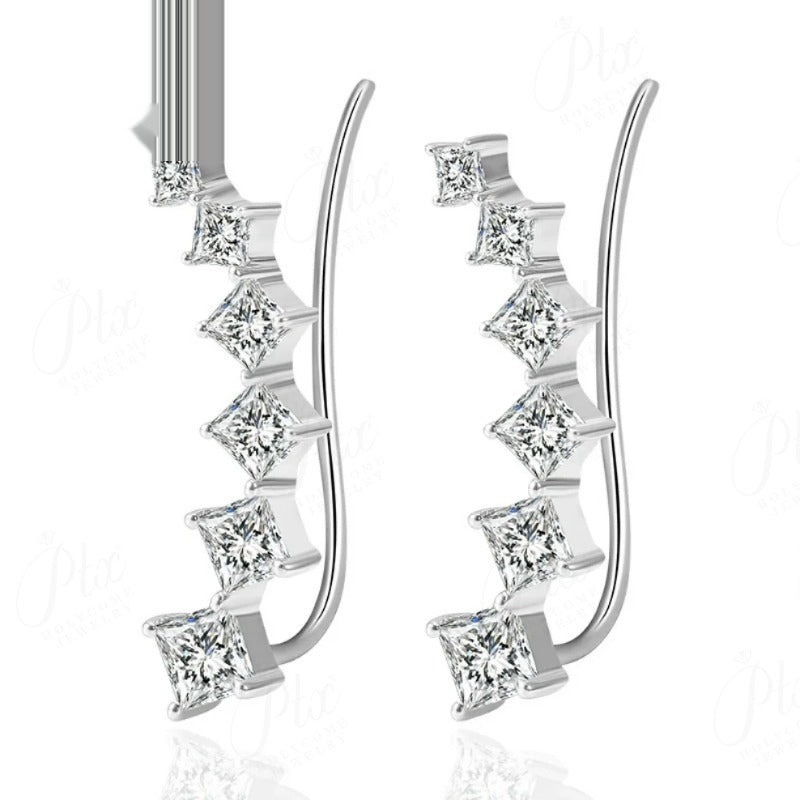
The tennis bracelet is the rare piece that works on almost everyone: a continuous line of matched stones set close together around the wrist, elegant enough for an evening, understated enough for a workday. It is also the piece people most often buy the wrong size or the wrong clasp on, and then wonder why it twists, catches, or slips off. This guide walks through the decisions a manufacturer wishes every buyer made before ordering.
Where the name comes from
The design itself is old: a line bracelet of diamonds dates back decades. The modern nickname came during a 1987 tennis match when professional player Chris Evert's diamond line bracelet broke on court and play paused while the stones were gathered. The name stuck, and the design has been a classic ever since. Today "tennis bracelet" refers to any flexible line bracelet with a continuous row of round (or sometimes shaped) stones, whether diamonds, moissanite, or colored gems.
Total carat weight vs stone quality
The spec that sells the bracelet is total carat weight (TCW). A 2 TCW bracelet and a 4 TCW bracelet look visibly different on the wrist. But TCW is the sum of many small stones, and the average quality of those small stones matters more than the headline number. A bracelet set with 100 low-clarity diamonds will look grayish; the same TCW in cleaner, better-cut stones will look bright and white. When we quote a tennis bracelet, we talk about the average color and clarity per stone, not just the total weight. If you are comparing diamonds vs alternatives, our stone comparison covers what you give up and gain.
Setting style: prongs vs channel vs bezel
Most tennis bracelets use four-prong settings, which let maximum light into each stone and look open. Prong-set bracelets sparkle the most, but the prongs can catch on sweaters and scarves. Channel-set and bezel-set bracelets look smoother and are more snag-resistant, but they use less of each stone's face. For an active wrist, we often recommend the smoother settings; for pure sparkle, prongs win. Our setting types guide shows the trade-offs in detail.
The clasp is non-negotiable
This is the detail buyers skip. A tennis bracelet must have a box-style clasp with a figure-8 or double safety latch. A simple spring ring on a flexible line bracelet is an accident waiting to happen: the moment the box clasp opens slightly, the bracelet twists and slips off the wrist. We have repaired dozens of "lost" bracelets that were simply wearing an inadequate clasp. When you try one on, tug the bracelet gently in both directions. The clasp should feel positive and locked, and the safety should click over it.
Sizing: the wrist test
A tennis bracelet should sit snug but not tight. You should be able to slip one finger underneath it, and the bracelet should not slide more than about an inch up and down your arm. Too loose and it twists around so the stone side faces down, which defeats the whole design. Too tight and it digs in and feels hot. Because the bracelet is rigid in a way a chain is not, we strongly recommend measuring your wrist rather than guessing from a friend's size. If you are unsure, order with an extender, and remember that we can always size a bracelet in the workshop if needed.
What to spend
Tennis bracelets run the full range. At the entry level you can have a clean, white, prong-set bracelet with honest small stones for a few hundred dollars in lab-grown or moissanite. Mid-range natural diamond pieces scale with TCW and stone quality. At the top end, matched D-F color, VS-clarity natural diamonds in a heavy platinum mounting are a serious jewelry-box anchor. Buy for the wrist you have, not the wrist in the photos. A well-made 2 TCW bracelet that fits perfectly and has a proper clasp will be worn every week; a 6 TCW bracelet that slips around and snags sweaters will spend its life in a drawer.
Common questions buyers ask
How tight should a tennis bracelet fit? Snug enough that it does not slide and twist, but loose enough to slip one finger underneath. It should not pinch the wrist bone. Can I wear a tennis bracelet every day? Yes, if the clasp is a box clasp with safety and the stones are set in a style that resists snagging. We see tennis bracelets as everyday pieces, not evening-only. How do I clean one? Warm soapy water and a soft toothbrush gets into the spaces between stones. Avoid ultrasonic cleaners if the bracelet has many small stones, because vibration can gradually loosen prongs. What is a good starter TCW? A 1 to 2 TCW bracelet on a 14k or platinum mounting looks substantial on most wrists without being heavy. Buy the clasp and the craftsmanship before you chase the biggest number on the spec sheet; a well-made 2 TCW will outshine a sloppy 4 TCW every time.
Independent background on moissanite — how its hardness and refractive index compare with diamond — is documented in the Wikipedia article on moissanite.
Related reading: Men's Jewelry Buying Guide: Styles, Metals, and Fit, Tennis Necklace Buying Guide: Stones, Clasps, and Length, Custom Bracelet Manufacturer.
Frequently Asked Questions
Is moissanite a good diamond alternative for retail buyers?
Yes for price-sensitive customers who want brilliance and hardness. Moissanite ranks 9.25 on the Mohs scale, holds up to daily wear and costs a fraction of a natural diamond of the same size, so it resells fast in bridal and fashion lines.
What is the minimum order for wholesale moissanite?
MOQ starts at 50 pieces per design for stock items. Custom cuts and private-label settings usually start at 100–300 pieces depending on the mold.
Do you provide certificates with moissanite stones?
Yes. Every parcel ships with GRA or IGI documentation listing carat weight, color grade and cut. We recommend passing the certificate to your end customer for trust.
How long does sample and bulk production take?
Samples ship in 3–5 days. Bulk runs take 15–20 days under 500 pieces, and 25–30 days for custom work.


