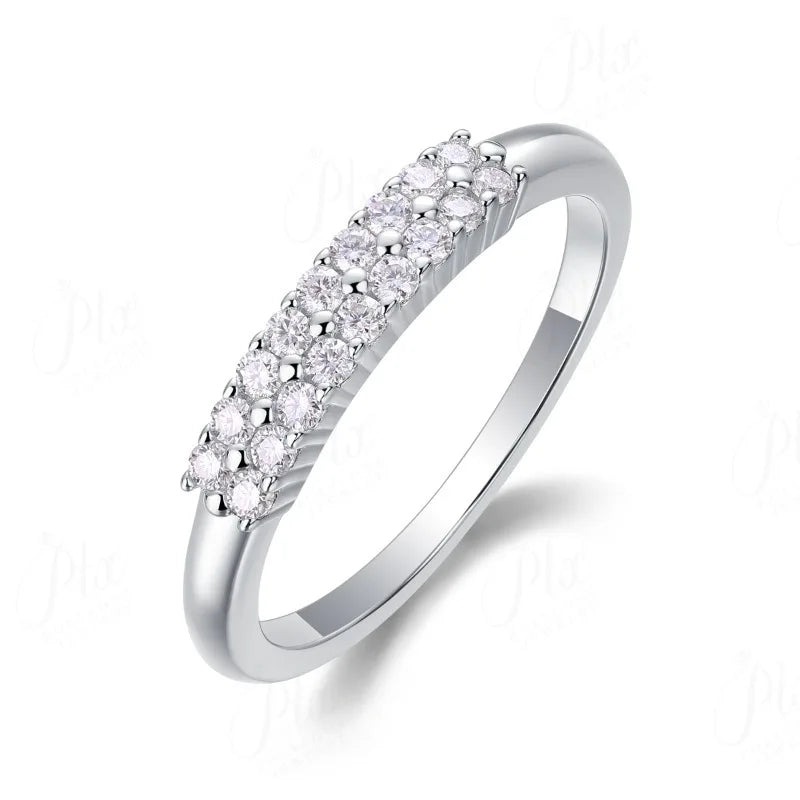
A bracelet that fits wrong, catches on every sleeve, or has a clasp that pops open in a meeting is a return waiting to happen — and bracelets are returned more often than any other jewelry category because these problems only show up after the customer wears it for a day. A custom bracelet manufacturer needs to understand wrist anatomy, clasp mechanics under daily motion, sizing across the 6-8 inch range, and how chain and cuff designs behave with arm movement. HOLYCOME has been manufacturing custom bracelets for jewelry brands, bridal lines, and private-label retailers since 2013, producing everything from delicate chain bracelets to full diamond tennis bracelets. This guide covers our production process, quality benchmarks, and the engineering details that separate bracelets that sell (and reorder) from bracelets that come back.
Why Bracelets Are the Hardest Jewelry Category to Get Right
Bracelets live on a body part that moves constantly — typing, reaching, carrying bags, putting on coats. That constant motion means every joint, every link, every clasp is stress-tested in real time by every customer.
Wrist Sizing vs. Bracelet Geometry
A bracelet is not just a short necklace. Wrists are oval, not round, and they taper from forearm to hand. A bangle that fits over the hand must be larger than the actual wrist; a cuff bracelet must flex just enough to slide on without deforming; a chain bracelet must have enough slack to move without spinning around the wrist but not so much that it slides off over the hand. We size every bracelet style on a wrist mandrel and test it on real wrists (three different staff members for each new design) before approving production.
Clasp Orientation and One-Handed Operation
Unlike necklaces (which are fastened in front using a mirror or behind the neck with both hands), bracelets are fastened one-handed behind the wrist. The clasp must be operable with one hand using only tactile feedback — which means spring tension, tab size, and safety latch geometry all matter. Box clasps with tiny figure-8 safety latches are elegant but frustrating for bracelets; lobster claws must be oriented so the trigger faces the thumb when the bracelet is on the wrist.
Tennis Bracelet Flex and Stone Security
Tennis bracelets flex more than tennis necklaces because wrists bend and rotate constantly. Each individual setting link must pivot smoothly without opening gaps between stones or pinching skin, and every stone must remain seated through thousands of wrist bends. We test our tennis bracelets through 1,000 flex cycles on a mechanical wrist simulator before approving a new design for production.
Cuff Spring Tension
Cuff bracelets rely on the spring tension of the metal to hold onto the wrist. Too tight and they pinch; too loose and they slide off. The correct opening gap depends on the alloy (softer 18K gold needs a smaller gap than harder 14K), the cuff width (wide cuffs distribute pressure and can use a larger gap), and the cross-sectional shape (oval cuffs grip better than round). We tune cuff tension for each design during prototyping and verify it on production samples.
Our Custom Bracelet Manufacturing Process
Here is how a custom bracelet production run flows through our HOLYCOME facility.
Step 1: Design Review and Sizing Specification
You send sketches, reference photos, target lengths/sizes, and price point. We confirm bracelet type (chain, cuff, bangle, tennis, charm, leather-and-metal), sizing range, clasp type, and alloy. MOQ varies by style: chain bracelets in sterling silver start at 100 pieces; gold chain and cuff bracelets start at 30 pieces; diamond/gemstone tennis bracelets start at 20 pieces; bangles (which require dedicated forming tools) start at 50 pieces per size.
Step 2: CAD and Worn Prototype
For cast cuffs and solid components, we model in RhinoGold and pay special attention to interior dimensions (the bracelet must clear the wrist bones), wall thickness (cuffs need enough metal to maintain spring tension), and any hinge or clasp geometry. Chain bracelets use our stock or custom chains. We always recommend a physical prototype for new bracelet designs — even more than for other jewelry categories — because how a bracelet feels on the wrist cannot be fully assessed from renderings. Silver prototypes cost $70-130 and include a fitting session feedback form where you can report fit, drape, clasp feel, and any comfort issues.
Step 3: Tooling and First Article
Tooling depends on bracelet type. Cuffs require either a bending mandrel matched to the wrist profile (for cast or hand-formed cuffs) or a steel die (for stamped cuff blanks). Bangles require forming dies to create the round or oval profile. Tennis bracelets require individual link molds and assembly jigs. First-article samples in the production alloy are produced after tooling is ready and sent for your approval (photos or physical piece) before the full run.
Step 4: Component Production
Cuff blanks are cast or stamped, then formed to shape on a mandrel and work-hardened to the correct spring tension. Bangle halves are cast or stamped, formed, and then soldered together (seamless bangles are formed from tubing without solder joints — a more expensive process that produces higher-end results). Chains are produced or sourced to the correct gauge. Tennis bracelet links are cast individually in batches, then trimmed and pre-polished before setting.
Step 5: Stone Setting (for jeweled styles)
Tennis bracelets are the most setting-intensive bracelet type, with 30-60 stones on a typical 7-inch bracelet (depending on stone size). Channel-set and prong-set construction follows the same process as tennis necklaces: each stone is seated to 12-15% girdle depth, stones are matched for color and clarity within each bracelet, and adjacent stones are set to minimize visible gaps. Charm bracelets and chain bracelets with station stones follow the same setting standards as our other products.
Step 6: Assembly, Soldering, and Hinge Work
Clasps are attached with soldered jump rings or end caps sized to the chain/bangle diameter. Hinged bangles require precise hinge work: the hinge pin must be straight, the two halves must meet without a visible gap when closed, and the safety clasp must click shut with the right tension. Our hinge specialists have at least five years of experience in bangle and watch-case hinge work — hinge quality is the single biggest differentiator between budget and premium bracelets. For cuffs, the opening is adjusted to the correct gap size after forming.
Step 7: Polishing, Plating, and Finishing
Bracelets receive multi-stage polishing with special attention to interior surfaces (which contact the skin). Rough interior edges or sharp solder joints on the inside of a cuff are the #1 comfort complaint, so we hand-finish all interior surfaces to a minimum 0.2 mm edge radius. White gold pieces are rhodium plated (exterior only for cuffs that are meant to show interior gold color, or both sides for full white finish). All bracelets are tumbled, ultrasonically cleaned, and steam-cleaned.
Step 8: Bracelet-Specific QC and Packaging
Every bracelet passes through dedicated QC checks:
- Fit test: bracelet placed on a wrist mandrel in the target size; cuff opening gap verified with calipers; bangle internal diameter checked
- Clasp operation: 200 open/close cycles for lobster claws and spring rings; box clasps checked for secure closure and safety latch function; clasps must be operable one-handed on a wrist
- Flex test (tennis bracelets): 1,000 flex cycles on a wrist simulator; no loose stones, no broken links, no stiff joints
- Cuff spring tension: opening force measured (8-15 Newton range depending on cuff width); cuff returns to original shape after opening for fitting
- Comfort check: interior edges all smooth; no solder protrusions; hinge pins flush on both sides (no pin ends poking out)
- Stone security (for jeweled pieces): each stone probed; tennis bracelets flexed by hand to check for rattling stones
- Length verification: measured end-to-end on a soft tape within ±3 mm
- Hallmark: karat stamp and brand mark inside cuff or on clasp tab
Bracelets are packaged individually to prevent tangling (chains are coiled in padded rolls; cuffs and bangles are placed in individual bracelet boxes or velvet pouches shaped to hold the bracelet form). Standard production lead time is 18-28 business days.
Bracelet Style Comparison
| Style | Construction | Key Quality Point | MOQ | Lead Time |
|---|---|---|---|---|
| Chain bracelet (cable, curb, Figaro) | Manufactured chain with clasp; optional charm stations | Clasp security one-handed; chain link closure; charm solder joints | 50 (gold); 100 (silver) | 12-18 days |
| Cuff bracelet | Cast, stamped, or hand-formed open cuff; no clasp | Spring tension; interior comfort edges; wall thickness | 30 pcs | 15-22 days |
| Bangle (solid or hinged) | Cast/soldered solid round or oval; hinged version with clasp | Roundness (solid); hinge alignment and gap (hinged); interior smoothness | 50 pcs | 18-24 days |
| Tennis bracelet | Individual stone settings linked by pins (similar to tennis necklace but shorter, more flex) | Flexibility without kinking; stone security through wrist movement; clasp double-security | 20 pcs | 25-35 days |
| Charm bracelet | Chain with soldered-on charm loops or slide-on beads/charms | Charm attachment security; loop orientation (charms hang forward); clasp strength for loaded bracelet | 50 pcs | 18-25 days |
| Leather/cord bracelet with metal findings | Leather or cord with magnetic or slide clasp; optional metal accents | Cord/leather knot security; metal finding attachment; magnetic clasp strength | 100 pcs | 15-20 days |
Sizing Standards and Best Practices
Bracelet sizing is where brands lose the most money on returns. Here are the sizing standards we recommend and produce to.
Chain and Tennis Bracelets
Women's chain and tennis bracelets are commonly produced in 6.5", 7", and 7.5" lengths, with 7" being the average women's wrist size. Men's chain bracelets are commonly 8", 8.5", and 9". We recommend offering at least two women's sizes (7" and 7.5") to cover 80% of customers, or offering adjustable extender chains that add 0.5-1" of length. A tennis bracelet should sit snugly enough that it does not slide up and down the wrist but loose enough to fit one finger between the bracelet and skin.
Bangles
Bangle size is the interior diameter, not the circumference (since bangles must fit over the widest part of the hand, not the wrist itself). Standard women's bangle diameters are 2.375" (small, 6.0" circumference), 2.5" (medium, 6.6" circumference), and 2.625" (large, 7.0" circumference). Bangle fit should be tested over the knuckle — a customer with a 6.5" wrist may need a 2.5" bangle if their knuckles are wide.
Cuffs
Cuffs are adjustable by the customer within a small range, so they are typically produced in one or two sizes (e.g., small/medium fitting 6-7" wrists, medium/large fitting 7-8" wrists) with an opening gap of approximately 1-1.25". The cuff can be gently squeezed or opened by the customer (or a jeweler) for custom fit — but we include fit instructions with every cuff to prevent customers from over-bending and breaking the metal.
Clasp Selection for Bracelets
Bracelet clasps face unique challenges because they are operated one-handed. Here is what we recommend for each bracelet type:
- Lobster claw clasp: Standard for most chain bracelets. We use 9-12 mm lobster claws for women's chain bracelets and 12-16 mm for men's. The trigger must face outward from the wrist when the bracelet is worn, which requires the clasp to be attached with a specific orientation during assembly.
- Spring ring clasp: Small and discreet, suitable for very lightweight fashion bracelets under 5 grams. Not recommended for tennis bracelets or heavy chains.
- Box clasp with safety latches: The standard for tennis bracelets. Our tennis bracelet box clasps have two figure-8 safety latches (one on each side) for double security. The clasp must be low-profile so it does not catch on long sleeves.
- Toggle clasp: Decorative and easy to fasten one-handed, which makes toggle clasps surprisingly popular for bracelets (more so than for necklaces). Recommended for chain bracelets 6-15 grams and for charm bracelets. The ring diameter must be sized so the T-bar does not accidentally slip out during arm movement.
- Magnetic clasp: Excellent for customers with dexterity issues. We use rare-earth neodymium magnets with a pull force of 2-4 pounds (enough to stay on during normal activity but weak enough to break away if caught, which is actually a safety feature for bracelets that can catch on door handles). Magnetic clasps on bracelets should always have a safety chain backup for pieces over 10 grams.
- Hinged with pressure clip (for bangles): Hinged bangles use a concealed clip closure that clicks into place when the two halves of the bangle meet. The clip tension must be tuned so the bangle stays closed but can be opened with one hand using the small thumb tab.
- Slide/magnetic clasp (for leather/cord): Leather and cord bracelets use either a magnetic barrel clasp or a slide knot clasp that adjusts to wrist size.
Tennis Bracelet Production: Highest Complexity
Tennis bracelets are the most technically demanding bracelets we produce, just as tennis necklaces are the most demanding necklaces — but the shorter length and constant wrist motion make bracelet stone security even more critical.
Link Construction
Tennis bracelets are made of individual cast links, each holding one (or sometimes two) stones. Links are connected by tiny pins or rivets that pass through the link sides and are peened on each end to prevent sliding out. The link-to-link articulation determines bracelet flexibility: too loose and the bracelet flops and gaps between stones; too tight and it does not drape around the wrist. We tune link tolerances to allow 10-15 degrees of rotation between adjacent links — enough to follow wrist curvature without creating visible gaps in the stone line.
Setting Standards
Tennis bracelets use either channel setting (stones in a continuous metal channel, sleekest look) or prong setting (each stone held by four prongs or shared prongs, more sparkle and flexibility). Both setting styles follow the same 12-15% seat depth standard we use across all categories. After setting, the entire bracelet is flexed repeatedly to seat stones firmly and detect any that rattle (rattling stones indicate an oversized seat that needs re-cutting).
Wear Testing
Before releasing a new tennis bracelet design for production, we run a sample through our mechanical wrist flex simulator for 1,000 opening/closing and flex cycles. Any stone that comes loose, any link that binds, and any clasp that fails during this test results in a design revision before production begins.
Real-World Project: 150-Piece Mixed Bracelet Collection
An Australian bridal and occasion jewelry brand placed an order in early 2025 for a mixed bracelet collection targeting wedding season: three tennis bracelets (2 mm, 3 mm, 4 mm CZ in sterling silver with rhodium finish), two pearl cuff bracelets, two chain bracelets (curb and paperclip link in gold vermeil), and one charm bracelet with three wedding-themed charms (heart, ring, infinity). Total order was 150 pieces across eight SKUs, with delivery required in 5 weeks for a September bridal pop-up.
Week 1: Design review and CAD. The client had specified 1.8 mm wall thickness for the pearl cuffs, but our review found that 1.8 mm in sterling silver would not hold spring tension well — cuffs would deform after 2-3 times opening and closing. We recommended 2.2 mm wall thickness and adding a hidden brass insert for extra spring (common in production silver cuffs). The client approved, recognizing the cost savings from avoided returns.
Weeks 2-3: Tooling and first articles. Rubber molds for the tennis bracelet links and charms; bending mandrels for the cuffs; chain sourced from our Italian supplier for the paperclip style; freshwater pearls matched from our Zhuji source (selected for roundness and luster consistency). First-article samples were shipped to the client on day 17 and approved on day 20 with minor feedback (charm orientation needed adjustment so they all faced forward when worn).
Week 4: Full production run. Casting, cleaning, CZ setting for the tennis bracelets, charm soldering (each charm loop was oriented and soldered individually so charms would hang forward-facing), cuff forming and tension testing, chain cutting and clasp assembly, polishing, and rhodium/gold plating. QC rejected 11 pieces: two tennis bracelets with a single rattling CZ stone, three cuffs with spring tension outside spec (re-formed and retested), three vermeil chains with thin plating spots (re-plated), one curb chain with a kink, and two charm bracelets with one charm soldered at the wrong orientation.
The order shipped on day 33, two days ahead of deadline. The brand reported strong sales at the pop-up and noted that the pearl cuff was the bestseller of the event. Read more about our quality control process.
Common Custom Bracelet Manufacturing Issues
Bracelet-specific failures that we see from under-equipped factories include:
Issue: Sharp Interior Edges on Cuffs and Bangles
After forming and soldering, the interior of a cuff or bangle can have sharp edges at the seam or where the metal was cut. These edges scratch skin and catch on sleeve linings. We radius all interior edges to a minimum 0.2 mm and run a finger along every interior surface during QC — yes, literally a physical comfort check.
Issue: Tennis Bracelet Clasps That Open with Sleeve Contact
Tennis bracelet safety latches that protrude slightly will catch on long sleeves as the wearer pushes their arm through, popping the clasp open. We file all safety latch mechanisms flush with the bracelet body and test each bracelet against cotton and wool fabric swatches to confirm nothing catches.
Issue: Cuffs That Lose Spring Tension
Cuffs that are not properly work-hardened after forming are soft and gradually open wider with each wearing, eventually falling off the wrist. After forming, all our cuffs are work-hardened by hammering (for silver and gold) or heat-treated (for specific alloys) to the correct hardness for the design. We then open and close each cuff 10 times during QC and re-measure the gap to confirm it returns to its original dimension.
Issue: One-Way Clasp Orientation
If a lobster claw is attached so the trigger faces inward toward the wrist instead of outward, the wearer cannot operate it one-handed. We have dedicated assembly jigs that hold the bracelet in the worn position during clasp soldering to ensure correct trigger orientation every time.
Issue: Bangles With Visible Solder Seams
Bangles that are formed from flat stock and butt-soldered together often show a visible seam if the solder joint is not filed and polished perfectly. For premium bangles, we use seamless tubing (extruded with no joint) or we lap the solder joint completely flush before polishing so no seam is visible even under 10x magnification.
Pricing and MOQ Reference
Reference pricing for custom bracelet production at HOLYCOME volume rates:
- Sterling silver chain bracelet (7", cable chain, lobster claw): $6-12 per piece at 100-piece MOQ
- Sterling silver cuff bracelet (plain, 10mm wide): $14-25 per piece at 50-piece MOQ
- Sterling silver CZ tennis bracelet (3mm stones, 7"): $35-60 per piece at 50-piece MOQ
- 14K gold chain bracelet (7", cable chain): $65-120 per piece at 30-piece MOQ
- 14K gold cuff bracelet (plain, 8mm wide): $110-185 per piece at 30-piece MOQ
- 14K gold diamond tennis bracelet (3mm stones, 7"): $550-950 per piece at 20-piece MOQ
- Platinum diamond tennis bracelet (3mm stones, 7"): $1,300-2,100 per piece at 10-piece MOQ
Tooling fees range from $120 for standard cuff rubber molds to $500+ for dedicated bangle forming dies and tennis bracelet assembly jigs. Reorders have no tooling fees. Request a detailed quote for your specific design.
Frequently Asked Questions
What sizes should I offer in my bracelet line?
For women's chain and tennis bracelets, offering 7" (average) and 7.5" (large) covers roughly 80% of customers; adding 6.5" (small/petite) improves coverage to over 95%. For bangles, offer 2.5" (medium) as the primary size with 2.375" and 2.625" as optional. Cuffs in a single adjustable size typically cover 6-7.5" wrists, which is most women's sizes.
How do you ensure tennis bracelet stones do not fall out?
We use three layers of protection: proper seat depth (12-15% of girdle diameter), tight stone matching (stones within ±0.02 mm of seat size), and post-production flex testing (1,000 wrist cycles on the simulator plus hand flexing on every piece). Additionally, all our tennis bracelets use box clasps with double safety latches so even if a stone somehow came loose, the bracelet itself cannot fall off the wrist. We also recommend prongs over channel settings for maximum stone security in high-flex applications.
Can you produce adjustable bracelets?
Yes. We offer three common adjustable mechanisms: extension chains (1" extender attached to the clasp end, most common and lowest cost), bolo/slider clasps (for chain bracelets that adjust smoothly to any length), and sliding knot closures (for leather and cord bracelets). Adjustable sizing reduces return rates for fit by approximately 40% according to our clients' data.
Do you offer engraved bracelets?
Yes. We offer both laser engraving (precise, suitable for text, logos, and fine detail on flat surfaces) and hand engraving (traditional, deeper, more artisanal look). Laser engraving is $3-8 per piece and is suitable for production runs; hand engraving is $15-40 per piece depending on complexity and is typically used for bespoke and high-end pieces. Engraving is typically done after final polish but before final QC, and engraved areas can be left bright or oxidized for contrast.
Can you match the finish of our existing bracelet collection?
Yes. We maintain physical finish samples for every repeat client, including exact polish levels, brushing direction and grit, plating thickness, and any specialty finishes (hammered, sandblasted, florentine, satin). Send us a sample piece from your existing line and we will match the finish exactly across your new production run.
Ready to Start Your Custom Bracelet Production?
Whether you need delicate chain bracelets for everyday wear, statement cuff bracelets for a designer collection, or full diamond tennis bracelets for a bridal line, HOLYCOME's specialized bracelet manufacturing delivers the fit, clasp reliability, and comfort that reduce returns and build repeat customers. Send your sketches, CAD files, or reference photos through our contact page for a detailed quotation within two business days. You can also explore our other jewelry categories including earrings and necklaces, or learn about our factory background and certifications.
Sterling silver terminology used in this guide follows the Wikipedia entry on sterling silver.
Related reading: Custom Bracelet Manufacturer Tennis Bangle Cuff, Custom Necklace Manufacturer, Custom Bracelet Manufacturer.


