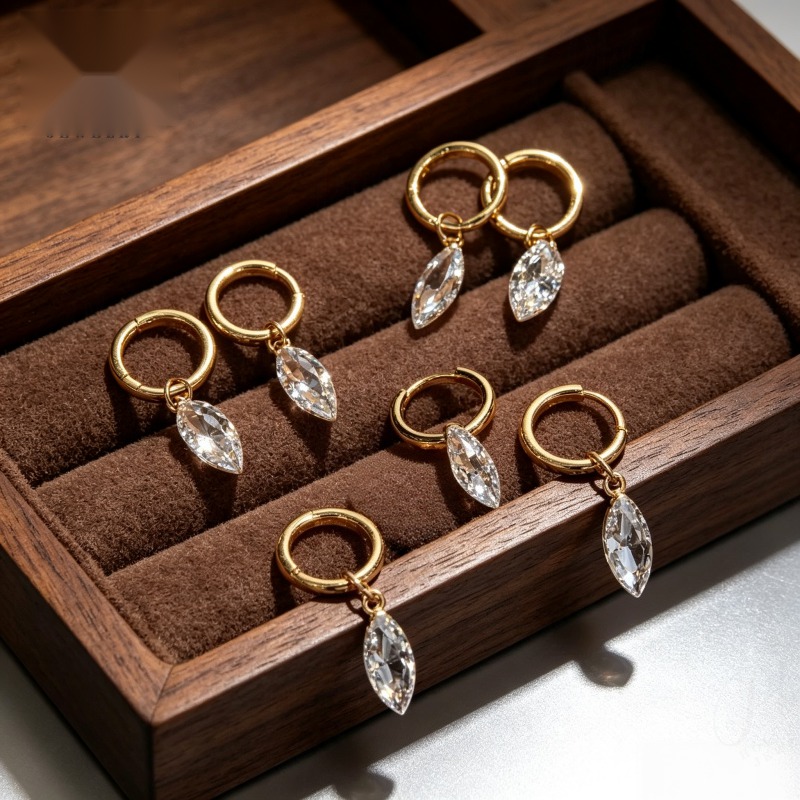
Stackable rings are the jewelry trend that never really ended, because they are not a trend: they are a way of building a ring collection over time. A thin band, a slightly wider one, a birthstone, a textured finish, and suddenly your finger tells a small story. But clients who buy stacks piece by piece often end up with rings that do not sit together: they tilt, they click, they scratch each other, and they wear uncomfortably by lunchtime. A stack is designed, not assembled.
Start with the profile
The most important choice is the inner and outer shape of each band. A "comfort fit" ring has a rounded inside that slides on easily. A "flat profile" band sits square against the finger. When you stack, the bands that touch each other should have compatible profiles so they sit flush. A fully rounded ring stacked next to a flat band will rock and tilt. When we design a stack for a client, we draw the profiles first and match them, so the whole group lies as one unit against the finger. It is the single most overlooked detail and the one that makes a stack feel expensive.
Widths: mix on purpose
A stack of four identical 2mm bands looks uniform and a little boring. A more pleasing stack mixes widths: a 1.5mm plain band, a 2mm pave band, a 4mm statement band, and a 1.2mm textured band. The eye reads rhythm, not repetition. A practical rule is to put the widest band closest to the palm (it acts as an anchor) and the thinnest bands toward the fingertip. If you are building around an existing engagement ring, our guide to matching bands covers the flush-fit problem specifically.
Mixing metals: yes, and deliberately
The old rule that you should never mix yellow gold, white gold, and rose gold is gone. Mixed-metal stacks look modern and intentional. The trick is balance: if you have two white-gold bands, anchor them with one yellow-gold and one rose-gold piece so the mix reads as a choice rather than an accident. We often build custom stacks where each band is a different metal, exactly because the contrast makes the whole finger more interesting. If you are choosing a single main metal first, our metal guide helps you start in the right place.
Stones in a stack: keep them low
A stack with one tall solitaire and three thin bands will always tilt, because the tall stone acts as a lever. If you want stones in a stack, choose flush or nearly flush settings: a bezel-set birthstone, a low pave band, or a channel set. Tall, high-set stones belong as a single hero ring on another finger. Also be aware that pave and channel settings can scratch the bands next to them over years of rubbing; that is normal and expected, and it is one reason we suggest storing a stack separately when it is off the hand.
Sizing a stack
Rings worn together run slightly tighter than rings worn alone, because the bands press against each other. If you plan to wear three bands on one finger regularly, size each one a touch looser than you would wear it alone, roughly a quarter size up. If one band is much wider (4mm or more), it needs its own accurate measurement, because wide bands fit tighter than thin ones at the same ring size. When in doubt, measure the finger you will actually stack on, not your index finger alone. Our ring sizing guide walks through the measurement step.
Building it over years
The best stacks are rarely bought in one trip. They start with one band: an anniversary, a birthday, a push gift, and each new occasion adds another. If you build in our own workshop, we can match profiles, metals, and finishes precisely, so a band you order three years later still sits flush with the first. That continuity is what separates a real collection from a pile of rings that happen to be on the same hand.
Common questions about stacking
Can I stack a vintage ring with modern bands? Yes, but match the profile. A flat antique band sits flush next to a flat modern band; a rounded comfort-fit antique band will rock against a flat modern one. Bring the old ring in and we can often true up the profile. Do stacked rings scratch each other? They will develop micro-scratches over years, which is normal and part of the patina. You can reduce it by storing the stack in one pouch rather than loose in a drawer. Can I stack on my ring finger with an engagement ring? That is exactly the look stacking was made for. Put the engagement ring closest to the palm, then build outward with thinner bands. What if my fingers change size with the weather? Stacked bands feel tighter in summer and looser in winter. Size for your average season, and expect to remove one band on very hot days.
The history and conventions of engagement rings are outlined in the Wikipedia entry on engagement rings.
Related reading: The Complete Guide to Custom Engagement Rings: From Concept to Deliver, Moissanite vs Lab-Grown vs Natural Diamond: A 2025 Buyer's Guide, Moissanite vs Lab-Grown Diamond: A 2025 Bespoke Buyer's Guide.
Frequently Asked Questions
What ring sizes can you supply in bulk?
US sizes 5–12 including half sizes. Send a size breakdown with your order and we cast to that curve; comfort-fit inner bands reduce resize requests.
Can I order a mixed size run instead of one size?
Yes. Mixed runs are standard for wholesale: specify quantity per size and we pack and label by size at no extra labor cost.
What is the MOQ for custom ring designs?
50 pieces per design for existing molds; 100–300 pieces when a new mold or CAD model is required.
How should I price rings for retail margin?
Most partners use a 3–4x markup on FOB cost for sterling and 2.5–3x for moissanite solos, which keeps landed cost under 30% of retail.


