There is a specific complaint we hear at least once a week: "My ring spins around on my finger." Sometimes it is an engagement ring that flips so the diamond faces the palm. Sometimes it is a wide band that rocks side to side. It looks like a small problem, but at the bench we treat it seriously, because a ring that moves is a ring that wears its own prongs out faster than it should. The good news is that most spinning problems have a simple, reversible fix that does not involve resizing the whole band.

Why rings spin
Rings spin for a few reasons. The most common is that the ring is sized for the finger at its largest point — usually the knuckle — and once it passes over the knuckle, it is loose on the actual finger. This is normal, especially on fingers that knuckle larger than the base. A second reason is weight imbalance: a one-sided stone on a solitaire will always want to rotate so the heavy side drops down, because gravity wins over friction. A third is finger size that changes through the day, the season, or the weather — hot weather makes fingers swell, cold weather makes them shrink, and a ring that fits perfectly at 4 p.m. in July may spin by January.
A ring that spins occasionally is not an emergency. A ring that flips every time you pick up a coffee cup is. Every flip is a small impact on the prongs, and over years that wear adds up.
The fix we reach for first: sizing beads
Sizing beads are two small beads of gold soldered to the inside of the shank, opposite each other. They do not change the nominal size of the ring — you can still pass it over the knuckle — but they add two small points of friction on the finger, which stops the ring from rotating. The beads sit on the lower half of the band, where they are comfortable and barely noticeable.
This is our go-to fix for engagement rings that flip. It is reversible — we can remove the beads later by grinding them off and re-polishing the inside — and it costs a fraction of a resizing. Most clients forget the beads are there within a week.
Other fixes we use
Sizing inserts are small plastic or metal clips that sit inside the band. They are inexpensive and reversible, but they collect soap and lotion and need to be cleaned. We usually recommend them as a temporary fix while you decide whether to do a permanent adjustment.
A ring guard is a slim band worn next to the ring to push it into place. It works, but it is a second ring on the finger, and some clients find it bulky.
Resizing is the permanent fix, and it is the right answer when the ring is genuinely a full half-size too big. But resizing an engagement ring is a bigger operation than most clients expect: the band has to be cut, the stone has to be checked, and the prongs have to be re-evaluated. We only resize when the other fixes have failed.
Weight imbalance and wide bands
Wide bands are a different problem. A 6mm wedding band that rocks side to side is usually a sign that the band is too wide for the finger's natural curvature, not that the size is wrong. In that case, we sometimes dome the inside of the band slightly — rolling it so it sits more snugly on the finger's curve — or switch to a slightly narrower width. This is a custom adjustment, not a one-minute fix, but it is the difference between a band that wears like a wall and one that disappears on the hand.
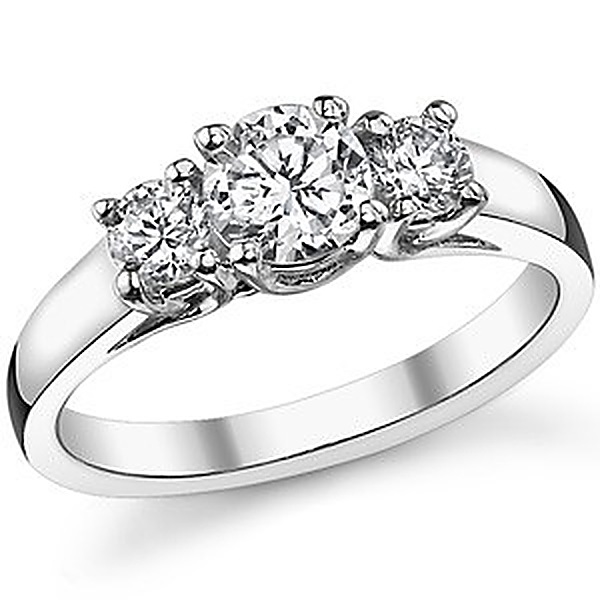
For solitaire engagement rings that flip, we sometimes suggest a slightly heavier shank or a halo setting that balances the weight on both sides of the finger. That is a redesign conversation, not a repair, but it is worth having if the flipping has bothered you for years.
When to leave it alone
Not every spinning ring needs fixing. If your ring turns occasionally but sits straight most of the time, and the prongs are checked annually, the spinning is cosmetic. Some clients actually prefer the way the ring moves on the finger. We only intervene when the spinning is constant, when the prongs are visibly wearing, or when the ring flips so far that the stone is at risk of knocking against surfaces.
If you are buying a new ring and you know your knuckle runs larger than your base finger, tell us before we set the size. We can build the ring with the right internal curve from the start, and save you a visit later. For the measurement side, our ring size guide walks through how to get a real number before ordering, and our prong check guide covers the signs that a spinning ring has already done damage worth fixing.
The Wikipedia entry on engagement rings gives an independent overview of engagement ring traditions and settings.
Related reading: Ring Sizing Up vs. Down: What Happens at the Bench, Signet Ring Buying Guide: Styles, Crests & Sizing, How Ring Resizing Works: Up-Sizing, Down-Sizing, and What We Do at the.
Frequently Asked Questions
What ring sizes can you supply in bulk?
US sizes 5–12 including half sizes. Send a size breakdown with your order and we cast to that curve; comfort-fit inner bands reduce resize requests.
Can I order a mixed size run instead of one size?
Yes. Mixed runs are standard for wholesale: specify quantity per size and we pack and label by size at no extra labor cost.
What is the MOQ for custom ring designs?
50 pieces per design for existing molds; 100–300 pieces when a new mold or CAD model is required.
How should I price rings for retail margin?
Most partners use a 3–4x markup on FOB cost for sterling and 2.5–3x for moissanite solos, which keeps landed cost under 30% of retail.