Every week a client sits on the bench across from me and asks the same version of the question: "How much should I actually spend?" After fifteen years of cutting, casting, and setting rings, I will tell you what most sales floors will not. The total number matters far less than how you divide it. A poorly allocated five-thousand-dollar ring looks and wears worse than a thoughtfully divided thirty-five-hundred-dollar ring. This is the allocation we use inside our own workshop when a friend hands us their budget and asks us to build the best possible thing. We are not here to upsell you. We are here to keep you from spending the money you did earn on the parts of the ring that will not matter in ten years.
The Three Buckets That Actually Matter
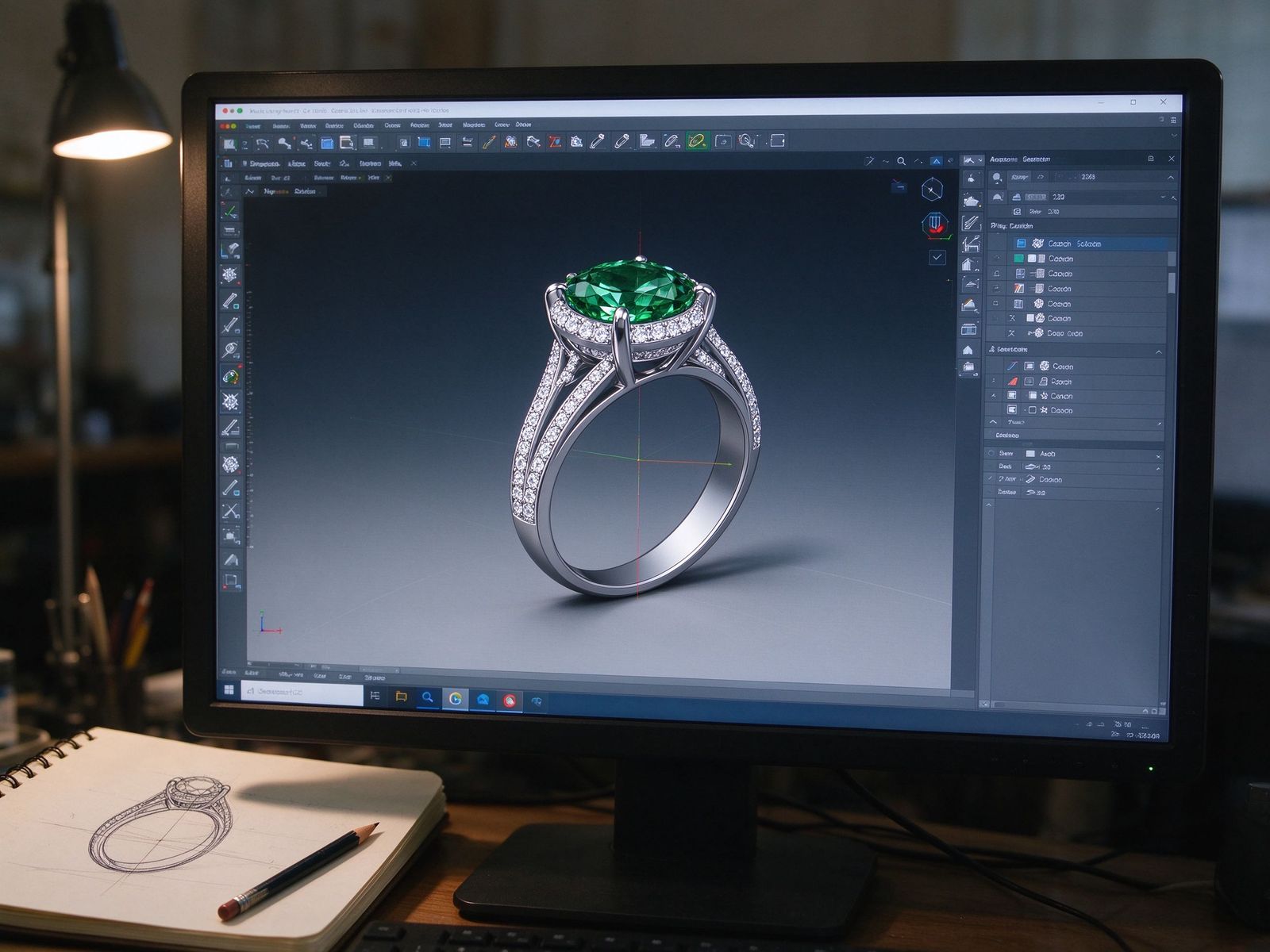
Stop thinking of a ring as one lump sum. It is three buckets: the center stone, the metal and setting, and the craft. Most buyers put ninety percent of the money into bucket one and starve buckets two and three. That is backwards for daily-wear jewelry. A beautiful stone in a thin, poorly soldered head will loosen, warp, and disappoint within a few years. A well-built setting lets a more modest stone outperform a flashier one. We have seen a one-carat stone set in a hand-built 14K head outshine a two-carat stone set in a mass-produced thin head every single time it leaves the bench. The setting is not a frame. It is the structure that determines whether the frame still holds the stone on your tenth anniversary.
Bucket One: The Center Stone, roughly fifty-five to sixty-five percent
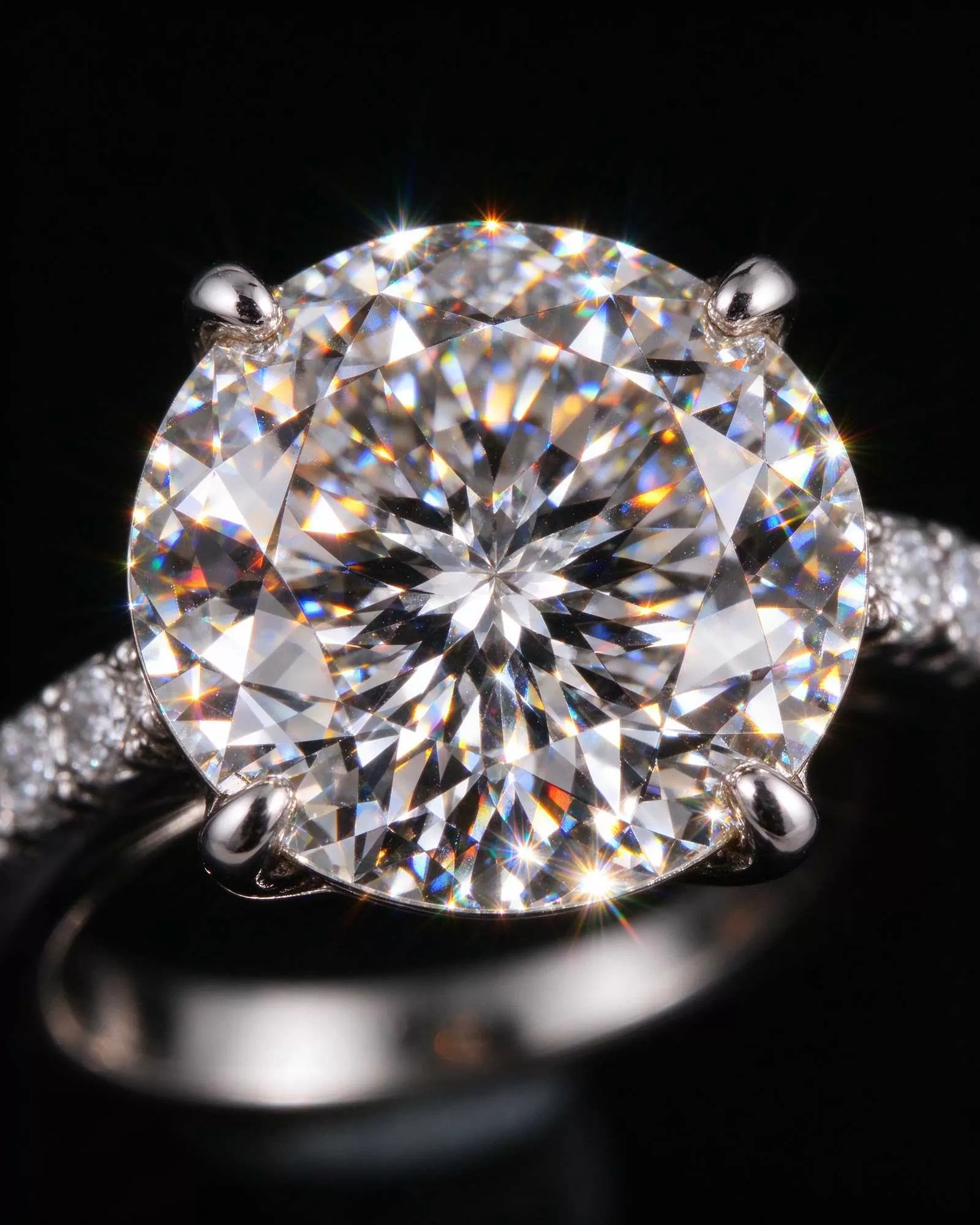
The center stone is the emotional anchor, so it deserves the largest share, but not all of it. Within this bucket, weight is the worst place to overspend. A 1.2 carat stone with a tight cut grade will out-sparkle a loose 1.6 carat stone every time it catches light. Cut quality beats size, and size beats color in almost every real-world viewing distance. If you are choosing between a slightly larger lower-cut stone and a slightly smaller excellent-cut stone, take the excellent cut. You will see the difference across a dinner table. You will not see the difference between a G color and an H color once the stone is set in a yellow or rose gold mounting.
- Prioritize cut, then clarity, then color, then carat.
- Skip the tiny clarity upgrade no microscope will ever show.
- Consider a lab-grown or moissanite center if your budget says weight and presence matter more than provenance.
- Ask for a stone that is eye-clean, not internally flawless; nobody inspects your ring under a loupe at a party.
Bucket Two: Metal and Setting, roughly twenty to twenty-five percent
This is where rings are won or lost. The setting is what holds the stone against your hand for fifty years. A 14K yellow gold solitaire with a properly built head and a comfort-fit shank will outlast a platinum ring with a paper-thin band. Tell your jeweler the ring is worn daily, gardening, typing, gym, and ask for a heavier shank, 1.8mm minimum on a solitaire and 2.0mm on a pavé band. That upgrade costs a few hundred dollars and changes the feel of the ring completely. A thin shank bends. A bent shank pulls prongs out of alignment. Misaligned prongs loosen the stone. One loose stone is the whole story of how rings get lost.
Bucket Three: Craft and Finishing, roughly ten to fifteen percent
Hand polishing, clean milgrain, a laser-tipped head, and a final inspection under magnification are not luxury extras. They are the difference between a ring that looks like it came off a shelf and one that feels made for a hand. If you are choosing between a bigger stone and a hand-finished setting, we lean craft every time. Craft is what you feel when the ring slides on; size is what other people guess from across a room. We have had clients come back years after the purchase and say the same thing: the stone was the reason they bought it, but the smooth edge and the comfortable shank are the reasons they never take it off.
Where to Save Without Anyone Noticing
Not every dollar needs to be spent at the top. There are honest corners to cut that no one will ever see. First, save on side stones if your center stone is well cut. A halo of tiny melee adds drama but also adds dozens of points of failure. A clean solitaire lets the center stone breathe. Second, save on marketing. You are not paying for a boutique window; you are paying for metal, stone, and bench time. Third, choose a metal you actually like. Platinum costs more per gram but 14K gold often wears better for active lifestyles, and the upgrade to platinum is not universally the smarter buy. Fourth, skip the halo if you are on your hands and knees at work; halos catch on everything.
Worked Examples: Real Budgets, Real Allocations
Let us put numbers on it. On a twenty-five-hundred-dollar budget, we would spend about fifteen hundred on a well-cut moissanite or lab-grown center, six hundred on a solid 14K setting with a heavier shank, and four hundred on craft, sizing, and a clean finish. On a six-thousand-dollar budget, the split shifts to roughly thirty-six hundred center, fifteen hundred setting, nine hundred craft and extras. On a twelve-thousand-dollar budget, you can begin to entertain a natural mined center, but we would still insist on spending real money on the head and prongs rather than chasing the next half carat. Across every budget, the shape of the split stays the same: stone wins, setting protects, craft completes.
The Mistakes We See on the Bench Every Month
We repair rings every week, and the same stories repeat. The couple who bought online to save ten percent and ended up paying double to re-tip prongs and re-cut the gallery. The buyer who stretched for a larger stone and got a thin band that bent within a year. The client who loved the look of pavé but never takes the ring off, losing three melee within eighteen months. None of these tragedies require a bigger budget; they require a wiser split of the budget you already have. The rings that come back to us damaged are almost never the cheap rings. They are the rings where the money went to the visible center stone and nowhere near the invisible head.
How to Talk to Your Jeweler About It
Walk in with your total number, not a wishlist. Say: "Here is my budget. Build me the most durable, best-looking ring you can within it, and show me where you would cut corners if you had to." A good atelier will show you the trade-offs on paper. A good salesperson will pressure you to stretch. The number on the tag is a starting point for a conversation, not an answer. Ask what the shank width is, ask what the head is made of, ask whether the prongs are cast on or laser-tipped. If you cannot get plain answers, you are in the wrong room.
A Note on the Two-Month Rule
Finally, give yourself time. Rushed budgets produce bad splits. When someone walks in six weeks before a proposal and needs a ring tomorrow, we work with what we have, but we always say the same thing: if you had started three months earlier, the same money would have bought a noticeably better ring. Time is the cheapest upgrade there is. Start the conversation early, sleep on the numbers, and come back when you are not anxious. The right ring survives a calm decision. It rarely survives a panicked one.
The Three-Month Salary Rule, Honestly
You have heard the old saying: spend three months salary on the ring. We will tell you what we tell everyone who asks. That number is a marketing invention from a diamond cartel in the nineteen-thirties. It is not a rule. It is a suggestion that happens to be very good for people selling diamonds. Spend what makes you comfortable, not what a hundred-year-old advertising campaign tells you to spend. A ring you are still paying off two years after the wedding is not a romantic object. It is a monthly bill. The right budget is one you can clear without resenting the jewelry.
Financing: When It Helps and When It Hurts
Zero-percent financing can be fine if you can pay the full balance before the promotion ends. It is a trap if you cannot. Interest rates on jewelry financing after the teaser period are brutal, and people who finance a ring they cannot afford in cash end up paying fifty percent more over two years. If you must finance, finance the smallest sensible ring, not the largest one you qualify for. A marriage does not get better because the ring was financed. It gets better because you started it without debt.
Where the Center Stone Actually Comes From
A lot of clients ask us, nervously, whether a lab-grown stone is a real diamond. It is. It has the same chemistry, the same hardness, the same sparkle. The difference is where it grew. A mined diamond traveled a billion years up through a pipe and out of a hole in the ground; a lab-grown diamond grew in a chamber over a few weeks. For an engagement ring that will live on a hand, the lab-grown stone is indistinguishable to the eye and costs a fraction. Moissanite, on the other hand, is a different material entirely, brighter and lighter in weight, and we are honest about that difference when clients ask. We do not push one option. We ask what the ring is for, who is wearing it, and what they actually value, and then we point at the stone that fits.
The Hidden Costs People Forget
The ring itself is not the whole budget. There is the sizing visit, the first clean, the appraisal, the insurance premium, the eventual re-tip, the eventual rhodium refresh. None of these are large numbers, but they add up, and people who budget exactly to the ring price are surprised by the first invoice. Build ten percent of the ring cost into a small "lifetime care" envelope when you plan. It covers the first five years of bench visits, and by then you will know whether the ring needs anything else. A ring you can afford to maintain is a ring that stays on the hand. A ring you cannot is a ring that goes into a drawer.
What the Ring Actually Says About You
People imagine a ring signals wealth. It does not. It signals attention. A well-built modest ring on a hand reads as considered. A huge thin-set stone reads as a decision made under pressure. The people who matter will not know the carat. They will know whether the ring looks comfortable on you, whether it matches your other pieces, and whether you seem at ease wearing it. Spend accordingly. The ring that makes you feel ordinary is the ring that makes everyone else feel that you got it exactly right.
Frequently Asked Budget Questions
Is a bigger carat always better?
No. A well-cut smaller stone out-performs a poorly cut larger one. People see the sparkle, not the millimeter.
Should I buy the ring online to save?
Only if you can see the setting in person and trust the aftercare. Online saves you the boutique markup but costs you the bench relationship.
What if we cannot agree on a budget?
Build the ring around the lifestyle, not the fantasy. If one of you wants presence and the other wants durability, the split we described is exactly the compromise.
Closing Thought
A ring is not a one-time decision; it is a piece of jewelry you will clean, resize, re-tip, and polish for decades. Spend the money where the decades happen: on the stone that catches light, the metal that does not bend, and the hands that built it. The rest is noise. Bring us your number and we will show you exactly how to divide it.