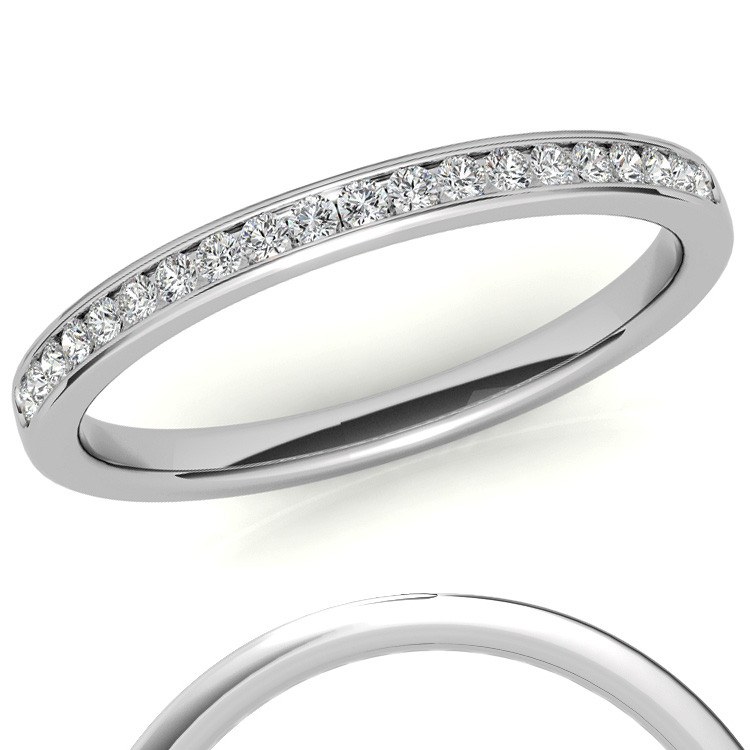
Beyond colorless, moissanite is available in stunning fancy colors. Learn about yellow, pink, blue, and green moissanite for unique bespoke designs.
How Colored Moissanite Is Created
Colored moissanite is created by introducing trace elements during the lab growth process or through treatment. Yellow moissanite gets its color from nitrogen; blue from boron. These colors are stable and permanent.
Popular Fancy Colors
TABLE:
| Color | Appearance | Best Setting Metal |
|---|---|---|
| Champagne/Yellow | Warm, golden | Yellow gold, rose gold |
| Pink/Rose | Romantic, feminine | Rose gold, white gold |
| Blue | Cool, striking | White gold, platinum |
| Green | Unique, earthy | Yellow gold |
| Grey/Black | Edgy, modern | Black rhodium, white gold |
Color Intensity and Grading
Fancy colored moissanite is graded by intensity: Faint, Very Light, Light, Fancy Light, Fancy, Fancy Intense, Fancy Vivid. Higher intensity commands premium pricing. Holycome stocks Fancy to Fancy Vivid grades.
Designing with Colored Stones
Colored moissanite works beautifully as center stones or accents. A pink moissanite in rose gold creates a romantic vintage look. Blue moissanite in white gold evokes sapphire at a fraction of the cost.
Stone Grades Buyers Can Actually Audit
Moissanite is graded on colour, clarity and cut in the same language as diamond, which makes it easy to compare across suppliers. Ask for the colour grade in writing (D-E-F near-colourless versus G-H-I near-colour) and request a photo of the actual parcel under neutral light, not a studio hero shot.
GRA or IGI documentation should travel with every parcel and list carat weight, colour and cut. Pass the certificate to your end customer: a documented stone converts better at retail and reduces returns from buyers who expected diamond grading.
Cut is where cheap parcels hide. A shallow pavilion cut loses fire under indoor light, so ask for an Ideal or Excellent cut grade and check a loose stone against a white card before you commit to 500 pieces.
Sourcing Benchmarks for This Category
Buyers usually benchmark three numbers before they shortlist a supplier: unit cost at a fixed volume, sample lead time, and the reject rate they can absorb without hurting sell-through. Get all three in writing, because a low unit price with a 12% reject rate is more expensive than a mid price with a 3% reject rate.
For stock designs HOLYCOME quotes from 50 pieces per design. Samples leave Wuzhou in 3 to 5 days. Bulk production runs 15 to 20 days under 500 pieces, and custom molds run 25 to 30 days. Payment is 30% T/T deposit with the balance against the bill of lading, and sample costs are credited back on the bulk order.
Ask for the cost breakdown line by line: metal weight, stone cost, labor, plating and packaging. Suppliers who will not break out metal weight are usually padding the labor line, and you cannot negotiate what you cannot see.
How the Production Line Actually Runs
The process starts with CAD. Your sketch, reference photo or existing sample is modelled to scale, and a 3D render comes back for approval. Nothing is cast until you sign off, which is where most quality problems are avoided.
From the approved model the factory cuts a wax or resin pattern, casts the piece, then sets stones by hand. Setting is the step that decides whether a ring looks like a $40 piece or a $400 piece: prongs must be even, seats must be flush and no stone should sit proud of the surface.
After setting, pieces go through polishing, plating and a final inspection under 10x magnification. Rejects are pulled at that station, not at packing, so a clean carton is a sign the QC step is real rather than a formality.
Quality Control You Should Specify
Write your acceptance criteria into the purchase order instead of relying on a verbal promise. The usual baseline is 3 to 5% dimensional or setting defects under 10x loupe, with defective units replaced free in the next shipment.
For plated goods, specify plating thickness and ask for a salt-spray result. One to two micron PVD over 316L holds colour for 12 to 18 months of daily wear; thin flash plating fails within weeks and comes back as refund requests.
For stone-set goods, add a stone-retention check: press each stone lightly and reject any that moves. A single lost stone costs more in goodwill than the whole piece costs to make.
Packing, Shipping and Paperwork
Packing protects margin. Each piece goes into an anti-tarnish bag with a sulfur absorber, then a labelled inner box, then a master carton with a packing list that matches your SKU codes. Mixed size and colour runs are packed and labelled separately so your receiving team does not have to re-sort.
Shipments leave through Guangzhou or Shenzhen. DDP is convenient for a first order because the landed cost is fixed; DAP is cheaper once you have your own customs broker. Either way, confirm the HS code and origin declaration before the carton seals.
Keep the commercial invoice, packing list and any certificate of origin in one folder per shipment. If your marketplace or a customs broker asks for documentation six months later, that folder is the difference between a routine answer and a delayed shipment.
Frequently Asked Questions
Is colored moissanite natural?
All commercial moissanite is lab-created. Colors are introduced during growth or through stable treatments.
Does colored moissanite fade?
No. The color is stable and permanent, unlike some treated gemstones.
Conclusion
Colored moissanite opens up endless design possibilities for unique bespoke jewelry. Holycome can source any fancy color for your custom piece. Contact service@holycome.com to explore colored moissanite options.
Related Articles
Rhodium plating, which gives white gold jewellery its bright finish, is covered in the Wikipedia article on rhodium.
Related reading: Colored Gemstone Buying Guide: How to Evaluate Color, Clarity, and Cut, Moissanite Ring Plating Options Rhodium Gold, Moissanite Earring Packaging Options.


