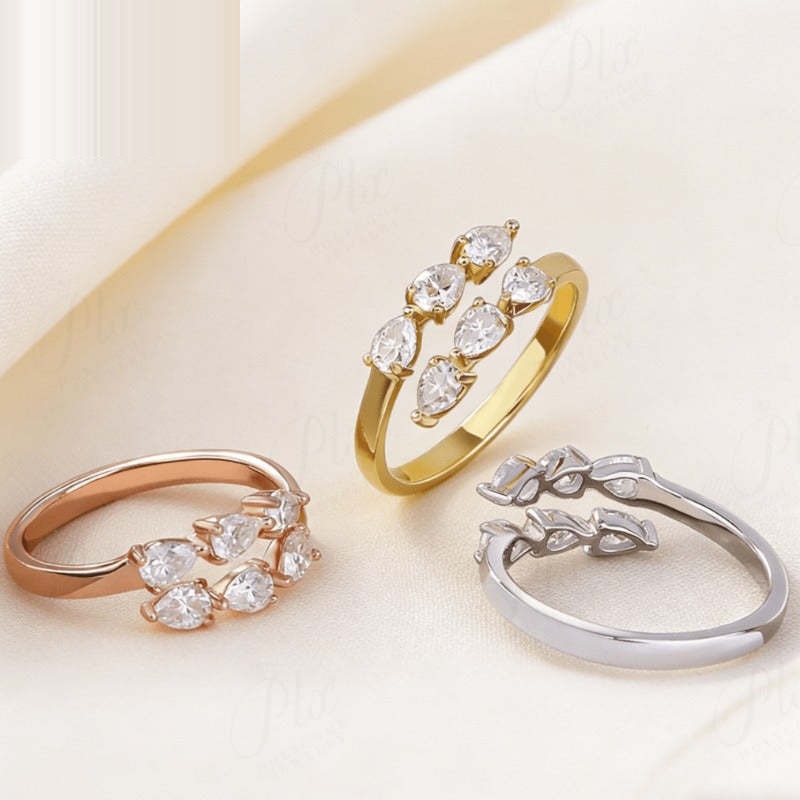
Sterling silver is the highest-volume metal in costume and demi-fine jewelry, and also the metal where quality varies most between manufacturers. Anyone can cast 925 silver in a small workshop in Shenzhen or Yiwu. The difference shows up three months later: rhodium plating peels off, stones fall out of soft settings, soldered joints turn black, pieces tarnish in the retail box before they ever reach a customer, and nickel in the alloy triggers rashes on sensitive ears. A silver jewelry program that looks cheap coming out of the factory will look much worse in six months.
HOLYCOME has manufactured 925 sterling silver jewelry from our Guangzhou factory since 2016, producing over 300,000 pieces annually across rings, earrings, necklaces, bracelets, pendants, and chains for brands spanning entry-level fashion to demi-fine price points. This article explains how we manufacture 925 silver jewelry—the alloy itself, casting differences from gold, anti-tarnish treatments, plating standards, stone setting in silver, nickel compliance, quality control, MOQ, and pricing. If you're sourcing silver jewelry wholesale, these are the standards to hold your supplier to.
What 925 Sterling Silver Actually Means
"925" refers to the millesimal fineness: 925 parts pure silver per 1,000 parts alloy, or 92.5% pure silver. Pure silver (999 fine) is too soft for jewelry—it bends, scratches, and loses shape with minimal wear. The remaining 7.5% is typically copper, which adds hardness, strength, and castability while preserving silver's bright white color and workability.
This 92.5% silver / 7.5% copper alloy is the standard sterling silver defined by the FTC Jewelry Guides and recognized in all major markets (US, EU, UK, Australia). Any mark of "925," "S925," "Sterling," or "STER" must refer to this 925/7.5 composition or equivalent. Pieces marked 925 that contain less than 92.5% silver are mis-hallmarked and illegal to sell in most jurisdictions.
We maintain batch-level assay reports for every silver alloy pour and welcome buyer-requested independent assay testing on bulk orders (we absorb the testing fee for orders over $10,000).
Variations: Nickel-Free and Anti-Tarnish Alloys
Standard 925 silver uses copper as the alloying element. Copper gives good hardness but causes two problems: (1) copper oxidizes (tarnishes) faster than silver, producing the dark patina silver is known for; (2) trace nickel (from scrap and recycled silver) can cause skin reactions. We offer three silver alloy options:
| Alloy | Composition | Tarnish resistance | Hardness | Nickel-free | Use case |
|---|---|---|---|---|---|
| Standard 925 | 92.5% Ag, 7.5% Cu | Standard (tarnishes 2–4 weeks without protection) | HV 70–90 (as-cast) | Contains trace Ni (we keep <0.05%) | Cost-effective fashion jewelry with rhodium/e-coat protection |
| Nickel-free 925 | 92.5% Ag, 7.5% Cu/Zn (no Ni) | Similar to standard | HV 70–90 | Yes (<0.01% Ni, REACH-compliant) | EU market, customers with metal sensitivity |
| Argentium-style / de-oxidized | 935 Ag + germanium | Significantly improved (firescale eliminated) | HV 80–100 | Nickel-free | Premium demi-fine, pieces worn daily without plating |
Our default production alloy is nickel-free 925 silver (no added nickel, compliant with EU Nickel Directive / REACH Annex XVII) for all pieces. Buyers needing standard 925 for price reasons can request it for non-EU markets.
Casting Silver: Different from Casting Gold
Silver casting shares the same lost-wax investment casting process as gold, but three material differences require different controls:
- Oxygen absorption and firescale: When heated in air, silver absorbs oxygen, which reacts with copper in the alloy near the metal surface to form cuprous oxide—a dark gray/black subsurface layer called "firescale" that becomes visible after polishing (and often bleeds through rhodium plating weeks later). Preventing firescale requires: (a) casting with a reducing flame or in a controlled atmosphere, (b) using de-oxidized silver alloy, or (c) applying anti-firescale flux during casting and pickling. We do all three.
- Higher shrinkage: Silver shrinks more than gold during cooling (approximately 1.5–2% linear shrinkage vs 1.2–1.5% for 14K gold). Our rubber molds are cut 1.8% oversize to compensate—new factories often use gold molds for silver and end up with rings half a size small.
- Porosity from copper oxides: Gas porosity in silver is commonly caused by copper oxide inclusions formed during melting. We add de-oxidizer (a small amount of zinc or germanium) to our silver melts and cast in a vacuum-assisted machine to minimize gas porosity.
Our overall casting scrap rate for 925 silver runs 2.8–3.5% (slightly higher than gold because of firescale risk), well below the 6–10% typical of average silver workshops. We do not weld-fill porosity in silver—porous pieces are re-melted, as filling creates surface pits that show through plating within months.
Rhodium Plating and Anti-Tarnish Protection
The single biggest source of silver jewelry complaints is tarnish. Sterling silver naturally reacts with sulfur compounds in air, sweat, and certain foods (eggs, onions, mustard) to form silver sulfide, the dark gray-black tarnish everyone recognizes. Three layers of protection prevent this:
1. Rhodium Plating
Virtually all commercial sterling silver jewelry is plated with rhodium over the silver surface for three reasons: rhodium is bright white (whiter than silver itself), rhodium is hard and scratch-resistant, and rhodium does not tarnish. Our rhodium plating specification:
- Bath: Sulfate-based rhodium plating solution (rhodium metal concentration 2g/L).
- Thickness: 2–3 microns (0.002–0.003mm) standard; premium 3–5 microns on request. Many commodity silver factories plate at 0.3–0.5 microns ("flash plating"), which wears off in 1–3 months of wear.
- Plating process: Silver pieces go through electro-cleaning, acid activation, nickel-free undercoat (a thin copper or palladium strike if needed for adhesion), rhodium plating at 45–50°C for 60–120 seconds depending on thickness target, and a final rinse.
- Coverage: All external surfaces are plated, including inside ring shanks and earring backs. We do not plate areas that will be soldered later.
Rhodium plating wears off over time (6–12 months at 2–3 microns for rings worn daily, longer for earrings/pendants that contact skin less), and re-plating is a routine jewelry maintenance step. Premium plating thickness extends life but adds $0.30–$0.80 per piece to cost.
2. E-Coat (Electrophoretic Anti-Tarnish Coating)
After rhodium plating, we apply an optional electrophoretic lacquer coating (e-coat), a transparent polymer film 5–10 microns thick deposited over the rhodium via electro-deposition. E-coat:
- Adds 6–12 months of additional tarnish resistance on top of rhodium plating.
- Is invisible (does not change the bright white finish).
- Does not yellow over time (unlike spray lacquers, which we do not use).
- Does not affect stone sparkle (unlike spray lacquer, which can leave a film on stone surfaces if applied after setting).
E-coat is included by default on all our sterling silver jewelry. It is particularly important for silver pieces stocked in retail environments with long shelf times (pieces can sit in inventory for months before sale).
3. Anti-Tarnish Packaging
Every silver piece ships in an anti-tarnish poly bag (impregnated with activated carbon or anti-tarnish chemicals that absorb sulfur from air) plus optional branded velvet pouches, ring boxes, and gift packaging. Without anti-tarnish bags, silver will tarnish during sea freight (25–40 days in a container), even with rhodium and e-coat.
Stone Setting in Silver vs Gold
Stone setting in silver follows the same techniques as gold (prong, bezel, pavé, channel, tension) but with one important difference: silver is softer than gold alloys (HV 70–90 as-cast for 925 silver vs HV 120–160 for 14K gold), meaning prongs in silver wear and bend faster than prongs in gold. We compensate in three ways:
- Thicker prongs: Silver prong minimum thickness is 0.5mm at the tip (vs 0.4mm for gold), with heavier bases. This is visible if you compare side-by-side—silver solitaires have slightly more substantial prongs than equivalent gold pieces.
- Deeper seat cuts: Stones are seated 25–30% below the girdle (vs 20–25% in gold) so less of the stone is held above the metal, reducing leverage on prongs if the ring is knocked.
- Burnished bead setting for pavé: Silver pavé uses larger beads (graver-formed beads) than gold pavé, distributing stone pressure over more metal.
Despite these compensations, silver pavé will still loosen faster than gold pavé under daily wear—this is a property of the metal, not a manufacturing defect. We set silver pavé to the same tightness standard as gold (push-tested on every stone) but advise buyers that silver pavé is best suited to fashion price points (pieces not worn every day for years) rather than heirloom expectations.
Available Finishes
In addition to standard high-polish rhodium finish, we offer eight silver finishes:
- High polish: Mirror finish, our standard.
- Brushed / satin: Uniform directional brushing (wheel/brushed, 240–600 grit) for a matte-soft look.
- Sandblasted: Fine glass bead blasting for a matte powder finish.
- Hammered: Hand or machine hammering for dimpled texture.
- Oxidized / blackened: Liver-of-sulfur oxidization to darken recesses, then polished on raised surfaces (popular for vintage and men's styles). Applied before rhodium plating on the recessed areas only.
- Two-tone (gold-plated accents): Selective gold plating (14K yellow or rose gold flash) on specific areas (halos, accent sections) while main body remains rhodium white.
- 14K gold vermeil: 2.5+ microns of 14K gold plated over sterling silver, marketed as "vermeil" (FTC requires vermeil to be at least 2.5 microns thick gold over sterling silver). Vermeil is a demi-fine price point between silver and solid gold.
- Rose gold plating: Copper-alloyed gold plating for pink/rose finish.
Hallmarking and Stamping
All our 925 silver pieces are stamped "925" or "S925" in a visible location (inside ring shanks, on earring backs, near necklace clasps, inside bracelets) per FTC and EU requirements. Private label clients can add their brand trademark or maker's mark at no additional cost (we maintain a library of customer stamps; new custom stamps cost $30–$50 to produce).
Country of origin markings are not required on silver jewelry imported to the US, but we can add "Made in China" if requested for specific retailer requirements.
Nickel and Lead Compliance
All our 925 silver production complies with:
- EU REACH Annex XVII, Entry 27 (Nickel Directive): Nickel release from skin-contact components (earring posts, ring shanks, bracelet interiors) <0.5 μg/cm²/week; from piercing components (posts) <0.2 μg/cm²/week. Our nickel-free alloy achieves <0.1 μg/cm²/week.
- EU REACH Entry 63 (Lead): Lead content <0.05% (500 ppm) in jewelry components; our silver alloys contain <100 ppm lead.
- EU REACH Entry 23 (Cadmium): Cadmium content <0.01% (100 ppm); our alloys contain <10 ppm cadmium.
- California Prop 65: Compliant for all restricted metals.
For EU shipments, we provide REACH compliance certificates and nickel-release test reports from independent labs (SGS or Intertek) on request (testing fee $80–$150 per SKU, or we can provide existing reports for standard alloys).
MOQ, Pricing, and Lead Times
| Order type | MOQ | Lead time |
|---|---|---|
| Sample pieces | 1 piece (sample fee credited to first bulk) | 7–14 days |
| Stock designs (rings, earrings, pendants) | 2 per SKU / $500 total | 10–18 days |
| Stock designs (chains, bracelets) | 5 per SKU / $500 total | 7–14 days |
| Modified custom (existing design changes) | 20 per SKU | 18–25 days |
| Full custom OEM (your designs) | 30 per SKU | 25–35 days (mold fee $50–$150/design) |
| Bulk / distributor | $10,000 total | 25–40 days (staged shipments possible) |
| Vermeil production | 30 per SKU | 18–28 days |
FAQ
What does rhodium plating thickness mean in practical terms?
Flash plating (0.3–0.5 micron) wears off rings in 1–3 months; standard 1–2 micron plating lasts 3–6 months; our default 2–3 microns lasts 6–12 months; premium 5 microns lasts 12–18 months on rings (longer on earrings and necklaces because they receive less friction). Plating wear is most visible where the ring contacts surfaces (prong tips, bottom of shank).
Is anti-tarnish e-coat really necessary?
If pieces will be on shelves (retail or e-commerce warehouse) for more than a month before sale, yes. E-coat prevents the slow tarnishing that happens even in air-conditioned retail environments, and it prevents pieces from arriving tarnished after 4–6 weeks of sea freight. If you are air-shipping and turning inventory in under two weeks, e-coat is optional.
Can you produce silver pieces without rhodium plating?
Yes. Some brands prefer the warmer gray-white of unplated sterling silver (popular for oxidized/vintage looks). We can ship pieces bright-polished with no plating (just anti-tarnish e-coat), or with a light anti-tarnish dip treatment that preserves silver's natural color.
How do I tell if a factory is using real 925 silver vs silver-plated brass/copper?
Three checks: (1) Ask for assay certificates—every reputable factory can provide batch assay reports from independent labs. (2) XRF test (x-ray fluorescence) at a gemological lab or testing facility will tell you exact composition in 30 seconds for $20–$50 per piece. (3) Silver is non-magnetic; a strong magnet should not stick to sterling silver (though springs/clasps may contain steel). We offer random XRF verification on bulk orders and welcome third-party inspection.
Why is some silver jewelry from China much cheaper than others?
Price differences in silver jewelry come from: (a) actual silver content (some cheap suppliers use lower fineness like 800 or 830 and mark it 925); (b) rhodium plating thickness (flash-plated pieces are significantly cheaper); (c) e-coat (omitted to save $0.10–$0.20 per piece); (d) setting quality (machine-cast settings without manual tightening); (e) QC (spot-check vs 100% inspection). A ring that is $2 cheaper wholesale will tarnish faster, lose stones, peel plating, and generate returns.
Can you do silver jewelry with gold vermeil?
Yes. Vermeil is 2.5+ microns of gold (10K, 14K, or 18K) plated over sterling silver. We vermeil in yellow, white, and rose gold. Vermeil pricing is roughly 1.8–2.5× standard silver pricing depending on gold thickness and current gold spot price.
Sterling silver is where the gap between commodity and quality manufacturing is largest. The metal itself is cheap relative to gold (silver is roughly 1–2% the price of gold by weight at any given time), so corners get cut on plating, alloys, setting, and QC to chase a lower per-piece price. But those cuts show up as tarnish, loose stones, peeling plating, and nickel reactions—and when your customer's silver ring turns her finger green or leaves a black tarnish mark, she does not blame the factory. She blames your brand. Our entire silver production process—nickel-free alloys, 2–3 micron rhodium, anti-tarnish e-coat, 100% QC, independent assay traceability—is built to prevent exactly those outcomes. Contact our silver manufacturing team for price lists, alloy certificates, or sample pieces.
The 92.5% silver composition and properties of sterling silver are described in the Wikipedia entry on sterling silver.
Related reading: 925 Sterling Silver Jewelry Manufacturer QC Guide, Silver Jewelry Oem Factory Direct, 925 Sterling Silver Manufacturer 925.


