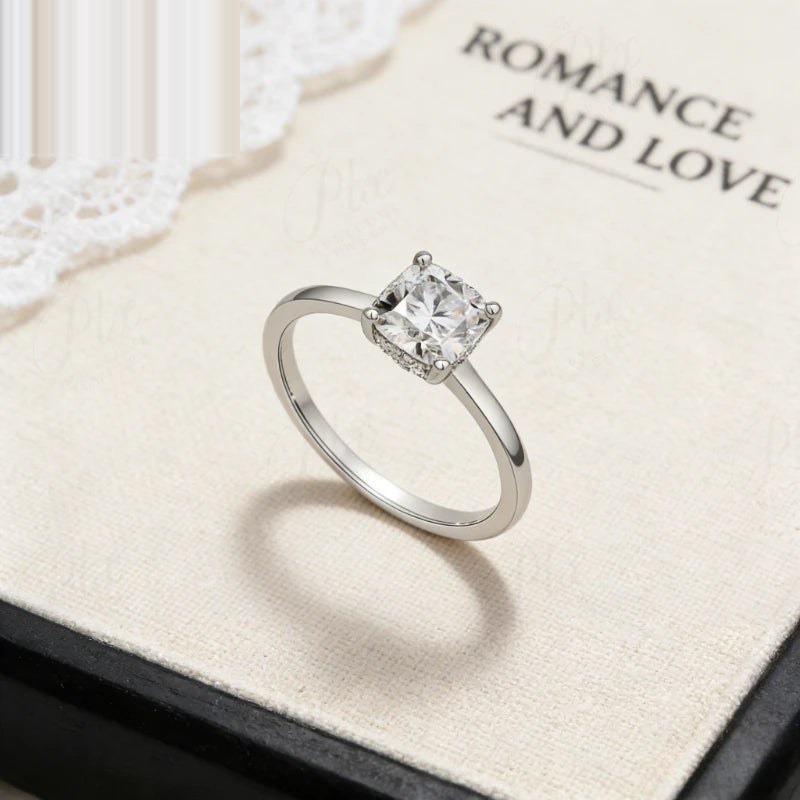
A fashion jewelry brand in New York reached out to us last year after a six-month run with a mass-market silver factory in Yiwu. Their product reviews were tanking: customers were reporting silver rings turning fingers green within two weeks, necklaces snapping at the clasp after a handful of wears, and stones falling out of earrings the first time they were worn. When we had them send samples, the problems were obvious to anyone who works with sterling silver regularly. The "925" stamp was present, but XRF testing showed actual silver content at 89.2%—below the 92.5% legal standard. The clasps were thin-gauge jump rings soldered with low-tin solder that cracked under mild tension. The rhodium plating was 0.12 microns thick (industry minimum for durability is 0.5 microns) and wore off in days, exposing copper alloy that caused skin discoloration. That factory could deliver a ring at $2.80. The brand paid the price in returns and reputation.
925 sterling silver is the backbone of fashion and demi-fine jewelry worldwide. It holds stones well, takes a high polish, accepts rhodium and gold plating, sits at an accessible price point, and is durable enough for everyday wear—when it is manufactured correctly. When corners are cut, silver jewelry fails spectacularly. As a 925 sterling silver jewelry manufacturer with dedicated silver production lines, in-house plating, and XRF testing on every batch, we produce 15,000-25,000 sterling silver pieces per month for brands across the US, EU, and Australia. This guide walks through how silver jewelry is manufactured properly, what quality standards matter, and how to avoid the common factory shortcuts that sink silver programs.
What Is 925 Sterling Silver?
Sterling silver is an alloy of 92.5% pure silver (fine silver, Ag 999) and 7.5% other metals—almost always copper, though some modern sterling formulations add zinc, silicon, germanium, or boron to improve tarnish resistance and casting properties. Pure silver is too soft for jewelry (Vickers hardness ~25 HV); copper adds hardness (sterling silver castings typically 60-80 HV after tumbling, 120-150 HV after heat treatment/age hardening), strength, and the structural integrity needed for settings, clasps, and thin sections.
The 925/1000 standard has a long history—the term "sterling" dates to 12th-century England, where silver pennies called "sterlings" were minted to a consistent 92.5% alloy. Today, the standard is codified by the U.S. FTC Jewelry Guides and enforced via hallmarking systems in many jurisdictions: EU Regulation 2019/1020 on market surveillance requires silver jewelry sold in the EU to bear a recognized hallmark indicating fineness. The 925 stamp (or "S925") is the industry marking, but stamps alone mean nothing—we XRF test every casting lot to verify actual silver content.
"Argentium sterling" is a modern sterling variant replacing some copper with germanium (935/1000 or 960/1000 fineness) to reduce tarnish and eliminate firescale. We work with Argentium on request at a 15-25% premium over standard sterling. See our silver quality standards.
Silver Jewelry Manufacturing Process
Sterling silver production follows the same lost-wax casting workflow as gold, with a few silver-specific differences:
- Design and CAD. Silver pieces are modeled in MatrixGold or Rhino with the same CAD precision as gold pieces. Silver can be cast thinner than gold in some areas (lower material cost) but requires slightly thicker prongs (silver is softer than 14K gold, so prongs need more mass to hold stones securely—minimum 0.40mm prong tips on silver vs 0.30mm on gold). CAD approval takes 1-3 days.
- Wax printing and tree assembly. 3D wax printers produce wax models at 25 micron resolution. Waxes are assembled onto casting trees—silver trees are larger than gold trees because silver is lower value and less dense; a silver tree may carry 30-80 pieces per flask (vs 15-40 for gold). Wax weight determines silver casting weight plus 10-15% sprue/button allowance.
- Investing and burnout. Wax trees are invested in a plaster-silica investment material (cristobalite-based for silver to handle the higher thermal conductivity). Burnout cycle is 6-8 hours, ramping to 700-730°C. Silver casts at a lower temperature than gold (960°C melting point for sterling vs 1064°C for pure gold), so burnout is shorter.
- Casting. Molten sterling silver (typically heated to 1000-1050°C) is cast via centrifugal or vacuum casting into the flask. Temperature control is critical: overheating silver causes gas porosity and excessive oxidation; underheating causes incomplete fills. Silver casting grain is sourced from certified refiners and tested by XRF upon receipt.
- Firescale prevention. When sterling silver is heated in air, oxygen diffuses into the alloy and reacts with copper to form cuprous oxide (Cu2O), creating a dark "firescale" stain beneath the surface that shows through after polishing. We prevent firescale by casting under a protective nitrogen atmosphere, using fire-scale resistant investment, and applying anti-firescale flux during soldering. Firescale that does occur must be ground out, removing silver and thinning components.
- Quench, devest, and tumble. Cast trees are quenched in water, investment is removed via high-pressure water blasting and chemical pickling (dilute sulfuric acid). Pieces are cut from the tree and put through a rotary tumbler with steel shot for 4-8 hours, which work-hardens the surface, rounds edges, and creates a preliminary polish.
- Assembly and soldering. Components (earring posts, ring shanks, chain connections, clasps, jump rings) are assembled and soldered using silver solder (available in easy/medium/hard grades by melting temperature). Silver soldering requires careful torch control because silver conducts heat extremely quickly—one common defect is melting adjacent parts when soldering a joint.
- Pre-polish and stone setting. Pieces receive a polish on polishing lathes using progressively finer compounds (tripoli for cutting, rouge for mirror finish). Stones are set; silver uses the same setting types as gold (prong, bezel, pavé, channel) but with slightly thicker prongs.
- Rhodium plating / gold vermeil / e-coating. Most sterling silver fashion jewelry receives rhodium plating (bright white finish, 0.5-1.0 micron thickness, plated over a nickel barrier strike to prevent silver migration). Gold vermeil (pronounced ver-may) is a thick gold plating (minimum 2.5 microns per FTC vermeil standards) over sterling silver. E-coating (electrophoretic deposition of clear lacquer) provides anti-tarnish protection. Plating thickness is regularly tested with XRF.
- Final polish, QC, and packaging. Final polish removes any plating residue, pieces are inspected under magnification, ultrasonically cleaned, steam cleaned, and packaged with anti-tarnish tabs.
Production time for standard silver pieces: 10-15 business days. Complex designs, vermeil finishes, and custom stone settings: 15-20 days.
Silver Quality Comparison: Budget vs Mid-Tier vs Our Production
| Quality Parameter | Budget Market Factory | Mid-Tier Silver Factory | HOLYCOME Silver Production |
|---|---|---|---|
| Verified silver content | 88-92% (stamped 925 but under-alloyed) | 92.0-92.5% | 92.5%+ verified by XRF per lot |
| Prong thickness (prong settings) | 0.25-0.30mm (bends, loses stones) | 0.35-0.40mm | Minimum 0.40mm, stress-tested |
| Rhodium thickness | 0.10-0.20 microns (wears in 1-4 weeks) | 0.30-0.40 microns | 0.50-1.0 microns (6-12 months wear) |
| Clasp construction (necklaces/bracelets) | Thin jump rings, low-grade solder | Standard clasps | Thicker-gauge clasps, high-silver solder |
| Firescale prevention | None (bleaches/pickles to hide) | Basic anti-firescale flux | Controlled atmosphere casting + flux |
| Earring post thickness | 0.60-0.68mm (bends easily) | 0.70-0.72mm | 0.76mm (US standard) |
| Tarnish protection | None (tarnishes in 2-4 weeks) | Anti-tarnish bags | E-coat + rhodium + anti-tarnish tabs |
| XRF testing | Never | Spot check | Every casting lot |
| Warranty support | None | Replacement for DOA only | 12-month manufacturing defect warranty |
The most expensive silver jewelry is not the priciest per piece—it is the one that costs 30% less upfront but generates 8-15% return rates due to tarnish, broken clasps, green fingers, and falling stones. See our silver production process.
Plating and Finishing Options
Plating is where silver jewelry brands make the most consequential spec decisions:
Rhodium plating (white finish): 0.5-1.0 micron rhodium over nickel strike gives a bright white, highly reflective finish equivalent in appearance to white gold. At our spec of 0.5+ microns, rhodium lasts 6-12 months with normal wear before needing re-plating. Thin rhodium (0.1-0.2 microns) is the #1 cause of "silver turning" complaints—it wears off rapidly, exposing silver that tarnishes and copper that discolors skin.
Gold vermeil (gold finish): Per FTC standards, vermeil requires sterling silver base + gold plating of at least 10K fineness + minimum 2.5 microns thickness (the "vermeil" designation cannot be used for thinner plating). We plate vermeil at 3.0 microns of 14K or 18K gold, which lasts 1-2 years with normal wear. "Gold flashed" or "gold washed" pieces (0.5 microns or less) cannot be called vermeil and wear off in weeks.
Rose gold plating: Copper-gold alloy plating (typically 14K rose, i.e., 58.3% gold with copper and silver) over silver. Same thickness requirements as yellow gold vermeil. Rose gold plating can shift toward pink or coppery tones depending on alloy ratio—we calibrate to a consistent rose tone per brand spec.
Black ruthenium / gunmetal: Dark plating (ruthenium, black rhodium, or oxidized silver) for gothic/modern/men's aesthetics. Requires a base plating layer and careful thickness control (0.3-0.8 microns). Black finishes wear at edges and contact points; clear e-coat extends life.
E-coat (electrophoretic coating): Clear or tinted lacquer applied via electrolytic deposition, providing a thin, uniform anti-tarnish layer. E-coat adds 5-10% to cost but extends brightness life by 3-6 months. We recommend e-coat on pieces intended for high-humidity markets (Southeast Asia, coastal US) or on pieces that will sit in retail inventory for extended periods.
Polish levels: High mirror polish (standard), brushed/satin finish, matte/sandblasted, hammered, and two-tone (high-polish and brushed combination). Two-tone finishing requires masking one finish while applying the other and adds 15-25% labor cost.
See plating and finishing guide.
Stone Setting in Silver
Silver is softer than gold (Vickers ~75 HV cast vs 120-150 HV for 14K gold), which affects how stones are set:
- Prong settings: Prong tips must be at least 0.40mm thick (vs 0.30mm for gold) to compensate for silver's softness. We pressure-test all silver prongs at 2x the probe pressure used on gold, because bent or flattened prongs from daily wear are the #1 cause of stone loss in silver rings and pendants.
- Bezel settings: Bezel settings work exceptionally well in silver—silver's malleability makes tight bezel rims easier to achieve, and the full metal rim compensates for silver's softness.
- Pavé and channel settings: Achievable in silver but require thicker bead metal and more frequent quality checks. Small pavé stones (under 1.5mm) in silver have the highest fall-out rate; we recommend bezel or prong for small stones in silver.
- Cubic Zirconia vs Moissanite vs Gemstones in silver: Most silver fashion jewelry uses CZ (affordable, consistent, visually convincing at small sizes). Moissanite is used in premium silver lines (closer to diamond look, higher price point). Natural and lab gemstones (sapphire, emerald, topaz, amethyst, etc.) are set in silver per customer spec. Thermal shock is a risk when soldering near heat-sensitive stones; we set heat-sensitive stones after all soldering is complete.
Pricing, MOQ, and Lead Times
Wholesale pricing for sterling silver jewelry (rhodium plated, CZ stones where applicable):
- Stud earrings (simple solitaire CZ, 3-8mm): $2.50-$7.50 per pair
- Hoop earrings (plain or CZ set): $4-$15 per pair
- Pendant necklaces (with 16-18 inch silver chain): $3.50-$14 per piece
- Tennis necklaces (CZ, 16 inches): $18-$45 per piece
- Solitaire rings (CZ, silver, rhodium): $2.80-$10 per piece
- Halo rings (CZ center + CZ pavé): $5-$16 per piece
- Tennis bracelets (CZ, 7 inches): $10-$28 per piece
- Signet / fashion rings (plain or engraved): $3-$15 per piece
- Bangles and cuffs: $5-$20 per piece
Vermeil (gold plated) adds 15-25% to the price. Moissanite stones add $8-$45+ per piece depending on stone size. Natural gemstones vary by stone type (amethyst, topaz, citrine at low premiums; sapphire, ruby, emerald at significant premiums). E-coat adds 3-6%.
MOQ: Stock designs from existing molds: 50 pieces per SKU silver (some high-volume catalog items 100 pieces). Custom designs from customer CAD: 100 pieces per SKU silver; custom mold/CAD development fee $80-$200. Samples: 1-5 pieces available at 2x-3x wholesale price; sample cost credited against first bulk order of 200+ pieces per SKU.
Lead times: In-stock catalog designs: 10-15 business days. Custom designs from new CAD: 20-25 days after CAD approval. Plating-only orders (raw silver to plated finished): additional 3-5 days. Rush orders (7-10 days): +25% rush fee. See silver jewelry price list.
Quality Control for Silver Jewelry
- XRF alloy testing: Every silver casting lot is tested on an XRF analyzer to confirm 92.5%+ silver content. Castings below 92.0% are rejected and recast; stamps on rejected pieces are removed.
- Firescale inspection: Pieces are inspected for firescale under strong side-lighting after pre-polish; any firescale showing through is ground out and the piece is re-polished or re-cast.
- Solder joint integrity: Jump rings, clasp connections, post attachments, and chain ends are tested with manual pull force. Solder joints on silver are the #2 cause of returns (after rhodium wear) because silver's thermal conductivity makes good solder joints harder to achieve.
- Plating thickness testing: Plating thickness is measured with XRF on sample pieces from every plating batch. Pieces under 0.40 microns rhodium are stripped and re-plated.
- Prong/stones testing: Every stone is tested with a probe post-setting and post-polishing.
- Earring post straightness: Posts must be straight and perpendicular to earring heads; bent posts are the #3 silver jewelry complaint.
- 925 stamp verification: Every piece receives a visible "S925" or "925" stamp before shipping. Unstamped pieces cannot be legally sold as sterling silver in most markets.
- Tarnish test (spot check): Sample pieces from each lot are placed in a humidity chamber (80% RH, 35°C) for 48 hours to verify that e-coat / anti-tarnish packaging is effective.
Our defect rate on finished silver jewelry is under 1.8%—slightly higher than gold because silver is produced at higher volumes with more per-batch variation—but tracked monthly by defect category for continuous improvement.
Frequently Asked Questions
Q: Do you provide nickel-free and lead-free silver jewelry?
A: Yes. All our sterling silver is nickel-free and lead-free, meeting EU REACH regulations and California Prop 65 requirements. Our rhodium plating uses a palladium strike (not nickel) as the underlayer to avoid nickel allergies. We provide material composition certifications and test reports upon request for EU and US compliance documentation.
Q: Can you supply silver jewelry with 14K/18K gold vermeil at scale?
A: Yes. Our in-house plating line handles both rhodium and gold plating (yellow, rose, white). We plate vermeil at 3.0 microns thickness (above the FTC's 2.5 micron minimum for the vermeil designation) and can plate up to 5.0 microns for premium lines that need extended wear. Gold vermeil MOQ is 100 pieces per SKU (same as standard silver); lead time adds 3 days for plating.
Q: How should silver jewelry be packaged to prevent tarnishing in inventory?
A: All our silver pieces are individually sealed in poly bags with an anti-tarnish tab inside, and then placed in presentation boxes or pouches. Bulk storage should be in a cool, dry area away from direct sunlight and away from latex, rubber, wool, or certain woods (oak in particular), all of which accelerate silver tarnish. Pieces stored in e-coat and proper packaging resist tarnish for 6-12 months. We include care cards advising customers to store silver in sealed bags when not worn.
Q: Can you produce silver pieces in our own designs with our logo stamped?
A: Yes—private label silver production is 70% of our silver volume. Laser engraving of your brand name/Logo inside rings, on earring backs, or on clasp tags is available at no extra charge for orders over 200 pieces per SKU. Custom branded packaging (boxes, pouches, cards) is available at MOQ 500 units for custom-printed items.
Q: Do you supply finished chains or just cast components?
A: Both. We produce cast silver components (pendants, earring tops, ring heads, charms) as well as finished pieces including chain. For chains, we stock a catalog of 40+ standard silver chain styles (cable, curb, figaro, rope, box, snake, herringbone, etc.) available by the inch or finished with clasps at 16/18/20/24 inch lengths. Custom chains are produced via our chain manufacturing partners at MOQ 500 meters.
Q: What is the minimum thickness you recommend for rhodium plating to avoid green fingers?
A: Minimum 0.5 microns rhodium over a palladium strike (nickel-free barrier). Below 0.3 microns, rhodium wears through within 1-4 weeks in high-contact areas (inside ring shanks, earring posts, clasp areas), exposing copper-containing silver alloy. Skin acidity varies person to person, but green finger is caused by copper reacting with skin oils and acids—thick enough rhodium prevents contact entirely for 6-12 months.
Key Takeaways for Silver Jewelry Buyers
- 925 stamp alone does not guarantee 92.5% silver—XRF verification per lot is the only reliable confirmation
- Rhodium plating under 0.3 microns wears off in weeks; 0.5+ microns lasts 6-12 months and prevents green fingers
- Silver prongs need to be 0.40mm minimum (thicker than gold) to hold stones securely in the softer metal
- Firescale prevention requires controlled-atmosphere casting, not just post-casting chemical bleaching
- Vermeil requires 2.5+ microns gold plating per FTC standards; thinner plating is just "gold flashed" and wears in weeks
- MOQ: 50 pieces per SKU stock designs / 100 pieces custom; lead time 10-20 days
- Sample pricing is 2-3x wholesale, credited against bulk orders of 200+ pieces
The New York brand that came to us with green-finger complaints and broken clasps rebuilt their entire silver line with us over 18 months. They now carry 180 SKUs, report a 1.6% return rate (down from 11.4%), and have grown their DTC business by 3x. The difference was not magic—it was verifying the alloy, plating to real thickness standards, and building prongs thick enough to hold stones in a softer metal. Silver jewelry can be entry-level price without being entry-level quality. Send us your silver designs or tech packs—we will quote production within 48 hours and produce pre-production samples for your review.


