Manufacturing
How a piece moves through the workshop
Eight gates, each with a written check. The point of the sequence is not speed — it is that a defect is caught while the piece is still cheap to fix.
-
01
Spec sheet and quote
Drawings, photos, competitor links and SKU lists all land in the same queue. We confirm stone, metal, plating, size run and unit price, then send a one-page spec back for signature. Nothing is cast before that page is agreed.
Gate window · 24 hours
-
02
CAD and photoreal render
A Rhino file is built to the confirmed dimensions. Buyers receive a three-view render and a stone-count sheet, and two revision rounds are included before the file is frozen.
Gate window · 2–3 days
-
03
Wax print and treeing
The frozen file is printed in casting wax, sprued onto a tree by metal colour and ring size, then invested. Silver and gold never share a flask because investment temperatures differ.
Gate window · 1 day
-
04
Casting
Induction melting for gold, vacuum assist for silver. Each flask is weighed before and after to catch short pours, and the tree is inspected under magnification once the investment is broken away.
Gate window · 1 day
-
05
Stone matching
Centre stones and melee are pulled from the same grading batch so colour and brilliance match across a size run. Any stone with a visible inclusion or an off-colour body is rejected at this gate.
Gate window · 1–2 days
-
06
Setting and assembly
Prong work is done under a loupe, pavé and channel work under a microscope. Every stone is pressure-checked with a probe before the piece leaves the bench.
Gate window · 2–4 days
-
07
Polishing and plating
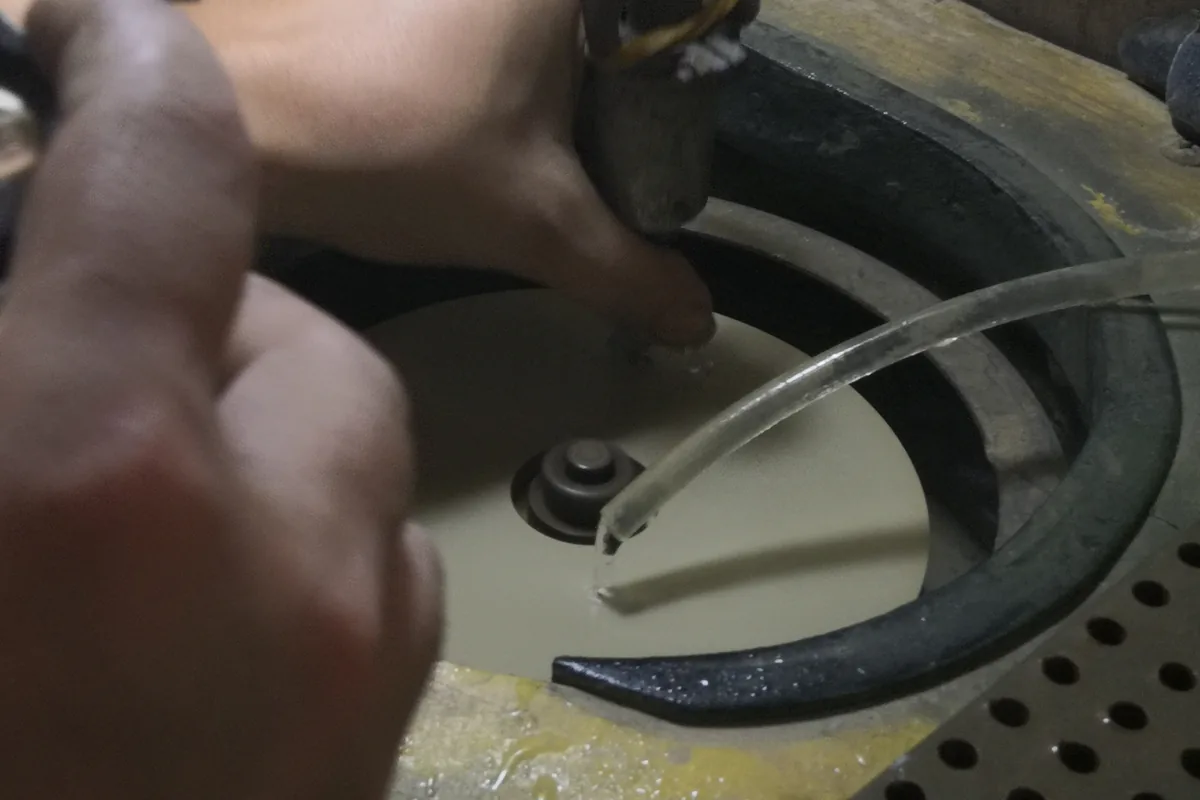
Four abrasive stages, then ultrasonic clean, then rhodium or 18K gold plating. Plating time and current are logged per batch so nickel-release tests stay repeatable.
Gate window · 1–2 days
-
08
Final QC and dispatch
Stone security, plating thickness, sizing, hallmark and weight are checked against the spec sheet. Pieces are photographed, packed with the GRA card, and shipped with tracking.
Gate window · 1–2 days
Where time actually goes
A stock reorder is fast; a first build is not
Two very different clocks run in the workshop. A reorder of an existing SKU only needs casting, setting and plating, because the CAD and the mould already exist. A first build pays for the whole chain, including two render revisions and a sample.
| Order type | What is skipped | Typical window |
|---|---|---|
| Stock reorder | CAD, render, sample | 3–7 days |
| Stock style in gold | CAD, render | 10–14 days |
| New CAD, silver | — | 12–18 days |
| New CAD, gold with melee | — | 18–25 days |
Windows exclude freight. DHL and UPS add 3–6 days depending on the destination country.
The three checks that save the most money
Most returns we see from other suppliers come from three places: colour mismatch inside a size run, plating that fails a nickel test, and stones that loosen in the first month. Each has a specific gate in our sequence.
Colour matching across a run
Melee is pulled from one grading batch per order and laid out on a white tray before setting. If a size run needs eleven pieces and only nine stones match, the order waits rather than mixing batches.
Plating repeatability
Rhodium and gold baths are logged with time, temperature and current. When a buyer's market tests for nickel release, we can reproduce the exact bath that passed the test.
Stone security
Every prong is probed, and pavé stones are checked with a light pull test after polishing — the step where a stone most often works loose.
Certifications and test reports · Factory and capacity · Wholesale terms
Production questions
Can I see the piece before it ships?
Yes. Bulk orders are photographed at final QC and the images are sent for approval before packing. Sample orders can also be video-inspected on request.
What happens if the render is not what I imagined?
Two revision rounds are included before the file is frozen. After freezing, a change means a new print and cast, which is quoted as a separate build.
Do you produce in platinum?
Platinum casting is available on request for higher-value programmes; the standard lines run silver, 10K, 14K and 18K gold.