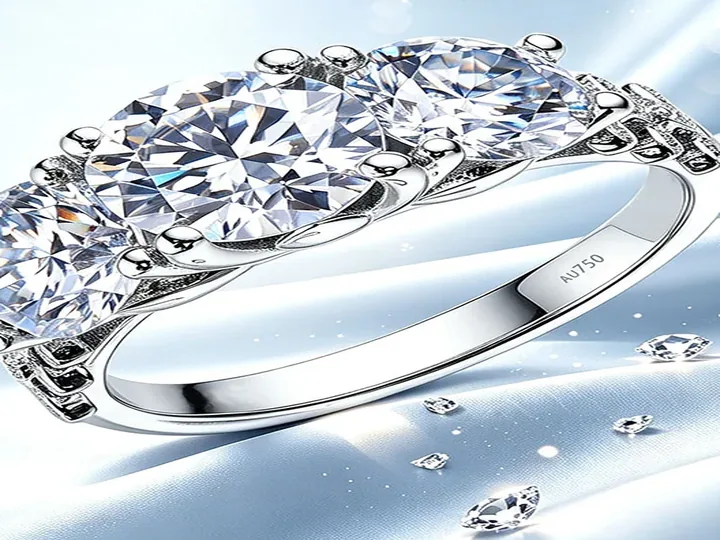
A bridal boutique in Austin started carrying wholesale moissanite solitaires two seasons ago. Her first supplier sold her stones at $4.20 a piece, no certificate (per GIA's diamond grading standards). Within 90 days, 14% of customers came back saying the stone looked "off" - gray in office light, not white. She switched to a GRA-certified supply at $8.80 and the return rate dropped to 0.6%. Her retail price went up $20, her margin went up, and the complaints stopped. Wholesale moissanite jewelry production is not a single product. It is a tiered stone market, and the tier you buy is the tier your customers will judge. Here is how we buy, set, and ship GRA moissanite at wholesale volume.
What GRA actually certifies
The GRA (Gemological Research Association) certificate on a moissanite stone covers four things: origin (lab-grown), carat weight, color grade, and cut grade. It does not grade clarity the way a GIA diamond report does, because nearly all wholesale moissanite is eye-clean. What it does do is tie the stone in your hand to a documented spec, so a customer can look it up.
IGI and GIA reports exist for high-end moissanite one-off pieces, but at wholesale volume, GRA is the standard. A stone without a GRA certificate is, operationally, an unverified stone. You may be getting a fine stone. You are also taking the risk on your customer's perception.
The stone tiers that drive sell-through
| Spec | Economy tier | Standard tier (our default) | Premium tier |
|---|---|---|---|
| Cut | Machine round | Excellent round | Ideal cut, hearts & arrows |
| Color | G-H equivalent, slight gray | D-E equivalent, white | D, colorless |
| Certificate | None | GRA | GRA + report photo |
| Cost (6.5mm) | $4-$6 | $8-$11 | $14-$18 |
| Customer return rate | 8-14% | 0.5-1.5% | <0.5% |
Our default wholesale offering is the standard tier. It is the sweet spot: white enough in office light, certified, and priced so the boutique can retail at a margin that beats a comparable lab-grown diamond without competing with CZ on price.
How we set moissanite at volume
Moissanite is Mohs 9.25 - harder than sapphire, softer than diamond. That hardness means it does not scratch in wear, but it also means prongs do not "give" around the stone the way they do with softer gems. Two setting rules matter:
- Prong size: On a 6.5mm round, we use 1.3mm prongs. Thinner prongs look better but fail pull tests on harder stones.
- Pull test: Every prong is pull-tested at 1.5kg of vertical force before the piece moves to polishing. Loose prongs are re-set, not polished and shipped.
We also check the stone under 10x loupe at incoming. Moissanite is optically doubly-refractive, which is normal and expected. What we reject is visible chipping on the girdle - a defect that usually shows up within the first month of wear as a dull spot.
Bulk pricing tiers and how they move
On a 925 silver GRA moissanite solitaire, 6.5mm:
- 30-99 pcs: $11.50 per piece
- 100-299 pcs: $9.80 per piece
- 300-999 pcs: $8.40 per piece
- 1,000+ pcs: $7.60 per piece
The drop between 30 and 300 pieces is roughly 27%. That is the volume tier most boutiques are leaving on the table by ordering 50 pieces at a time. If you can forecast three months out, the math is obvious.
Decision guidance by buyer type
Boutique launching moissanite: Start with 30 pieces of the 6.5mm round solitaire in sterling silver. It is the SKU that moves. Skip the fancy cuts (oval, pear) until the round is proven; they look beautiful but sell slower in a first launch.
DTC brand with reviews: Move to the premium tier on your hero SKU. The $6 extra per stone buys a near-zero return rate, which on a reviewed product is worth more than the unit cost.
Wholesale / chain buyer: Lock a rolling forecast. We pre-buy stones in 500-stone lots, which drops stone cost by about 12%, and pre-cast the silver settings. Pull-to-order shipments go out in 5-7 working days.
Frequently Asked Questions
Is GRA certification real and recognized?
GRA is the standard wholesale moissanite certificate. It documents carat, color, cut, and lab-grown origin. It is not a GIA diamond report, but at moissanite wholesale volume it is the document buyers and customers expect. Stones without it are unverified.
What size moissanite sells best at retail?
The 6.5mm round (equivalent to a 1-carat diamond) is the volume SKU. The 5mm and 8mm rounds sell as secondary. Fancy cuts (oval, pear, emerald) move slower but at higher retail price.
Does moissanite scratch or cloud over time?
Moissanite at Mohs 9.25 resists scratching better than any gem except diamond. It does not cloud from wear. A "cloudy" appearance usually means skin oils and soap film, which a 10-minute soak in warm soapy water removes.
Can I get 14k gold moissanite settings at wholesale?
Yes. 14k yellow, white, and rose gold settings open at 20 pieces per style. Unit cost rises roughly $28-$45 per piece over the silver version, depending on ring weight.
How do you handle returns on moissanite jewelry?
We accept defective pieces within 30 days of carton receipt. A loose stone or a cracked girdle is replaced or credited. Customer-preference returns are not covered, which is why the GRA certificate and the right stone tier matter up front.
Key takeaways
- GRA-certified white moissanite at $8-$11 beats economy stone at $4-$6 on returns, reviews, and margin.
- The 6.5mm round solitaire is the volume SKU. Fancy cuts are a season-two bet.
- Specify 1.3mm prongs and a 1.5kg pull test in the PO. Moissanite is hard; prongs that "give" fail.
- Volume tiers drop 27% between 30 and 300 pieces. Forecast three months out to capture that.
Request a sample parcel of 5 GRA moissanite solitaires: $45 delivered, ships in 3 business days. See the moissanite rings catalog, read the buying guides, review the production steps, or check our QC standards.


