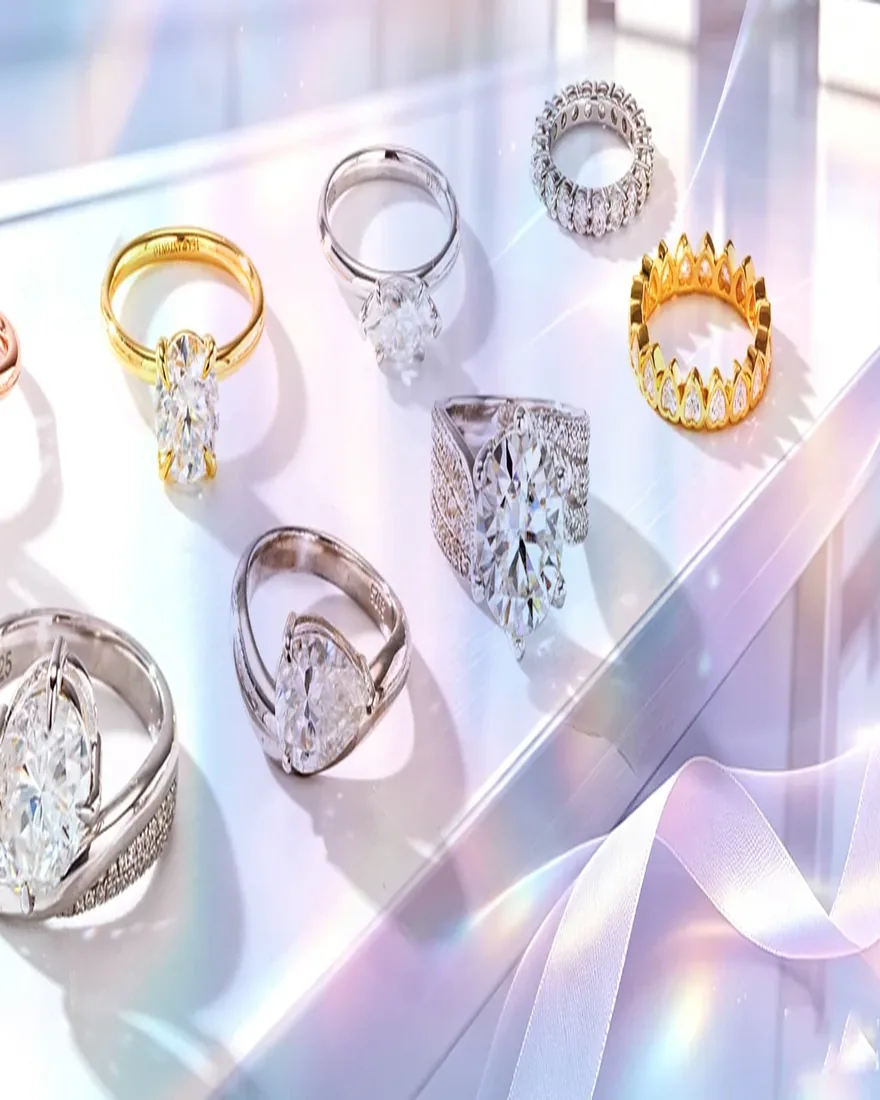
A jewelry buyer in Denver opened a second location and tried to place a 30-piece mix across six ring styles. The first factory quoted her $24 per piece. The second quoted $11.50 for the same 925 silver CZ band at 200 pieces. She almost walked away from the cheaper number because it felt too low, until she compared what each quote actually included: tooling, plating, certificate (FTC jewelry industry guides), and packing. MOQ is where the number stops being a marketing pitch and starts being an arithmetic problem. Here is how we structure ours, and how to read the one on your next quote.
Why factories set an MOQ at all
A jewelry line moves through six departments: 3D modeling, wax printing, investment casting, setting, polishing, and plating. Each department has a fixed setup cost regardless of whether it processes 20 pieces or 2,000. The MOQ is the minimum quantity that spreads that fixed cost thin enough to give you a wholesale price instead of a retail one.
The table below shows the industry-normal MOQ range for common categories versus where our line typically lands once a reorder pattern is proven:
| Category | Typical industry MOQ | Our opening MOQ | Reorder floor |
|---|---|---|---|
| 925 silver stud earrings | 100 pairs | 50 pairs | 30 pairs |
| Silver fashion rings | 120 pcs | 60 pcs | 40 pcs |
| Custom 14k gold bands | 30 pcs | 20 pcs | 10 pcs |
| Moissanite solitaires | 50 pcs | 30 pcs | 20 pcs |
| Private label necklaces | 80 pcs | 40 pcs | 25 pcs |
Two things matter more than the headline number. First, whether the MOQ is per style or per order. A per-style MOQ of 50 across ten styles means 500 pieces. A per-order MOQ of 200 means you can mix. Second, whether the factory will release the reorder floor once your sell-through data exists.
The hidden cost of going below MOQ
Buyers usually focus on unit price. They should focus on setup time. When an order lands below the efficient batch size, the bench jeweler runs it as a repair job: hand-polished, hand-finished, slotted between real production. That adds roughly 35% to the labor line and often stretches lead time by two weeks because the job has to wait for a slot.
We see this most often with first-time buyers who want 10 pieces in 14k gold to test a market. We will usually suggest a 20-piece opening at a per-unit price only 8% above the 50-piece rate, because that lets us run the line properly and gives you sell-through data to justify a second run. If you genuinely cannot move 20, a sample-order surcharge of about $180 covers the setup hour and keeps the unit price honest.
How to read a wholesale MOQ quote
Ask four questions before you compare numbers side by side:
- Is the MOQ per style, per category, or per shipment?
- Is tooling (CAD, rubber mold, cutting tools) amortized into the unit price or billed once separately?
- Does the price include rhodium plating, certificate, and branded packaging, or are those line items?
- What is the reorder floor, and does the price drop on a proven reorder?
A quote that looks 20% cheaper on paper but bills $220 per style in tooling, excludes plating, and holds a flat 100-piece MOQ forever is usually more expensive in year two than the one that started higher.
Decision guidance by buyer type
First-time small buyer (under $50k annual purchase): Push for a per-order mix MOQ rather than per-style. Pick one hero SKU and run it at the factory's stated floor; use the other slots for existing catalog pieces they already tooled, so you pay no new setup.
Growing boutique ($50k-$300k): Negotiate a tiered MOQ: 30 pcs per style for the opening order, dropping to 15 pcs on reorders with a 90-day sell-through commitment. This is where most factories will move, because you become predictable.
Private label / chain buyer: Treat MOQ as a planning variable, not a supplier constraint. Build a 12-month rolling forecast and ask for a blanket PO: they pre-cast the wax components in a single efficient run and pull finished goods to order. Unit cost typically drops 12-18% this way.
Frequently Asked Questions
What is a normal MOQ for wholesale silver jewelry?
A normal opening MOQ for sterling silver fashion pieces sits between 50 and 120 pieces per style. Reorder floors often fall to 30-40 pieces once sell-through data exists. Custom 14k gold work starts lower, around 20 pieces, because material cost already justifies the run.
Can I mix styles to hit the MOQ?
Sometimes. Many factories will accept a per-order MOQ (for example 200 pieces across any mix) but keep a per-style minimum of 30 pieces so each casting tree is efficient. Confirm in writing before you place the order.
Why does MOQ drop on reorders?
Because the CAD file, rubber mold, and cutting tools already exist. The fixed setup cost from the first order is amortized, so the factory can run smaller batches profitably and still protect margin.
Will a factory run a 10-piece test order?
Most will, but at a sample surcharge that covers the setup hour. Expect to pay roughly $150-$250 on top of unit price, and accept a longer lead time because the job runs between production batches.
Does MOQ include certificates and packaging?
Usually no. Certificates (GRA for moissanite, assay for gold) and branded boxes are line items. Ask for a fully landed quote including plating, certificate, and retail packaging before comparing suppliers.
Key takeaways
- MOQ is a setup-cost problem, not a sales target. Read it as the point where fixed labor gets spread thin.
- Compare per-style vs per-order MOQ, and ask what the reorder floor is. The year-two number matters more than year one.
- For first orders, push for a single hero SKU at the factory floor plus catalog fills; avoid paying new tooling on six experimental styles.
- Negotiate a tiered MOQ tied to a rolling forecast once your sell-through is proven.
Request a sample parcel: MOQ 20 pcs on custom work, 30 pcs on moissanite lines, ships in 5 business days after sample approval. See our moissanite rings catalog, read our buying guides, or review our factory process and QC stage-gates before you ask for a quote.
The Wikipedia article on rhodium explains why rhodium plating is applied to white gold and silver jewellery.


