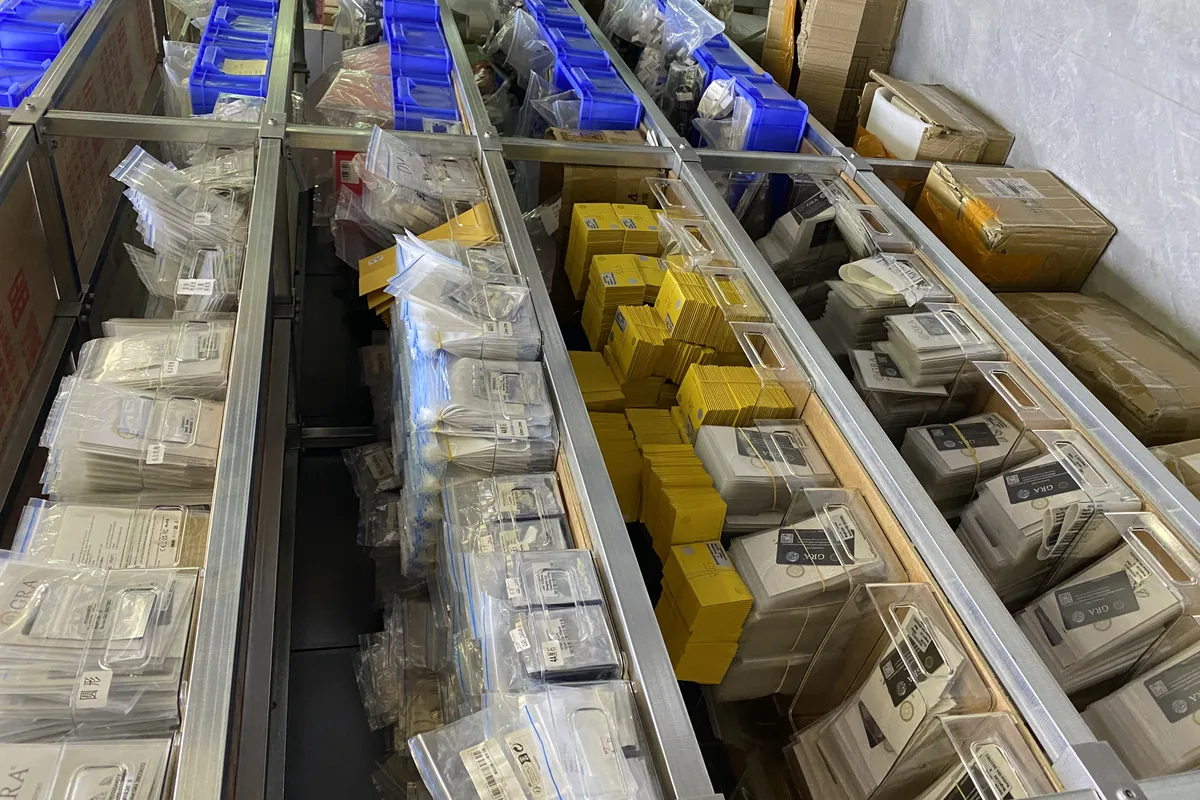
A Copenhagen boutique buyer ordered 300 silver pendants from a supplier that quoted fast samples and a low minimum. Six weeks after the promised delivery date, the cartons finally landed, and 36 pendants (12%) had bails drilled off-center — enough that half the stock sat in a returns drawer. The supplier, it turned out, was a trading house relaying the order to three different workshops. This guide explains what a genuine wholesale jewelry manufacturer does at each stage, and the verification questions that tell a real factory from a middleman before you commit.
Why the middleman problem costs buyers real money
Trading companies add margin without adding bench time. They also split your order across workshops, which means inconsistent finishing between styles and nobody on the floor who can actually fix a casting defect. The gap shows up most clearly in four operational areas:
| Stage | Trading company | Actual factory |
|---|---|---|
| Quote turnaround | 3-7 days, relayed by email | 24-48 hours, straight from the bench |
| Sample lead time | 10-15 days | 5-8 days |
| Revision control | No direct bench access | CAD and jeweler feedback direct |
| Rejection handling | Negotiated per dispute | Re-cast under the existing order |
Industry return rates for imported silver jewelry typically land between 5% and 15%, depending entirely on who runs the inspection. A factory with its own QC line usually holds that under 3%. The difference is not luck; it is who owns the inspection when a prong looks loose.
What a real manufacturing line actually includes
A competent wholesale manufacturer runs the process in-house rather than passing it around to subcontractors. Here is the chain you should expect:
- CAD and 3D printing: your design is modeled in CAD, printed as a resin pattern on a desktop DLP printer, and reviewed with you before any metal is poured.
- Lost-wax casting: the resin or wax pattern is mounted on a tree, invested in plaster, burned out, and cast in 925 sterling silver or 10k/14k gold.
- Stone setting: prong, bezel, or pavé seats are cut by hand; pavé stones are re-checked under a 10x loupe after setting.
- Finishing and plating: tumbling, hand polishing, and on silver a rhodium dip. Our rhodium plate runs 0.5µm against the more common 0.3µm, which roughly doubles the time before a white-silver piece starts to yellow.
- QC and packing: every piece is weighed, sized, louped, and pull-tested on prong-set stones before it goes into a poly bag and carton.
Which route fits your business
Opening boutiques ordering 50-200 pcs per style: start with stock silver styles that allow minor customization — a different bail, a stamped tag, a change of stone. Tooling stays minimal, unit cost stays predictable, and you learn the supplier's QC rhythm before committing to bespoke designs.
High-end bridal and designer boutiques: move to 14k solid gold and GIA- or GRA-certified stones. Expect MOQs of 20-50 pcs per style, longer lead times (6-10 weeks), and factory audit documents (ISO 9001, export records to EU/US markets) as a standard part of the conversation, not a special request.
Private-label programs: once a style sells through twice, lock it into a branded program with your own maker's mark, laser-engraved interior, and custom packaging. Reorders then run on a 3-4 week repeat cycle rather than a fresh development cycle every season.
Frequently Asked Questions
What is a normal MOQ for wholesale jewelry?
For stock silver styles, expect 50-100 pieces per style. For fully custom designs, the minimum usually lands at 20-50 pieces once tooling is approved. Tooling itself is a one-time fee and is amortized into the unit price on later reorders, so the per-piece cost drops on repeat runs.
How long does wholesale jewelry production take?
Stock items ship in 7-15 business days. Custom orders run 4-8 weeks end to end, including CAD revisions, casting, setting, plating, and final QC. Add roughly one week for DDP sea freight to the US or EU, and two days for express air.
Can I get a sample before bulk production?
Yes. A pre-production sample is standard practice and should be approved in writing before the bulk run begins. The sample locks the metal weight, stone size, finish, and sizing so the bulk order matches exactly and avoids post-shipment disputes.
What metal options do wholesale factories offer?
Most factories work in 925 sterling silver, 10k and 14k yellow, white, and rose gold alloys. Platinum is available at many shops but usually needs a separate casting line and a higher MOQ because of its high melting point and alloy control.
How do I protect my designs when working with a factory?
Sign a non-disclosure agreement before sending CAD files, stamp your own maker's mark onto the pieces, and keep the production files registered in your business name. A reputable factory will not reuse your designs for other buyers once your line is established.
Takeaways
- Verify that your supplier owns the bench — ask for casting and plating photos dated to your sample.
- Insist on a pre-production sample approved in writing before bulk casting starts.
- Compare rhodium thickness (0.5µm vs 0.3µm) and prong pull-test standards when you quote.
- Start with low-risk stock styles, then graduate to custom and private-label programs as demand proves itself.
Ready to test a line? Request a sample parcel — MOQ 50 pcs on stock styles, pre-production sample approved in 7 days, DDP shipping to US and EU addresses. Browse our moissanite rings, read more in our buying guides, or see the shop floor in our factory tour. New buyers can request a quote with their target styles and quantities.
Sterling silver terminology used in this guide follows the Wikipedia entry on sterling silver.


