A boutique owner in Copenhagen spent two days touring a factory last spring. She looked at the showroom, shook hands with the sales manager, placed a 500-piece sterling silver order, and received a parcel where 11% of the rings had crooked prongs. She never walked the production floor. A factory tour is not a courtesy visit; it is the cheapest due diligence you will ever do. Below is the seven-zone walkthrough we expect serious wholesale buyers to run before they commit.
Why a showroom tells you almost nothing
Industry data from trade shows puts it bluntly: between 12% and 18% of first-time import orders from a new supplier end up returned or discounted because of defects the buyer could have spotted on the floor. The showroom displays the one perfect sample. The floor shows how the other 999 pieces are actually made.
When you visit, ask to walk in production order, not the curated route. The goal is to see the normal Tuesday, not the staged open house.
The 7 zones, in walking order
1. Wax and 3D printing room
Look at how many build plates are queued. A small queue means the factory is idle; a wall of finished trees means capacity is real. Check whether the castable resin is dated and stored out of sunlight. Yellowed resin prints break during casting and nobody up the line can fix that.
2. Casting room
The casting bay is where most metal wastage happens. Notice the furnace temperature readout, the burnout schedule on a whiteboard, and whether castings are quenched by hand or tumbled. Ask what karat alloys they melt in-house versus buy as grain. You want to see XRF test strips from the last lot.
3. Stone setting bench
This is the single highest-defect zone. Watch four or five setters for ten minutes. Are they using the correct bur sizes, or are they burring every seat by eye? Check whether they pull-tested prongs or just visually closed them. Our own standard is a 1.5 kg prong pull test on every pavé piece; most shops only eyeball it.
4. Polishing and buffing
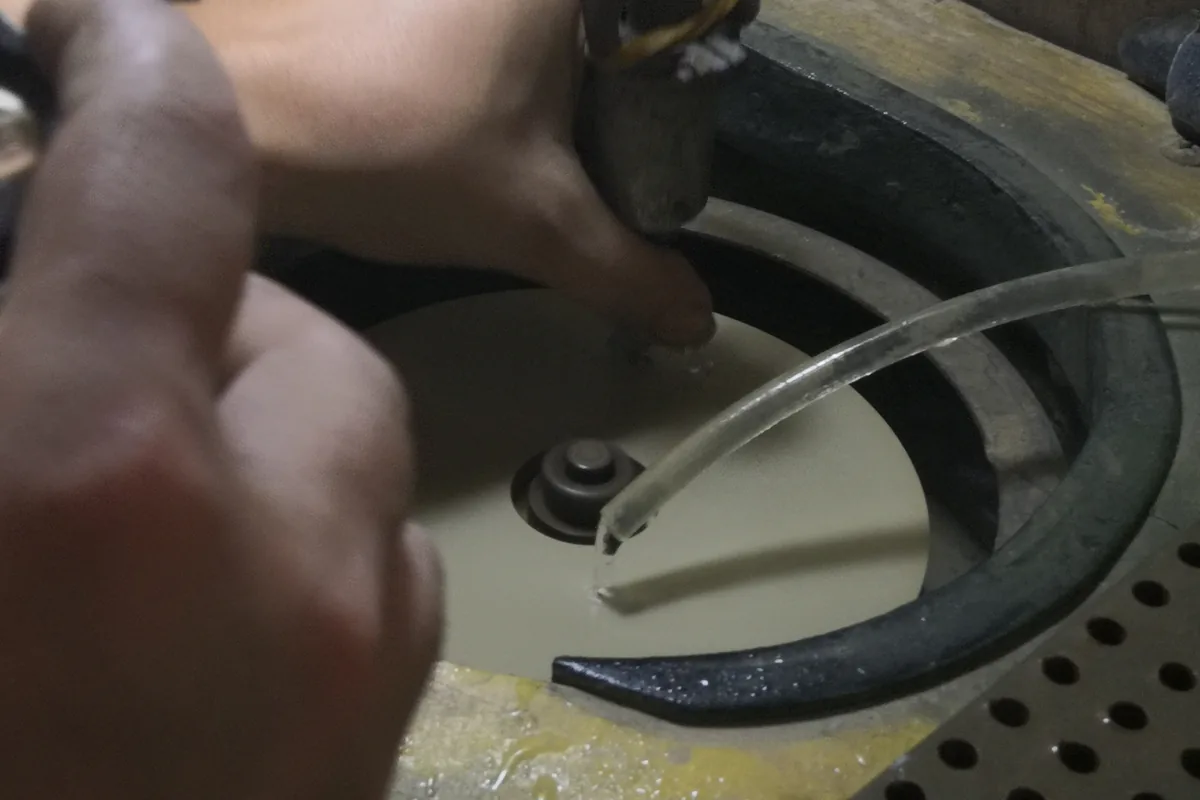
Dull plating hides under-polish. Ask to see a half-polished piece mid-process. Look for residual compound in engraving channels, inside shanks, and under gallery rails. If the buffing area is spotless and organized, the polishing team takes pride; if it is a chaotic pile of rags, expect orange-peel finishes.
5. Plating lab
Rhodium thickness is the number buyers most often get cheated on. Ask for the plating gauge log. Industry standard is around 0.3 micrometres; we plate sterling silver and white gold to 0.5 micrometres, measured on a coulometric gauge each shift. A thicker plate means 6 to 12 more months of white finish before re-plating in your customers' hands.
6. QC and final inspection
Find the reject bin. A factory with no rejects is lying or has no QC. Ask what defect rate they are holding this month. Healthy shops run 2–4% rejection on the line and catch it before packing. If they cannot quote a number, leave.
7. Packing and outgoing
Watch how pieces are separated. Every piece should be individually bagged, with the SKU sticker facing up, before it touches another piece. Loose pieces rattling together in a tray is the reason you receive scratched goods. Also confirm the export carton labeling, silica gel desiccant, and whether they ship DDP or FOB.
| Zone | Red flag (walk away) | Green flag (proceed) |
|---|---|---|
| Casting | No XRF records | Daily alloy test strips on file |
| Setting | No pull tester on bench | 1.5 kg pull test logged per lot |
| Plating | "We just dip it" | Coulometric gauge log, 0.5 µm |
| QC | Empty reject bin | 2–4% line rejection, root-cause board |
How to use the tour by buyer type
First-time importers ordering under 200 pcs: you probably cannot fly in. Ask for a live video walkthrough on a Tuesday, with the camera pausing at each of the seven zones. A real factory will oblige; a trading company will dodge.
Boutiques opening a private label: book the two-day visit. Bring calipers and a loupe. Measure three random finished pieces against your CAD spec. The difference between a 1.6 mm and 1.8 mm shank is your customer's comfort.
High-volume brands at 5,000+ pcs/month: ask for a third-party audit report (SGS, ITS, or Bureau Veritas) in addition to your own walk. ISO 9001 certification on the wall is table stakes; read the scope on it.
Frequently Asked Questions
Do I need to fly in, or is a video tour enough?
A video tour catches 80% of red flags for opening orders under 500 pieces. Once you cross 2,000 pieces per reorder, an in-person visit pays for itself in one avoided defect batch.
How long should a factory tour take?
A real production-floor walk through all seven zones takes 60 to 90 minutes. If the sales manager rushes you off the floor after 15 minutes, that itself is the answer.
What should I bring on a tour?
Bring a 10x loupe, digital calipers, a small electronic gram scale, and a printed copy of your own top-five SKUs. Measure what they show you, do not trust the labels.
Can a factory stage a fake floor for visitors?
Some trading companies rent bench space for open-house days. Ask to see yesterday's packing list and today's WIP (work in progress) logs; live numbers are hard to fake on the spot.
Does a bigger factory always mean better quality?
No. Factories over 200 workers often run commodity lines with higher defect rates. For intricate pavé or custom work, a 40–80 person specialist shop is usually the better partner.
Key takeaways
- Walk all seven zones in production order; skip the showroom.
- Ask for live logs: XRF, plating gauge, reject rate, WIP.
- Our shop plates to 0.5 µm and pull-tests every pavé piece — ask for the same from any quote.
- First orders under 500 pcs can be vetted by video; scale up, then fly in.
Next step: book a live Tuesday walkthrough of our bench, or request our factory profile PDF. Opening MOQ starts at 20 pieces per SKU, sample parcels ship in 5 business days.
Read more on our manufacturing guides, the full production process, and OEM jewelry manufacturing. See also the wholesale QC checklist.
Rhodium plating, which gives white gold jewellery its bright finish, is covered in the Wikipedia article on rhodium.


