Stones Materials Wholesale: Factory vs Retail Counter
Words and bench work · HOLYCOME workshop
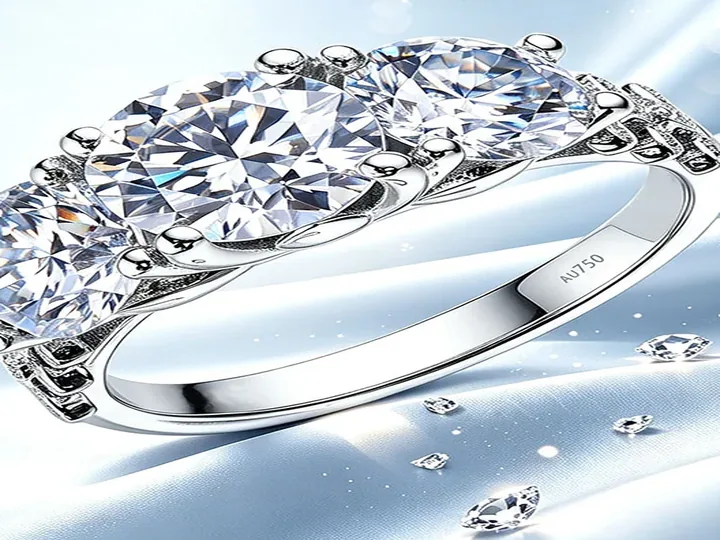
01The counter and the crate: two places the same stone shows up
I have spent twelve years standing between a polishing wheel and a shipping box. In that time I have watched the same 1-carat moissanite leave our floor in a crate of 200 and later appear under a glass case in a mall with a lighting setup worth more than the stone. The stone did not change. The story around it did.
That gap is what this piece is about. Not whether retail stores are bad, but what a trade buyer actually gets when they source stones materials wholesale from a factory instead of buying retail-finished goods and marking them up. I will keep it to numbers and paperwork, because that is what I can prove.
02What the retail counter is really selling you
Walk into a mainstream chain and ask for a one-carat near-colorless stone in a silver setting. You will get a price, a glossy card, and a return window. You will not get the cutter's name, the rough lot, or the inspection record. That is not dishonesty; it is the retail model. The store buys finished goods, holds inventory, pays rent, and prices in a margin that can run several times the ex-factory cost.
For a trade buyer, that model has a hard ceiling. You cannot compete on price against a store if you are buying at store-adjacent prices. And you cannot control quality, because by the time the piece reaches you, the stone has already been set and sealed.
- Retail pricing bundles rent, staffing, marketing and financing into the stone cost.
- Certification at retail is often a house card, not a third-party lab report.
- Stone substitution risk is invisible once the piece is set and boxed.
- Reorder consistency depends on what the store still has in stock, not on your spec sheet.
03What a factory crate actually contains
On our side, a wholesale order starts with a stone spec, not a product photo. Color grade, clarity grade, cut proportions, measurement tolerance, and the certificate body are agreed before anything is polished. Moissanite runs through our line with GRA reports; lab-grown diamond goes to IGI. Both are third-party documents a buyer can verify, not a card printed in-house.
The difference in cost is not magic. It comes from removing the retail layer, and from how we run the floor. Our stone yield and cycle time run roughly 20 percent better than a typical trading company because we cut and set under one roof. No stone travels to a second workshop for setting, no third party re-inspects and repacks it, and no one adds a handling margin in the middle. That single-roof setup is the concrete reason the number comes out lower.
04Side-by-side: retail counter versus factory wholesale
| Factor | Mainstream retail counter | HOLYCOME factory wholesale | Why it matters to you |
|---|---|---|---|
| Price basis | Finished retail piece, margin included | Per-stone and per-piece ex-factory quote | You can build your own retail price |
| Certification | Often a house card | GRA for moissanite, IGI for lab diamond | Verifiable third-party document |
| MOQ | One piece, whatever is on the shelf | 1 pc for stock, 30 pcs for custom | Test before you commit volume |
| Production time | Immediate if in stock | 12-18 days after spec sign-off | Predictable restock planning |
| QC trail | Not shared | Three-stage check, records available | Disputes get settled with evidence |
05The QC trail is the part retail cannot give you
This is where I earn my salary. Every order passes three gates. First, incoming stone check: we measure, weigh, and loupe each parcel before it is accepted into the job. Second, in-process inspection during setting and polishing, because a stone that shifts in the prong is a return waiting to happen. Third, pre-ship inspection on an AQL sampling basis, so we are judging the batch, not just the pretty sample on top.
If a buyer receives a parcel and something is off, we do not argue from memory. We pull the records. That is the practical value of a documented floor, and it is the thing a retail counter simply has no reason to build.
Retail sells you a stone you can return. A factory sells you a stone you can reorder to the same spec next quarter.
06Where the retail alternative still wins, honestly
I am not going to pretend wholesale suits everyone. If you need one engagement ring this weekend with a hands-on viewing and a no-questions return, the counter is the right call. Retail wins on immediacy, try-before-buy, and local after-sales convenience.
Wholesale wins when you are building a catalog, when you need the same spec repeated across hundreds of units, and when your margin depends on landed cost. It also wins when your customer asks a hard question about the certificate, because you can answer it with a lab report number instead of a shrug.
07Payment, shipping and the paperwork rhythm
Terms are plain. T/T with 30 percent deposit to start production, balance before shipment. PayPal is fine for sample orders so a first-time buyer can test us without a wire. Delivery is DDP, typically 5-8 days to the US or EU once goods are packed, which means the customs side is on us, not on your forwarder.
Samples are welcome and we would rather you order one piece than guess. Stock items ship at MOQ 1 pc. Custom work needs 30 pcs because a new mold or a new setting program has to be amortized somewhere, and pretending otherwise would just hide the cost in the unit price.
- Deposit: 30 percent T/T, balance before dispatch.
- Samples: PayPal accepted, MOQ 1 pc on stock.
- Custom: MOQ 30 pcs, 12-18 days production.
- Delivery: DDP, 5-8 days transit.
- Documents: GRA for moissanite, IGI for lab-grown diamond.
08Frequently Asked Questions
What is the minimum order for stones materials wholesale?
Stock stones and stock settings start at 1 pc, so you can sample before committing. Custom cuts, custom settings, or a new color combination require 30 pcs. Pricing is quoted per stone and per piece ex-factory, so the unit cost drops as volume climbs.
How long does production take, and what does it cost?
Standard production runs 12-18 days after you sign off the spec, plus 5-8 days DDP transit. Cost depends on stone type, size, grade and setting metal; moissanite in 925 silver sits far below lab-grown diamond in gold. We quote line by line so you see the stone and the labor separately.
Which certificates come with the goods?
Moissanite ships with GRA reports and lab-grown diamond ships with IGI reports. Both are third-party documents with report numbers you can check independently. Custom orders can be quoted with or without certification depending on your market requirements.
If you want to see the difference on your own bench rather than in a comparison table, send your stone spec or a reference photo to service@holycome.com or message WhatsApp +86 133 7744 7107. Tell us the grade, size, metal and quantity, and we will come back with a per-piece quote and a sample plan, usually the same working day.
