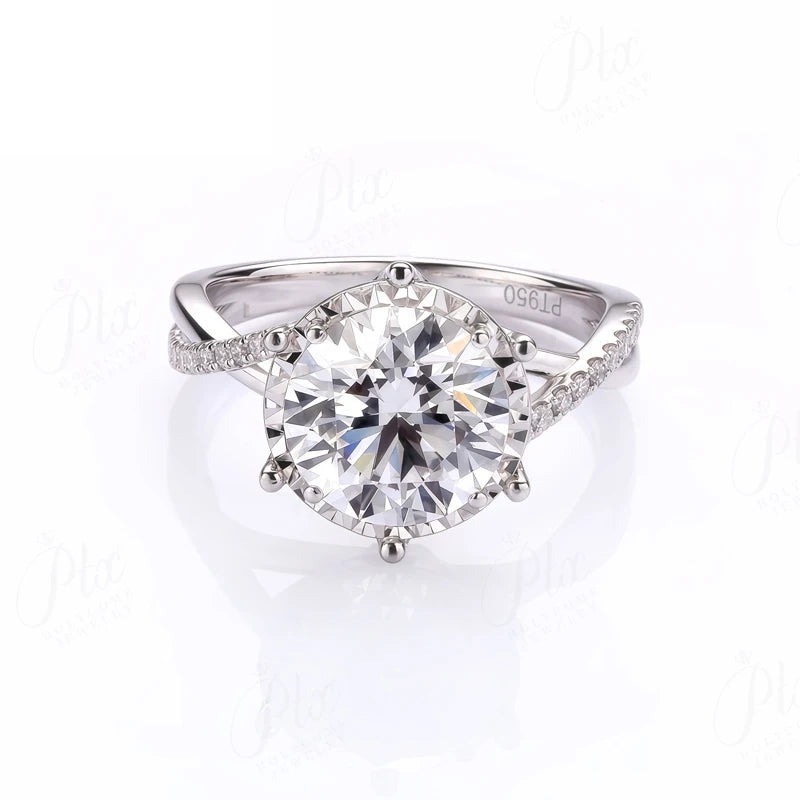
One of the most famous red stones in the British Crown Jewels is not a ruby at all. The Black Prince's Ruby set in the Imperial State Crown is a spinel, and it sat there, mislabeled, for hundreds of years before mineralology caught up. That history tells you almost everything about spinel: it looks enough like ruby to fool kings, it has been quietly underpriced by comparison, and it is finally getting its own name on the box rather than living as someone else's imitation.
What spinel is
Spinel is a magnesium aluminum oxide that grows in the same deposits as ruby, which is exactly why the two were confused for centuries. Red spinel can be every bit as vivid as a fine ruby. But spinel also comes in hot pink, lavender, violet, cobalt blue, and near-black. It is usually clean, takes a brilliant polish, and is rarely treated—unlike ruby, which is routinely heated and often fracture-filled to improve clarity. That means a spinel you buy is, in most cases, exactly what you see.
Why the confusion lasted so long
Before modern gemology, jewelers sorted red stones by color alone. Ruby and red spinel look nearly identical in the rough, and both were traded as 'ruby' across ancient trade routes. Only when mineralogists looked at crystal structure, hardness, and refractive index did they separate the two. The good news for buyers today is that spinel has not yet priced itself into ruby territory. A clean, bright red spinel that looks like a ruby at arm's length costs a fraction of a comparable ruby, which is why designers have quietly favored it for understated, high-looking pieces.
Which colors are valuable
- Red spinel — the classic. Vivid, slightly purplish red in clean stones over a carat is the tier serious collectors watch.
- Cobalt blue spinel — a vivid, slightly electric blue from Vietnam and Burma; the most expensive spinel per carat.
- Pink and hot-pink spinel — wearable, bright, and far more affordable than the red and blue tiers.
- Lavender and mauve — softer, romantic colors popular in custom pastel rings.
As with most colored stones, saturation and clarity drive value. A pale, grayish spinel is cheap; a neon, clean one is not. Stones with a slight gray cast read dull in low light, even if they photograph well.
Durability and why it works in rings
Spinel is 8 on the Mohs scale, which puts it just below ruby and sapphire and well above garnet or tourmaline. That hardness, combined with good toughness and the fact that it rarely needs fracture filling, makes spinel a genuinely practical ring stone. We set it in solitaire and halo settings exactly as we would a ruby, and customers who want a red center without a ruby budget are often surprised at how well it wears daily. If you are weighing alternatives, our simulants and alternatives guide covers the broader comparison logic.
Caring for spinel
Spinel is low-maintenance. Warm soapy water, a soft brush, and an ultrasonic cleaner (on clean stones) are all safe. It does not fracture-fill the way ruby can, so there is no oil to leach out and no fear of hot steam. Take rings off before heavy work and store them away from diamonds, which can scratch softer neighbors in the same tray. Our sapphire care routine applies almost unchanged, since both are hard, stable oxides.
The bottom line
Spinel is the underdog of colored stones. It has the hardness for daily wear, the color range to match any taste, and a price that has not yet caught up to its appearance. If you want a red or pink center stone that looks expensive without costing it, spinel is one of the smartest choices we can recommend—and it carries a better story than most.
How spinel compares to ruby side by side
Set a clean red spinel next to a mid-grade ruby and the difference is subtle to most eyes. Spinel tends to sit slightly brighter and more uniformly red, while ruby often carries a deeper, slightly purplish tone and visible silk inclusions. In a ring at arm's length, few people will guess it is not ruby. Where spinel loses points is resale cachet—the name simply has not carried the same marketing weight. For a buyer who loves the look and plans to wear the piece rather than flip it, that gap works firmly in your favor: you get the appearance for a fraction of the cost.
Because spinel is less marketed, prices have not been inflated by fashion cycles the way some colored stones have. That makes it a sensible buy for someone who wants a beautiful, durable stone now without betting on resale hype.
It is a gem for the buyer who cares more about how a stone looks and wears than about the name printed on a certificate.
The International Gem Society moissanite guide explains how moissanite performs in daily wear compared with diamond.
Authoritative References
For buyers who need to verify the technical and regulatory basis of this guide, the following independent institutions publish authoritative reference data:
- GIA Gem Encyclopedia - independent grading and identification reference for natural and lab-grown gems.
- Wikipedia: Moissanite - peer-reviewed background on moissanite chemistry, optics and history.
Frequently Asked Questions
How do I verify a factory before placing a bulk order?
Request a production video, business license, export records and a paid sample run. A factory that accepts a 50-piece test order is usually a real manufacturer.
What payment terms do you offer?
30% T/T deposit with the balance against the bill of lading. This protects both sides on first orders and can move to net terms after a track record.
What is your normal reject rate?
3–5% under 10x loupe inspection for cast and set pieces. Defective units are replaced free in the next shipment.
Where is the factory located?
Wuzhou, Guangxi, China—the core lab-grown and moissanite manufacturing cluster. Shipments go via Guangzhou or Shenzhen ports.


