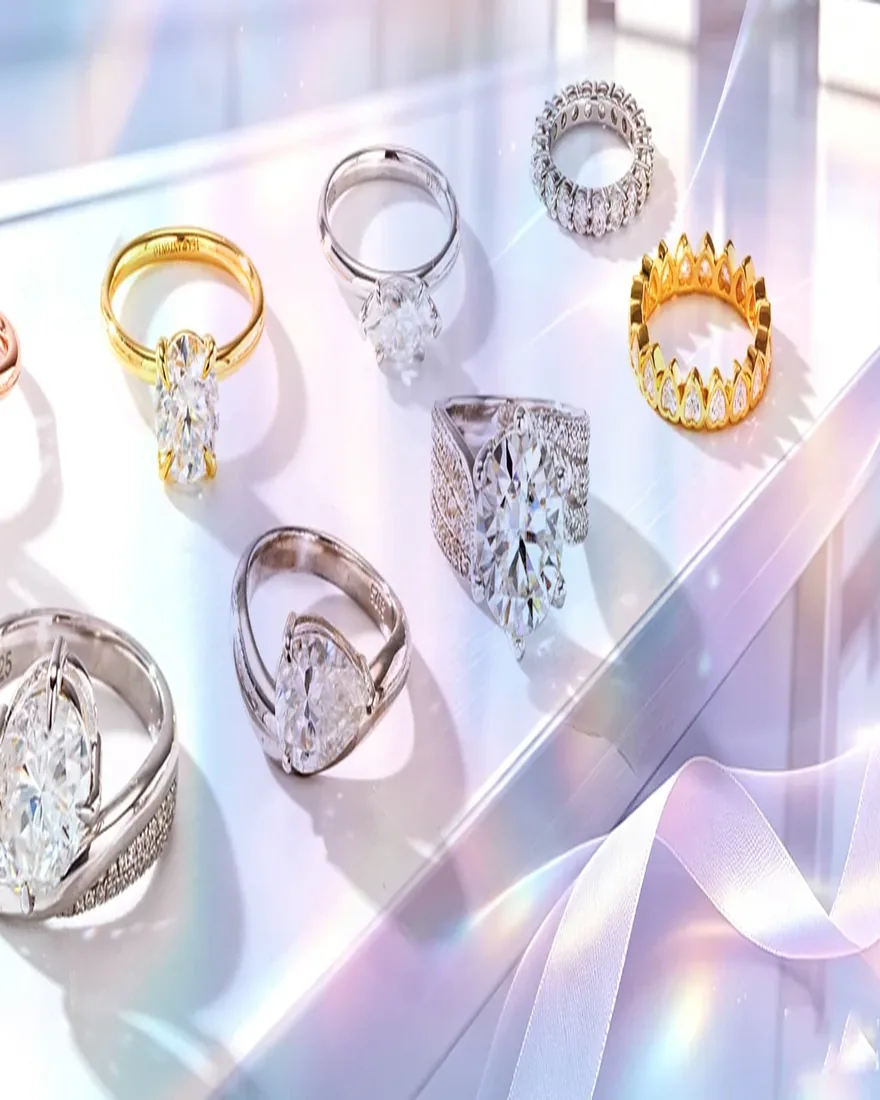
A ring that does not fit is one of the most common reasons people walk into a jeweler. The good news is that many rings can be resized. The less obvious news is that sizing up and sizing down are not the same job, some rings cannot be resized at all, and a few pieces should never be sized more than once. Knowing the limits before you hand over the ring saves everyone time and protects a piece that may matter a great deal.

Sizing down: the simpler job
To make a ring smaller, the jeweler cuts out a small wedge of metal from the bottom of the band and solders the two ends back together. It is a clean, predictable operation on a plain band. Most plain solitaire rings can be sized down one to two full sizes with no trouble. The repair is then polished so the seam disappears. If your ring is too loose and spins on your finger, sizing down is usually the correct fix rather than a temporary plastic sizing bead, which can catch dirt and irritate the skin.
Sizing up: the harder one
To make a ring larger, the jeweler cuts the shank and adds a small strip of matching gold or platinum to stretch it. Sizing up by a half size is usually fine. Sizing up more than a full size starts to cause problems: the added metal changes the thickness of the band, the soldered seam is larger, and any engraving, millgrain, or texture around the bottom of the ring is cut through. Wide rings are especially hard to size up, because stretching the shank distorts the whole shape and can pull stones out of alignment.
The rings that cannot be resized
- Eternity bands set all the way around. Cutting the shank means disturbing stones or settings; most cannot be resized.
- Mixed-metal or inlay rings where the bottom of the band carries a design that would be destroyed by a cut.
- Ceramic, tungsten, and titanium rings. These are too hard or too brittle to cut and solder; they are usually made to size and cannot be altered.
- Thin, heavily engraved bands where the cut would remove meaningful work.
- Antique rings with structural cracks, which resizing would likely split further.
Stones and the heat problem
Resizing involves heat, and heat can damage certain stones. Opal, emerald, tanzanite, and some treated stones can crack, fracture-fill, or discolor under a torch. A competent bench jeweler will either remove the stones before soldering or shield them carefully with heat sinks and cooling. If a jeweler offers to resize a ring with delicate stones without mentioning this, ask what they plan to do. Our repair guide covers the kinds of work that should always go to a real bench rather than a mall kiosk.
Sizing as a last step, not a first guess
The best resizing is the one you never need. If you are ordering a custom or online ring, measure carefully first—our at-home measuring guide walks through the mistakes people make. Rings worn on different fingers, across seasons, and at different times of day all change size; fingers swell by afternoon and in warmer weather. Resizing is a service we are glad to provide, but getting the original size right is always cheaper and safer, especially on a piece with stones all around the band.
The bottom line
Sizing down a plain band: usually easy. Sizing up more than a size: ask first. Eternity bands and hard-metal rings: often impossible. When in doubt, bring the ring in and let us look before we quote, because a resizing attempt on the wrong ring can permanently damage a piece you love.
Timing and cost expectations
A straightforward sizing on a plain band is usually a same-day or next-day job. Sizing up, resizing a ring with delicate stones, or resizing an antique piece can take a few days, because stones may need to be removed and reset. Cost follows the work: sizing down on a plain shank is the least expensive repair we do; sizing up with added metal and protected stones costs more. Always ask whether stones need to be removed, and get the quote in writing before we cut the band. A reputable bench will happily explain which operation your ring needs before touching it.
One last tip: if a ring only spins because it is slightly too loose but sits correctly over the knuckle, a sizing bead or a gentle sizing down is almost always better than forcing a dramatic cut. Small corrections keep the piece structurally safer.
Bring the ring in first, let us assess it, and only then decide whether sizing, a bead, or a new band is the right path.
For third-party reference, the Wikipedia article on moissanite details moissanite’s discovery, optical properties and use in jewellery.
Frequently Asked Questions
What ring sizes can you supply in bulk?
US sizes 5–12 including half sizes. Send a size breakdown with your order and we cast to that curve; comfort-fit inner bands reduce resize requests.
Can I order a mixed size run instead of one size?
Yes. Mixed runs are standard for wholesale: specify quantity per size and we pack and label by size at no extra labor cost.
What is the MOQ for custom ring designs?
50 pieces per design for existing molds; 100–300 pieces when a new mold or CAD model is required.
How should I price rings for retail margin?
Most partners use a 3–4x markup on FOB cost for sterling and 2.5–3x for moissanite solos, which keeps landed cost under 30% of retail.


