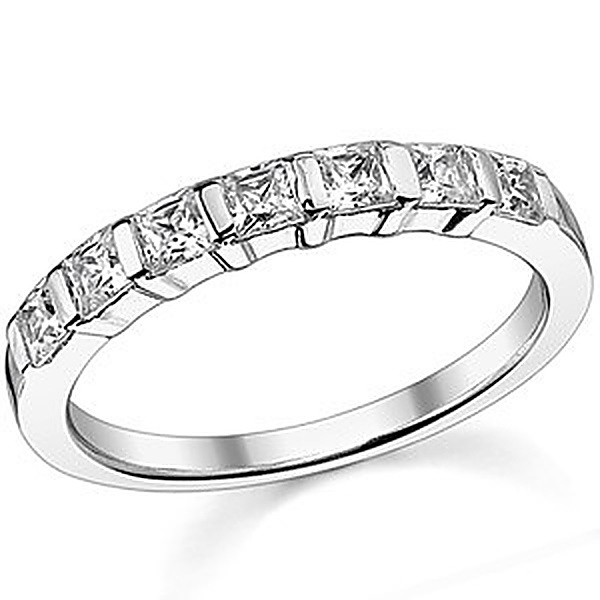
Rhodium (EU ECHA nickel safety regulations) is a platinum-group metal that most customers never see listed on a spec sheet, yet it is the reason the white jewelry in most retail displays looks as bright as it does. It is also the most misunderstood step in the finishing line: buyers assume white gold is naturally white, and they expect plating to last forever. Neither is true. Understanding the actual spec - how thick the plate is, what sits under it, and where it wears first - is what separates a wholesale order that reorders from one that comes back as a complaint.
Why rhodium exists at all
White gold is alloyed to be white - usually with nickel, palladium, or both - but the resulting color is a pale, slightly grayish yellow, not the mirror white of a showroom ring. Sterling silver is bright but tarnishes within weeks of wearing on skin. Rhodium plating solves both problems in one coat: it is the whitest of the platinum-group metals, it is extremely hard (HV 800-1000), and it sits as a thin barrier between the base metal and the wearer.
Thickness, in microns
Standard rhodium plate on wholesale jewelry runs 0.1 to 0.25 microns. That is about one five-hundredth of a millimeter - thin enough that a single buffing session removes most of it. High-wear pieces, men's bands, and bracelets are plated to 0.5 microns. Anything over 1 micron is unusual because rhodium is brittle at thickness and can craze or peel rather than wear gracefully.
When a supplier says rhodium finished without a micron figure, assume the minimum. Ask for the number in writing. The cost difference between 0.1 and 0.5 microns per piece is small; the lifespan difference in wear is six to twelve months versus two to three years.
The underplate does most of the work
Rhodium itself is too thin and too precious to plate directly onto a porous cast surface. The actual protective layer is underneath:
- Copper strike on sterling silver, improving adhesion and sealing the porous silver surface.
- Nickel strike on white gold or silver, building a uniform, high-brightness base that rhodium mirrors.
- Rhodium flash on top, the visible 0.1-0.5 microns.
For markets with nickel restrictions (EU REACH, most child jewelry, and a growing share of US retail), factories swap the nickel strike for a palladium or nickel-free silver strike. That change raises the piece cost, but it is non-negotiable if you are shipping to compliance-conscious retailers.
Where it wears first
Rhodium does not wear uniformly. The inside of a ring shank, where the band brushes against a desk all day, loses the plate in three to six months. The high points of a bracelet, the clasp edges, and the back of a pendant follow next. The top surface of a ring, where customers look, often still looks plated after two years. This is normal and predictable, and it is the reason fine jewelers offer re-plating as a paid service rather than a warranty event.
The pre-plate polish decides everything
Rhodium is a mirror of whatever is underneath. A piece plated after a lazy buff shows swirls and orange peel under the rhodium, and no amount of re-plating will fix it. Factories that care about finish therefore hold the same polish tolerance before plating as they would for a piece meant to ship unplated. The plating line itself - electroclean, acid dip, rinse, strike, plate, rinse, dry - is sequential, and a missed rinse leaves water spots that show as dull patches once the piece reaches retail.
Yellow and rose gold flash, for context
Rhodium is not the only jewelry plate. Yellow gold plating over sterling silver runs 0.5 to 2.5 microns, and rose gold plating uses a copper-alloyed gold bath. The same discipline applies: underplate matters, pre-polish matters, and thickness dictates lifespan. Where rhodium is chosen for its whiteness and hardness, yellow gold plate is usually chosen for cost - a silver piece plated to 18k color retails for a fraction of a solid 18k piece, but it wears through in a year on a ring shank. Buyers choosing silver-with-gold-plate for a daily-wear line should plan for re-plating turnover rather than treating it as a permanent finish.
Stripping and re-plating old stock
Pieces that come back for re-plating are first stripped in a reverse-electrolysis bath, which removes the old rhodium without attacking the base metal. Once stripped, the piece goes back through the same polish and clean cycle as a new piece, because the stripped surface is dull and slightly etched. Skipping the re-polish step and plating straight over a stripped piece is the shortcut that gives re-plated jewelry a gray, lifeless look. A factory that handles its own re-plating queue well is running the same line it runs for new production, not a side bench.
What to specify on your PO
Three lines on a purchase order eliminate most plating disputes: rhodium thickness in microns, whether the underplate is nickel-free, and whether re-plating service is available for returns. A factory that can quote all three quickly is running a controlled plating line rather than sending pieces out to a job shop on a Friday. For the rest of the finishing sequence that leads up to the plating bath, see our finishing process guides.
Frequently Asked Questions
What gold purities and platings do you offer?
Solid 10K, 14K and 18K, plus gold-filled and vermeil. Plated fashion lines use 1–2 micron PVD over brass or 316L.
How do I avoid mislabeling gold products?
Label by construction: solid, gold-filled, vermeil or plated. Mislabeling plated as vermeil is the most common compliance complaint in this category.
Can you stamp karat marks?
Yes. Every solid-gold and vermeil piece is stamped with karat and maker marks, which supports customs and resale claims.
What is the MOQ for gold lines?
50 pieces per design for stock settings; custom CAD work starts at 100 pieces.


