One of the most common items that lands on our repair bench is a gemstone that looks tired: a chipped corner, a frosted table, a scratched crown, or a stone that simply stopped sparkling years ago. Most clients assume the stone is finished and the setting must be reset with something new. Often, it is not. Recutting or repolishing the existing stone can bring it back, and it usually costs a fraction of a replacement.

First, diagnose the problem
We start by looking at the stone under magnification. There are three distinct problems, and they need different solutions.
Surface scratches and frosting. Years of contact with desks, powder compacts and other gems dull the polish on the crown. The edges of the facets are still crisp. This is the easiest fix: a light repolish on the existing facets brings back the surface without touching the geometry of the cut.
A small chip on a facet edge or the girdle. The chip can be hidden by re-cutting and re-polishing the affected facet. The stone loses a small amount of weight, usually well under a tenth of a carat for a chip on an edge, but the cut proportions stay intact.
A chip that reaches the center of the table or a major corner. This is where we talk about a full recut. The stone has to be re-shaped, often from oval to a smaller oval, or from round to cushion, to remove the damaged area. Weight loss here is real, and we measure it before we start.
When we say no
We will not recut every stone. If the stone is heavily included, if a chip opens into a deep natural fracture, or if the recut would push the stone below a size that changes the setting dramatically, we tell the client plainly. Recutting a 1-carat stone down to 0.7 carats is sometimes the right choice, but only if the setting can accommodate the smaller size. Sometimes the honest answer is that replacing the stone is cheaper than salvaging it.
We also decline to recut stones with significant collector value, where a historical cut matters more than a flawless surface. A vintage European-cut diamond with its original table and crown geometry may be worth more as-is than re-cut to modern proportions.
How a recut works at the bench
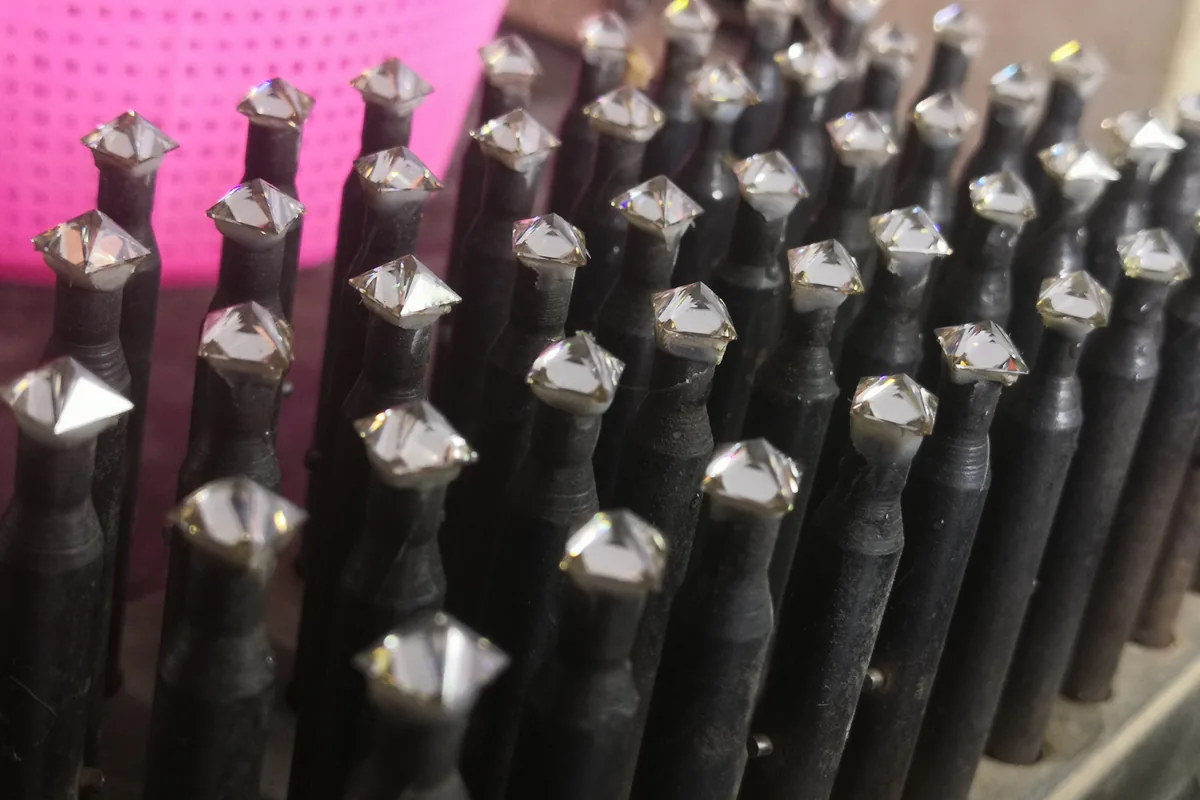
The stone is removed from the setting, cleaned, and measured. If it is a repolish, it is mounted on a dop stick and taken through a series of finer laps, with the polisher matching the original facet angles so the new surface lines up with the old geometry. The whole job can take under an hour for a small stone.
A full recut is a different job. We re-map the stone, decide the new shape that maximizes the remaining weight, and re-cut every facet from scratch on a faceting machine. This is slow, careful work. The goal is not to make the stone as big as possible; it is to make it as well-proportioned as possible given the weight we have to work with. A small, well-cut stone beats a larger, dull one every time.
The trade-offs to expect
Three things change when a stone is recut. First, weight. A chip repair costs almost nothing; a full recut can cost 15 to 30 percent of the original weight, depending on where the damage sat. Second, shape. Oval often becomes a slightly smaller oval, pear can become cushion, and round stones may lose their ideal proportions if we are removing a corner chip. Third, color. Some colored gems darken slightly when re-cut smaller because less light travels through the stone. We flag that conversation before starting; we do not want the client surprised afterward.
After the recut
Once the stone is back from the faceting room, we reset it in the original setting, check that the new girdle sits properly in the prongs, and do a final polish on the metal. We also give the client before-and-after photos so they can see exactly what changed. Most people are surprised how much life a simple repolish puts back into a twenty-year-old stone.
Repolishing vs. replacing
For most older pieces, a repolish or a light recut is the better economic choice by far. The stone was chosen for a reason, it is already in a setting the client loves, and the cost is a fraction of a new center stone. The cases where we recommend replacement are when the damage forces a size reduction that breaks the setting, when the stone itself was never well cut to begin with, or when the client simply wants a different color. You can read more about our repair workflow in when to see a jeweler, and about how we prepare settings in soldering at the bench.
Carat weight conventions cited here follow the Wikipedia entry on carat weight.
Frequently Asked Questions
How do I verify a factory before placing a bulk order?
Request a production video, business license, export records and a paid sample run. A factory that accepts a 50-piece test order is usually a real manufacturer.
What payment terms do you offer?
30% T/T deposit with the balance against the bill of lading. This protects both sides on first orders and can move to net terms after a track record.
What is your normal reject rate?
3–5% under 10x loupe inspection for cast and set pieces. Defective units are replaced free in the next shipment.
Where is the factory located?
Wuzhou, Guangxi, China—the core lab-grown and moissanite manufacturing cluster. Shipments go via Guangzhou or Shenzhen ports.


