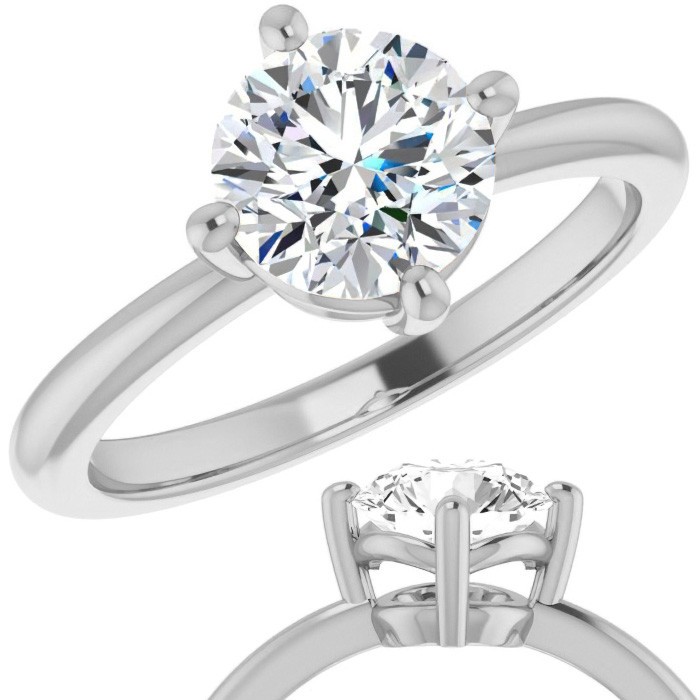
A boutique owner in Porto started a private label (FTC jewelry industry guides) line by picking eight catalog silver pieces and adding her logo inside the band. Three months later, sales were flat. The pieces looked identical to what three other boutiques in the same mall were already selling, because the logo was the only difference. Private label jewelry production is not just logo engraving. It is the small spec choices - finish, plating thickness, packaging, stone grade - that make a piece feel like yours. Here is how we build private label lines, and where most new brands leave money on the table.
What actually makes a piece "private label"
A private label piece has four layers of customization. Buyers usually pay attention to only the first.
- Logo: Laser-engraved inside the band, on the clasp, or on the back of a pendant. The cheapest layer, and the most visible.
- Spec deviations: A half-millimeter band width, a matte instead of high-polish finish, a thicker rhodium plate. These are free or near-free on existing tooling.
- Stone upgrade: Moving from generic CZ to GRA moissanite changes the weight on a customer's hand and the price you can charge.
- Packaging: A branded box, a card, a pouch. This is where the unboxing experience is made or lost.
The brands that win at private label are the ones who customize all four. The brands that stall are the ones who stop at layer one.
The spec deviations that cost almost nothing
When a factory already holds the rubber mold for a catalog piece, changing the finish or the plating thickness does not require new tooling. It requires a line in the PO. These are the highest-ROI tweaks:
| Spec | Default catalog | Private label upgrade | Cost impact |
|---|---|---|---|
| Rhodium thickness | 0.3µm | 0.5µm | +$0.40/pc |
| Finish | High polish | Matte / brush | +$0.15/pc |
| Inside comfort fit | Flat | Comfort-fit | +$0.30/pc |
| Stone grade | CZ | GRA moissanite | +$3-$9/pc |
| Packaging | Polybag | Branded box + insert | +$1.20/pc |
A $2.25 per-piece investment turns a $11 catalog piece into a $28 retail piece that does not look like anyone else's. That is the math private label is built on.
Logo placement and the tolerances that matter
Laser engraving looks trivial until a run comes back crooked. The tolerances we hold for logo engraving:
- Position: +/- 0.3mm from center of the inside band
- Depth: 0.05mm (deep enough to read, shallow enough not to trap dirt)
- Font size: minimum 1.2mm height on a ring, 0.8mm on a clasp
- Orientation: aligned to the ring gap, not rotated
If your factory cannot quote tolerances like these, they are engraving by eye. That is fine for a 20-piece test run. It is not fine for a 500-piece reorder.
Barcodes, SKUs, and the operational layer
Private label means your customer and your inventory system. Two operational details buyers forget until the carton lands:
- Barcode labeling: If you sell to US retailers, they expect a UPC. We print and apply barcode stickers in-house for a small fee. Confirm the format (UPC-A, EAN-13) before the run.
- Carton labeling: DDP shipping to a US 3PL requires a shipping mark and a packing list that matches the carton count. We provide both, but we need your 3PL's spec sheet.
Decision guidance by buyer type
Boutique launching a first private label line: Pick 4-6 catalog styles, not 20. Apply all four customization layers (logo, spec tweak, stone upgrade, packaging). Run 30 pieces per style. The goal is to find which spec combination sells, not to fill a wall.
DTC brand with proven SKUs: Move to a semi-custom version of your best seller. Tweak the band width or the stone size by half a millimeter, cut a small new mold, and now you have a version no one else on Amazon or Shopify can undercut.
Chain / multi-store buyer: Build a seasonal capsule. We pre-cast the wax components in one large tree, hold finished settings, and pull-to-order by store. Lead time drops to 5-7 working days and unit cost falls 12-18%.
Frequently Asked Questions
What is the minimum order for private label jewelry?
We open private label programs at 30 pieces per style on existing catalog tooling. With new CAD or a custom mold, the opening MOQ is 20 pieces for 14k gold work and 40 pieces for sterling silver.
Can I put my logo on any catalog piece?
Almost always, on the inside of a ring band, the back of a pendant, or the clasp of a chain. Confirm placement before PO sign-off; some pavé settings have no flat surface for engraving.
How much does branded packaging add?
A generic jewelry box adds about $0.90. A fully printed box with your logo, an insert card, and a pouch runs $1.80-$2.50 per piece, plus a one-off plate fee of $60-$150.
Do I own the designs I private label?
If the base style is our catalog piece, we hold the tooling but you hold exclusive branding rights under our private label agreement. If we cut a new mold from your spec, the mold is yours on final payment.
How long does a private label launch take?
From signed PO to carton: 25-35 working days on existing tooling, 35-50 days for a new CAD style. Add 5-7 days for DDP air freight to the US or EU.
Key takeaways
- Customize all four layers: logo, spec, stone, packaging. Logo-only private label competes on price.
- Spec deviations on existing tooling cost pennies but change how the piece feels and what you can charge.
- Ask for engraving tolerances in writing. "By eye" does not scale to 500 pieces.
- Plan barcodes and carton labels before the run, not when the 3PL rejects the carton.
Send us your brand assets (logo vector, box reference, color Pantone); we will come back with a private label line proposal and sample within 10 working days. Browse the moissanite catalog, read the buying guides, see the production steps, or review our QC standards.
Independent background on moissanite — how its hardness and refractive index compare with diamond — is documented in the Wikipedia article on moissanite.


